


Filter Replacement Eureka Forbes
Maintaining the integrity of water purification systems requires a disciplined approach to component lifecycle management. For facilities utilizing commercial or industrial-grade water treatment units, understanding the nuances of filter replacement Eureka Forbes is essential to ensuring consistent output quality and protecting downstream equipment. While the brand is widely recognized for residential applications, its commercial and industrial divisions deploy sophisticated filtration architectures that demand precise replacement protocols and high-performance components.
In industrial environments, filtration is not merely about taste or clarity; it is about meeting specific chemical and physical parameters required for manufacturing processes, boiler feed water, or large-scale food and beverage production. This technical guide explores the engineering considerations, selection criteria, and maintenance best practices associated with replacing filtration elements in these systems, with a focus on the role of high-quality Filter Cartridges in achieving optimal performance.
The Technical Necessity of Timely Filter Replacement
Filtration systems operate on the principle of mechanical or chemical separation. Over time, the media within the filter becomes saturated with contaminants, leading to several performance-degrading phenomena. For engineers and facility managers, recognizing these triggers is the first step in a successful replacement strategy.
Pressure Differential and Flow Rate
One of the primary indicators that a filter has reached the end of its service life is an increase in the pressure differential (ΔP) across the filter housing. As particulates accumulate on the surface or within the depth of the media, the resistance to flow increases. If the filter replacement Eureka Forbes protocol is ignored, this pressure buildup can lead to "media migration" or structural failure of the cartridge, potentially allowing bypass or releasing captured contaminants back into the system.
Contaminant Breakthrough
In systems utilizing activated carbon or specialized resin cartridges, the replacement cycle is often dictated by chemical exhaustion rather than physical clogging. Once the adsorption sites on the carbon are occupied, the filter can no longer remove chlorine, volatile organic compounds (VOCs), or heavy metals. Regular water quality testing is necessary to detect breakthrough before it impacts the final product or process.
Evaluating Replacement Options: Materials and Specifications
When sourcing components for filter replacement Eureka Forbes, technical professionals must look beyond brand names and focus on the material specifications and performance ratings of the replacement elements. The choice of material significantly impacts the chemical compatibility and thermal resistance of the filtration stage.
Polypropylene and Depth Filtration
Most sediment pre-filters used in these systems are constructed from melt-blown or string-wound polypropylene. These are depth filters designed to capture a wide range of particle sizes throughout the thickness of the media. When selecting replacements, it is vital to confirm the micron rating—distinguishing between nominal (approximate) and absolute (99.9% efficiency) ratings—to ensure the protection of sensitive RO membranes or UV sterilizers.
Carbon Block vs. Granular Activated Carbon (GAC)
Carbon stages are critical for removing disinfectants that can damage thin-film composite (TFC) membranes. Carbon blocks generally offer superior filtration efficiency and prevent the "channeling" often seen in GAC filters. For high-demand industrial applications, ensuring the carbon block has a high iodine rating and low ash content is essential for longevity and purity.
Stainless Steel and Precision Mesh
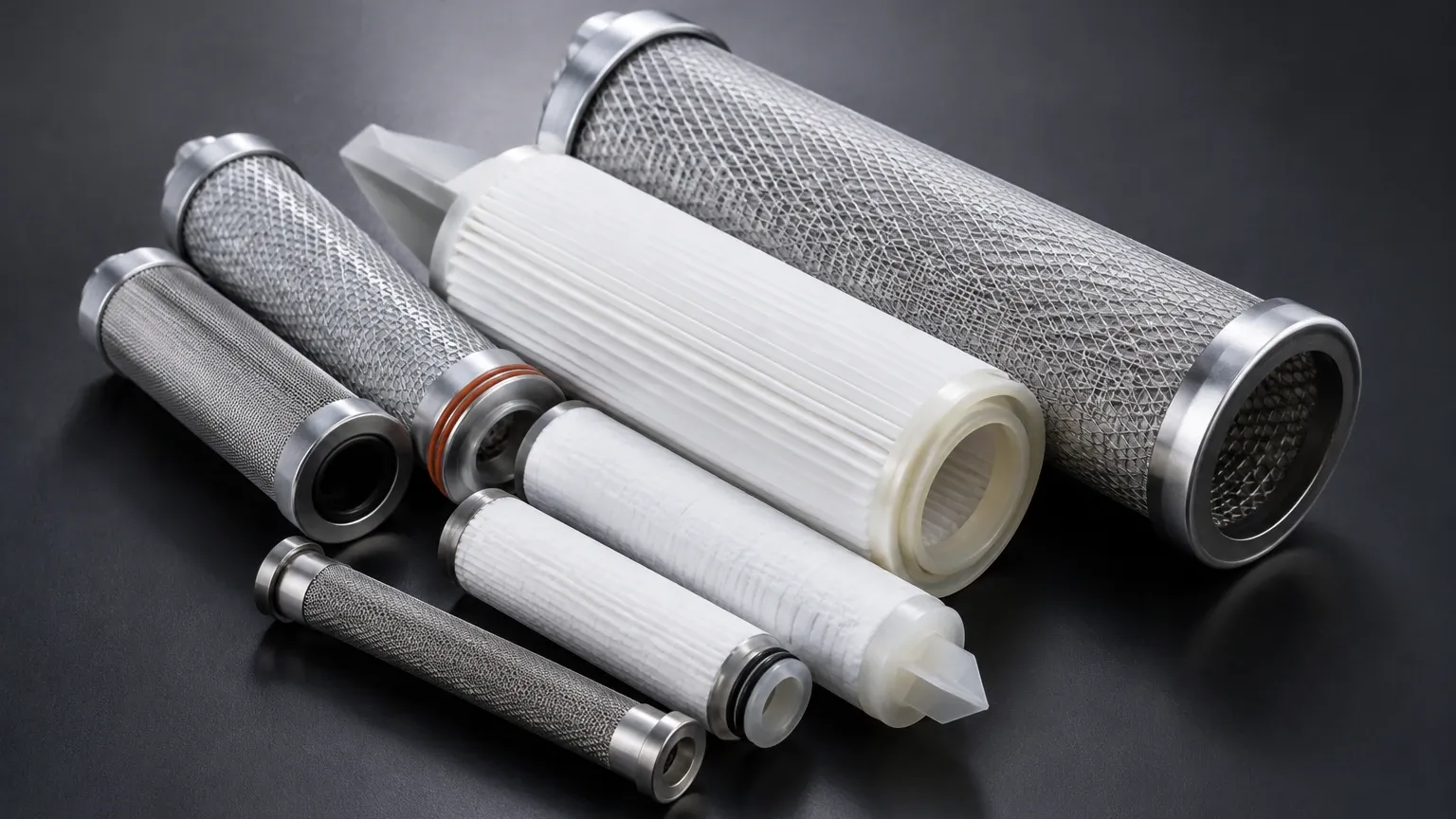
In heavy-duty industrial contexts or high-temperature applications, plastic-based cartridges may be insufficient. This is where stainless steel Filter Cartridges provide a robust alternative. Unlike disposable polymer filters, stainless steel mesh or sintered metal elements offer exceptional mechanical strength and can often be cleaned and reused, providing a lower total cost of ownership in specific B2B environments. They are particularly effective as post-filters or for protecting high-pressure pumps from abrasive particulates.
Engineering Considerations for System Compatibility
Replacing a filter is not as simple as matching the physical dimensions. Engineers must evaluate how the replacement part interacts with the entire hydraulic circuit. A mismatch in specifications can lead to system inefficiencies or catastrophic failure.
Micron Rating Precision
Selecting a micron rating that is too fine for the application will result in rapid clogging and frequent downtime. Conversely, a rating that is too coarse will fail to protect downstream components. For Eureka Forbes systems, the sequence of filtration—from coarse sediment removal to fine carbon polishing—must be maintained according to the original design intent unless a process change justifies a reconfiguration.
Flow Velocity and Contact Time
For chemical adsorption stages, the flow velocity through the media is a critical variable. If a replacement cartridge has a different porosity or internal structure, it may reduce the "empty bed contact time" (EBCT), leading to incomplete removal of contaminants like chloramines. Replacement parts must be verified to support the system's rated flow rate without compromising chemical reduction efficiency.
Seal and O-Ring Integrity
The interface between the filter cartridge and the housing is a common point of failure. During filter replacement Eureka Forbes, the condition of the O-rings and gaskets must be inspected. Using the wrong elastomer (e.g., using BUNA-N where Viton is required for chemical compatibility) can lead to leaks or bypass. Ensuring a proper seal is as important as the quality of the filter media itself.
Step-by-Step Professional Replacement Protocol
To maintain system hygiene and operational safety, a standardized procedure should be followed during the replacement process. This ensures that the system is returned to service without introducing air pockets or microbial contamination.
1. System Isolation: Close the inlet and outlet valves to isolate the filter housing. If the system is under high pressure, use the pressure relief valve to safely bleed off internal pressure before attempting to open the housing.
2. Housing Sanitization: Once the old cartridge is removed, the interior of the housing should be cleaned. In industrial settings, this may involve a mild sanitizing solution to prevent biofilm buildup on the housing walls.
3. Cartridge Inspection: Before installation, inspect the new Filter Cartridges for any shipping damage or manufacturing defects. Ensure that the end caps are secure and the media is intact.
4. Seating and Alignment: Carefully align the cartridge with the internal guides of the housing. Improper seating is a leading cause of "bypass," where unfiltered water flows around the cartridge rather than through it.
5. Air Venting and Flushing: After reassembling the housing, slowly open the inlet valve. Use the vent plug to allow trapped air to escape. Once the housing is full, flush the new filter to drain for several minutes. This is particularly important for carbon filters to remove "fines" (small carbon particles) that could otherwise clog downstream membranes.
Troubleshooting Common Post-Replacement Issues
Even with a professional approach, issues can arise following a filter change. Understanding how to troubleshoot these symptoms is vital for maintaining uptime.
* Reduced Flow Rate: If the flow rate is lower than expected immediately after replacement, check for airlocks in the system or verify that the protective plastic wrap was removed from the new cartridge. Additionally, ensure that the cartridge is not too fine for the current feed water turbidity.
* Cloudy Water or Bubbles: This is often caused by trapped air being released from the new media. It typically clears after several gallons of flow. If the cloudiness persists, it may indicate carbon fines, requiring further flushing.
* Leaking Housings: Leaks at the sump or head are usually due to a misaligned O-ring or a cracked housing. Avoid using wrenches to over-tighten housings; hand-tightening is generally sufficient if the O-ring is properly lubricated and seated.
Total Cost of Ownership and Customization
For B2B procurement teams, the decision-making process for filter replacement Eureka Forbes should extend beyond the initial purchase price. The total cost of ownership (TCO) includes the cost of the replacement parts, the labor required for the change-out, the cost of disposal, and the impact of downtime.
In many high-volume industrial applications, moving toward customized filtration solutions can yield significant savings. For example, replacing standard disposable cartridges with cleanable stainless steel Filter Cartridges can eliminate the recurring cost of consumables and reduce the environmental footprint of the facility. Custom-engineered filters can also be designed to handle specific flow rates or chemical environments that standard off-the-shelf components cannot accommodate.
Conclusion
Effective filter replacement Eureka Forbes is a cornerstone of industrial water management. By focusing on technical specifications—such as micron ratings, material compatibility, and structural integrity—engineers can ensure that their water treatment systems continue to operate at peak efficiency. Whether utilizing standard polymer depth filters or upgrading to precision-engineered metal cartridges, the goal remains the same: consistent, reliable, and cost-effective filtration that protects both the process and the final product. For those managing demanding industrial environments, partnering with a manufacturer capable of providing high-performance filtration components is essential for long-term operational success.
