


Filter Cartridge Gas
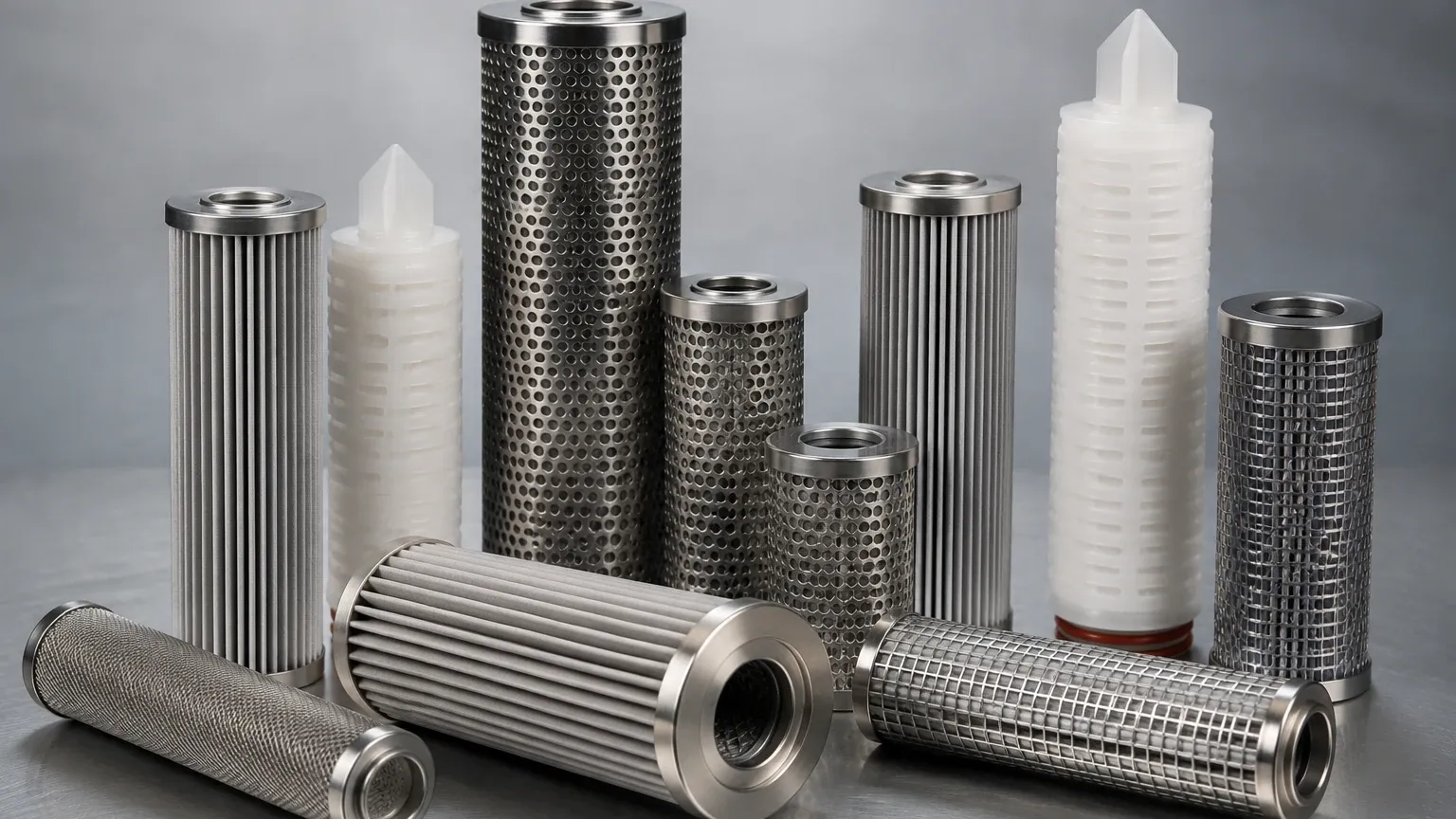
In industrial environments, the filtration of gases is a critical process requirement that directly impacts equipment longevity, product purity, and operational safety. Whether the application involves compressed air, nitrogen, steam, or aggressive process gases, the selection of a high-performance filter cartridge gas system is paramount. Unlike liquid filtration, gas filtration involves unique physical dynamics, including higher velocities and different particle behavior mechanisms. For engineers and procurement specialists, understanding the technical nuances of stainless steel Filter Cartridges is essential for optimizing system performance and minimizing downtime.
Industrial gas filtration serves several primary functions: removing solid particulates, separating liquid aerosols (coalescing), and ensuring sterile conditions in sensitive industries like pharmaceuticals and food production. Because gases are compressible and often transported at high pressures or temperatures, the structural integrity of the filter medium is just as important as its filtration efficiency. Stainless steel components, particularly those manufactured by Kaifil, offer the thermal and chemical resistance necessary to withstand these demanding conditions.
Understanding the Role of Filter Cartridges in Industrial Gas Applications
The primary objective of a gas filter cartridge is to intercept contaminants that could otherwise cause mechanical wear, contaminate end products, or poison catalysts. In a typical filter cartridge gas setup, the gas stream passes through a porous medium—often pleated or sintered wire mesh—where particles are trapped.
In gas systems, contaminants are generally categorized into three types:
1. Solid Particulates: Dust, pipe scale, and metal shavings that can erode valves and compressors.
2. Liquid Aerosols: Oil mist from compressors or water vapor that can lead to corrosion or process interference.
3. Biological Contaminants: Bacteria and spores, which are critical in sterile air applications.
Using stainless steel filter cartridges for gas applications provides a distinct advantage over disposable polymer filters. Metal filters can handle significantly higher differential pressures and are not prone to "media migration," where fibers from the filter itself break off and enter the gas stream. This reliability is vital for maintaining the integrity of high-purity gas lines used in semiconductor manufacturing or chemical synthesis.
Key Mechanisms of Gas Filtration
To specify the correct filter, engineers must understand how particles are actually captured within the gas stream. Gas filtration relies on four primary mechanisms, which vary in effectiveness depending on particle size and gas velocity:
Inertial Impaction
This occurs with larger particles (typically >1 micron) that have too much momentum to follow the gas streamlines around the filter fibers. Instead, they strike the fiber directly and become trapped. This mechanism is highly effective at higher gas velocities.
Interception
Interception happens when a particle follows a streamline but comes close enough to a fiber to touch it and be captured. This is the dominant mechanism for mid-sized particles.
Diffusion (Brownian Motion)
For very small particles (typically <0.1 micron), the random movement caused by gas molecules bumping into them (Brownian motion) increases the likelihood that they will contact a filter fiber. Unlike impaction, diffusion is more effective at lower gas velocities.
Electrostatic Attraction
While less common in purely mechanical stainless steel filters, electrostatic charges can sometimes play a role in attracting fine particles to the filter surface. However, in industrial stainless steel filter cartridge gas applications, the focus is primarily on the first three mechanical methods to ensure consistent, verifiable performance.
Material Selection for Filter Cartridge Gas Systems
The environment in which the gas filter operates dictates the material requirements. For most industrial applications, stainless steel is the gold standard due to its versatility and durability.
Stainless Steel 304 vs. 316L
* Type 304: Suitable for general industrial gases, compressed air, and non-corrosive environments. It provides excellent strength and cost-effectiveness.
* Type 316L: The "L" stands for low carbon, which improves weldability and resistance to intergranular corrosion. 316L is preferred for applications involving corrosive gases (such as sulfur dioxide), high-salinity environments, or where stringent cleaning protocols (like CIP/SIP) are required in the pharmaceutical industry.
Sintered Wire Mesh vs. Pleated Construction
* Sintered Mesh: Offers extreme structural rigidity. The diffusion bonding process ensures that the wires do not shift, maintaining a precise pore size even under high pressure pulses. This is ideal for high-pressure gas filtration.
* Pleated Cartridges: By pleating the wire mesh, the surface area is significantly increased. This allows for higher flow rates and a lower initial pressure drop, which is critical for energy efficiency in large-scale gas distribution systems.
Technical Specifications and Engineering Considerations
When selecting a filter cartridge gas solution, several engineering parameters must be balanced to ensure the system operates within its design limits.
Micron Rating: Absolute vs. Nominal
In gas filtration, the distinction between absolute and nominal ratings is critical. An absolute rating signifies that 99.9% of particles of a specific size will be captured. For critical gas streams, such as those protecting sensitive analytical equipment or providing sterile air, absolute-rated cartridges are necessary. Nominal ratings are more suited for pre-filtration where the goal is to remove the bulk of heavy contaminants.
Pressure Drop (Delta P)
Every filter introduces resistance to flow. The initial pressure drop should be kept as low as possible to reduce the load on compressors. As the filter loads with contaminants, the Delta P will increase. Engineers must define the "terminal pressure drop"—the point at which the cartridge must be cleaned or replaced to prevent damage or excessive energy consumption.
Temperature and Pressure Limits
Stainless steel Filter Cartridges excel in high-temperature gas filtration, where polymer seals and media would melt or degrade. Standard metal cartridges can often operate at temperatures exceeding 500°F (260°C), and specialized designs can go much higher. It is essential to confirm that the end-cap adhesives (if any) or gaskets (O-rings) are also rated for these temperatures.
Common Applications of Gas Filter Cartridges
Gas filtration is ubiquitous across heavy and light industries. The specific requirements of the filter cartridge gas system vary by sector:
Chemical and Petrochemical Processing
In these industries, filters are used to protect downstream catalysts from particulate poisoning. They also filter process gases like hydrogen, nitrogen, and carbon dioxide. The ability of stainless steel to resist chemical attack makes it the only viable choice for many of these aggressive gas streams.
Food and Beverage Industry
Compressed air is often used to move ingredients or blow out containers. This air must be free of oil, moisture, and bacteria. Sintered metal filters are frequently used for "culinary steam" applications, where steam is injected directly into food products. The filter ensures that pipe scale and other debris do not contaminate the batch.
Pharmaceutical Manufacturing
Sterile gas filtration is a requirement for fermenters and packaging lines. Stainless steel cartridges can be repeatedly sterilized in place (SIP) using high-pressure steam, ensuring that the filter itself does not become a source of contamination.
Power Generation
In gas turbines, the fuel gas must be filtered to extremely fine levels to prevent erosion of the turbine blades. High-flow gas filter cartridges ensure that even at massive volumes, the gas remains clean enough to maintain turbine efficiency.
Maintenance, Cleaning, and Replacement Cycles
One of the primary B2B advantages of stainless steel filter cartridge gas components is their cleanability. Unlike disposable depth filters, metal mesh cartridges can often be restored to near-original condition.
Cleaning Methods
* Backpulsing/Backwashing: Using a reverse flow of clean gas or liquid to dislodge particles from the surface of the mesh.
* Ultrasonic Cleaning: Submerging the cartridge in a specialized bath where high-frequency sound waves create cavitation bubbles that scrub the mesh at a microscopic level. This is highly effective for removing deeply embedded particulates.
* Chemical Cleaning: Using solvents or acids to dissolve specific contaminants, provided the chemical is compatible with the stainless steel grade.
Determining Replacement
While cleanable, metal filters do have a finite lifespan. Repeated cleaning cycles or mechanical stress can eventually lead to fatigue. Monitoring the "clean pressure drop" after each cleaning cycle is a best practice; if the base pressure drop continues to rise, it indicates that the media is becoming permanently blinded and the cartridge should be replaced.
Selecting the Right Solution for Your Gas Filtration Needs
Choosing the right filter cartridge gas system requires a partnership with a manufacturer that understands the complexities of metal fabrication and filtration science. At Kaifil, we specialize in providing customized solutions tailored to specific industrial challenges.
When consulting with a filtration expert, be prepared to provide the following data:
* Gas Composition: Is the gas corrosive, flammable, or inert?
* Flow Rate: What is the maximum and minimum flow (SCFM or Nm³/h)?
* Operating Pressure and Temperature: Both steady-state and peak conditions.
* Target Particle Size: What is the required micron rating and efficiency?
* Connection Type: Do you require standard DOE (Double Open End) or specific code fittings like 222 or 226?
By focusing on these technical details, engineers can ensure they implement a filtration strategy that maximizes uptime and protects the integrity of their industrial processes. High-quality stainless steel Filter Cartridges represent a long-term investment in system reliability, offering a combination of durability and precision that disposable alternatives simply cannot match.
