


Filter Cartridge Gac
In the landscape of industrial liquid processing, the removal of dissolved organic contaminants, chlorine, and odors is a critical requirement for maintaining product purity and protecting downstream equipment. The filter cartridge gac (Granular Activated Carbon) serves as a primary solution for these challenges. Unlike mechanical filtration, which relies on physical straining to remove suspended solids, GAC utilizes the principle of adsorption to trap molecules within a highly porous carbon structure. For engineers and procurement specialists, understanding the technical nuances of GAC media, its containment within Filter Cartridges, and the engineering variables that dictate performance is essential for optimizing industrial filtration systems.
The Role of Granular Activated Carbon (GAC) in Industrial Filtration
Granular Activated Carbon is produced from carbonaceous source materials such as coconut shells, coal, or wood. Through a process of carbonization followed by chemical or thermal activation, the material develops a vast network of microscopic pores. This internal surface area—often exceeding 1,000 square meters per gram—provides the sites necessary for chemical adsorption.
In industrial applications, GAC is preferred for its ability to remove volatile organic compounds (VOCs), trihalomethanes (THMs), and chlorine. In the food and beverage industry, it is indispensable for dechlorinating process water to prevent off-flavors. In chemical processing, GAC cartridges protect ion exchange resins and reverse osmosis (RO) membranes from oxidative damage caused by residual disinfectants.
While GAC is highly effective, its performance is highly dependent on the "Empty Bed Contact Time" (EBCT). Unlike a standard sediment filter where the flow rate is limited primarily by pressure drop, a filter cartridge gac requires a specific duration of contact between the fluid and the carbon media to allow adsorption to occur. If the flow velocity is too high, the contaminant molecules may pass through the cartridge before they can be captured by the carbon pores.
Engineering Specifications for GAC Filter Cartridge Selection
When specifying a filter cartridge gac for an industrial system, technical professionals must look beyond basic dimensions. Several key metrics determine the suitability of the cartridge for a specific process:
Iodine Number and Surface Area
The Iodine Number (measured in mg/g) is a fundamental indicator of the carbon's micropore content and its ability to adsorb low-molecular-weight substances. A higher iodine number generally correlates with a higher adsorption capacity. For industrial-grade cartridges, an iodine number between 800 and 1,200 is typical, depending on the source material.
Particle Size and Mesh Distribution
The "granular" in GAC refers to the size of the carbon particles. Common mesh sizes include 12×40 or 20×50. Smaller particles provide more surface area and faster adsorption kinetics but result in a higher pressure drop across the cartridge. Conversely, larger granules allow for higher flow rates with less resistance but may require longer housings to achieve the necessary contact time.
Flow Rate vs. Adsorption Efficiency
Engineers must calculate the optimal flow rate to ensure the target contaminant reduction is met. For chlorine removal, GAC is highly efficient even at relatively high speeds. However, for the removal of complex organics or pesticides, the flow rate must be significantly reduced to increase the EBCT. Manufacturers like Kaifil provide data on pressure drop (Delta P) versus flow rate to help engineers size the housing and pump requirements correctly.
Structural Design: Stainless Steel vs. Plastic Containment
While many commercial GAC cartridges utilize plastic (polypropylene) housings, industrial environments often demand more robust structural integrity. This is where the integration of stainless steel components becomes vital. A filter cartridge gac used in high-temperature or high-pressure chemical lines must resist structural failure and chemical degradation.
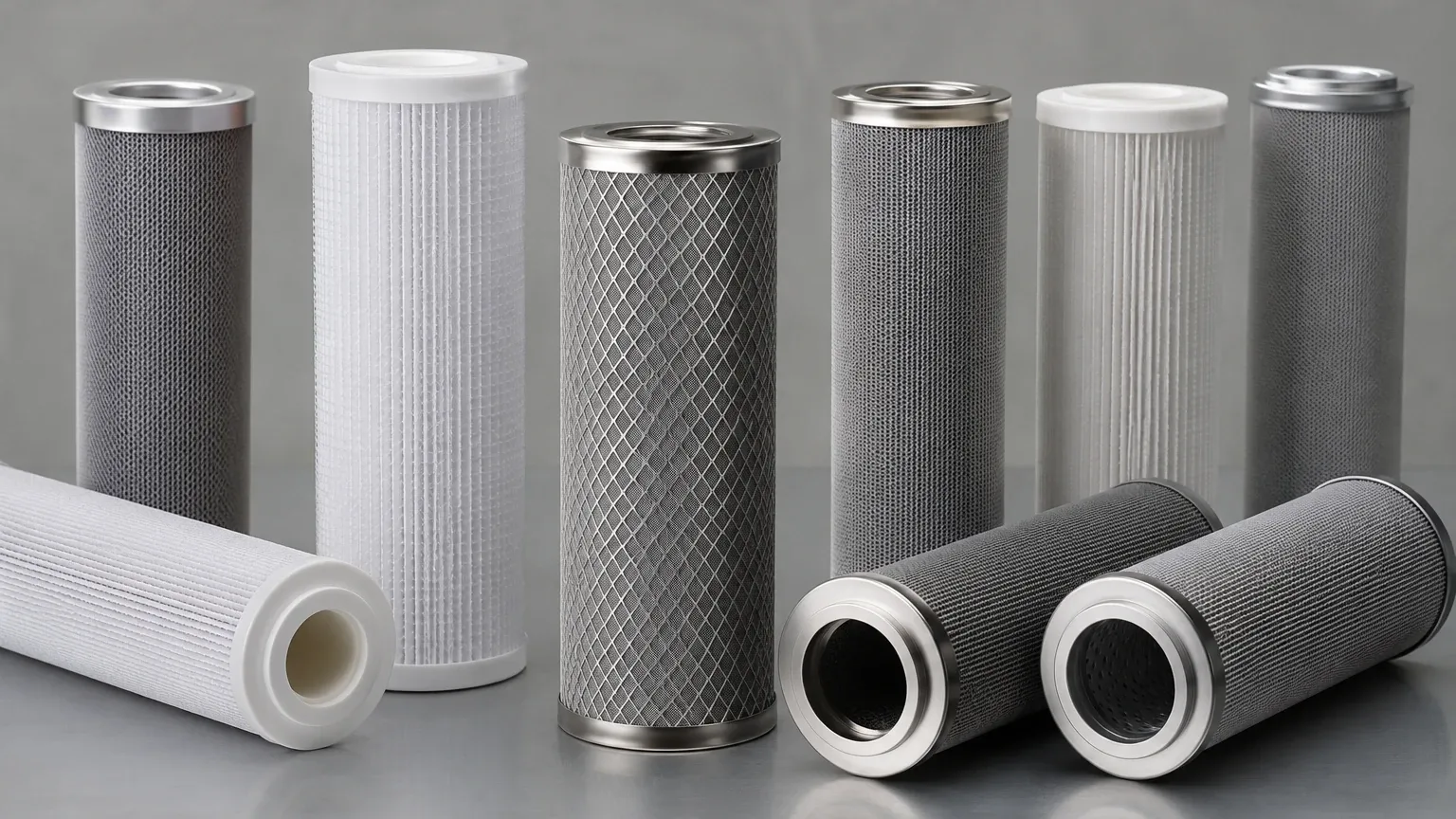
Stainless steel filter cartridges can be engineered to act as the containment vessel for GAC media. Using precision-engineered stainless steel wire mesh as the inner and outer support layers ensures that the carbon granules remain securely packed while allowing for maximum fluid permeability. The benefits of using stainless steel in GAC applications include:
* Thermal Stability: Stainless steel can withstand process temperatures that would soften or melt plastic cartridges.
* Chemical Compatibility: In solvent recovery or aggressive chemical filtration, stainless steel prevents leaching and maintains its mechanical properties.
* Durability: Metal housings are resistant to pressure spikes and hydraulic shock, which can cause plastic cartridges to crack or bypass.
For specialized OEM requirements, customizing the mesh size of the stainless steel support is necessary to prevent "fines migration"—the shedding of small carbon particles into the downstream flow.
Performance Metrics and Breakthrough Analysis
Monitoring the performance of a filter cartridge gac is more complex than monitoring a standard particulate filter. In a sediment filter, a rising pressure drop indicates the filter is reaching the end of its life. In a GAC cartridge, the pressure drop may remain constant while the adsorption sites become fully saturated.
Breakthrough Point
The breakthrough point is the moment when the concentration of the contaminant in the effluent exceeds the allowable limit. To manage this, industrial operators must implement a regular sampling schedule or use online sensors (such as TOC analyzers or chlorine meters). Once breakthrough occurs, the GAC media is considered spent and the cartridge must be replaced.
Pressure Drop (Delta P)
While adsorption capacity is the primary metric, mechanical clogging can still occur if the influent contains high levels of suspended solids. In these cases, the GAC cartridge acts as a secondary mechanical filter, leading to an increase in Delta P. It is standard engineering practice to install a sediment pre-filter (such as a 5-micron pleated or depth cartridge) upstream of the GAC stage to protect the carbon pores from being blinded by silt or scale.
Common Risks and Mitigation in GAC Filtration
To ensure the longevity and safety of an industrial filtration system, several operational risks associated with GAC must be addressed during the design phase:
1. Channeling: If the GAC is not packed uniformly or if the cartridge is operated at inconsistent flow rates, the fluid may create "channels" or paths of least resistance through the media. This bypasses the majority of the carbon's surface area, leading to premature breakthrough. Proper cartridge design and steady-state flow control mitigate this risk.
2. Carbon Fines Migration: New GAC cartridges often contain a small amount of carbon dust (fines) created during shipping and handling. Upon startup, these fines can wash out into the system. Industrial systems should include a "rinse-to-drain" step during installation or a post-filter (typically a 1-micron or 5-micron stainless steel mesh filter) to capture these particles.
3. Bacterial Growth: Because GAC removes chlorine (a disinfectant) and traps organic matter (a food source), it can become a breeding ground for bacteria during periods of stagnation. In pharmaceutical or food-grade applications, the use of silver-impregnated carbon or regular steam sterilization of stainless steel cartridge assemblies may be required.
Customization and OEM Integration for Specialized Applications
Standard off-the-shelf GAC cartridges often fail to meet the rigorous demands of specialized industrial processes. For instance, in the aerospace or high-end chemical industries, the physical dimensions, end-cap configurations, and material specifications must be exact.
Kaifil specializes in providing customized filtration solutions that bridge the gap between standard media and high-performance industrial requirements. By utilizing advanced manufacturing techniques, it is possible to design Filter Cartridges that incorporate GAC media within bespoke stainless steel architectures. This allows for:
* Custom Micron Ratings for Support Mesh: Ensuring that even the finest GAC particles are retained.
* High-Pressure End Caps: Utilizing DOE (Double Open End), SOE (Single Open End) with 222 or 226 O-rings, or threaded connections to ensure a bypass-free seal.
* Variable Lengths: Constructing cartridges in non-standard lengths (e.g., 5-inch, 30-inch, or 40-inch) to fit existing proprietary housings.
When engineers consult with a manufacturer like Kaifil, they can define the specific chemical environment and mechanical stresses the filter will face. This collaborative approach ensures that the resulting filter cartridge gac solution is optimized for the total cost of ownership, balancing initial acquisition costs with service life and process reliability.
Conclusion: Making an Informed Purchasing Decision
Selecting the right filter cartridge gac requires a balance of chemistry and mechanical engineering. By focusing on the iodine number, contact time, and the structural integrity of the cartridge housing, technical professionals can ensure their systems operate at peak efficiency. For demanding industrial environments, moving away from standard plastic components toward custom stainless steel-supported filtration ensures durability and prevents costly process failures.
Before finalizing a purchase, engineers should confirm the chemical compatibility of the entire cartridge assembly, the expected breakthrough curve for their specific contaminant, and the necessity of pre-filtration or post-filtration stages. With the right technical specifications and a reliable manufacturing partner, GAC filtration remains one of the most effective methods for achieving high-purity process fluids in the modern industrial sector.
