


Metal Mesh Filter for Range Hood: A Technical Engineering Guide
In industrial and commercial ventilation, the management of airborne grease, moisture, and particulate matter is critical for maintaining both operational safety and equipment longevity. A high-performance metal mesh filter for range hood applications serves as the first line of defense in extraction systems, preventing the accumulation of flammable residues in ductwork and protecting downstream components like fans and motors. For engineers and procurement specialists, selecting the appropriate filtration media involves a deep understanding of material science, fluid dynamics, and mechanical design.
This guide explores the technical specifications, engineering considerations, and selection criteria for metal mesh filters, focusing on their role in demanding industrial environments where standard residential components fail to meet performance requirements.
1. Operating Principles of Metal Mesh Filtration
The primary function of a metal mesh filter in a range hood or ventilation canopy is the capture of grease through a process known as impingement. Unlike membrane filters that rely on sieving, metal mesh filters utilize a tortuous path to separate heavier particles from the airflow.
Impingement and Coalescence
As grease-laden air passes through the multiple layers of the filter, the air is forced to change direction rapidly. Because grease particles have higher inertia than air molecules, they cannot follow the sudden changes in airflow direction. Instead, they strike the metal surfaces of the mesh. Once these particles make contact, they adhere to the metal wire and coalesce into larger droplets. Eventually, gravity pulls these droplets down into a collection trough or grease cup.
Airflow Dynamics and Pressure Drop
Engineers must balance filtration efficiency with pressure drop. A denser mesh or more layers will capture more grease but will also increase the resistance to airflow. This resistance, measured as static pressure drop, requires the ventilation fan to work harder, increasing energy consumption and potentially reducing the total volumetric flow rate (CFM). High-quality industrial filters are designed to optimize the "open area" percentage to ensure maximum grease capture with minimal impedance to the exhaust system.
2. Material Selection for Industrial Environments
The choice of material is the most significant factor in determining the filter's service life and its resistance to chemical cleaning agents. While aluminum is common in light-duty applications, industrial-grade solutions typically require stainless steel or specialized alloys.
Stainless Steel (Grade 304 and 316)
Stainless steel is the industry standard for commercial kitchens and industrial processing plants.
- Grade 304: Offers excellent resistance to corrosion and high temperatures. It is the most common choice for standard commercial ventilation.
- Grade 316: Contains molybdenum, providing superior resistance to chlorides and acidic environments. This is often specified for chemical processing plants or coastal facilities where salt air is a concern.
Aluminum and Galvanized Steel
Aluminum filters are lightweight and cost-effective but are susceptible to damage from caustic cleaning chemicals. Galvanized steel provides some corrosion resistance but may eventually rust if the zinc coating is compromised during cleaning or through mechanical wear. For long-term durability and hygiene, stainless steel remains the preferred engineering choice.
3. Structural Design and Construction
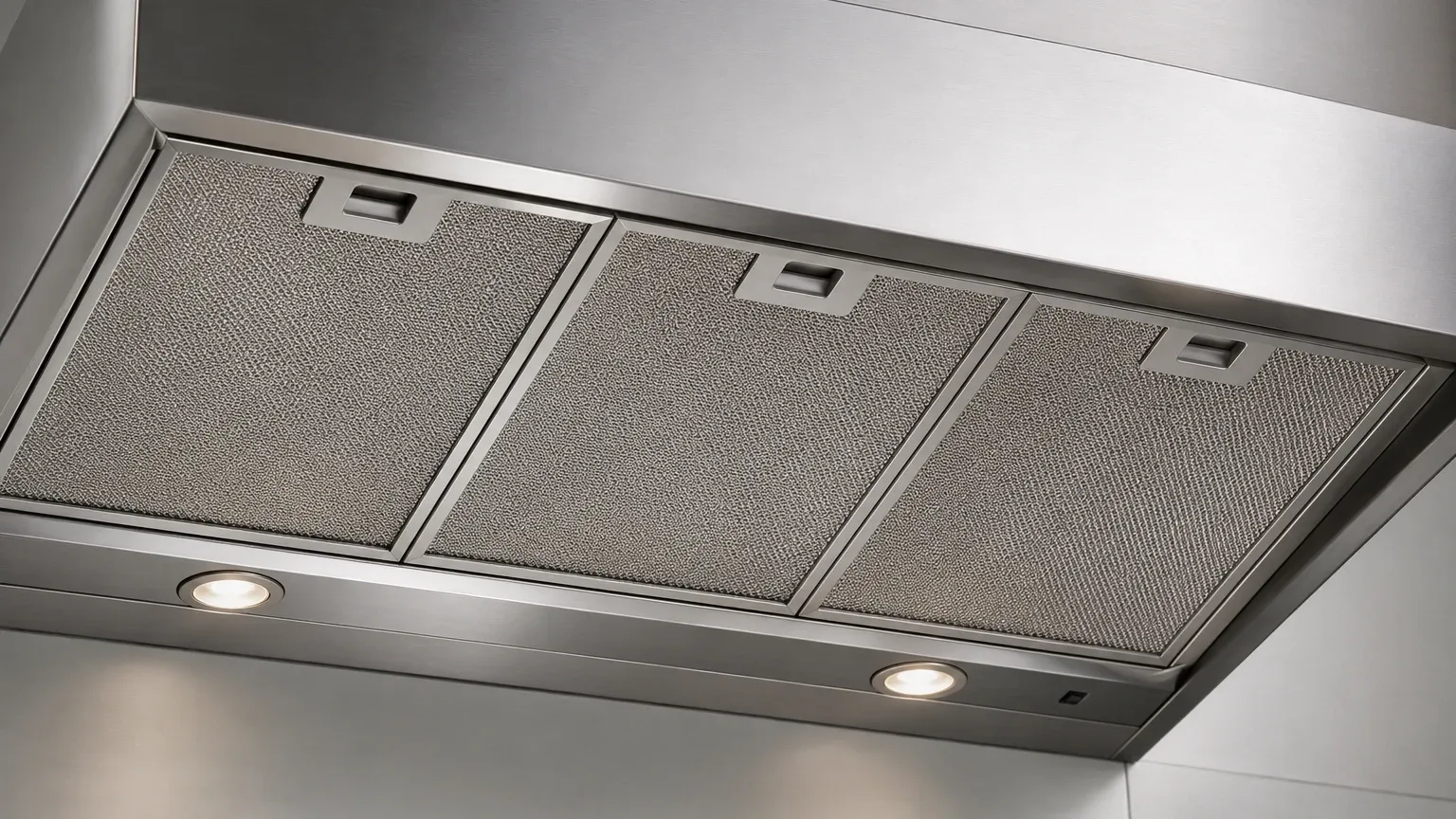
An industrial metal mesh filter for range hood systems is not a single sheet of material but a complex assembly designed for structural integrity.
Layering and Mesh Density
Most professional filters consist of several layers of expanded metal or woven wire mesh. These layers are often staggered or oriented at different angles to maximize the surface area for impingement. In precision applications, the mesh count (the number of openings per linear inch) and the wire diameter are carefully calculated to meet specific filtration grades.
Frame Integrity
The mesh pack is typically encased in a heavy-duty U-channel frame. This frame must be rigid enough to prevent the filter from vibrating or "whistling" under high-velocity airflow. In high-heat environments, the frame and the mesh must have compatible thermal expansion coefficients to prevent warping or structural failure over time.
4. Customization and OEM Integration
Every industrial ventilation system has unique requirements based on the volume of air, the type of contaminants, and the physical constraints of the hood. Manufacturers like Kaifil specialize in providing customized solutions that go beyond standard rectangular panels.
In many specialized industrial setups, filtration is required in different geometries. For instance, Wire Mesh Filter Cylinders & Tubes are often integrated into circular ducting or specialized extraction arms where a flat panel is not feasible. These cylindrical designs provide a larger surface area in a compact footprint, allowing for higher flow rates and longer intervals between maintenance cycles.
Customization options for engineers include:
- Variable Layering: Adjusting the number of mesh layers to meet specific grease extraction efficiency (GEE) targets.
- Custom Dimensions: Precision-engineered frames to fit non-standard hood apertures.
- Integrated Handles and Drainage: Adding hardware to facilitate easy removal and ensure grease flows correctly into collection systems.
- Specialized Coatings: Some applications may require hydrophobic or oleophobic coatings to improve drainage and cleaning efficiency.
5. Maintenance, Cleaning, and Total Cost of Ownership
One of the primary advantages of metal mesh filters over disposable media is their reusability. However, the ease of cleaning is a critical factor in the total cost of ownership (TCO).
Cleaning Protocols
In high-volume environments, filters must be cleaned daily or weekly. Stainless steel filters are compatible with high-temperature dishwashers and caustic degreasers, which would degrade aluminum filters. For deep cleaning, ultrasonic baths are highly effective at removing carbonized grease from the inner layers of the mesh pack.
Durability vs. Replacement Cycles
While the initial capital expenditure (CAPEX) for a high-quality stainless steel filter is higher than for aluminum or disposable options, the operational expenditure (OPEX) is significantly lower. A well-maintained stainless steel filter can last for years, whereas lower-quality options may warp, corrode, or lose filtration efficiency within months. Engineers should evaluate the TCO by factoring in the cost of replacement, labor for cleaning, and the impact on the downstream exhaust system's maintenance needs.
6. Selection Criteria for Technical Buyers
When specifying or purchasing a metal mesh filter for range hood applications, international buyers and engineers should confirm the following technical details with the manufacturer:
1. Material Certification: Ensure the alloy (e.g., SS304) meets international standards for corrosion resistance and food safety if applicable.
2. Filtration Efficiency: Request data on grease capture percentage at specific face velocities.
3. Pressure Drop Curves: Obtain charts showing the relationship between airflow (CFM) and static pressure drop (inches of water gauge).
4. Temperature Limits: Confirm the maximum operating temperature, especially for heavy-duty cooking or industrial heat-treating processes.
5. Compliance: Ensure the filter meets relevant fire safety standards (such as UL 1046 in the US or equivalent international standards), which require filters to act as flame baffles to prevent fire from entering the ductwork.
Conclusion
The selection of a metal mesh filter is a critical engineering decision that impacts the safety, efficiency, and maintenance profile of an industrial ventilation system. By prioritizing high-grade materials like stainless steel and considering the benefits of customized geometries—such as those found in specialized Wire Mesh Filter Cylinders & Tubes—facilities can ensure optimal performance in the most demanding environments.
Kaifil continues to support the global industrial sector by providing precision-engineered filtration components tailored to specific application needs. Whether for commercial kitchens, chemical processing, or general industrial exhaust, a robust metal mesh filtration strategy is essential for protecting infrastructure and maintaining operational continuity.
