


Menards Water Filter Cartridges
Water filtration is a critical component in both residential maintenance and industrial process management. For many facility managers and small-scale operators, sourcing replacement components often begins at large-scale home improvement retailers. Menards water filter cartridges represent a common starting point for those seeking accessible solutions for sediment reduction, chlorine removal, and basic water conditioning. However, as applications scale in complexity and technical demand, the distinction between retail-grade consumables and industrial-engineered filtration components becomes vital for operational efficiency.
Understanding the specifications, limitations, and performance metrics of standard retail cartridges allows engineers and purchasing teams to determine whether a standard off-the-shelf product suffices or if a more robust, specialized solution is required to protect downstream equipment and ensure product purity.
Understanding Menards Water Filter Cartridges and Retail Standards
The selection of water filter cartridges at retailers like Menards typically focuses on point-of-entry (POE) and point-of-use (POU) systems. These products are generally designed for municipal water treatment or well water applications where the primary goals are the removal of suspended solids, taste and odor improvement, and the protection of plumbing fixtures.
Most retail cartridges fall into several standard categories:
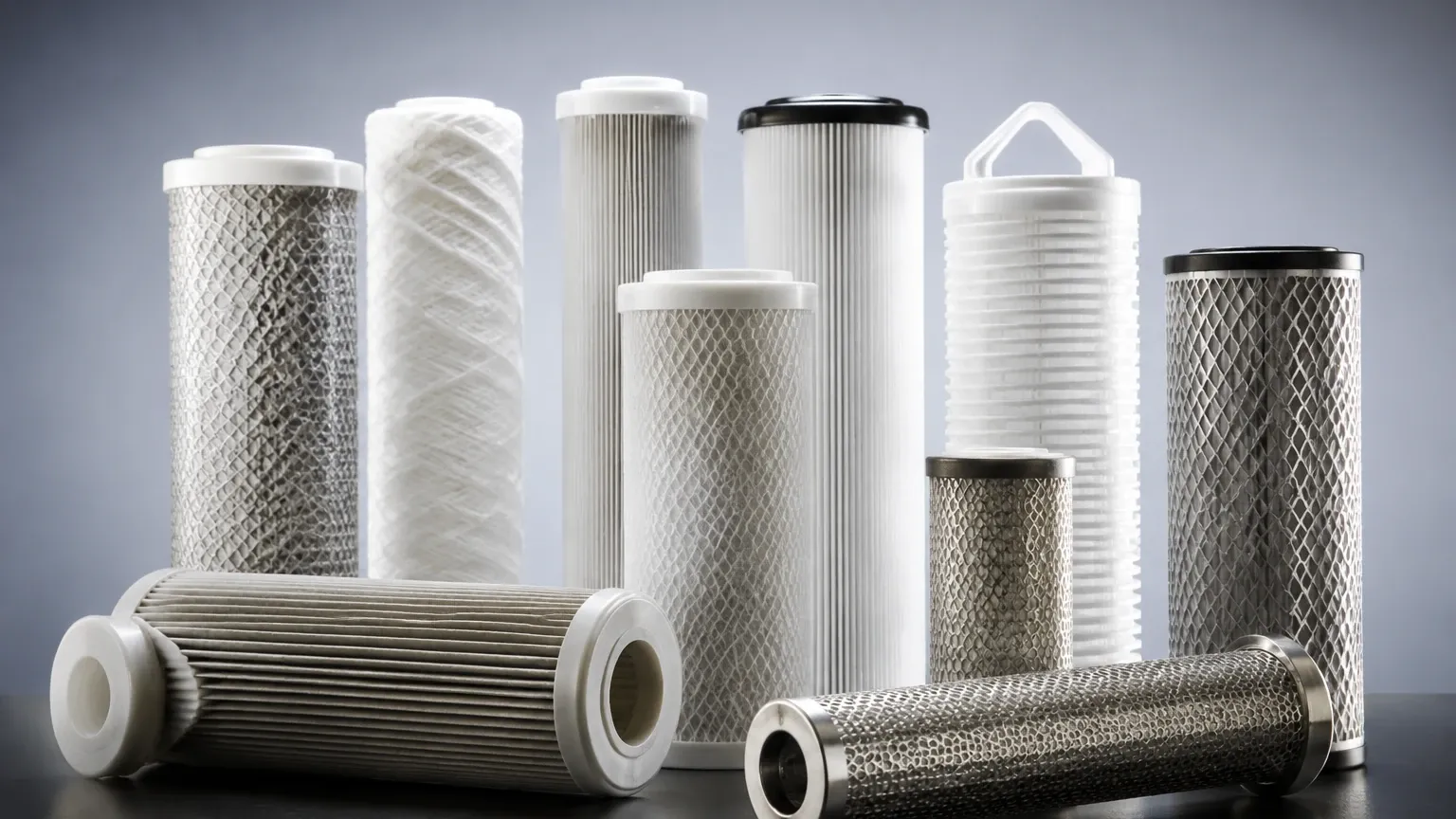
* Sediment Filters: Usually constructed from melt-blown polypropylene or pleated polyester, these are designed to trap sand, silt, and rust. They are rated by micron size, often ranging from 1 to 50 microns.
* Carbon Block and GAC Filters: Granular Activated Carbon (GAC) or extruded carbon blocks are used primarily for chemical adsorption, targeting chlorine, volatile organic compounds (VOCs), and unpleasant odors.
* Specialty Cartridges: These may include phosphate-based filters for scale inhibition or iron-reduction filters for well water systems.
While these Filter Cartridges are effective for residential flow rates and standard pressures, industrial environments often introduce variables—such as high temperatures, aggressive chemicals, and extreme pressure differentials—that exceed the mechanical limits of standard retail materials.
Technical Evaluation Criteria for Industrial Filtration
When evaluating any filtration component, including those sourced from retail environments, engineers must look beyond the brand name and focus on technical data sheets. The following criteria are essential for determining the suitability of a filter for a specific application:
Micron Rating: Nominal vs. Absolute
Most menards water filter cartridges are rated "nominally." A nominal rating indicates the filter can trap a certain percentage of particles of a given size (e.g., 85% of 5-micron particles). In precision industrial processes, an "absolute" rating is often required, ensuring that 99.9% (Beta 5000) of particles at the specified micron level are retained. Using a nominal filter in a process requiring absolute filtration can lead to downstream contamination and equipment failure.
Flow Rate and Pressure Drop (Delta P)
Every filter media creates resistance to flow. As the filter loads with contaminants, this resistance increases. Retail cartridges are often optimized for low-flow residential plumbing (3–10 GPM). In industrial settings where flow rates might exceed 50 GPM per housing, the initial pressure drop must be calculated to ensure the pump system can handle the load as the cartridge reaches its terminal pressure drop.
Chemical and Thermal Compatibility
Standard retail cartridges often use plastic end caps and adhesives that may degrade when exposed to industrial solvents, high-temperature feed water, or caustic cleaning agents. For example, a standard polypropylene melt-blown filter may lose structural integrity at temperatures exceeding 140°F (60°C), whereas stainless steel alternatives can withstand temperatures upwards of 500°F.
Industrial vs. Residential Filter Cartridges: Material Science
The primary difference between standard retail offerings and industrial-grade solutions lies in the material science and construction methods. While Menards provides high-quality consumer brands like OmniFilter or Culligan, these are typically disposable items intended for low-stakes environments.
Polypropylene and Cellulose
These materials are common in retail cartridges. They are cost-effective and excellent for one-time use in sediment removal. However, they are prone to "media migration," where fibers from the filter itself can break off and enter the process stream—a significant risk in pharmaceutical or food and beverage production.
Stainless Steel and Metal Mesh
In contrast to disposable plastic filters, industrial manufacturers like Kaifil specialize in stainless steel filtration. Stainless steel Filter Cartridges offer several advantages over retail counterparts:
1. Cleanability: Unlike disposable cartridges that must be discarded once clogged, stainless steel mesh and sintered metal filters can be backwashed or ultrasonically cleaned, significantly reducing long-term waste and replacement costs.
2. Structural Integrity: Metal filters do not suffer from "unloading," a phenomenon where high pressure forces trapped contaminants through a soft filter media.
3. Sustainability: For facilities focused on ESG (Environmental, Social, and Governance) goals, moving away from monthly disposable plastic cartridges toward permanent, cleanable metal elements is a strategic advantage.
Common Risks and Limitations in Industrial Settings
Using retail-grade menards water filter cartridges in a B2B or industrial context carries specific risks that can impact the total cost of ownership (TCO).
Bypass and Seal Failure
Industrial filter housings often use specific end-cap configurations (such as 222 or 226 O-ring styles) to ensure a positive seal. Many retail cartridges are "Double Open End" (DOE) and rely on compression gaskets. In high-vibration or high-pressure industrial systems, DOE gaskets can shift, allowing unfiltered water to bypass the cartridge entirely.
Frequent Replacement Cycles
Retail filters are designed for the sediment load of a typical household. In an industrial process with high solids loading, these cartridges may blind (clog) within hours rather than months. The labor cost associated with frequent filter changes often far outweighs the initial savings of buying a cheaper retail cartridge.
Lack of Documentation and Traceability
Industrial applications, particularly in the pharmaceutical and food sectors, require material traceability (MTRs) and compliance certifications (such as FDA or USP Class VI). Retail products rarely provide the level of documentation necessary for strict regulatory audits.
Customization and Engineering Considerations
One of the primary limitations of sourcing from a retail inventory is the lack of customization. Industrial filtration often requires bespoke solutions tailored to specific fluid dynamics. When moving beyond standard menards water filter cartridges, engineers can specify several variables:
* End-Cap Geometry: Customizing the interface to fit existing housings, whether they require spear ends, fin ends, or specific O-ring materials like Viton or EPDM.
* Reinforcement: Adding internal cores or external cages to prevent cartridge collapse under high differential pressure.
* Multi-Layered Media: Combining different mesh sizes within a single cartridge to provide graduated filtration, which extends the life of the inner fine-filtration layer.
By working with a manufacturer that provides OEM capabilities, companies can develop filtration components that are purpose-built for their specific machinery, rather than forcing a standard retail product into a role it wasn't designed for.
Total Cost of Ownership (TCO) Analysis
When deciding between a standard retail cartridge and an industrial-engineered solution, the purchase price is only one part of the equation. A comprehensive TCO analysis should include:
1. Acquisition Cost: The unit price of the filter.
2. Disposal Costs: The expense and environmental impact of discarding used cartridges (especially if they have filtered hazardous materials).
3. Labor Costs: The man-hours required for frequent filter changes and system downtime.
4. Downstream Impact: The cost of repairing or replacing sensitive equipment (like RO membranes or high-pressure nozzles) that may be damaged by poor filtration.
While a retail cartridge might cost $20 and an industrial stainless steel cartridge might cost $200, the stainless steel version may last for years with proper cleaning, whereas the retail version may require weekly replacement. Over a five-year period, the industrial solution is almost always the more cost-effective choice for high-demand applications.
Conclusion: Making the Right Selection
Menards water filter cartridges serve an essential role in the consumer market and for basic utility water needs in small facilities. They offer convenience and immediate availability for standard sediment and chlorine issues. However, for technical professionals managing industrial processes, the limitations of retail-grade materials and nominal ratings must be carefully weighed against the requirements of the application.
For those seeking high-performance, durable, and cleanable solutions, transitioning to professional Filter Cartridges engineered from stainless steel or precision-grade polymers is a necessary step. By prioritizing material compatibility, absolute filtration ratings, and structural integrity, engineers can ensure long-term system reliability and optimized process performance. When the stakes include equipment longevity and product purity, the move from retail consumables to engineered filtration components is an investment in operational excellence.
