


China Fuel Filters Manufacturer
In the global industrial landscape, the role of a China fuel filters manufacturer has evolved from providing low-cost components to delivering high-precision, engineered filtration solutions. For industries ranging from marine propulsion and power generation to heavy construction and chemical processing, the integrity of fuel filtration systems is a critical factor in equipment longevity and operational efficiency. Selecting the right manufacturing partner involves more than comparing price points; it requires a deep understanding of material science, filtration physics, and the specific demands of industrial fuel systems.
Industrial fuel filters must withstand rigorous conditions, including high pressure, fluctuating temperatures, and exposure to corrosive chemical additives. As global supply chains continue to integrate, technical professionals and purchasing teams are increasingly looking toward specialized manufacturers in China to provide custom stainless steel filtration components that meet international standards. This guide explores the technical considerations, evaluation criteria, and engineering advantages associated with sourcing from a professional manufacturer in this sector.
The Technical Role of Stainless Steel in Industrial Fuel Filtration
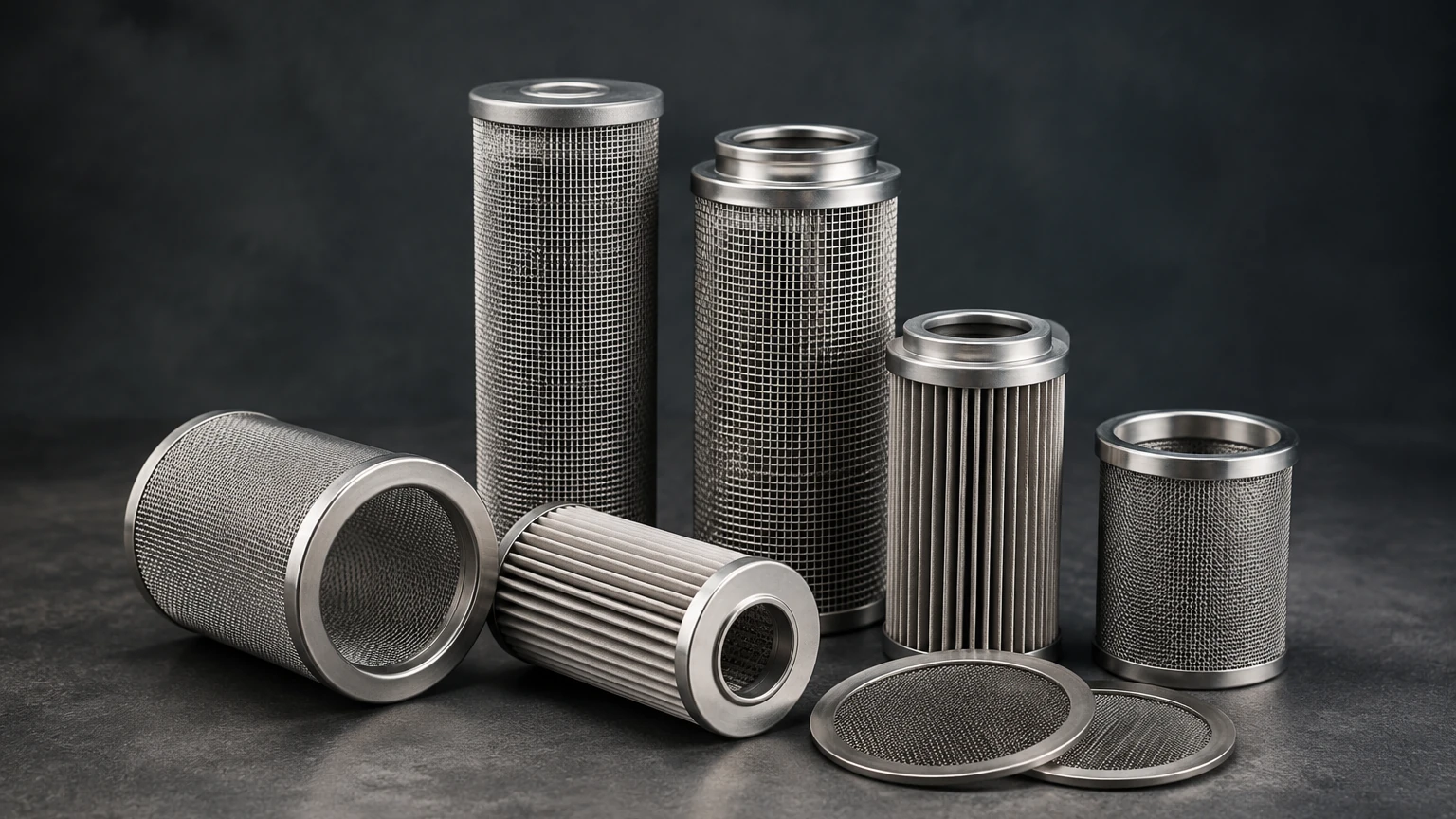
While standard automotive fuel filters often rely on pleated paper or synthetic fibers, industrial-grade fuel filtration frequently demands the use of stainless steel. A specialized China fuel filters manufacturer like Kaifil focuses on stainless steel wire mesh and sintered metal components because of their inherent durability and chemical resistance.
Material Integrity and Chemical Compatibility
Stainless steel, particularly grades 304 and 316L, offers superior resistance to the corrosive elements found in modern fuels. With the increasing use of biodiesels and high-sulfur heavy fuel oils (HFO) in maritime and industrial applications, the risk of chemical degradation in filter media is high. Stainless steel does not react with fuel additives or moisture, ensuring that the filter media does not break down and introduce contaminants into the fuel stream.
Thermal and Pressure Stability
Industrial fuel systems often operate under significant pressure and varying temperatures. Unlike polymer-based media, stainless steel wire mesh maintains its structural integrity under high differential pressure. This prevents media migration—a phenomenon where bits of the filter material detach and enter the engine or burner—which can cause catastrophic failure in high-precision fuel injectors.
Key Performance Indicators for Industrial Fuel Filters
When evaluating products from a China fuel filters manufacturer, engineers must prioritize specific performance metrics to ensure the selected component matches the application’s requirements. Understanding these KPIs is essential for optimizing the filtration process and protecting downstream equipment.
Micron Rating: Absolute vs. Nominal
One of the most critical specifications is the micron rating. It is vital to distinguish between nominal and absolute ratings. A nominal rating refers to the filter's ability to retain a percentage of particles of a certain size, whereas an absolute rating indicates that 99.9% (or a specific Beta ratio) of particles above that size will be captured. For high-pressure common rail (HPCR) diesel engines, absolute filtration is often required to prevent microscopic particles from eroding injector nozzles.
Dirt-Holding Capacity and Pressure Drop
The efficiency of a filter is also measured by its dirt-holding capacity—the amount of contaminant it can trap before the pressure drop (delta P) reaches a critical level. A well-designed filter maximizes surface area through pleating or multi-layered mesh structures. This reduces the initial pressure drop, allowing the system to operate more efficiently and extending the interval between maintenance cycles.
Evaluating a China Fuel Filters Manufacturer: Quality and Compliance
Sourcing from international markets requires a robust verification process. A reliable manufacturer should demonstrate transparency in their production processes and adherence to recognized quality management systems.
Material Traceability and Certification
For industrial applications, material traceability is non-negotiable. Professional manufacturers provide Material Test Reports (MTRs) that confirm the chemical composition of the stainless steel used. This ensures that the "316L" mesh ordered is actually 316L, providing the expected corrosion resistance. Compliance with ISO 9001 standards is a baseline requirement, but specific industry certifications (such as those for marine or pressure vessel applications) may also be necessary.
Advanced Testing Capabilities
Technical professionals should inquire about the manufacturer’s internal testing protocols. Reliable manufacturers utilize bubble point tests to verify the integrity of the filter mesh and pore size. They may also conduct collapse pressure tests and flow fatigue tests to simulate the stresses of a real-world industrial environment. These tests ensure that the filter will not fail prematurely under the pulsing pressures of a hydraulic or fuel delivery system.
The Benefits of Customization and OEM Solutions
Standard off-the-shelf filters rarely meet the specific needs of specialized industrial machinery. Working with a manufacturer that offers OEM and customized filtration solutions allows engineers to tailor the filter to the exact spatial and performance constraints of their equipment.
Bespoke Engineering and Design
Customization involves more than just changing the dimensions of a filter cartridge. It includes selecting the optimal weave type (such as plain, twill, or dutch weave) for the wire mesh to balance flow rate and filtration accuracy. A professional China fuel filters manufacturer can also customize the end caps, internal support cores, and sealing mechanisms (O-rings or gaskets) to ensure compatibility with the housing and the fluid being filtered.
Prototyping and Scalability
For new equipment development, the ability to produce small-batch prototypes for testing is invaluable. Once the design is validated, the manufacturer should have the capacity to scale up to full production while maintaining consistent quality across every unit. This flexibility is a hallmark of a mature manufacturing partner.
Maintenance, Cleaning, and Total Cost of Ownership
One of the primary advantages of stainless steel filters produced by a specialized manufacturer is their cleanability. Unlike disposable cartridges, stainless steel wire mesh filters can often be cleaned and reused, which significantly impacts the total cost of ownership (TCO).
Cleaning Methods for Stainless Steel Mesh
Depending on the nature of the contaminants, stainless steel filters can be cleaned using ultrasonic baths, backwashing, or chemical solvents. This reusability reduces waste and long-term procurement costs. However, it is essential for the manufacturer to provide guidelines on the maximum number of cleaning cycles to ensure the mesh does not suffer from fatigue or permanent clogging.
Long-Term Operational Savings
While the initial investment in a stainless steel filter from a China fuel filters manufacturer may be higher than a disposable alternative, the reduction in replacement frequency and the protection provided to expensive engine components result in lower overall costs. By minimizing downtime and extending service intervals, these high-quality components contribute to a more efficient operation.
Strategic Sourcing: Navigating the Selection Process
To successfully partner with a manufacturer, purchasing teams should establish a clear communication channel regarding technical specifications and delivery expectations. The following steps can help streamline the sourcing process:
1. Define Technical Requirements: Clearly state the fluid type, flow rate, operating temperature, maximum allowable pressure drop, and required micron rating.
2. Request Technical Drawings: Before production, review detailed engineering drawings to confirm dimensions and tolerances.
3. Audit the Quality Process: Ask for documentation regarding QC steps, from raw material inspection to final product testing.
4. Confirm Logistics and Lead Times: Understand the production timeline and shipping methods to ensure the components arrive when needed for assembly or maintenance schedules.
For those seeking comprehensive information on industrial filtration components and customized engineering support, visiting the Main Page of a dedicated manufacturer can provide deeper insights into product ranges and technical capabilities.
Conclusion
In the demanding world of industrial fuel systems, the quality of filtration is a deciding factor in the reliability of the entire operation. Sourcing from a specialized China fuel filters manufacturer offers access to advanced materials, precision engineering, and cost-effective customization. By focusing on technical benchmarks such as material integrity, micron accuracy, and structural durability, engineers and purchasing professionals can secure filtration solutions that protect their equipment and optimize performance. As the industry moves toward more complex fuel types and stricter emissions standards, the partnership between equipment manufacturers and specialized filter producers will only become more vital.
