


Replacement Filter Ninja Coffee Maker
In both commercial and high-end residential brewing environments, the quality of the final beverage is inextricably linked to the efficiency and precision of the filtration system. When searching for a replacement filter ninja coffee maker, users are often looking for a balance between durability, cost-effectiveness, and the sensory profile of the coffee. While many consumer-grade machines originally ship with paper filters or basic plastic-housed mesh, the industrial perspective favors permanent, high-precision stainless steel solutions.
For engineers and procurement teams involved in the maintenance of commercial brewing equipment or the development of OEM beverage systems, understanding the technical specifications of Filter Cartridges is essential. Moving beyond disposable options toward permanent metal filtration components offers significant advantages in terms of flow consistency, chemical resistance, and long-term sustainability.
Understanding Filtration Mechanisms in Coffee Brewing
Filtration in a coffee maker is not merely about keeping grounds out of the cup; it is a complex process of selective separation. The goal is to allow water-soluble compounds and essential oils to pass through while retaining insoluble solids (fines).
In the context of a replacement filter ninja coffee maker, the choice of filter medium dictates the body and clarity of the coffee. Paper filters are effective at removing almost all sediment and many of the coffee oils, resulting in a "clean" but sometimes thinner mouthfeel. Conversely, stainless steel wire mesh filters allow more oils and micro-fines to pass through, producing a richer, more full-bodied beverage. From an engineering standpoint, this is managed by controlling the micron rating and the open area of the mesh.
Surface vs. Depth Filtration
Most coffee filters, including those used in Ninja systems, operate on the principle of surface filtration. The particles are trapped on the surface of the mesh or paper. In industrial applications, stainless steel filter cartridges provide a rigid surface that does not deform under the pressure of the brewing cycle, ensuring that the pore size remains constant throughout the life of the filter.
Materials and Construction: The Case for Stainless Steel
When evaluating a replacement filter ninja coffee maker, material selection is the most critical factor for durability and hygiene. While plastic-framed filters are common, they are susceptible to thermal degradation over time and can harbor bacteria if the surface becomes scratched.
304 vs. 316L Stainless Steel
Stainless steel is the gold standard for food and beverage filtration.
* Type 304: This is the most common grade used in kitchen environments. It offers excellent corrosion resistance and is highly durable for standard brewing temperatures.
* Type 316L: For industrial-grade brewing or environments where aggressive cleaning agents are used, 316L provides superior resistance to pitting and chloride corrosion.
At Kaifil, we emphasize the use of high-quality alloys to ensure that the filter cartridge does not impart any metallic taste to the beverage—a common concern with lower-quality metal filters. The structural integrity of a stainless steel mesh filter ensures that it can withstand thousands of brewing cycles and high-pressure cleaning without losing its shape or filtration accuracy.
Key Evaluation Criteria for Replacement Filter Cartridges
Selecting a replacement filter requires looking beyond simple dimensions. To achieve optimal performance, several technical parameters must be considered:
1. Mesh Count and Micron Rating
The mesh count refers to the number of openings per linear inch. For coffee filtration, a mesh count between 100 and 400 is typical. A finer mesh (higher count) results in a lower micron rating, which traps smaller particles. Most permanent coffee filters target a range of 60 to 100 microns. This allows for the passage of flavorful oils while preventing the "muddy" sediment often associated with poor-quality metal filters.
2. Weave Type
The style of the weave affects both the flow rate and the strength of the filter.
* Plain Weave: The simplest and most common, providing a straight-through path for the liquid.
* Dutch Weave: Offers a more tortuous path and higher strength, often used in pressurized brewing systems where higher structural rigidity is required.
3. Effective Filtration Area (EFA)
The EFA determines how quickly the water can pass through the grounds. A filter with a higher EFA will reduce the backpressure on the coffee maker’s pump and prevent over-extraction, which can lead to bitterness. When designing custom filter cartridges, maximizing the open area without compromising the mesh's strength is a primary engineering goal.
Performance Expectations and Maintenance Cycles
One of the primary drivers for seeking a replacement filter ninja coffee maker is the failure of the original component. Permanent stainless steel filters are designed to be a one-time purchase, but their performance depends heavily on proper maintenance.
Preventing Clogging and Calcification
Over time, coffee oils and calcium deposits from hard water can build up within the microscopic openings of the mesh. Unlike paper filters, which are discarded, a stainless steel cartridge must be cleaned regularly. In industrial settings, this is often achieved through ultrasonic cleaning or backwashing. For commercial coffee applications, a daily soak in a food-safe degreaser is recommended to maintain the integrity of the micron openings.
Structural Longevity
A well-manufactured stainless steel filter should not fray or separate from its frame. At Kaifil, we utilize advanced welding and bonding techniques to ensure that the wire mesh is securely integrated into the cartridge housing. This prevents "bypass," where unfiltered water escapes around the edges of the filter—a common flaw in cheaply made replacement parts.
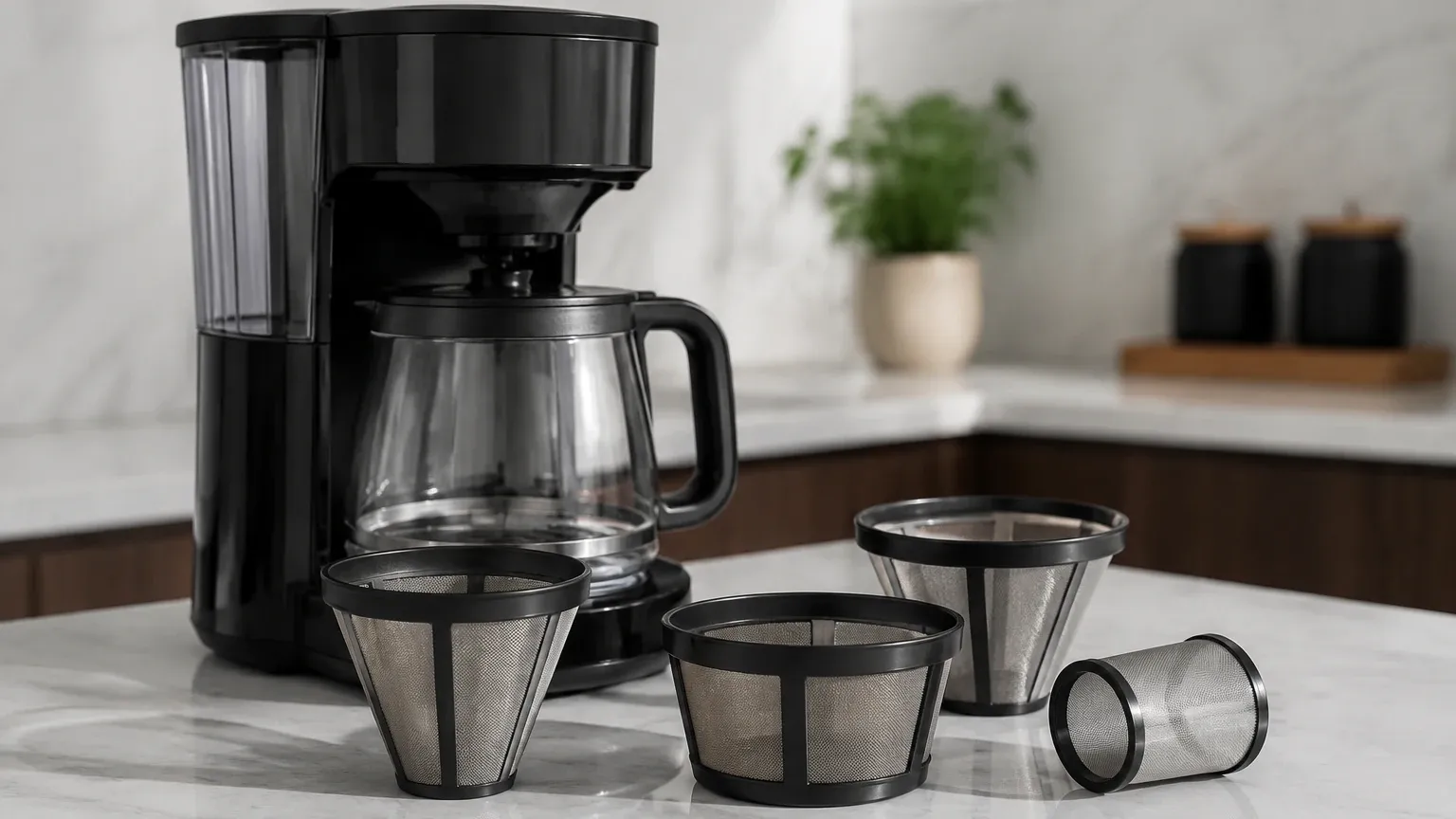
Customization Options for OEM and Commercial Systems
For manufacturers of brewing equipment or large-scale catering operations, off-the-shelf solutions may not always meet specific flow or aesthetic requirements. Customization of filter cartridges allows for optimization of the brewing profile.
* Bespoke Geometry: Filters can be engineered to fit unique basket shapes, ensuring a perfect seal and preventing bypass.
* Reinforced Structures: For high-volume commercial machines, adding a perforated metal support layer to the fine mesh can prevent deformation under high flow rates.
* Surface Treatments: Electropolishing can be applied to the stainless steel to create an ultra-smooth surface, making it even more resistant to oil buildup and easier to clean.
By working with a specialized manufacturer, companies can develop filtration components that are tailored to the specific grind size and water temperature of their machines, resulting in a superior end product.
Total Cost of Ownership: Permanent vs. Disposable Filters
While the initial cost of a high-quality stainless steel replacement filter ninja coffee maker is higher than a pack of paper filters, the long-term economics favor the permanent solution.
1. Elimination of Recurring Costs: A single stainless steel filter can replace thousands of paper filters over its lifespan.
2. Reduced Waste: For organizations with sustainability mandates, eliminating disposable paper waste is a significant benefit.
3. Consistency: Unlike paper, which can vary in thickness and porosity between batches, a precision-engineered metal mesh provides identical performance every time it is used.
4. Operational Efficiency: In a commercial environment, reducing the need to manage inventory for disposable filters simplifies the supply chain.
Engineering the Future of Beverage Filtration
As the demand for high-quality, specialty coffee grows, the role of the filter becomes even more prominent. Whether you are looking for a replacement filter ninja coffee maker for a single machine or sourcing industrial-scale filtration components for a new product line, the focus must remain on precision and material quality.
Stainless steel wire mesh offers a level of control that other materials simply cannot match. By selecting the correct mesh weave, material grade, and construction method, you ensure that the filtration process enhances the flavor profile rather than detracting from it.
For those seeking reliable, high-performance filtration solutions, Kaifil provides the technical expertise and manufacturing capability to deliver custom components that meet the most demanding industrial standards. From initial design and material selection to final production, our focus is on providing durable, precise, and cost-effective filtration that stands the test of time.
