


Ro Filter Cartridge Near Me
In the industrial landscape, the search for a "ro filter cartridge near me" often marks the beginning of a critical procurement process for water treatment and process fluid purification. While the phrase is frequently associated with residential water systems, for engineers and facility managers in the chemical, pharmaceutical, and food and beverage sectors, it represents a search for high-performance components that protect multi-million dollar Reverse Osmosis (RO) membranes.
Reverse Osmosis is a pressure-driven membrane separation technology used to remove ions, molecules, and larger particles from drinking water and industrial process water. However, the RO membrane itself is highly sensitive to fouling and physical damage from suspended solids. This is where high-quality Filter Cartridges serve as the essential first line of defense. Selecting the right cartridge is not merely about proximity; it is about technical compatibility, material integrity, and long-term operational efficiency.
Understanding the Role of Filter Cartridges in RO Systems
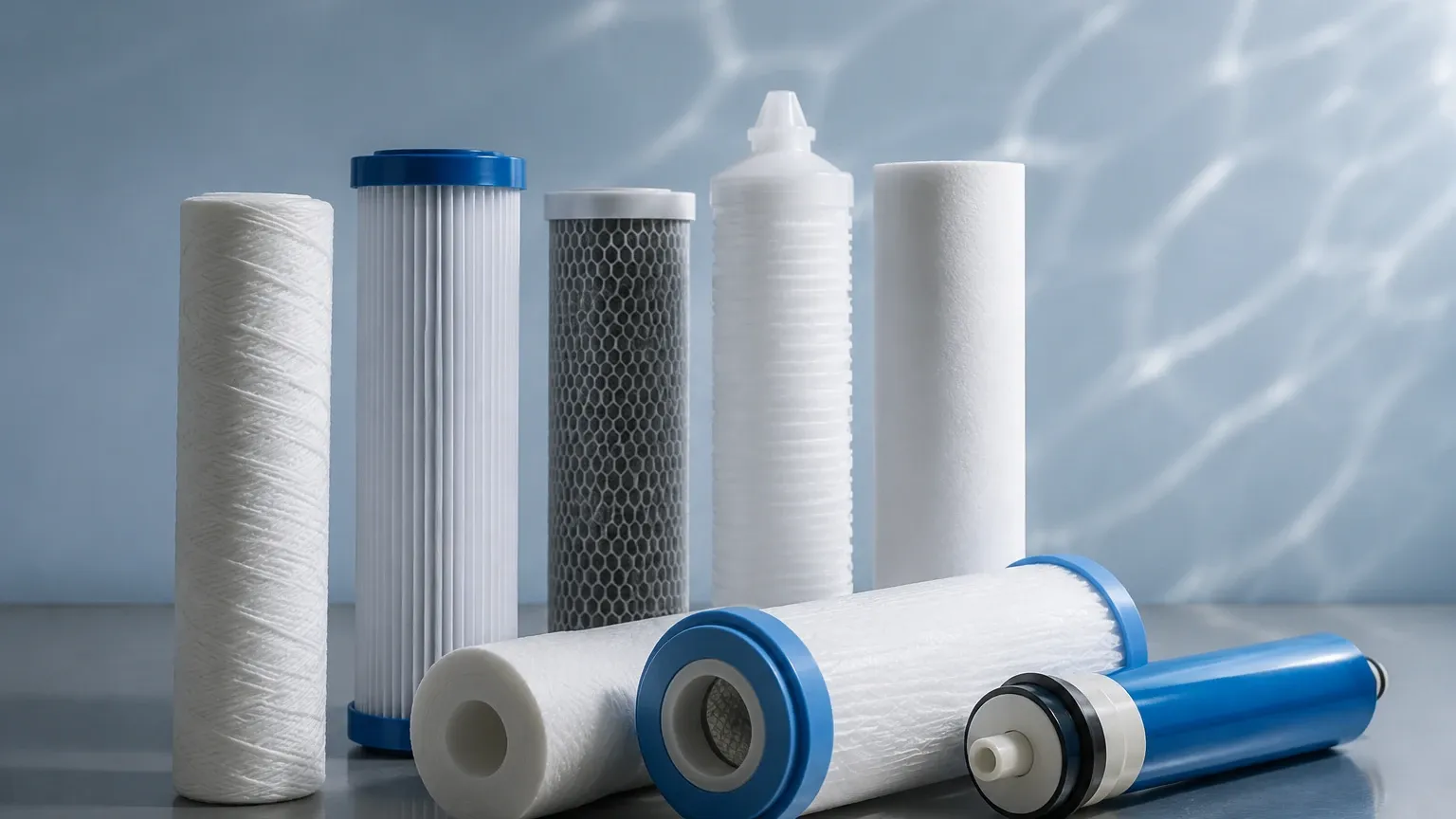
Industrial RO systems operate under significant pressure and require consistent feed water quality to maintain flux rates and salt rejection percentages. The filter cartridge, typically installed in a pre-filtration housing, is responsible for removing silt, sand, rust, and other particulate matter that could cause "scaling" or "fouling" on the membrane surface.
There are two primary stages where filter cartridges interact with an RO system:
1. Pre-Filtration: This is the most critical stage. Cartridges with specific micron ratings (typically 1 to 5 microns) are used to ensure the Silt Density Index (SDI) of the feed water remains within the RO membrane manufacturer's specifications. Failure at this stage leads to frequent membrane cleanings and premature membrane replacement.
2. Post-Filtration: In high-purity applications, such as pharmaceutical grade water or semiconductor manufacturing, cartridges may be used after the RO stage to capture any remaining trace particulates or to prevent bacterial regrowth in storage tanks.
When searching for an "ro filter cartridge near me," industrial buyers must distinguish between standard melt-blown polypropylene filters and high-durability options like stainless steel wire mesh or sintered metal cartridges, which offer superior mechanical strength and temperature resistance.
Why Sourcing "Near Me" May Not Meet Industrial Requirements
For a maintenance engineer, the convenience of a local supplier is undeniable. However, the technical demands of industrial filtration often exceed the inventory of general local distributors. Industrial-grade filtration requires a deep understanding of fluid dynamics and material science that specialized manufacturers like Kaifil provide.
The Limitation of Local Retail Stocks
Most local suppliers stock "commodity" filters—standard sizes with broad tolerances. Industrial RO systems often require:
* High Flow Rates: Standard cartridges may cause excessive pressure drops, reducing the efficiency of the RO high-pressure pump.
* Chemical Compatibility: In chemical processing, the feed water might contain solvents or high-temperature fluids that degrade standard plastic filters.
* Precision Micron Ratings: A nominal 5-micron filter from a local hardware store does not offer the same efficiency as an absolute-rated industrial cartridge designed for membrane protection.
By moving beyond a local search and engaging directly with a manufacturer, engineers can access customized solutions that are engineered for specific flow rates and contaminant loads, ensuring the RO system operates at peak performance.
Technical Specifications for Industrial RO Pre-Filtration
When evaluating Filter Cartridges for RO applications, several technical parameters must be confirmed to ensure system longevity.
Micron Rating: Nominal vs. Absolute
In the context of RO protection, the distinction between nominal and absolute ratings is vital. A nominal rating indicates the filter can trap a large percentage of particles of a given size, whereas an absolute rating guarantees the removal of nearly 100% of particles at that size. For high-stakes RO systems, absolute-rated cartridges are preferred to prevent membrane abrasion.
Differential Pressure (ΔP)
Every filter introduces a pressure drop. As the cartridge loads with contaminants, the differential pressure increases. Industrial-grade cartridges are designed with optimized pleating or pore structures to provide a high surface area, which minimizes the initial pressure drop and extends the time between filter changes.
End Cap Configurations
Standard RO housings require specific end cap styles to ensure a bypass-free seal. Common configurations include:
* DOE (Double Open End): Requires flat gaskets at both ends.
* Code 7 (226 O-ring/Fin): Features a locking tab and double O-rings for high-purity applications.
* Code 3 (222 O-ring/Flat): Utilizes double O-rings for a secure seal without a locking tab.
Material Selection: Stainless Steel vs. Polymeric Cartridges
While polypropylene (PP) is the most common material for RO pre-filters due to its low cost, stainless steel filter cartridges are increasingly preferred in demanding industrial environments.
Advantages of Stainless Steel in RO Applications
1. Temperature Resistance: In applications like boiler feed water or hot-fill food processing, feed water temperatures can exceed the structural limits of PP filters. Stainless steel (304 or 316L) maintains its integrity at extreme temperatures.
2. Cleanability and Reusability: Unlike disposable plastic cartridges, stainless steel wire mesh and sintered cartridges can be cleaned via backwashing, ultrasonic cleaning, or chemical steeping. This reduces the total waste stream and long-term procurement costs.
3. Mechanical Strength: High-pressure RO systems can experience pressure surges. Stainless steel cartridges do not collapse or bypass under these conditions, providing a reliable barrier for the RO membranes.
4. Zero Media Migration: Some low-quality polymeric filters can shed fibers into the effluent stream. Stainless steel components are welded and finished to ensure no media migration, which is critical for downstream membrane safety.
Evaluating Customization and OEM Capabilities
One of the primary reasons to look beyond "ro filter cartridge near me" is the need for customization. Many industrial RO units are integrated into larger skid-mounted systems where space is at a premium or where unique flow paths are required.
Customization options provided by manufacturers like Kaifil include:
* Custom Lengths: Beyond the standard 10", 20", 30", and 40" lengths to fit proprietary housings.
* Variable Micron Layers: Designing a multi-layered sintered mesh cartridge that provides graded density filtration (coarse outer layers and fine inner layers) to maximize dirt-holding capacity.
* Specialized Materials: Utilizing 316L stainless steel for high-salinity water (seawater RO) to prevent pitting and corrosion.
For OEM manufacturers building RO systems, having a partner that can produce consistent, high-quality metal filter components according to specific engineering drawings is more valuable than a local off-the-shelf supplier.
Total Cost of Ownership and Maintenance Cycles
When engineers search for an "ro filter cartridge near me," they are often reacting to a maintenance need. However, a proactive approach involves calculating the Total Cost of Ownership (TCO).
The Cost of Frequent Replacements
While a cheap plastic filter may cost less upfront, the labor costs associated with frequent replacements, the disposal costs of contaminated plastic, and the risk of RO membrane fouling can make it the more expensive option over a five-year period.
The Value of Durability
Investing in high-quality Filter Cartridges reduces downtime. In a 24/7 manufacturing environment, every hour the RO system is offline for a filter change represents lost production. Stainless steel cartridges, while requiring a higher initial investment, offer a lifecycle that can span years rather than weeks, provided a proper cleaning regimen is followed.
Replacement Indicators
Engineers should monitor the differential pressure across the filter housing. A typical rule of thumb is to replace or clean the cartridge when the ΔP reaches 15-20 psi (1.0-1.4 bar). If a system requires changes more frequently than every three months, it is a sign that the current cartridge selection is undersized or the micron rating is inappropriate for the influent water quality.
Conclusion: Strategic Procurement for RO Filtration
Finding an "ro filter cartridge near me" is a convenient starting point, but for industrial applications, the focus must remain on technical performance and reliability. Protecting an RO system requires a deep understanding of the particulate load, chemical environment, and operational pressures.
By choosing stainless steel filtration solutions and working with experienced manufacturers, industrial professionals can ensure their water treatment processes remain efficient and cost-effective. Whether you are dealing with high-temperature process water or aggressive chemical feedstocks, the right Filter Cartridges provide the necessary security to keep your RO membranes—and your entire facility—running smoothly.
Before making your next purchase, confirm the absolute micron rating, material compatibility, and the potential for a reusable solution to optimize your filtration ROI.
