


Filter Element of Air Compressor
In industrial compressed air systems, the quality of the air produced is directly proportional to the efficiency and integrity of the filtration components used. A compressed air system is often the backbone of a manufacturing facility, powering pneumatic tools, control systems, and sensitive process equipment. However, ambient air contains millions of microscopic particles, water vapor, and oil aerosols that, if left unfiltered, can lead to catastrophic equipment failure and product contamination. The filter element of air compressor serves as the primary defense mechanism against these contaminants, ensuring that the compressed air meets the specific purity standards required for industrial applications.
Selecting the correct filtration solution requires a deep understanding of the physical properties of contaminants and the mechanical demands of the compressor environment. From intake filters that protect the compressor pump to high-pressure discharge filters that ensure downstream air quality, each stage of filtration must be engineered for durability, precision, and minimal energy loss.
Understanding the Role of the Filter Element of Air Compressor
The fundamental purpose of a filter element of air compressor is to remove impurities from the air stream while maintaining the lowest possible resistance to airflow. In a typical industrial setup, filtration occurs at several critical points. The process begins at the intake, where large particulates are removed to prevent wear on the internal components of the compressor. As the air is compressed, it often picks up oil from the lubrication system (in oil-injected compressors) and concentrates atmospheric moisture.
Downstream filtration then takes over to address three main types of contaminants:
1. Solid Particulates: Dust, scale, and metal shavings that can cause abrasive wear in pneumatic cylinders and valves.
2. Liquid Aerosols: Oil and water droplets that can emulsify, leading to sludge formation in piping systems.
3. Vapors: Gaseous oil or moisture that can affect the taste or odor of end products, particularly in the food, beverage, and pharmaceutical sectors.
By maintaining a rigorous filtration schedule, engineers can prevent the "sandblasting" effect of particulates on internal components, reduce the risk of corrosion in distribution lines, and ensure the reliable operation of sensitive instrumentation.
Technical Specifications and Material Selection for Industrial Filter Cartridges
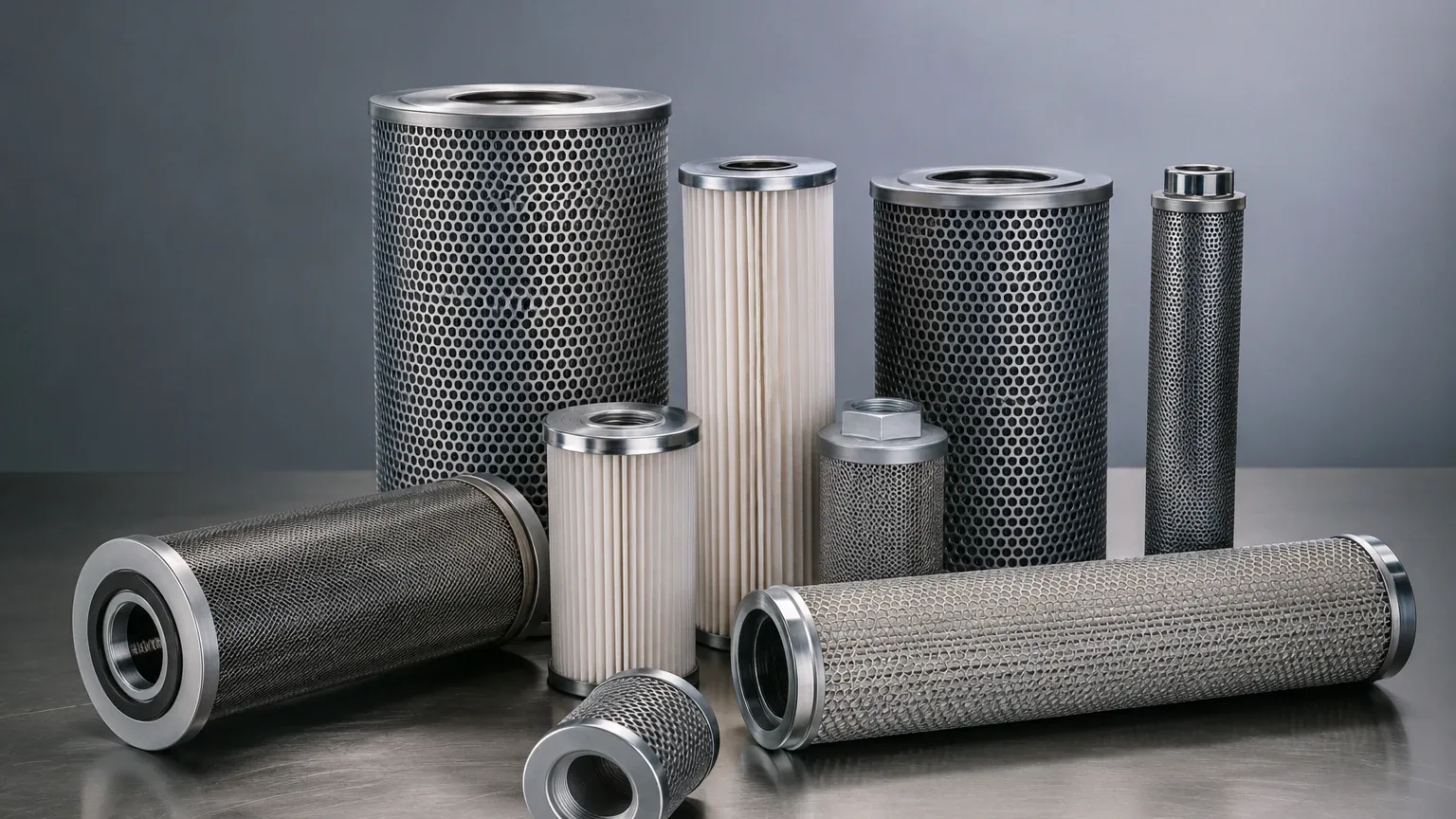
The performance of a filter is largely dictated by its construction materials and design architecture. In demanding industrial environments, standard disposable filters may lack the structural integrity or chemical resistance required for long-term operation. This is where high-performance Filter Cartridges made from stainless steel and other advanced alloys become essential.
Material Integrity
Stainless steel (typically Grade 304 or 316L) is preferred for filtration in harsh environments due to its exceptional resistance to corrosion and high temperatures. Unlike synthetic fibers or paper-based media, stainless steel wire mesh can withstand the high-pressure pulses and thermal cycling common in heavy-duty air compressors. Furthermore, stainless steel elements are often cleanable and reusable, providing a lower total cost of ownership over the equipment's lifecycle.
Filtration Efficiency and Micron Ratings
Micron ratings define the ability of a filter to capture particles of a specific size. For air compressor applications, filters are typically categorized as:
* Coarse/Pre-filters: 5 to 40 microns, used for general-purpose protection.
* Fine/Particulate filters: 1 to 5 microns, protecting downstream tools.
* Micro-filters/Coalescing filters: 0.01 to 1 micron, essential for removing oil aerosols.
When evaluating these ratings, engineers must distinguish between nominal and absolute ratings. An absolute rating signifies that the filter will capture 99.9% of particles at that size, whereas a nominal rating is an average figure that may allow larger particles to pass under certain pressure conditions.
Types of Compressed Air Filtration: Particulate, Coalescing, and Adsorption
To achieve the air quality levels specified by ISO 8573-1:2010, a combination of filtration technologies is usually required. Each type of filter element of air compressor utilizes different physical principles to capture contaminants.
Particulate Filtration
Particulate filters use mechanical sieving and direct interception. As the air passes through the porous media, particles larger than the pore size are trapped on the surface or within the depth of the material. For high-temperature discharge air, pleated stainless steel mesh is often used to maximize surface area, reducing the velocity of the air as it passes through the media and increasing the probability of particle capture.
Coalescing Filtration
Coalescing filters are designed to remove liquid aerosols and sub-micron particles. They work on the principle of coalescence, where small droplets are forced to collide and merge into larger drops as they pass through a fiber matrix. These larger drops eventually become heavy enough to fall to the bottom of the filter housing, where they are removed by a drain. Coalescing is a continuous process, and the efficiency of the filter is highly dependent on the velocity of the air and the surface tension of the liquids involved.
Adsorption Filtration
For applications requiring the removal of oil vapors and odors, adsorption filters (typically containing activated carbon) are utilized. Adsorption is a chemical process where molecules of the contaminant adhere to the surface of the adsorbent material. These are usually the final stage in a filtration train, following particulate and coalescing stages, to ensure the highest level of air purity.
Engineering Considerations for Selection and Sizing
Selecting a filter element of air compressor is not merely a matter of matching pipe sizes. Several engineering variables must be calculated to ensure the filtration system does not become a bottleneck or a source of inefficiency.
Flow Rate and Velocity
Filters must be sized according to the maximum flow rate (SCFM or m³/min) of the compressor at the lowest operating pressure. If a filter is undersized, the air velocity through the media will be too high, leading to excessive pressure drop and reduced filtration efficiency. In coalescing filters, high velocity can actually strip captured liquids from the media and re-entrain them into the air stream (carryover).
Operating Pressure and Temperature
Standard filter housings and elements are often rated for 10-16 bar. However, in high-pressure applications (such as PET bottling or nitrogen boosting), filters must be specifically rated for pressures exceeding 40 bar. Similarly, the operating temperature at the discharge of a compressor can reach 70°C to 100°C. Material selection for gaskets, seals, and the filter media itself must account for these thermal loads to prevent bypass or structural failure.
Chemical Compatibility
In chemical processing or offshore environments, the air may contain trace amounts of corrosive gases. Using 316L stainless steel for the filter element of air compressor provides the necessary resistance to pitting and stress corrosion cracking, ensuring the structural integrity of the filtration system in aggressive atmospheres.
Maintenance, Pressure Drop, and Replacement Cycles
The total cost of a filtration system is largely determined by its impact on energy consumption. The resistance to airflow caused by a filter is known as pressure drop (Delta P). As a filter element of air compressor becomes loaded with contaminants, the pressure drop increases.
The Cost of Pressure Drop
Every 0.14 bar (2 psi) of pressure drop in a compressed air system typically requires a 1% increase in compressor power to maintain the same system pressure. Therefore, running a filter until it is completely clogged is economically counterproductive. Modern industrial filtration systems utilize differential pressure gauges to monitor the health of the element.
Replacement Intervals
While some stainless steel elements can be cleaned using ultrasonic baths or backwashing, many coalescing and particulate elements are designed for a specific service life, often measured in operating hours (e.g., 4,000 to 8,000 hours) or when the pressure drop reaches a predetermined limit (typically 0.35 to 0.5 bar). Regular inspection of the filter element of air compressor is necessary to identify signs of "channeling," where the media has ruptured, allowing unfiltered air to bypass the system.
Custom Stainless Steel Solutions for Demanding Environments
Many industrial applications fall outside the capabilities of standard off-the-shelf filtration products. High-vibration environments, extreme temperatures, and unique housing geometries require customized engineering. Custom-manufactured Filter Cartridges allow for the optimization of pleat density, support core strength, and end-cap configurations to meet specific OEM requirements.
For instance, in hydraulic-assisted air systems or heavy-duty screw compressors, the filter element must handle high viscosity oil carryover without collapsing. By utilizing specialized welding techniques and reinforced inner cores, manufacturers like Kaifil produce filtration components that maintain their shape and performance under mechanical stress that would destroy conventional elements.
Customization also extends to the filtration media itself. By layering different grades of stainless steel wire mesh, engineers can create a multi-stage filtration effect within a single cartridge, providing pre-filtration and fine filtration in one compact unit. This not only saves space but also simplifies the maintenance routine for the end-user.
Conclusion: Optimizing System Reliability
The filter element of air compressor is a small component with a significant impact on the overall efficiency and longevity of an industrial compressed air system. By prioritizing high-quality materials, accurate sizing, and proactive maintenance, engineering teams can significantly reduce downtime and energy costs. Whether the application involves general manufacturing or sensitive pharmaceutical processing, understanding the technical nuances of filtration media—from micron ratings to material compatibility—is essential for achieving optimal performance. Investing in robust, precision-engineered filtration solutions ensures that the compressed air system remains a reliable asset rather than a source of operational risk.
