


Filter Element O Ring
In industrial filtration, the integrity of a process depends not only on the efficiency of the filter media but also on the reliability of the seal. The filter element o ring is a critical component that ensures process fluids pass through the filtration media rather than bypassing it. Even the most sophisticated Filter Cartridges cannot perform their intended function if the sealing mechanism fails. For engineers and procurement professionals, understanding the technical nuances of O-ring selection—ranging from material science to dimensional tolerances—is essential for maintaining system uptime and product purity.
The Role of the O-Ring in Industrial Filtration
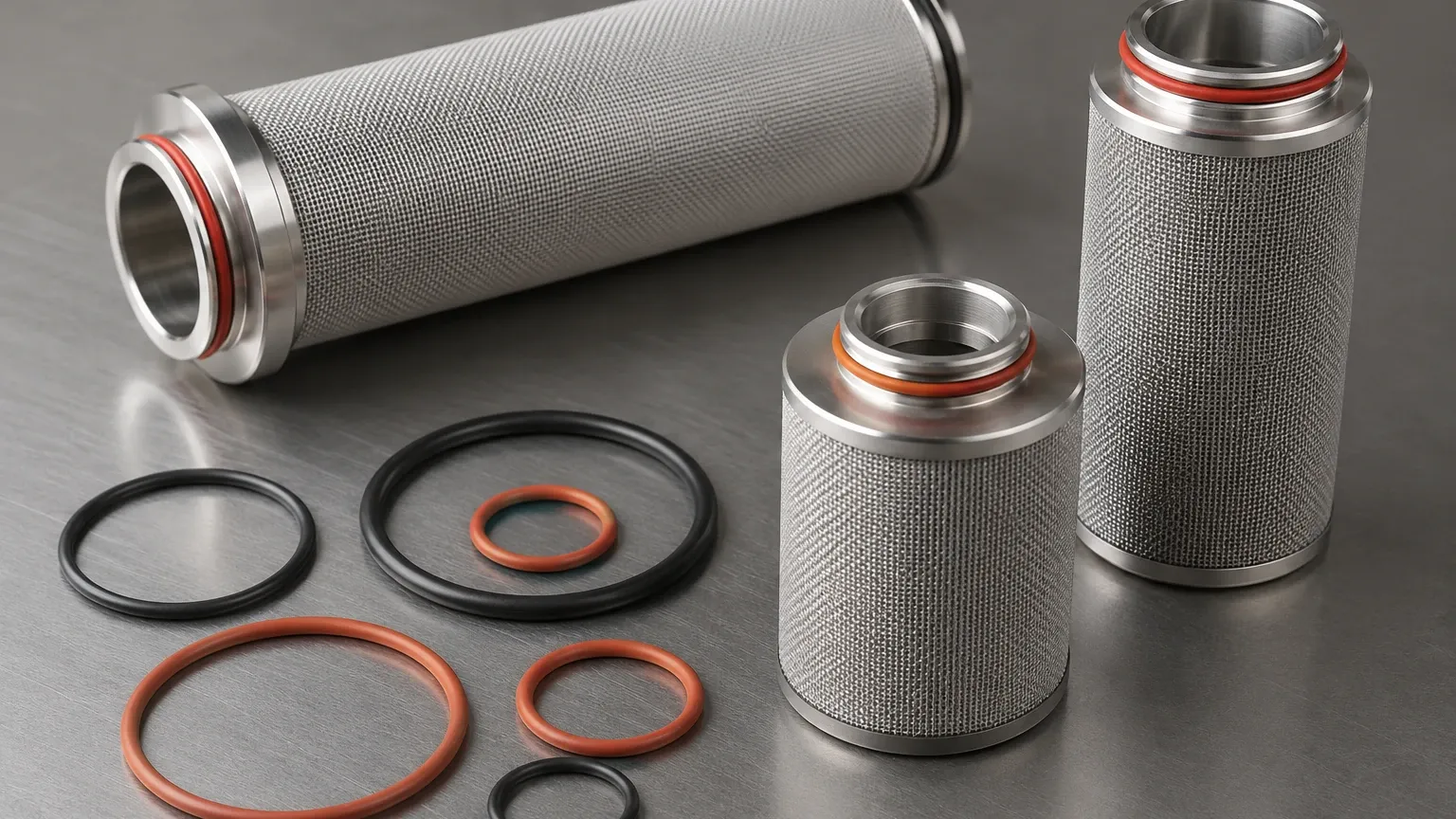
An O-ring serves as a mechanical gasket in the shape of a torus; it is a loop of elastomer with a round cross-section, designed to be seated in a groove and compressed during assembly between two or more parts. In the context of industrial filter cartridges, the O-ring is typically located at the end cap of the filter element, where it interfaces with the filter housing manifold.
When a filter element is installed, the O-ring is compressed against the housing wall or within a designated gland. This compression creates a physical barrier that prevents unfiltered fluid from leaking into the "clean" side of the system. This phenomenon, known as fluid bypass, is one of the primary causes of downstream contamination and equipment damage. Because industrial processes often involve high pressures, fluctuating temperatures, and aggressive chemicals, the filter element o ring must be engineered to withstand specific environmental stressors without losing its sealing properties.
Material Science: Selecting the Right Elastomer
Choosing the correct material for a filter element o ring is perhaps the most critical decision in the specification process. The elastomer must be chemically compatible with the process fluid and capable of maintaining elasticity at the operating temperature. Below are the most common materials used in industrial filtration applications:
Nitrile (NBR/Buna-N)
Nitrile is the workhorse of the industrial sealing world. It offers excellent resistance to petroleum-based oils, fuels, and hydraulic fluids. It is commonly used in general industrial applications and hydraulic systems. However, Nitrile has poor resistance to ozone, weathering, and polar solvents like ketones or ethers. Its temperature range is typically -40°C to +120°C.
EPDM (Ethylene Propylene Diene Monomer)
EPDM is preferred for applications involving hot water, steam, and polar solvents. It exhibits excellent resistance to heat, ozone, and weather. In the food and beverage industry, EPDM is a frequent choice due to its ability to withstand Clean-in-Place (CIP) chemicals. However, it is not compatible with petroleum-based oils or mineral oils, which cause the material to swell and degrade. Its temperature range is approximately -50°C to +150°C.
Viton™ (FKM/Fluoroelastomer)
Viton is specified for high-temperature environments and applications requiring broad chemical resistance. It performs exceptionally well in the presence of acids, aliphatic hydrocarbons, and aromatic hydrocarbons. While more expensive than NBR or EPDM, its durability in harsh chemical processing environments often justifies the total cost of ownership. Its temperature range extends from -20°C to +200°C.
Silicone (VMQ)
Silicone O-rings are widely used in the pharmaceutical and medical industries because they are physiologically inert and offer excellent heat resistance. They maintain flexibility at very low temperatures and can withstand dry heat up to 230°C. However, silicone has low tensile strength and poor tear resistance, making it unsuitable for dynamic sealing applications or high-pressure environments where the O-ring might be subjected to mechanical friction.
PTFE and Encapsulated O-Rings
For the most aggressive chemical environments where no elastomer can survive, PTFE (Polytetrafluoroethylene) is used. However, pure PTFE lacks the "memory" or elasticity required for a reliable seal. To solve this, encapsulated O-rings feature a silicone or Viton core covered by a seamless FEP or PFA jacket. This provides the chemical inertness of PTFE with the energizing spring-back of an elastomer.
Engineering Considerations: Compression and Gland Design
A filter element o ring does not seal by its presence alone; it seals through controlled deformation. Engineers must consider the following factors when designing or selecting a sealing interface:
1. Compression Ratio: For static seals in filter housings, a compression (squeeze) of 15% to 30% of the O-ring's cross-section is standard. Too little compression leads to leaks at low pressures, while too much compression can cause permanent deformation (compression set) or damage to the O-ring during installation.
2. Gland Fill: The groove (gland) where the O-ring sits must be large enough to accommodate the O-ring's volume when it is compressed. Elastomers are essentially incompressible fluids; they change shape but not volume. If the gland is too small, the O-ring will overfill the space, potentially causing the plastic or metal end caps of the filter cartridge to crack.
3. Surface Finish: The metal surface of the filter housing that contacts the O-ring must have a specific smoothness. A surface that is too rough will create leak paths, while a surface that is too smooth may prevent the O-ring from "gripping" the wall, leading to seal instability.
Standards and Sizing: AS568 and Beyond
Most industrial filter element o rings follow the AS568 standard, which is the Aerospace Size Standard for O-rings. This system assigns a three-digit dash number to specific combinations of Inside Diameter (ID) and Cross-Section (CS). For example, a "-222" O-ring is a common size for many standard 2.5-inch diameter filter cartridges.
In addition to AS568, metric standards (ISO 3601) are frequently used in European and Asian equipment. When sourcing replacement Filter Cartridges, it is vital to confirm whether the housing requires a standard imperial size or a metric equivalent, as even a fraction of a millimeter difference can result in a failed seal.
Installation and Maintenance Best Practices
Even the highest quality O-ring can fail if handled incorrectly. To ensure a leak-free installation, the following steps should be followed:
* Inspection: Before installation, inspect the O-ring for nicks, cuts, or surface irregularities. Even a microscopic scratch can provide a path for high-pressure bypass.
* Lubrication: Using a compatible lubricant (such as silicone grease for EPDM or NBR, or a process-compatible oil) reduces friction during installation. This prevents the O-ring from "rolling" or twisting in the groove, which is a common cause of spiral failure.
* Avoid Over-Stretching: When placing an O-ring onto a filter end cap, avoid stretching it more than 5% of its ID. Excessive stretching thins the cross-section and reduces the effective squeeze.
* Replacement Cycles: O-rings should generally be replaced every time the filter cartridge is changed. Elastomers undergo "compression set" over time, meaning they lose their ability to spring back. Reusing an old O-ring on a new filter element significantly increases the risk of bypass.
Troubleshooting Common O-Ring Failures
Identifying why a filter element o ring failed can help engineers optimize their filtration system. Common failure modes include:
* Chemical Swell: If the O-ring material is incompatible with the fluid, it will absorb the fluid and increase in volume. This can make the filter cartridge nearly impossible to remove from the housing or cause the O-ring to extrude out of the gland.
* Compression Set: If the O-ring appears flat on the top and bottom rather than round, it has lost its elasticity. This is often caused by exceeding the material's temperature limit or using an O-ring past its service life.
* Extrusion and Nibbling: In high-pressure systems, the O-ring can be forced into the small gap between the filter element and the housing. This results in a "nibbled" or frayed appearance on the low-pressure side of the seal. This can be mitigated by using a harder elastomer (higher Durometer) or reducing the clearance gaps.
* Explosive Decompression: In high-pressure gas applications, gas can permeate the elastomer. If the system pressure is dropped rapidly, the trapped gas expands violently, causing internal cracks or "blisters" on the O-ring surface.
Performance Impact on Industrial Processes
In industries such as pharmaceutical manufacturing or microelectronics, the filter element o ring is a critical point of compliance. For these applications, O-rings must not only seal effectively but also meet regulatory standards such as FDA 21 CFR 177.2600 or USP Class VI. These certifications ensure that the elastomer does not leach harmful chemicals into the process stream.
In the food and beverage sector, the O-ring must be resistant to the thermal shock of steam sterilization and the chemical aggression of caustic wash-downs. A failure here doesn't just mean a leak; it means a potential batch contamination and a breach of food safety protocols.
Conclusion
The filter element o ring is a small but indispensable component of any industrial filtration system. Its selection requires a balance of chemical compatibility, thermal stability, and mechanical precision. By choosing the correct material and adhering to proper installation practices, engineers can ensure that their Filter Cartridges deliver the precise filtration performance required for demanding industrial environments.
At Kaifil, we understand that a filter is only as reliable as its seal. Our expertise in manufacturing custom stainless steel filtration solutions extends to the selection and integration of high-performance sealing components. Whether your application involves high-pressure hydraulics, aggressive chemical processing, or sanitary food production, ensuring the integrity of the filter element o ring is paramount to achieving efficient, durable, and cost-effective filtration.
