


Cartridge Filter of Ro Plant
In industrial water treatment, the Reverse Osmosis (RO) process represents a significant capital investment. The heart of this system—the semi-permeable membrane—is highly sensitive to suspended solids, colloidal matter, and biological contaminants. To safeguard these expensive components, the cartridge filter of ro plant serves as the final mechanical barrier. Positioned typically after the multimedia filters and just before the high-pressure pump, these filters ensure that the feed water meets the stringent Silt Density Index (SDI) requirements necessary for long-term membrane health.
For engineers and facility managers, selecting the correct filtration media is not merely a matter of nominal micron ratings. It involves a deep understanding of fluid dynamics, material compatibility, and the total cost of ownership. This guide examines the technical nuances of Filter Cartridges within the context of RO pre-filtration, focusing on performance optimization and industrial reliability.
The Critical Role of Cartridge Filters in RO Systems
The primary function of a cartridge filter in an RO system is "polishing." While upstream processes like sand filtration or ultrafiltration remove the bulk of larger contaminants, the cartridge filter captures the remaining fine particulates that could otherwise lodge in the narrow feed spacers of the RO membrane elements.
If the cartridge filter of ro plant fails or is bypassed, the RO membranes will experience rapid fouling. This leads to several operational failures:
* Increased Differential Pressure: As particulates accumulate on the membrane surface, the pressure required to maintain permeate flow increases, leading to higher energy consumption.
* Flux Decline: The rate of water passage through the membrane drops, reducing the overall plant capacity.
* Chemical Cleaning Frequency: Frequent fouling necessitates more aggressive and frequent Clean-In-Place (CIP) cycles, which shortens the chemical lifespan of the membranes.
By maintaining a consistent filtrate quality, industrial-grade filter cartridges act as an insurance policy, ensuring that the high-pressure pump and the downstream membranes operate within their design parameters.
Technical Specifications and Material Selection
When specifying a cartridge filter of ro plant, material selection is dictated by the chemical composition of the feed water and the operating temperature. In most standard industrial RO applications, melt-blown polypropylene (PP) or string-wound cartridges are common due to their cost-effectiveness. However, in specialized industrial environments—such as high-temperature process water or aggressive chemical streams—stainless steel filtration components become necessary.
Micron Ratings: Nominal vs. Absolute
Engineers must distinguish between nominal and absolute ratings. A nominal 5-micron filter might only capture 60-80% of particles at that size, whereas an absolute-rated filter is designed to capture 99.9% or more. For RO pre-filtration, a 5-micron nominal filter is the industry standard, but systems treating high-fouling water may require a graduated approach, such as a 10-micron pre-filter followed by a 1-micron absolute filter.
Depth vs. Surface Filtration
Most RO cartridge filters utilize depth filtration. In this structure, the density of the media increases toward the center core. This allows larger particles to be trapped in the outer layers while finer particles are captured deeper within the matrix. This design provides a high dirt-holding capacity, which is essential for maintaining long run times between filter changes.
Engineering Considerations for Pre-filtration Efficiency
Designing an effective pre-filtration stage requires more than just choosing a micron size. Several engineering factors must be balanced to ensure the cartridge filter of ro plant performs reliably under varying feed conditions.
Flux Rate and Face Velocity
The flux rate, or the volume of water passing through a given area of filter media, significantly impacts filtration efficiency. Operating at an excessively high flux rate can force deformable particles through the media, a phenomenon known as "breakthrough." In industrial RO design, it is generally recommended to keep the flow rate per 10-inch equivalent (DOE) cartridge below 5 gallons per minute (GPM) for standard melt-blown filters to maximize sediment retention.
Pressure Drop (ΔP)
The clean pressure drop across a new set of cartridges should ideally be less than 2-3 psi (0.14-0.21 bar). As the filter accumulates debris, the differential pressure increases. Engineers must monitor this ΔP closely; once it reaches the manufacturer's recommended change-out point (typically 15-25 psi), the cartridges must be replaced. Exceeding this limit can cause the filter media to compress or collapse, leading to a total loss of filtration integrity and potential damage to the high-pressure pump.
Housing Compatibility
The filter housing must be constructed from materials that resist corrosion, especially in seawater desalination or brackish water RO plants. While reinforced plastic or carbon steel with internal linings are common, 316L stainless steel housings are preferred in pharmaceutical and food-grade applications for their durability and ease of sanitization.
Monitoring Performance and Replacement Cycles
A robust maintenance strategy for the cartridge filter of ro plant is essential for preventing unscheduled downtime. Relying solely on a calendar-based replacement schedule is often inefficient. Instead, performance-based monitoring should be utilized.
1. Differential Pressure Gauges: Installing high-quality pressure gauges on the inlet and outlet of the filter housing is the most direct way to monitor loading. Digital sensors integrated into a PLC can trigger alarms when the ΔP reaches a critical threshold.
2. Turbidity and SDI Testing: Regular Silt Density Index (SDI) testing of the water before and after the cartridge filter provides empirical data on the filter’s effectiveness. If the post-filter SDI is consistently above 3.0, the pre-filtration strategy may need to be re-evaluated.
3. Visual Inspection: Upon removal, used cartridges should be inspected for signs of "channeling" (where water bypasses the media) or unusual discoloration, which may indicate biological growth or specific mineral scaling issues.
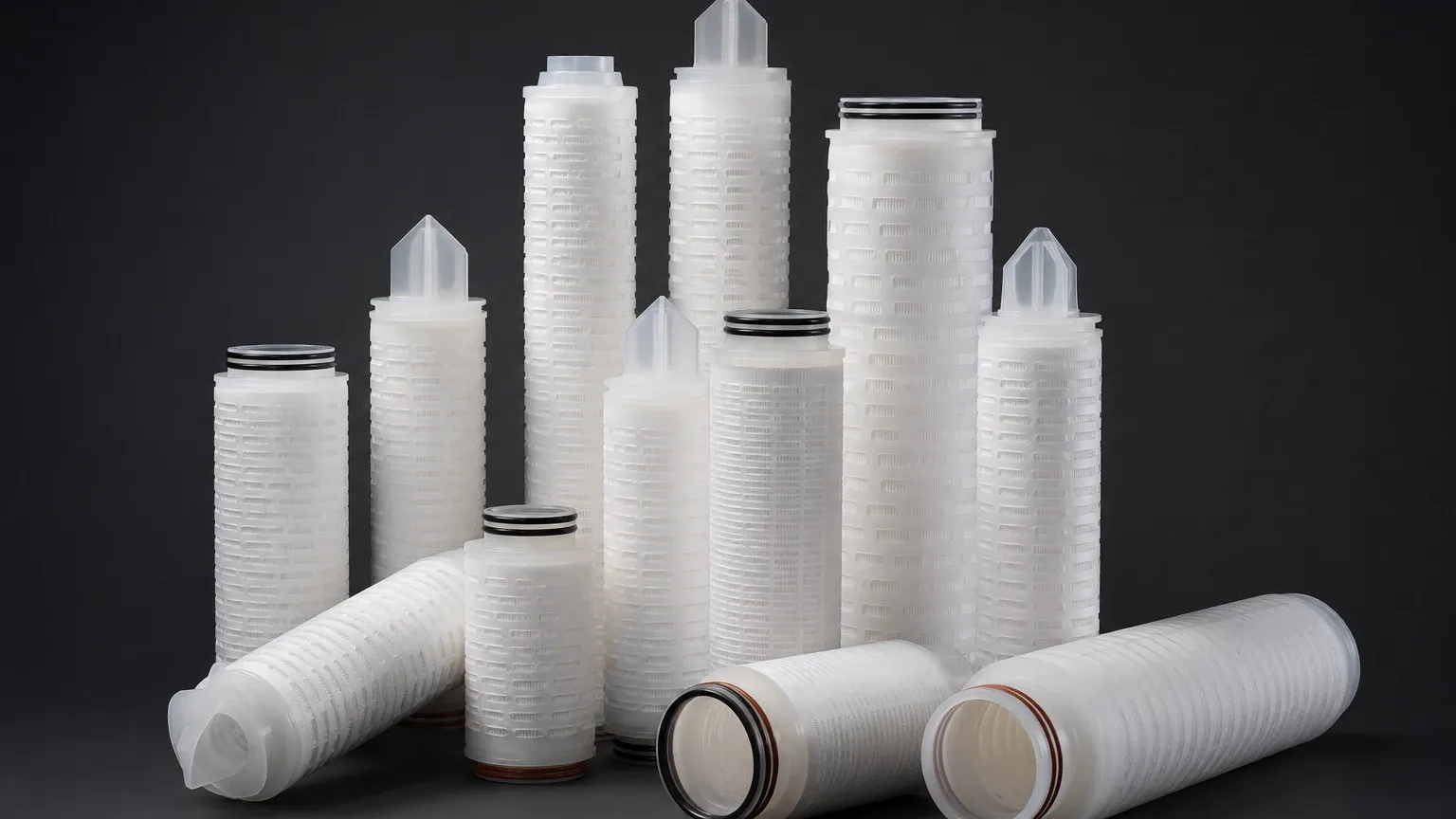
Customization and Industrial-Grade Filter Cartridges
While standard polypropylene cartridges suffice for many applications, certain industrial processes demand customized filtration solutions. Kaifil specializes in the manufacture of precision metal filtration components that address the limitations of disposable plastic media.
In applications involving high temperatures, high pressures, or the recovery of valuable catalysts, stainless steel wire mesh or sintered metal cartridges offer significant advantages. Unlike disposable options, these metal Filter Cartridges can often be cleaned and reused, providing a sustainable solution for demanding industrial environments.
Customization options often include:
* End-Cap Configurations: Ensuring a perfect seal within existing housings (e.g., 222/O-ring, 226/Bayonet, or DOE).
* Reinforced Cores: Preventing collapse in high-viscosity or high-pressure applications.
* Multi-Layered Media: Combining different mesh sizes to achieve specific filtration gradients in a single cartridge.
For an OEM or a system integrator, having the ability to customize the cartridge filter of ro plant ensures that the filtration stage is perfectly matched to the unique chemistry and physical properties of the process water.
Total Cost of Ownership and Membrane Protection
When evaluating the cost of the cartridge filter of ro plant, the purchase price is only one variable. A low-cost, low-quality filter may save money upfront but can lead to significantly higher costs in the form of:
* Premature Membrane Replacement: The cost of a single RO membrane element can be ten times the cost of a full set of high-quality cartridge filters.
* Increased Energy Costs: Operating with fouled membranes or high-ΔP filters increases the load on high-pressure pumps.
* Labor Costs: Frequent filter changes due to low dirt-holding capacity increase maintenance man-hours.
Investing in high-performance cartridges with a high dirt-holding capacity and verified absolute ratings typically results in a lower total cost of ownership. By extending the interval between membrane cleanings and protecting the system from breakthrough events, quality filtration components ensure the long-term viability of the RO plant.
Conclusion
The cartridge filter of ro plant is a small but vital component in the hierarchy of water treatment. Its role in protecting sensitive membranes from particulate fouling cannot be overstated. By selecting the appropriate micron rating, understanding the nuances of depth vs. surface filtration, and monitoring differential pressure, engineers can optimize the performance of their RO systems.
Whether utilizing standard disposable media or specialized stainless steel components for harsh environments, the focus must remain on precision and reliability. For those seeking to optimize their industrial filtration processes, exploring advanced Filter Cartridges and customized solutions is a critical step toward achieving efficient, cost-effective, and durable water treatment performance.
