


Optima Water Filter Cartridges
In industrial water treatment and process engineering, the efficiency of a filtration system is often defined by the performance of its core components. High-performance filtration, often referred to in the context of optima water filter cartridges, involves a precise balance of flow dynamics, contaminant retention capacity, and structural integrity. For engineers and procurement specialists, selecting the correct cartridge is not merely a matter of matching dimensions; it requires a deep understanding of the fluid chemistry, particle size distribution, and the mechanical stresses of the operating environment.
Industrial filtration demands vary significantly across sectors such as chemical processing, food and beverage production, and pharmaceutical manufacturing. In these high-stakes environments, the choice of filter media—ranging from synthetic polymers to advanced stainless steel wire mesh—determines the total cost of ownership and the reliability of the entire production line.
Technical Foundations of High-Efficiency Water Filtration
To evaluate the effectiveness of optima water filter cartridges, one must first analyze the fundamental mechanics of particle separation. Filtration in water systems generally occurs through two primary mechanisms: depth filtration and surface filtration.
Depth vs. Surface Filtration
Depth filtration utilizes a thick medium to trap particles throughout the entire tortuous path of the material. While effective for high dirt-holding capacity, depth filters can be prone to media migration and are often difficult to clean. Conversely, surface filtration, typically achieved through precision-engineered stainless steel mesh or membranes, captures particles on the upstream side of the media. This method provides a more absolute micron rating and allows for easier cleaning and backwashing, which is essential in continuous industrial processes.
Micron Ratings and Efficiency
When specifying Filter Cartridges, engineers must distinguish between nominal and absolute micron ratings. A nominal rating indicates the ability of the filter to retain a majority of particles at a specific size, whereas an absolute rating signifies that 99.9% or more of particles at that size are captured. For critical water applications, such as protecting high-pressure pumps or sensitive reverse osmosis (RO) membranes, absolute-rated cartridges are the industry standard to prevent bypass and downstream contamination.
Material Selection for Industrial Environments
The material composition of optima water filter cartridges is a critical factor in determining their compatibility with specific process fluids. While plastic or fiber-based cartridges are common in low-pressure, ambient-temperature applications, industrial processes often require more robust solutions.
Stainless Steel 304 and 316L
Stainless steel is the preferred material for demanding water filtration tasks. Grade 304 offers excellent resistance to many aqueous solutions, while Grade 316L provides superior corrosion resistance, particularly in environments containing chlorides or high-salinity water. These materials allow the cartridges to withstand high differential pressures and extreme temperatures that would cause synthetic filters to deform or fail.
Chemical Compatibility
In chemical processing and pharmaceutical water systems, the filter media must remain inert. Stainless steel cartridges do not leach surfactants, binders, or adhesives into the process stream, ensuring the purity of the effluent. This is a significant advantage over resin-bonded or thermal-bonded synthetic cartridges, which may release extractables under certain chemical or thermal loads.
Engineering Considerations: Flow Rate and Pressure Drop
A common challenge in water filtration is balancing filtration fineness with the required flow rate. The "clean pressure drop" is the initial resistance the fluid encounters when passing through a new filter cartridge. As contaminants accumulate, this pressure drop increases.
Calculating Sizing and Housing Requirements
To optimize the performance of optima water filter cartridges, engineers must calculate the flux rate—the volume of water passing through a specific area of filter media over time. Lower flux rates generally lead to longer service life and higher efficiency. If a system is undersized, the high velocity of the water can force contaminants through the media or cause premature blinding, leading to frequent downtime for maintenance.
Structural Integrity and Pleating
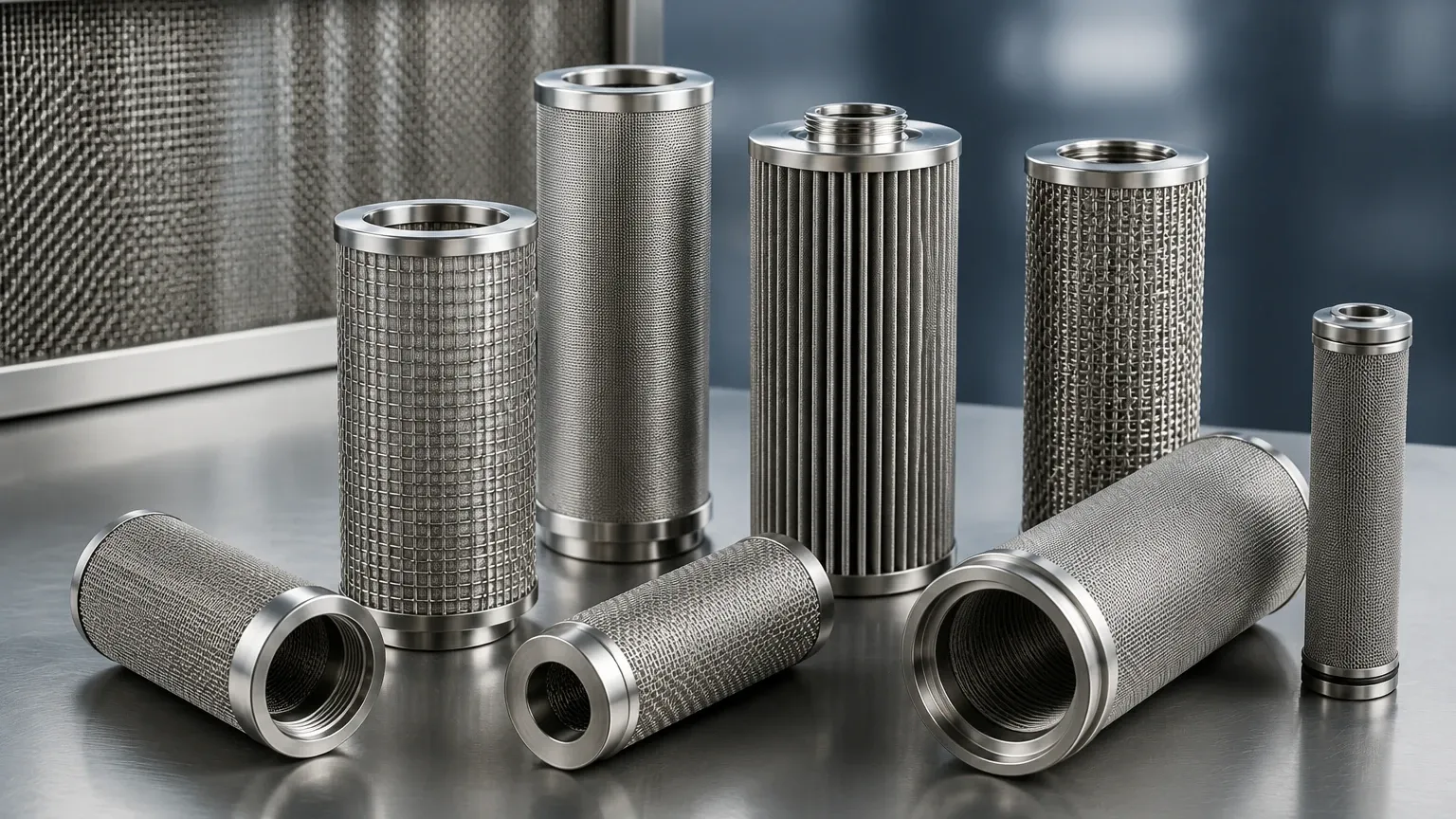
To maximize surface area without increasing the footprint of the filter housing, many high-performance cartridges utilize pleated designs. Pleating a stainless steel wire mesh significantly increases the available filtration area, which reduces the velocity of the fluid at the media interface. This design choice is critical for managing high-flow water systems where space is limited but high dirt-holding capacity is required.
Application-Specific Requirements
Different industries impose unique constraints on water filtration systems. Understanding these nuances is essential for selecting the appropriate optima water filter cartridges.
Food and Beverage Industry
In food and beverage production, water is often an ingredient or used for critical cleaning (CIP) processes. Filter cartridges must comply with strict hygiene standards. Stainless steel filters are advantageous here because they can be sterilized using steam-in-place (SIP) or hot water sanitization methods without compromising the structural integrity of the filter.
Pharmaceutical and Biotech
Water for Injection (WFI) and purified water systems require filtration that can guarantee the removal of bacteria and pyrogens. Precision-engineered metal filters serve as excellent pre-filters to protect expensive membrane systems, ensuring that the biological load is minimized before the final sterilization stages.
Cooling Water and Cooling Towers
In heavy industrial cooling loops, water often contains scale, rust, and biological growth. High-durability stainless steel cartridges are used to protect heat exchangers from fouling. The ability to clean and reuse these filters makes them a cost-effective alternative to disposable cartridges in high-volume water applications.
Maintenance, Cleaning, and Total Cost of Ownership
One of the most significant advantages of high-quality metal filter cartridges is their longevity. While the initial capital expenditure for a stainless steel cartridge may be higher than a disposable polypropylene version, the long-term economics often favor the durable option.
Monitoring Differential Pressure
Effective maintenance of optima water filter cartridges relies on accurate differential pressure (DP) monitoring. Most industrial systems are designed with sensors that trigger an alarm or a backwash cycle when the DP reaches a predetermined limit (typically between 15 and 25 psi, depending on the application). Operating beyond these limits risks collapsing the filter core or causing "breakthrough," where captured particles are forced through the media.
Cleaning Protocols for Reusable Cartridges
Stainless steel cartridges can be cleaned using several methods, including:
* Ultrasonic Cleaning: Using high-frequency sound waves in a cleaning solution to dislodge fine particles from the mesh pores.
* Backwashing: Reversing the flow of clean water or air through the cartridge to flush out accumulated debris.
* Chemical Cleaning: Using mild acids or bases to dissolve scale or organic fouling, followed by thorough rinsing.
By implementing a structured cleaning regimen, the service life of a single stainless steel cartridge can extend to several years, drastically reducing the waste and procurement costs associated with disposable filtration.
Customization and OEM Solutions
Standard off-the-shelf filtration solutions do not always meet the specific needs of complex industrial systems. Customization is often necessary to address unique flow paths, specialized mounting requirements, or unconventional fluid properties.
Engineering for Specific Flux and Retention
Manufacturers like Kaifil work with engineering teams to develop bespoke filtration components. This involves selecting specific wire diameters and weave patterns (such as plain, twill, or dutch weaves) to achieve a precise balance of mechanical strength and filtration fineness. For instance, a twilled dutch weave might be selected for an application requiring high-pressure resistance and sub-micron filtration.
Integration into Existing Systems
When upgrading a water treatment plant, new optima water filter cartridges must often fit into legacy housings. Custom end-cap designs—including DOE (Double Open End), Code 7 (226 O-ring with bayonet), or NPT threaded connections—ensure that high-performance media can be integrated without requiring a complete overhaul of the piping and vessel infrastructure.
Confirming Specifications Before Procurement
Before finalizing a purchase or design specification for water filter cartridges, technical teams should confirm several key parameters with the manufacturer:
1. Fluid Characteristics: Confirm the pH levels, presence of oxidizing agents, and maximum operating temperature.
2. Contaminant Profile: Identify the nature of the solids (e.g., hard vs. deformable) and the expected particle size distribution.
3. Operational Dynamics: Determine if the system will experience pressure surges or frequent start-stop cycles, which may require reinforced internal cores.
4. Regulatory Compliance: Ensure the materials used meet the necessary industry certifications (e.g., FDA compliance for food-contact surfaces).
By focusing on these technical details, engineers can ensure that the selected filtration solution provides reliable, long-term performance in demanding industrial water applications. High-quality Filter Cartridges serve as a critical defense for downstream equipment, ensuring process consistency and minimizing the risks associated with fluid contamination.
