


Pentair Filter Cartridges
In industrial fluid processing, the selection of filtration components is a critical engineering decision that directly impacts product purity, equipment longevity, and operational efficiency. Pentair filter cartridges represent a significant segment of the global filtration market, offering a diverse range of solutions for sediment reduction, chemical adsorption, and sub-micron sterilization. For engineers and procurement professionals, understanding the technical nuances of these cartridges—ranging from material science to hydraulic performance—is essential for optimizing process streams in sectors such as chemical processing, food and beverage, and pharmaceutical manufacturing.
Industrial filtration is rarely a one-size-fits-all application. The performance of pentair filter cartridges is governed by the interaction between the contaminant load, the fluid chemistry, and the physical architecture of the filter media. This guide examines the technical specifications, application logic, and engineering considerations required to integrate these components into high-demand industrial environments.
The Role of Pentair Filter Cartridges in Industrial Fluid Management
Pentair filter cartridges are designed to address specific separation challenges across the liquid-solid spectrum. In industrial contexts, these cartridges typically serve one of three primary roles: pre-filtration, clarifying filtration, or final polishing.
Pre-filtration involves the removal of large particulate matter to protect sensitive downstream equipment, such as high-pressure pumps or reverse osmosis (RO) membranes. Clarifying filtration targets smaller suspended solids to improve the visual clarity and consistency of a fluid. Final polishing, often utilizing membrane-grade media, ensures the removal of microscopic contaminants, including bacteria and fine colloids, to meet stringent quality standards.
Because industrial processes often involve aggressive chemicals, varying temperatures, and high flow rates, the selection of a cartridge must go beyond simple micron ratings. Engineers must evaluate the structural integrity of the cartridge core, the compatibility of the end-cap gaskets, and the thermal stability of the media itself.
Technical Classification of Cartridge Designs
To select the appropriate filter, it is necessary to distinguish between the different construction methodologies employed in the Pentair product line. Each design offers distinct advantages based on the nature of the contaminants being targeted.
Depth Filtration Cartridges
Depth cartridges, such as melt-blown or string-wound varieties, utilize a thick layer of media to trap particles throughout the entire cross-section of the filter. These are characterized by a "gradient density" structure, where the outer layers catch larger particles and the inner layers capture progressively smaller ones. This design provides a high dirt-holding capacity, making them ideal for fluids with a broad distribution of particle sizes. However, they are generally nominal-rated, meaning they do not provide an absolute barrier to particles at their rated micron level.
Pleated Filter Cartridges
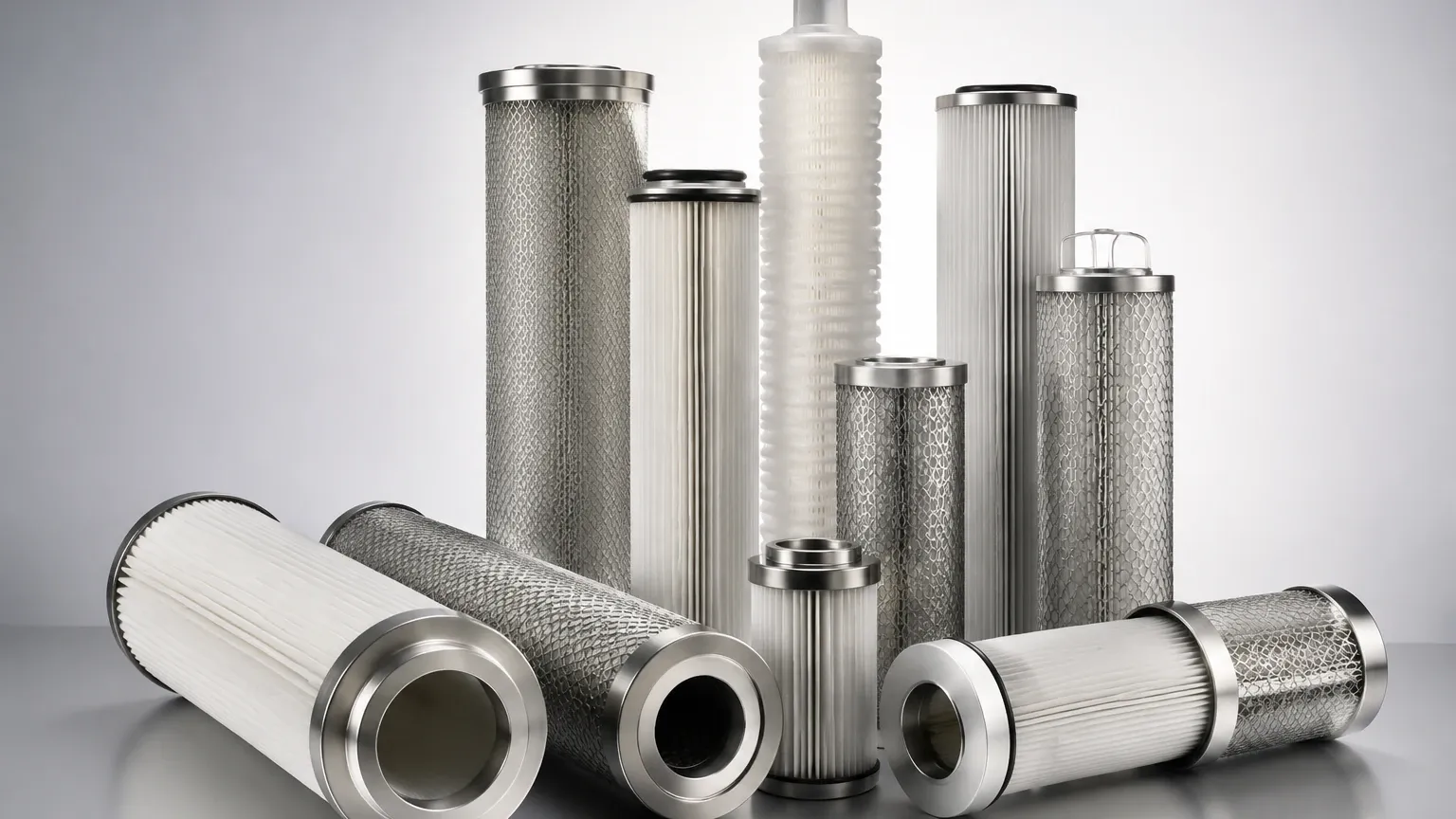
Pleated designs utilize a thin sheet of media—often made of polypropylene, polyester, or fiberglass—that is folded to maximize the available surface area within a standard cartridge footprint. This increased surface area allows for higher flow rates and lower initial pressure drops compared to depth filters. Pleated Filter Cartridges are frequently used in applications requiring high efficiency or absolute-rated filtration, as the manufacturing process allows for tighter control over pore size distribution.
Carbon and Specialty Media
For applications requiring the removal of dissolved organics, chlorine, or odors, carbon block cartridges are standard. These utilize activated carbon compressed into a solid core. In industrial settings, these are often used in water treatment stages to protect resins or membranes from oxidative damage caused by residual disinfectants.
Material Compatibility and Selection Criteria
The chemical and thermal environment of the application dictates the material requirements of the filter cartridge. While polypropylene is the most common material due to its broad chemical resistance and low cost, it has limitations regarding temperature and specific organic solvents.
1. Polypropylene (PP): Suitable for most aqueous solutions, acids, and bases. It is generally limited to temperatures below 80°C (176°F).
2. Polyethersulfone (PES): Often used in pleated membrane cartridges for the pharmaceutical and electronics industries due to its high flow rates and low protein binding characteristics.
3. Polytetrafluoroethylene (PTFE): Reserved for the most aggressive chemical environments and high-temperature gas filtration, offering near-universal chemical compatibility.
4. Stainless Steel: In environments where synthetic polymers fail due to extreme heat (exceeding 120°C) or high differential pressures, stainless steel mesh or sintered metal cartridges become the necessary alternative. While Pentair offers a wide array of polymer solutions, specialized manufacturers like Kaifil provide the custom stainless steel components required for these extreme industrial conditions.
Evaluating Performance: Micron Ratings and Efficiency
One of the most frequent points of confusion in filter procurement is the distinction between nominal and absolute micron ratings. A 5-micron nominal filter may only capture 60% to 85% of particles at that size, whereas an absolute-rated filter (often defined by a Beta ratio of 5000 or 99.9% efficiency) will capture virtually all particles at the specified rating.
Engineers must determine the "critical particle size" that their process can tolerate. In hydraulic systems, for example, particles as small as 3 to 5 microns can cause accelerated wear on valves and actuators. In such cases, relying on a nominal pentair filter cartridges might lead to premature component failure, necessitating a shift to high-efficiency pleated media.
Operational Considerations: Pressure Drop and Service Life
The total cost of ownership (TCO) of a filtration system is heavily influenced by the replacement cycle of the cartridges. This cycle is determined by the relationship between flow rate and differential pressure ($ΔP$).
Clean Pressure Drop
Every filter introduces a resistance to flow. A high initial pressure drop reduces the available pressure for downstream processes and shortens the effective life of the filter. Pleated cartridges typically offer the lowest clean pressure drop due to their high surface area.
Terminal Differential Pressure
Filters must be replaced when the pressure drop reaches a specific limit, usually between 20 and 35 PSI, depending on the housing and pump capabilities. Operating beyond this limit risks "breakthrough," where the pressure forces contaminants through the media, or structural failure of the cartridge core. Monitoring $ΔP$ is the only reliable way to manage replacement cycles and prevent process downtime.
Industry-Specific Application Requirements
Different sectors impose unique regulatory and functional demands on filter cartridges.
* Food and Beverage: Cartridges must be constructed from FDA-listed materials (CFR Title 21) and often require resistance to Hot Sanitization or Steam-In-Place (SIP) cycles. Pentair’s specialized lines for this sector focus on removing spoilage organisms and ensuring clarity in bottled water, beer, and wine.
* Chemical Processing: The primary concern is chemical degradation. Filters used in solvent recovery or acid filtration must maintain structural integrity to prevent bypass. In these high-stakes environments, the compatibility of the O-ring material (Viton, EPDM, or Silicone) is just as important as the filter media itself.
* Pharmaceuticals: This sector requires validated performance. Cartridges must be integrity-testable (using bubble point or diffusion tests) to ensure they meet sterile filtration standards. Low extractables and high purity are non-negotiable.
Selecting Between Standard and Custom Filtration Solutions
While pentair filter cartridges provide a robust solution for many standard water and light industrial applications, certain engineering challenges require a more tailored approach. Standard plastic cartridges are often limited by their inability to be cleaned and reused, leading to high consumable costs in high-sediment applications.
For processes involving high-viscosity fluids, extreme temperatures, or the need for backwashable systems, custom-engineered stainless steel filtration components are often the superior choice. These metal filters provide the durability required for heavy-duty chemical processing and hydraulic applications where polymer-based cartridges would collapse or melt.
When evaluating a filtration strategy, engineers should consider the following questions:
1. What is the maximum operating temperature and pressure during both normal operation and cleaning cycles?
2. Is the fluid compatible with standard polymers, or does it require specialized metallic media?
3. What is the cost of downtime versus the cost of a higher-grade, potentially cleanable filter element?
4. Does the application require a standard 10-inch or 20-inch format, or is a custom geometry necessary to fit existing housing constraints?
By addressing these technical parameters, procurement teams can ensure they are not only purchasing a cartridge but investing in a filtration solution that enhances the reliability of the entire production line. Whether utilizing the broad catalog of Pentair or seeking the precision of custom stainless steel manufacturing, the goal remains the same: achieving consistent, verifiable fluid purity at the lowest possible operational cost.
