


Puretec Water Filter Cartridges
In industrial and commercial water treatment, the selection of filtration media is a critical engineering decision that directly impacts process efficiency, equipment longevity, and product quality. Puretec water filter cartridges are widely recognized for their versatility in addressing sediment, chemical, and biological contaminants across various scales of operation. However, for engineers and procurement professionals, understanding the technical nuances of these cartridges—and knowing when to transition to specialized industrial solutions like stainless steel media—is essential for optimizing filtration systems.
This guide examines the technical specifications of puretec water filter cartridges, evaluates their performance in industrial contexts, and provides a framework for selecting the appropriate Filter Cartridges based on fluid dynamics, chemical compatibility, and total cost of ownership.
Understanding the Applications of Puretec Water Filter Cartridges
Puretec water filter cartridges are designed to fit standard filter housings and are categorized by their primary filtration mechanism. In B2B environments, these are typically deployed in pre-filtration stages for reverse osmosis (RO) systems, cooling towers, and food and beverage processing lines.
Sediment Filtration
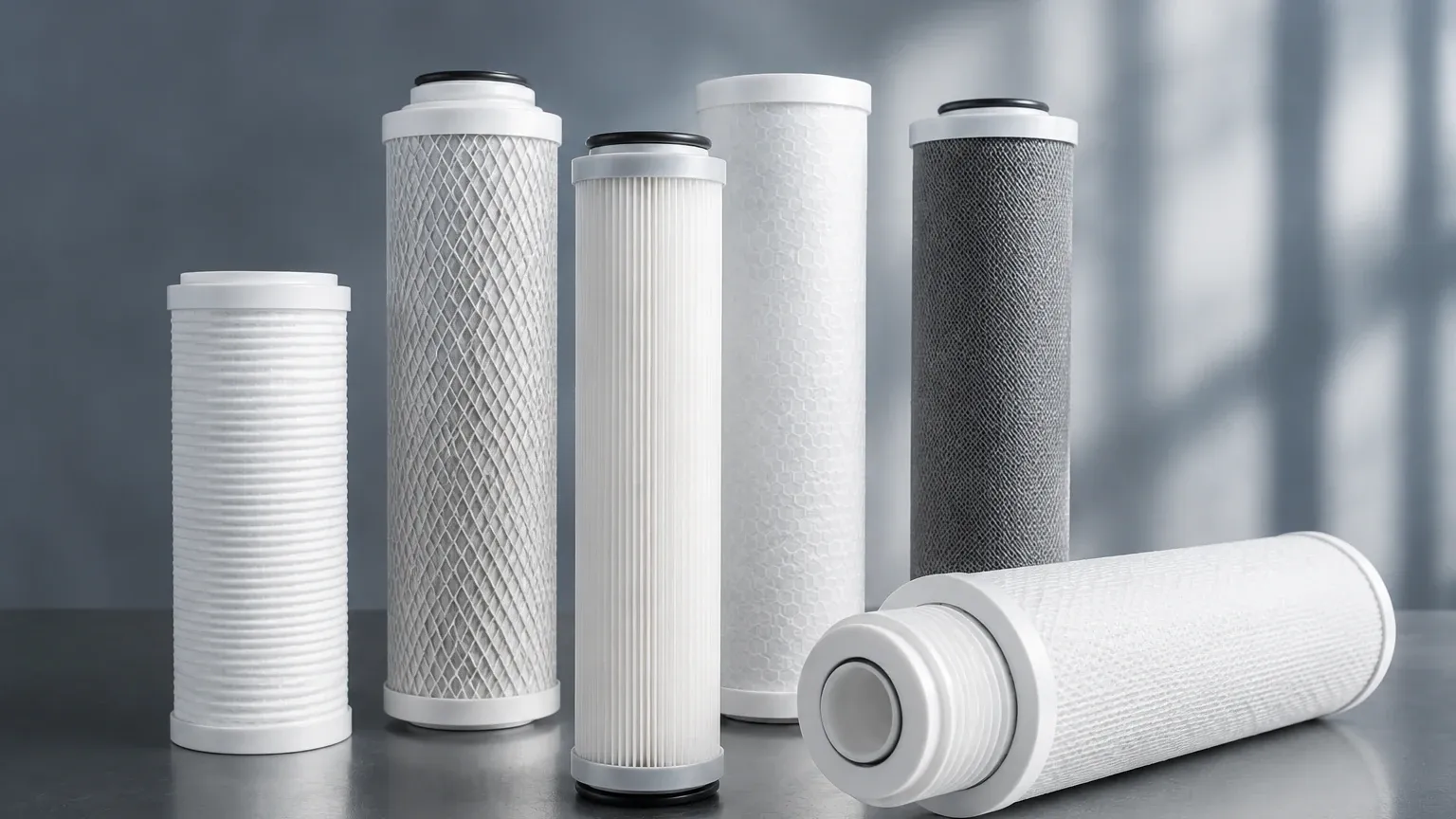
Sediment cartridges, such as the PX and MB series, utilize depth filtration technology. These are engineered to capture suspended solids, rust, and scale. In industrial settings, these cartridges protect downstream sensitive equipment from abrasion and clogging. The gradient density structure of melt-blown cartridges allows for high dirt-holding capacity, which is vital in high-flow applications where frequent downtime for maintenance must be minimized.
Chemical and Taste/Odor Reduction
Carbon-based cartridges, including carbon blocks (CB series) and granular activated carbon (GAC), are utilized to remove chlorine, volatile organic compounds (VOCs), and other chemical impurities. In the pharmaceutical and food industries, maintaining the purity of the solvent (water) is paramount to ensuring the consistency of the final product.
Scale Prevention
Specialized cartridges are also available for scale inhibition, using polyphosphate media to sequester hardness minerals. This is particularly relevant for boiler feed water and heat exchangers, where scale buildup can lead to significant energy losses and mechanical failure.
Technical Specifications and Media Types
When evaluating puretec water filter cartridges, engineers must look beyond the brand name and focus on the physical and chemical properties of the filter media. The choice of material dictates the cartridge’s resistance to temperature, pressure, and chemical degradation.
1. Polyspun (Polypropylene): These are the most common sediment filters. Polypropylene is chemically inert to many acids and bases, making it suitable for general industrial water treatment. However, its temperature limit is typically around 60°C (140°F), which may be insufficient for hot water loops or steam condensate recovery.
2. Pleated Media: Pleated cartridges offer a significantly higher surface area compared to depth filters. This results in lower initial pressure drops and higher flow rates. Pleated polyester or polypropylene is often used when high-efficiency particulate removal is required in a compact footprint.
3. Carbon Block: Manufactured by extruding or molding activated carbon powder with a binder. These provide superior filtration efficiency for chemicals compared to GAC because they prevent "channeling," where the fluid finds the path of least resistance and bypasses the media.
Engineering Considerations for Industrial Filtration
Selecting the right filtration solution requires a deep dive into the specific requirements of the application. For industrial-grade performance, the following engineering parameters must be confirmed before procurement.
Micron Ratings: Nominal vs. Absolute
A common point of confusion in filter selection is the distinction between nominal and absolute micron ratings.
* Nominal Rating: This is an indicative value, often representing the ability of the filter to capture approximately 85% to 90% of particles at a given size. Many puretec water filter cartridges are nominally rated, which is suitable for general-purpose sediment reduction.
* Absolute Rating: This refers to the diameter of the largest hard spherical particle that will pass through the filter under specified test conditions. In critical applications, such as final filtration in pharmaceutical processing, absolute-rated Filter Cartridges are necessary to ensure 99.9% (Beta 1000) efficiency.
Beta Ratio and Efficiency
The Beta Ratio ($\\beta$) is a more precise way to measure filtration efficiency. It is calculated by dividing the number of particles upstream of the filter by the number of particles downstream. A Beta ratio of 100 means the filter is 99% efficient at that micron size. Engineers should request Beta ratio data when the filtration goal is process-critical.
Comparing Polymeric and Stainless Steel Filter Cartridges
While puretec water filter cartridges are excellent for standard water treatment, certain industrial environments demand more robust materials. This is where stainless steel filter cartridges, such as those manufactured by Kaifil, provide a technical advantage.
Temperature and Pressure Resistance
Polymeric cartridges (polypropylene, polyester) have limited structural integrity at high temperatures. In contrast, stainless steel 304 or 316L cartridges can operate at temperatures exceeding 250°C and withstand significantly higher differential pressures. If a process involves high-pressure steam or aggressive thermal cycles, stainless steel is the engineering standard.
Chemical Compatibility
While polypropylene is resistant to many chemicals, it can swell or degrade when exposed to certain hydrocarbons or strong solvents. Stainless steel provides a broader range of compatibility, particularly in the chemical processing and petrochemical industries. Furthermore, stainless steel does not leach binders or surfactants into the process stream, which is a risk with some low-quality polymeric cartridges.
Cleanability and Reusability
Standard water filter cartridges are typically disposable. Once they reach their dirt-holding capacity, they must be replaced and discarded. In high-volume industrial applications, this creates a significant waste stream and recurring costs. Stainless steel wire mesh filters can be cleaned via backwashing, ultrasonic cleaning, or chemical soaking, allowing them to be reused multiple times. This shift from a consumable model to a capital equipment model can optimize the long-term budget.
Operational Efficiency and Pressure Drop Management
In any filtration system, the pressure drop ($\\Delta P$) across the filter media is a key indicator of performance. The total pressure drop is the sum of the housing pressure drop and the media pressure drop.
Initial Clean Pressure Drop
Engineers must ensure that the initial clean pressure drop does not exceed the system's design limits. A high initial $\\Delta P$ suggests that the filter is either undersized for the flow rate or that the micron rating is unnecessarily tight for the application. Using pleated Filter Cartridges can help mitigate this by providing more flow channels per square inch of media.
Terminal Pressure Drop and Replacement
The terminal pressure drop is the point at which the filter is considered "blinded" or full. For most puretec water filter cartridges, the recommended change-out pressure is between 15 and 25 psi (1.0 to 1.7 bar). Operating beyond this point risks "breakthrough," where the pressure forces captured contaminants through the media and back into the process stream, or causes the cartridge core to collapse.
Maintenance, Replacement, and Total Cost of Ownership
A common mistake in B2B procurement is focusing solely on the unit price of the cartridge. A comprehensive analysis must include the Total Cost of Ownership (TCO), which accounts for:
* Replacement Frequency: How often does the cartridge need to be changed? High-turbidity water will exhaust a standard depth filter quickly.
* Labor Costs: The time required for maintenance personnel to shut down the system, bleed the pressure, replace the cartridges, and restart the system.
* Disposal Costs: In some regions, used filter cartridges are classified as industrial waste, incurring specific disposal fees.
* Downtime: The cost of lost production during filter changes.
By evaluating these factors, many facilities find that upgrading to high-capacity or cleanable metal filtration systems provides a better return on investment than relying on standard disposable cartridges for high-load applications.
Customization for Specialized Industrial Requirements
Standard off-the-shelf puretec water filter cartridges are designed for a broad range of general applications. However, industrial engineering often presents unique challenges that require customized solutions. This is where technical collaboration with a manufacturer like Kaifil becomes essential.
Custom Dimensions and Fittings
Industrial housings may not always follow the standard 10-inch or 20-inch "Big Blue" or Slimline formats. Custom Filter Cartridges can be engineered with specific lengths, diameters, and end-cap configurations (such as Code 7, 222, or 226 O-ring styles) to ensure a bypass-free seal in existing infrastructure.
Material Selection for Corrosive Environments
In applications involving seawater, brine, or highly acidic solutions, even standard stainless steel may be prone to pitting. Engineering teams can specify advanced alloys or specialized surface treatments to extend the life of the filtration component in these harsh environments.
Precision Pore Structures
For applications requiring exact particulate cutoff points, such as catalyst recovery or fine chemical filtration, custom-woven wire mesh or sintered metal fiber media can be engineered to provide specific filtration characteristics that are not available in standard commercial water filter cartridges.
Conclusion: Selecting the Right Filtration Strategy
Effective industrial filtration is a balance between performance, compatibility, and cost. While puretec water filter cartridges offer a reliable solution for many standard water treatment needs, engineers must remain vigilant about the limitations of polymeric media in demanding environments.
When specifying filtration components, always confirm the fluid's chemical properties, the expected particulate loading, and the operational temperature. For systems where durability, high-temperature resistance, and reusability are paramount, exploring custom stainless steel Filter Cartridges is the recommended engineering path. By aligning the filtration media with the specific rigors of the industrial process, facilities can achieve higher purity standards and more predictable operational costs.
