


Replacement Under Sink Water Filter Cartridges
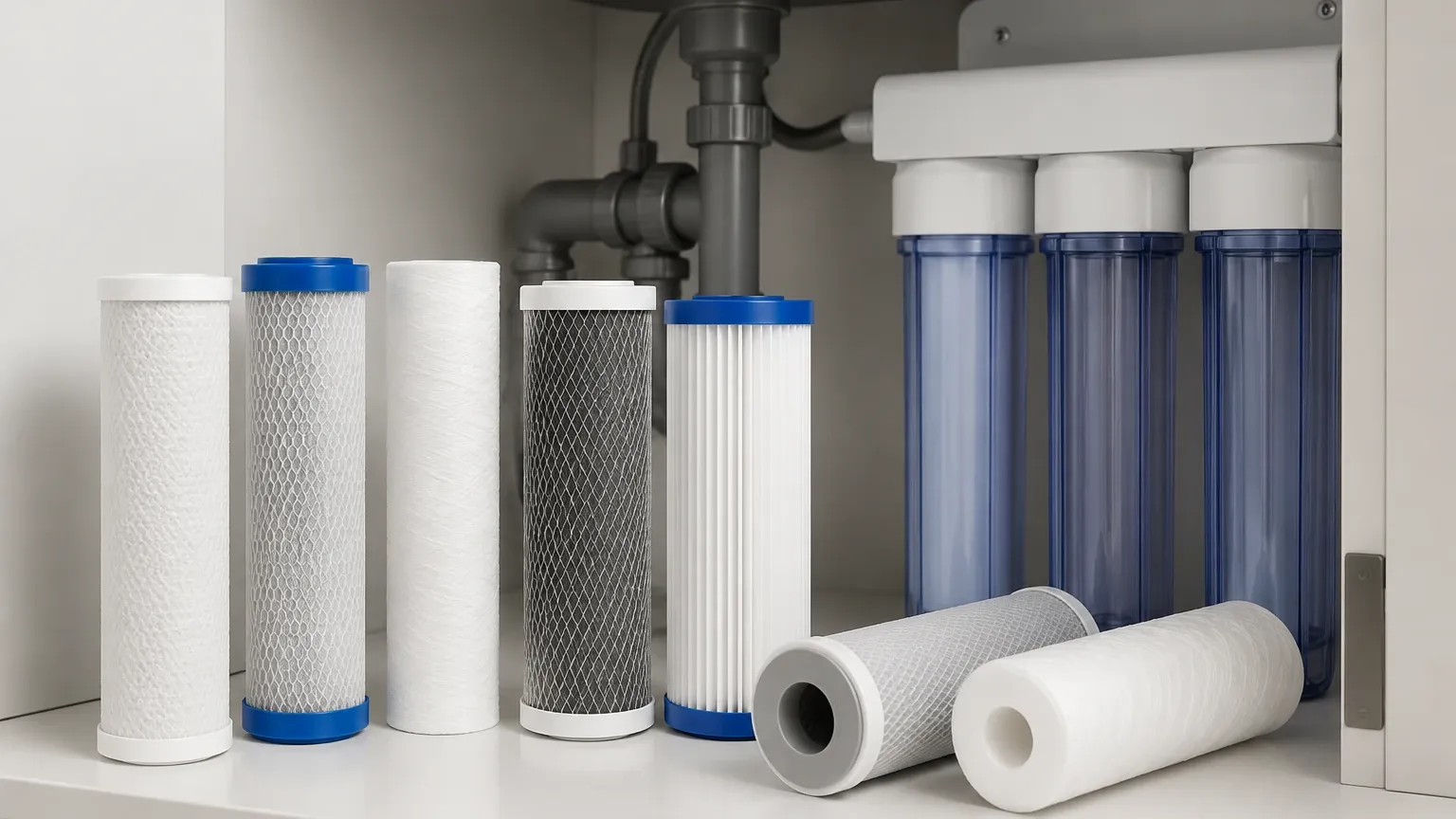
In industrial, commercial, and laboratory environments, point-of-use (POU) water filtration systems—often referred to as under-sink systems—are critical for ensuring the purity of process water, ingredient water, and potable supplies. While residential users focus on taste and odor, engineering and procurement teams must prioritize technical specifications, material compatibility, and structural integrity. Selecting the correct replacement under sink water filter cartridges is not merely a maintenance task; it is an engineering decision that impacts downstream equipment longevity, product quality, and operational overhead.
Industrial-grade filtration requires a departure from standard consumer plastics toward high-performance materials such as stainless steel wire mesh and sintered metal. These materials offer the durability needed to withstand pressure fluctuations, chemical exposure, and high temperatures that would compromise standard polymer filters.
Technical Specifications and Filtration Mechanics
When sourcing replacement under sink water filter cartridges, the primary technical consideration is the filtration mechanism and its efficiency. Filtration is generally categorized into surface filtration and depth filtration. Surface filters, such as stainless steel wire mesh, capture particles on the outer layer, making them easier to clean and backwash. Depth filters, often made from pleated media or sintered powders, trap particles within the thickness of the material, providing higher dirt-holding capacity for fine particulates.
Micron Ratings: Absolute vs. Nominal
Engineers must distinguish between nominal and absolute micron ratings. A nominal rating indicates the filter's ability to retain a majority of particles of a specific size, while an absolute rating signifies that 99.9% (Beta 1000) of particles at that size are captured. For critical applications, such as pharmaceutical rinsing or precision component cleaning, absolute-rated Filter Cartridges are essential to prevent contamination bypass.
Flow Rate and Pressure Drop (Delta P)
The relationship between flow rate and pressure drop is a vital engineering metric. As a cartridge accumulates debris, the differential pressure increases. If the initial pressure drop is too high due to restrictive media, the system's efficiency will plummet, and the pump may experience premature wear. High-quality stainless steel cartridges are engineered to maximize open area, ensuring high flow rates with minimal resistance.
Material Selection for Demanding Environments
The environment in which the filtration system operates dictates the material requirements for replacement under sink water filter cartridges. While polypropylene is common in low-demand scenarios, industrial applications often require the chemical resistance and thermal stability of stainless steel.
304 vs. 316L Stainless Steel
For most standard water filtration needs, Type 304 stainless steel provides excellent durability and corrosion resistance. However, in environments involving saline solutions, harsh chemicals, or high-purity deionized water, Type 316L is the preferred choice. The addition of molybdenum in 316L enhances its resistance to pitting and crevice corrosion, ensuring that the filter does not become a source of metal ion contamination.
Sintered Metal Media
Sintered metal cartridges are manufactured by fusing metal powders or fibers without the use of binders. This process creates a rigid, porous structure that can withstand extreme pressure differentials without deforming. This structural integrity is a significant advantage over pleated paper or plastic filters, which may collapse or "unload" captured contaminants during pressure spikes.
Engineering Considerations for System Compatibility
Compatibility involves more than just the physical dimensions of the cartridge; it encompasses the sealing mechanism and the housing interface. When evaluating replacement under sink water filter cartridges, engineers must verify several physical parameters to ensure a leak-proof and bypass-free installation.
End Cap Configurations
Standard under-sink housings often use Double Open End (DOE) configurations, relying on gaskets at both ends to create a seal. However, for higher-pressure or high-purity applications, Single Open End (SOE) designs with O-ring seals (such as 222 or 226 configurations) are superior. These provide a mechanical lock and a redundant seal that prevents bypass, which is a common failure point in lower-end filtration systems.
Gasket and O-Ring Materials
The elastomer used for seals must be compatible with the fluid and the operating temperature. Common materials include:
- Buna-N (Nitrile): Standard for general water applications.
- EPDM: Excellent for hot water and steam sterilization.
- Viton (FKM): Required for high-temperature and chemical-heavy processes.
- Silicone: Often used in food and beverage applications due to its inert nature.
Performance Evaluation and Total Cost of Ownership
The initial purchase price of replacement under sink water filter cartridges is only one component of the total cost of ownership (TCO). For procurement teams, the focus should shift toward the life-cycle cost, which includes replacement frequency, labor costs for maintenance, and the potential cost of system downtime.
Cleanability and Reusability
One of the primary advantages of stainless steel filter cartridges is their ability to be cleaned and reused. Unlike disposable plastic or fiber cartridges that must be discarded once fouled, metal mesh filters can be ultrasonically cleaned, backwashed, or chemically treated to restore their original permeability. In high-sediment environments, the ability to clean a filter ten or twenty times significantly reduces the long-term expenditure compared to purchasing hundreds of disposable units.
Monitoring Replacement Cycles
To optimize the replacement cycle, systems should be equipped with differential pressure gauges. Replacing a cartridge too early results in wasted resources, while replacing it too late risks media rupture or pump damage. A standard rule in industrial filtration is to schedule replacement or cleaning when the differential pressure reaches a predetermined limit, typically between 15 and 25 psi, depending on the housing's design limits.
Common Risks in Substandard Filtration
Selecting low-quality replacement under sink water filter cartridges introduces several risks that can compromise an industrial operation. Understanding these risks is essential for risk mitigation and quality assurance.
1. Media Migration: In poorly manufactured fiber filters, the filter media itself can break off and enter the downstream flow. Stainless steel wire mesh and sintered structures eliminate this risk due to their rigid, bonded construction.
2. Bypass: If the cartridge does not fit perfectly within the housing, or if the gaskets fail, water will take the path of least resistance around the filter. This results in unfiltered water reaching sensitive equipment.
3. Chemical Leaching: Some plastic filters use adhesives or surfactants that can leach into the water over time. Metal filters are typically binder-free, making them safer for high-purity and food-grade applications.
Customization and OEM Solutions
Many industrial under-sink systems are part of larger OEM equipment, such as commercial coffee brewers, laboratory water purifiers, or dental vacuum systems. In these cases, standard off-the-shelf cartridges may not meet the specific flow or filtration requirements. Customization allows for the optimization of the filter’s length, diameter, and micron rating to match the exact needs of the machinery.
Custom-engineered Filter Cartridges can be designed with reinforced internal cores to handle high-viscosity fluids or external shrouds to protect the delicate mesh from physical damage during handling and cleaning. Working with a manufacturer that understands these engineering nuances ensures that the replacement components perform as well as, or better than, the original equipment.
Conclusion: Making an Informed Selection
Selecting the right replacement under sink water filter cartridges requires a balance of mechanical engineering knowledge and operational insight. By focusing on material durability, absolute filtration accuracy, and the long-term benefits of cleanable media, industrial users can ensure their water systems remain reliable and cost-effective.
Before procurement, technical teams should confirm the chemical compatibility of the filter media and seals, the required micron rating for downstream protection, and the physical dimensions of the existing housing. Transitioning from disposable solutions to high-performance stainless steel filtration often provides the most sustainable and reliable path for demanding commercial and industrial water applications.
Download Replacement Under Sink Water Filter Cartridges as a PDF
