


Reece Water Filter Cartridges
In the landscape of industrial and commercial water treatment, procurement teams and facility engineers often encounter a variety of filtration components distributed through major suppliers. Among these, reece water filter cartridges represent a significant segment of the market, particularly for applications requiring point-of-entry or point-of-use water purification. Understanding the technical specifications, material compatibility, and performance limits of these cartridges is essential for maintaining system integrity and ensuring the longevity of downstream equipment.
For industrial professionals, the selection of Filter Cartridges is not merely a matter of brand preference but a calculation of flow dynamics, contaminant loading, and chemical resistance. This guide examines the engineering considerations behind water filtration solutions often found in commercial distribution, providing a technical framework for evaluation and selection.
Understanding the Application Scope of Reece Water Filter Cartridges
Reece serves as a primary distributor for various filtration brands, most notably Puretec and Stefani, which cater to a broad spectrum of water quality needs. In a B2B context, these cartridges are typically deployed in light industrial settings, commercial kitchens, laboratories, and small-scale manufacturing plants.
The utility of reece water filter cartridges generally falls into three categories:
1. Sediment Removal: Utilizing depth filtration or pleated media to capture suspended solids, rust, and scale.
2. Chemical Adsorption: Employing activated carbon (granulated or block) to remove chlorine, volatile organic compounds (VOCs), and improve taste or odor.
3. Specialized Treatment: Including scale inhibition for boilers and cooling towers, or ultra-fine filtration for microbiological control.
When integrating these components into an industrial process, engineers must confirm that the cartridge's design flow rate aligns with the system's peak demand. Overloading a cartridge beyond its rated capacity leads to premature bypass or structural failure of the filter media.
Engineering Specifications and Housing Compatibility
A critical factor in the procurement of reece water filter cartridges is the physical dimension and end-cap configuration. Most commercial water filters adhere to standard industry sizes, which facilitates easier replacement and cross-compatibility between different housing manufacturers.
Standard Dimensions
Industrial water filter housings typically accommodate cartridges in lengths of 10 inches and 20 inches. Within these lengths, two primary diameters exist:
* Slimline (Standard): Approximately 2.5 inches in diameter, suitable for low-flow applications.
* Large Diameter (Big Blue): Approximately 4.5 inches in diameter, designed for higher flow rates and higher dirt-holding capacity.
End-Cap Configurations
Most reece water filter cartridges utilize the Double Open End (DOE) configuration, which relies on a compression seal at both the top and bottom of the filter housing. However, in high-pressure industrial environments, engineers may require more secure interfaces, such as Code 7 (fin and double O-ring) or Code 3 (flat and double O-ring) configurations. While standard commercial cartridges often use DOE, high-performance stainless steel alternatives manufactured by specialists like Kaifil can be engineered to fit these standard housings while providing superior sealing integrity.
Material Science in Industrial Filtration: Beyond Standard Polymers
While many standard reece water filter cartridges are constructed from polypropylene, polyester, or cellulose, demanding industrial environments often necessitate a shift toward more robust materials. The choice of material directly impacts the cartridge’s chemical compatibility and thermal stability.
Polypropylene vs. Stainless Steel
Polypropylene is the industry standard for general-purpose water filtration due to its low cost and broad chemical resistance. However, it has limitations regarding temperature (typically capped at 60°C) and structural rigidity under high differential pressure.
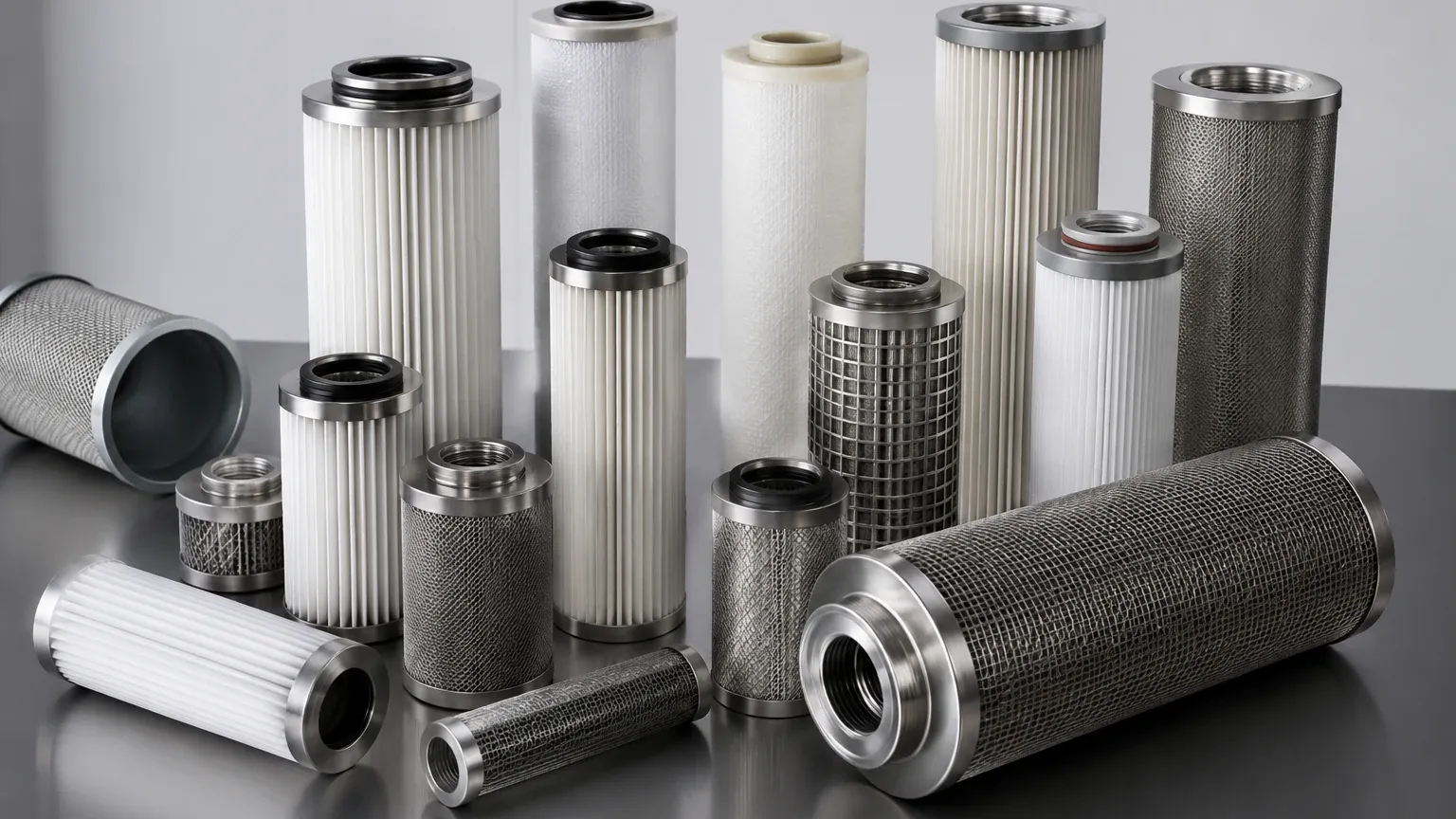
In contrast, Filter Cartridges constructed from 304 or 316L stainless steel wire mesh offer several advantages for industrial users:
* Temperature Resistance: Capable of operating in environments exceeding 200°C.
* Cleanability: Unlike disposable polymer cartridges, stainless steel mesh can be backwashed or ultrasonically cleaned, reducing the total cost of ownership over time.
* Structural Integrity: Stainless steel does not suffer from "unloading," a phenomenon where high pressure forces captured contaminants through the media.
For engineers managing chemical processing or high-temperature water loops, evaluating whether a standard polymer cartridge from a distributor like Reece is sufficient, or if a custom metal filter component is required, is a vital step in system design.
Evaluating Filtration Efficiency and Micron Ratings
The performance of reece water filter cartridges is primarily defined by their micron rating. However, B2B buyers must distinguish between "nominal" and "absolute" ratings to avoid performance gaps.
Nominal Micron Rating
A nominal rating indicates that the filter will trap a large percentage (typically 60% to 80%) of particles at the specified size. This is often sufficient for general sediment reduction in municipal water lines.
Absolute Micron Rating
An absolute rating implies that the filter media will capture 99.9% (Beta 1000) of particles at that size. In pharmaceutical or food and beverage applications, where microbial control or precise process consistency is required, absolute-rated cartridges are mandatory.
When sourcing reece water filter cartridges, it is important to review the manufacturer's technical data sheets to confirm the testing methodology used to determine these ratings. Industrial applications involving sensitive equipment, such as reverse osmosis (RO) membranes, require strict adherence to micron specifications to prevent premature membrane fouling.
Maintenance Protocols and Replacement Cycles
The operational cost of a filtration system is heavily influenced by the replacement frequency of the cartridges. For reece water filter cartridges, the replacement cycle is governed by two main factors: differential pressure ($ΔP$) and time.
1. Differential Pressure: As the filter media becomes loaded with contaminants, the pressure drop across the filter increases. Most industrial systems should have pressure gauges installed upstream and downstream of the filter housing. A common threshold for replacement is a differential pressure of 10 to 15 psi (0.7 to 1.0 bar). Operating beyond this point risks media rupture or a significant decrease in flow.
2. Time-Based Replacement: For carbon-based cartridges, the chemical adsorption sites eventually become saturated. Even if the pressure drop is low, the cartridge may no longer be removing chlorine or VOCs. Standard recommendations for commercial water filters often suggest a 6-to-12-month replacement interval to prevent bacterial growth within the media.
In high-volume industrial applications, the labor costs associated with frequent cartridge changes can be significant. This is where high-capacity pleated Filter Cartridges or permanent stainless steel solutions provide a logistical advantage by extending the service interval.
Custom OEM Solutions for High-Demand Environments
While standard reece water filter cartridges meet the needs of many general applications, unique industrial challenges often require customized filtration components. This is particularly true in sectors like hydraulic oil filtration, high-viscosity fluid processing, or aggressive chemical filtration.
As a manufacturer specializing in custom stainless steel filtration, Kaifil works with engineers to develop bespoke solutions that standard distributors may not stock. Customization options include:
* Bespoke Micron Grades: Tailoring the mesh weave to capture specific particle geometries.
* Reinforced Cores: Designing internal supports that can withstand extreme pressure spikes without collapsing.
* Custom End-Caps: Engineering adapters that allow high-performance metal filters to fit into existing plastic or commercial-grade housings.
By understanding the limitations of off-the-shelf products, purchasing teams can make informed decisions about when to utilize standard commercial cartridges and when to invest in engineered metal filtration components.
Total Cost of Ownership (TCO) Considerations
When evaluating reece water filter cartridges, the initial purchase price is only one component of the TCO. Engineers must also account for:
* Disposal Costs: Polymer cartridges are generally single-use and contribute to the waste stream. In some jurisdictions, used filters may be classified as hazardous waste depending on the contaminants captured.
* Downtime: The time required to take a system offline for filter changes impacts production efficiency. High-dirt-holding capacity filters reduce this frequency.
* Energy Consumption: A filter with a high initial pressure drop requires more pump energy to maintain the desired flow rate. Selecting a cartridge with an optimized surface area, such as a pleated design, can lower energy costs.
Conclusion: Selecting the Right Filtration Strategy
Reece water filter cartridges provide a reliable and accessible solution for a wide range of standard water treatment needs. However, for the industrial sector, selection must be guided by rigorous engineering standards. By analyzing the specific demands of the application—including flow rates, temperature, chemical exposure, and required filtration accuracy—engineers can determine the most cost-effective and technically sound filtration strategy.
Whether utilizing standard commercial cartridges or opting for high-performance Filter Cartridges made of stainless steel, the focus remains on protecting downstream assets and maintaining process consistency. For those operating in demanding environments where standard solutions fall short, consulting with a specialized manufacturer like Kaifil ensures that filtration components are engineered to meet the exact rigors of the application.
