


9 Wire Mesh
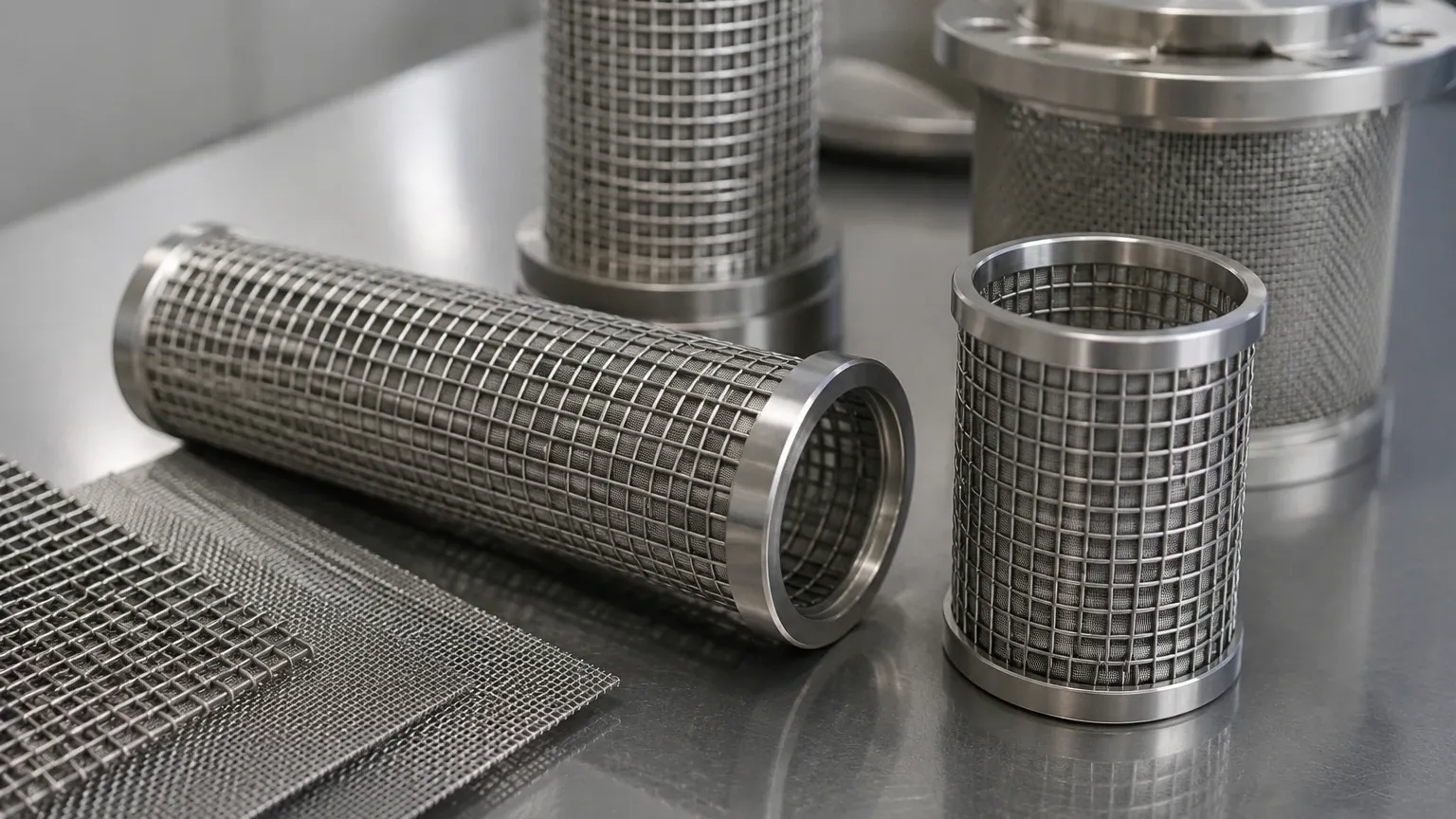
In industrial filtration and fluid management, the selection of the correct mesh specification is a critical engineering decision that impacts system pressure, flow efficiency, and the protection of downstream components. Among the various specifications used in coarse filtration and structural support, 9 wire mesh serves as a robust solution. When integrated into Wire Mesh Filter Cylinders & Tubes, this specific mesh count provides a balance between mechanical strength and high flow capacity.
For engineers and procurement professionals, understanding the technical nuances of 9 mesh—ranging from its physical dimensions to its performance under hydraulic stress—is essential for optimizing filtration systems in chemical processing, water treatment, and industrial level measurement applications.
Understanding 9 Wire Mesh Specifications
The term "9 mesh" refers to the number of openings per linear inch of the wire cloth. In the context of industrial wire mesh, this is a relatively coarse specification, often utilized for primary filtration, scalping, or as a support layer for finer filter media.
Technical Dimensions and Aperture
The performance of 9 wire mesh is defined by the relationship between the mesh count and the wire diameter. For example, using a standard wire diameter of 0.80 mm (0.032 inches) for a 9-mesh screen results in an aperture (opening) of approximately 2.02 mm (0.079 inches). This creates an open area percentage of roughly 51.3%.
When selecting 9 mesh for industrial cylinders, engineers must specify the wire diameter based on the required structural integrity:
- Heavier Wire (e.g., 1.0 mm): Increases the burst strength of the cylinder but reduces the open area and increases the pressure drop.
- Lighter Wire (e.g., 0.6 mm): Maximizes flow rates and reduces weight but may require internal reinforcement (such as a perforated metal core) to prevent collapse under high differential pressure.
Structural Design of Wire Mesh Filter Cylinders & Tubes
Converting flat 9 wire mesh into functional cylinders and tubes involves precise fabrication techniques to ensure the component can withstand the rigors of industrial environments. The structural design is as important as the filtration rating itself.
Welding and Seam Integrity
For B2B applications where durability is paramount, the longitudinal seam of the filter tube is typically joined using TIG (Tungsten Inert Gas) welding or plasma welding. These methods provide a clean, high-strength bond without the need for fillers that could contaminate the process fluid. In high-volume OEM production, resistance welding or spot welding may be used for overlap seams, though butt-welding is preferred for applications requiring a perfectly smooth internal or external diameter.
Reinforcement Strategies
Because 9 wire mesh is relatively coarse, it is frequently used as the outer protective layer or the inner support core for multi-layered filter elements. In high-pressure hydraulic or water treatment systems, a standalone mesh tube may fail due to pressure surges. To mitigate this, manufacturers often combine the mesh with:
1. Perforated Metal Cores: Providing the primary rigid structure while the mesh handles the filtration.
2. Sintered Layers: Bonding multiple layers of mesh together through a heat-treatment process to create a monolithic structure with fixed pore geometry.
3. End Caps and Fittings: Custom-machined flanges, NPT threads, or BSP fittings are welded to the ends of the cylinders to ensure leak-proof integration into the housing.
Material Selection for Corrosive and High-Temperature Environments
The longevity of Wire Mesh Filter Cylinders & Tubes is largely dictated by material science. In the chemical and pharmaceutical sectors, generic steel is rarely sufficient.
Stainless Steel Grades
- Grade 304: The standard choice for general industrial use, offering good corrosion resistance and excellent formability. It is suitable for food and beverage applications where high-acid environments are not present.
- Grade 316L: Containing molybdenum, 316L is the preferred choice for marine environments, pharmaceutical processing, and applications involving chlorides or aggressive chemicals. The "L" (low carbon) designation ensures the material remains resistant to intergranular corrosion after welding.
- High-Temperature Alloys: For applications exceeding 500°C, such as hot gas filtration, alloys like 310S or Inconel may be required to maintain mechanical properties and oxidation resistance.
Surface Treatments
To further enhance performance, 9 wire mesh components can undergo secondary treatments:
- Passivation: Removes free iron from the surface to maximize the protective chromium oxide layer.
- Electropolishing: Smooths the microscopic surface of the wire, reducing the risk of bacterial growth in food-grade applications and making the filter easier to clean during backwashing cycles.
Integration into Industrial Level Measurement and Fluid Systems
While primarily used for filtration, 9 wire mesh cylinders play a specialized role in industrial level measurement. In many tank systems, sensitive level sensors (such as float switches or ultrasonic transducers) can be disrupted by turbulence, foam, or debris.
Stilling Wells and Protective Cages
A cylinder made from 9 wire mesh can act as a "stilling well." By surrounding the sensor, the mesh allows the liquid to reach the same level as the rest of the tank while dampening surface waves and blocking large particulates that might jam a mechanical float. The 9-mesh specification is ideal here because it provides enough open area to ensure there is no "level lag" (the delay in the liquid level equalizing inside the cage) while still offering significant mechanical protection.
Intake Strainers
In pumping systems, these tubes serve as intake strainers. The coarse 9-mesh aperture is perfect for protecting pumps from large debris like stones, plastic fragments, or wood chips, which are common in raw water intake from rivers or lakes. By preventing these solids from entering the pump volute, the mesh cylinder significantly extends the mean time between failures (MTBF) for the rotating equipment.
Performance Evaluation: Flow Rate, Pressure Drop, and Filtration Accuracy
When specifying 9 wire mesh for a new project, engineers must calculate the expected performance parameters to ensure the system meets its design goals.
Flow-Pressure Dynamics
The pressure drop ($\\Delta P$) across a wire mesh cylinder is a function of the fluid viscosity, velocity, and the mesh's open area. A 9-mesh screen, with its large apertures, typically exhibits a very low initial pressure drop. However, as particulates accumulate on the surface, the effective open area decreases.
Engineers should request a flow-vs-pressure curve from the manufacturer to determine the "terminal pressure drop"—the point at which the filter must be cleaned or replaced to prevent pump cavitation or housing failure.
Filtration Efficiency
It is important to note that 9 wire mesh is a surface filtration medium. It captures particles larger than its aperture on the surface. For applications requiring the removal of fine silts or bacteria, 9 mesh should only be used as a pre-filter or a support structure for a finer membrane or a high-density sintered metal felt.
Procurement and Customization: A Guide for Engineering Buyers
Purchasing industrial filtration components requires more than just selecting a part number. For international buyers, confirming the following technical details with the manufacturer is critical to ensuring project success.
Customization Options
Standard sizes are rarely sufficient for specialized industrial equipment. Buyers should look for manufacturers capable of providing:
- Custom Diameters and Lengths: Precise tolerances (e.g., +/- 0.5 mm) are often required for a proper fit in existing filter housings.
- Variable Weave Types: While plain weave is standard for 9 mesh, twilled weaves or Dutch weaves can be utilized if the application requires a different balance of strength and filtration fineness.
- OEM Branding: For equipment manufacturers, having the filter components produced with specific part numbers or logos can simplify after-market part replacement for their end-users.
Quality Assurance and Documentation
To meet regulatory and safety standards, especially in the pharmaceutical or oil and gas sectors, the following documentation should be requested:
- Material Test Reports (MTRs): Confirming the chemical composition of the stainless steel (e.g., verifying it is true 316L).
- Dimensional Inspection Reports: Ensuring the cylinders meet the specified tolerances.
- Pressure Test Certificates: For components that will operate under significant hydraulic load.
Maintenance and Service Life
The total cost of ownership (TCO) of a filter is determined by its durability and ease of maintenance. Wire Mesh Filter Cylinders & Tubes made from 9 mesh are generally highly reusable.
Cleaning Methods
Unlike disposable polymer filters, stainless steel mesh can be cleaned multiple times. Common methods include:
- Backwashing: Reversing the flow of the fluid to dislodge particles from the mesh surface.
- Ultrasonic Cleaning: Using high-frequency sound waves in a solvent bath to remove fine contaminants trapped in the wire intersections.
- Chemical Cleaning: Using mild acids or bases to dissolve organic or mineral scaling, provided the mesh material is compatible with the cleaning agent.
Replacement Cycles
While durable, wire mesh is subject to fatigue and abrasion. In systems with high-velocity abrasive slurries, the wires can thin over time, leading to a change in the aperture size or eventual breakage. Regular visual inspections for "wire thinning" or seam separation are recommended during scheduled maintenance shutdowns.
Conclusion
9 wire mesh is a versatile and essential component in the landscape of industrial filtration. Whether used as a standalone intake strainer, a protective stilling well for level sensors, or a structural support for complex multi-stage filter elements, its performance is rooted in its technical specifications. By selecting the appropriate material grade, wire diameter, and reinforcement structure, engineers can ensure that their Wire Mesh Filter Cylinders & Tubes provide reliable, long-term service in even the most demanding B2B environments.
When sourcing these components, partnering with a manufacturer that understands the intersection of material science and fluid dynamics is key to achieving optimal filtration efficiency and minimizing operational downtime.
