


Filter Cartridge 150
In industrial filtration, the designation "150" typically refers to one of two critical specifications: a filtration rating of 150 microns or a physical dimension, such as a 150mm length. For engineers and procurement specialists, selecting a Filter Cartridges solution requires a precise understanding of how these specifications interact with fluid dynamics, chemical compatibility, and system pressure requirements.
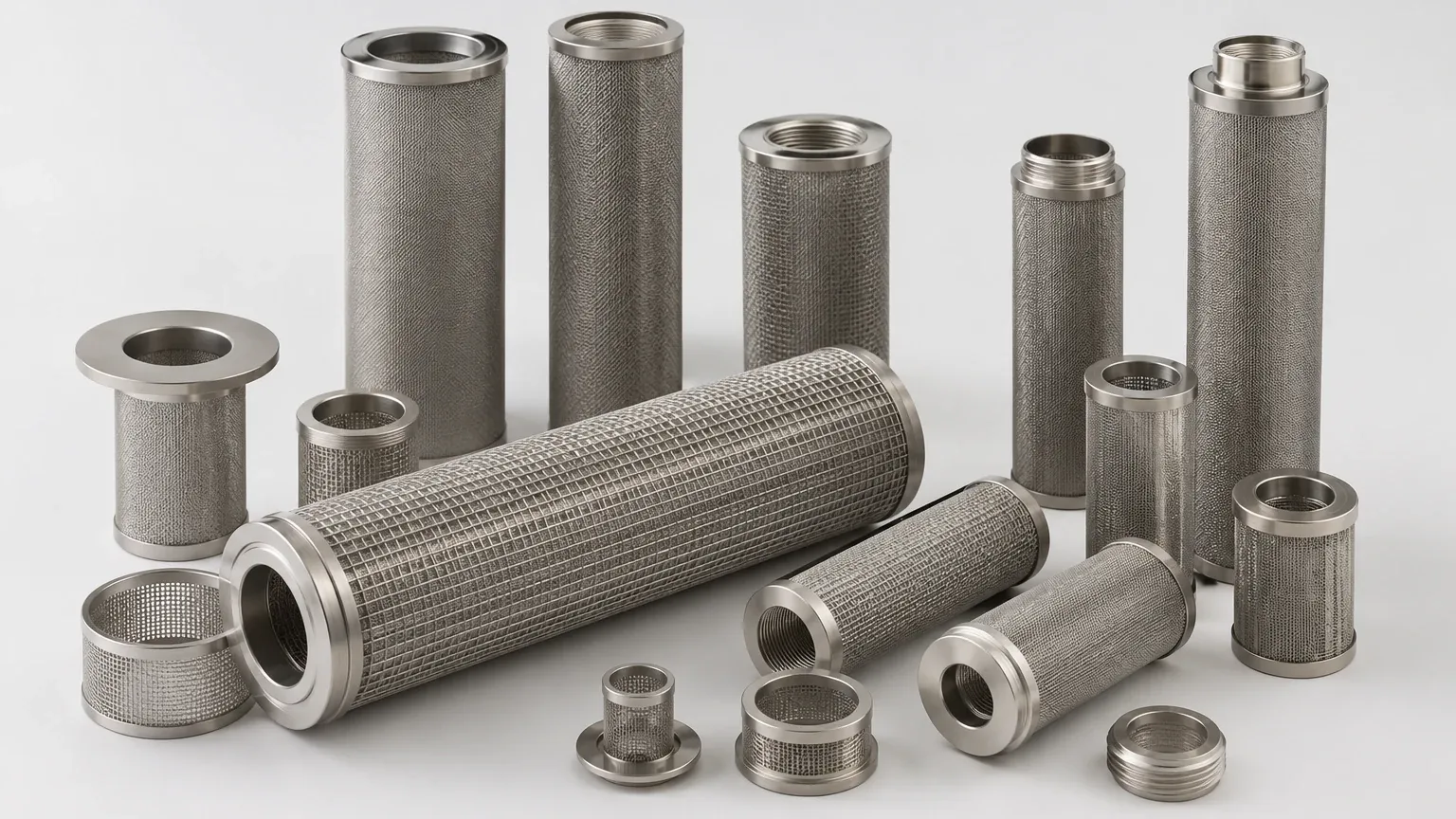
Stainless steel filter cartridges, particularly those designed for 150-micron retention or 150mm form factors, serve as essential components in protecting downstream equipment, ensuring product purity, and maintaining the integrity of closed-loop hydraulic and chemical systems. This guide examines the technical parameters, material considerations, and application-specific logic required to integrate these components effectively into industrial workflows.
Understanding the Role of 150-Micron Filtration in Industrial Systems
When "150" refers to the micron rating, it indicates that the filter medium is designed to capture particles larger than 150 micrometers. In the hierarchy of industrial filtration, this is classified as a coarse-to-medium filtration level, often serving as a primary defense or a "scalping" filter.
150-Micron Mesh Characteristics
A 150-micron rating is roughly equivalent to a 100-mesh screen in standard U.S. mesh sizing. For stainless steel cartridges, this is typically achieved using a plain square weave or a twilled weave of stainless steel wire.
* Plain Weave: Provides a straight-through flow path and is easiest to clean via backwashing. It is ideal for applications with a high concentration of solid contaminants where surface loading is expected.
* Structural Integrity: At 150 microns, the wire diameter is substantial enough to offer significant mechanical strength, allowing the cartridge to withstand higher differential pressures without the immediate need for heavy internal support cores, though cores are still recommended for high-pressure hydraulic applications.
Pre-Filtration and Protection
The primary engineering objective for a 150-micron filter is often the protection of high-precision downstream components. In a multi-stage filtration system, a 150-micron cartridge removes larger debris—such as metal shavings, scale, or large organic particulates—preventing them from clogging finer membranes or damaging sensitive pumps and valves. This staged approach extends the service life of more expensive, sub-micron filters located further down the line.
Material Selection for Stainless Steel Filter Cartridges
Industrial environments demand materials that can survive corrosive chemicals, extreme temperatures, and physical abrasion. For a filter cartridge 150, the choice of alloy is the most significant factor in determining the total cost of ownership (TCO).
Type 304 Stainless Steel
Type 304 is the standard grade for general industrial use. It provides excellent strength and good corrosion resistance for water treatment, food and beverage processing, and basic hydraulic fluids. It is a cost-effective choice for environments where the pH levels are relatively neutral and chloride exposure is minimal.
Type 316L Stainless Steel
For more demanding applications, Type 316L (low carbon) is the preferred specification. The addition of molybdenum enhances resistance to pitting and crevice corrosion, particularly in chloride-rich environments. In pharmaceutical and chemical processing, 316L is often mandatory to prevent metallic leaching and to withstand aggressive Clean-in-Place (CIP) chemicals.
Temperature and Chemical Compatibility
Unlike polymer-based filters (such as polypropylene or PES), stainless steel filter cartridges can operate in temperatures exceeding 250°C (depending on the seal material). When evaluating a 150-series cartridge for high-temperature steam or hot oil filtration, engineers must ensure that the end-cap adhesives or welding methods are compatible with the operating temperature. All-welded constructions are generally superior for extreme thermal cycling.
Engineering Standards for Filter Cartridge 150 Dimensions
In many contexts, "150" refers to the physical length of the cartridge—150mm (approximately 6 inches). This compact size is frequently utilized in specialized industrial equipment where space is at a premium.
Standard Form Factors
Common diameters for 150mm cartridges include the standard 2.5-inch (63mm) or 2.75-inch (70mm) outer diameters. These are often used in:
* Vent Filters: Protecting storage tanks from atmospheric contaminants during fluid draw-down.
* Small-Batch Processing: In laboratory or pilot plant settings where fluid volumes do not justify a full-length 10-inch or 20-inch cartridge.
* Hydraulic Return Lines: Filtering oil as it returns to a reservoir in mobile or stationary machinery.
End-Cap Configurations
The interface between the cartridge and the housing is a critical failure point if not specified correctly. Common configurations for the 150mm length include:
* DOE (Double Open End): Uses flat gaskets at both ends; requires a housing with a tie-rod or spring-loaded cap to maintain a seal.
* Code 7 (226 O-Rings/Fin): Features a bayonet-style locking mechanism and double O-rings, providing a high-security seal for critical applications.
* SOE (Single Open End): Often used in sanitary housings to eliminate "dead zones" where bacteria could proliferate.
Performance Metrics: Flow Rate and Differential Pressure
When integrating a filter cartridge 150 into a system, engineers must calculate the clean pressure drop (ΔP) to ensure the pump capacity is sufficient.
Flow Velocity and Viscosity
The 150-micron mesh offers relatively low resistance to flow compared to tighter ratings. However, the viscosity of the fluid significantly impacts performance. For high-viscosity fluids like resins or heavy oils, the flow rate per unit area must be reduced to prevent a rapid rise in differential pressure.
Dirt Holding Capacity
While stainless steel mesh filters are primarily surface-loading media, pleated designs can significantly increase the available surface area. A pleated 150-micron cartridge will have a much higher dirt-holding capacity than a cylindrical wrap of the same dimensions, leading to longer intervals between cleaning cycles. In B2B procurement, the choice between pleated and cylindrical designs should be based on the contaminant load of the process fluid.
Key Applications for 150-Series Filtration
The versatility of the 150-micron rating and the 150mm form factor makes these cartridges staples across several sectors.
Food and Beverage Processing
In the production of juices, syrups, and oils, 150-micron filters are used to remove pulp, seeds, or large particulates. Stainless steel is the material of choice here due to its ability to be sterilized and its compliance with food safety standards. The durability of the metal ensures that no fibers or plastic fragments migrate into the product stream.
Chemical and Petrochemical Industries
Filter cartridges are used to protect nozzles and sensitive instrumentation from pipeline scale and rust. In chemical synthesis, a 150-micron filter may be used to recover expensive catalysts from a slurry after a reaction is complete.
Water Treatment and Desalination
As a pre-filter for Reverse Osmosis (RO) systems or UV sterilization units, 150-micron cartridges remove suspended solids that could foul membranes or shield microbes from UV light. In seawater applications, the use of high-grade alloys like 316L or Super Duplex is essential to prevent rapid corrosion.
Maintenance and Cleaning of Reusable Metal Cartridges
One of the primary advantages of a stainless steel filter cartridge over disposable options is reusability. This significantly reduces the long-term operational expenditure (OPEX) and environmental impact.
Cleaning Methods
* Backwashing: Reversing the flow of the fluid to dislodge particles from the surface of the mesh.
* Ultrasonic Cleaning: Using high-frequency sound waves in a cleaning solvent to remove deeply embedded contaminants. This is highly effective for pleated 150-micron cartridges.
* Chemical Soaking: Utilizing acids or alkalis to dissolve organic or mineral buildup, followed by a thorough rinse.
Determining Replacement Cycles
While reusable, stainless steel cartridges are not infinite. Engineers should monitor the "terminal differential pressure"—the point at which the filter is so loaded that cleaning no longer returns the ΔP to an acceptable baseline. Physical inspection for mesh blinding, wire fraying, or end-cap separation is necessary to ensure the cartridge still meets its original 150-micron specification.
Customization and OEM Procurement for Industrial Filters
For many B2B buyers, standard off-the-shelf options may not meet the specific requirements of a proprietary machine or a unique chemical process. Customization is often required for the filter cartridge 150 to ensure perfect integration.
Custom Dimensions and Fittings
OEMs often require non-standard lengths (e.g., exactly 152mm) or specialized thread patterns (NPT, BSP, or custom flanges) to fit legacy equipment. Working with a manufacturer that provides custom engineering support allows for the development of a drop-in replacement that eliminates the need for expensive housing modifications.
Validation and Testing
In regulated industries like pharmaceuticals, a filter cartridge must be accompanied by material certifications (MTRs) and, in some cases, integrity test data. When sourcing 150-micron filters, it is vital to confirm that the manufacturer can provide the necessary documentation to satisfy quality audit requirements.
Total Cost of Ownership (TCO) Considerations
When evaluating a Filter Cartridges purchase, the initial price is only one component. Buyers must account for:
1. Service Life: How many cleaning cycles can the cartridge survive?
2. Labor Costs: How easy is it to install and remove the cartridge?
3. Process Downtime: Does the filter design allow for rapid change-outs?
4. Waste Disposal: The cost savings of not disposing of plastic cartridges every few weeks.
By selecting a high-quality stainless steel 150-series cartridge, industrial facilities can achieve a more stable process, better equipment protection, and a lower overall cost per gallon of filtered fluid. Whether the requirement is for a 150-micron mesh to protect a high-pressure pump or a 150mm cartridge for a compact vent application, the engineering focus remains on material integrity, precise manufacturing, and application compatibility.
