


Filter Element 10 Micron
In industrial filtration, the selection of a specific micron rating is a critical engineering decision that directly impacts process efficiency, equipment longevity, and product purity. A filter element 10 micron rating represents a common yet vital threshold in liquid and gas processing. It sits at the intersection of fine particulate removal and high-flow efficiency, making it a standard choice for protecting sensitive downstream components such as high-pressure pumps, spray nozzles, and precision valves.
Understanding the technical nuances of a 10-micron rating requires more than just knowing the particle size. Engineers must evaluate the distinction between nominal and absolute ratings, the material of construction, and the structural design of the Filter Cartridges to ensure the selected component meets the rigorous demands of industrial environments.
Understanding the 10-Micron Filtration Threshold
A micron, or micrometer (µm), is one-millionth of a meter. To put a 10-micron rating into perspective, a human hair is typically between 50 and 70 microns in diameter, while the lower limit of human visibility is approximately 40 microns. Therefore, a filter element 10 micron is designed to capture particles that are invisible to the naked eye but significant enough to cause mechanical wear or process contamination.
In hydraulic systems, for example, particles in the 5 to 15-micron range are often the most damaging because they match the clearance sizes of many moving parts. A 10-micron filter acts as a primary line of defense, capturing silt and metallic debris before they can cause abrasive wear. In the food and beverage or pharmaceutical sectors, this level of filtration is frequently used for clarification or as a pre-filter to protect more expensive sub-micron membranes.
Nominal vs. Absolute Ratings in 10-Micron Filter Elements
One of the most frequent points of confusion in filter selection is the difference between nominal and absolute micron ratings. This distinction is critical when specifying a filter element 10 micron for a specific application.
Nominal Ratings
A nominal rating is an efficiency figure based on weight percentage. A nominally rated 10-micron filter might be 60% to 90% efficient at capturing particles of that size. These filters are generally used in less critical applications or as pre-filters where the goal is to reduce the overall particle load rather than ensure total removal of a specific size. They are often constructed from depth media like felt or wound fiber.
Absolute Ratings
An absolute rating implies that the filter has been tested to capture 99.9% (or higher) of particles at the specified micron size. This is often expressed via the Beta Ratio (β). For a filter to be considered "absolute" at 10 microns, it should ideally have a Beta Ratio of β10 = 1000, meaning only one out of every 1,000 particles of 10 microns or larger passes through the media. For critical industrial processes, such as chemical catalyst recovery or fine chemical production, absolute-rated stainless steel Filter Cartridges are the industry standard.
Material Engineering for Stainless Steel Filter Cartridges
While synthetic materials like polypropylene or polyester are common in disposable applications, industrial B2B environments often require the durability of metal. Stainless steel (typically grades 304 or 316L) is the material of choice for high-performance filter elements due to its thermal stability and chemical resistance.
Sintered Wire Mesh
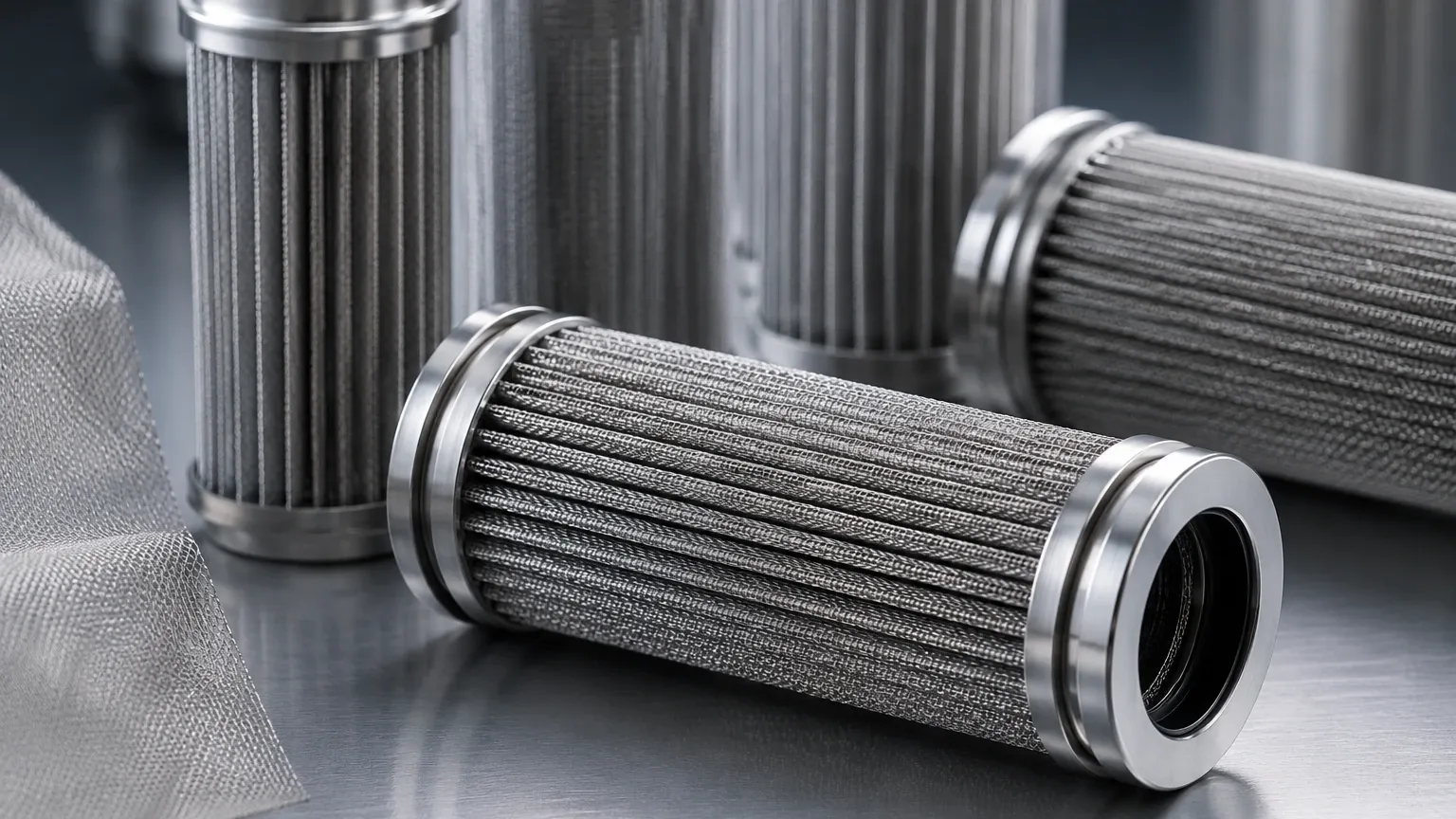
For a 10-micron requirement, sintered wire mesh is a premier choice. This material consists of multiple layers of stainless steel wire cloth that are bonded together through a high-temperature sintering process. This creates a robust, fixed-pore structure that will not migrate or unload particles under pressure surges. A filter element 10 micron made from sintered mesh provides precise surface filtration, making it easy to clean via backwashing.
Pleated Metal Designs
To maximize the surface area within a standard cartridge footprint, stainless steel media can be pleated. Pleating a 10-micron mesh significantly increases the dirt-holding capacity and reduces the initial pressure drop. This is particularly beneficial in high-flow applications where downtime for cleaning or replacement must be minimized. The increased surface area allows the filter to operate longer before reaching its terminal pressure drop.
Performance Metrics: Flow Rate and Pressure Drop
Every filter element introduces resistance to the fluid flow, known as pressure drop (ΔP). When selecting a filter element 10 micron, engineers must balance filtration efficiency with the system's energy requirements.
Several factors influence the pressure drop across a 10-micron element:
1. Fluid Viscosity: Thicker fluids (like heavy oils) require more force to pass through 10-micron pores than water or gases.
2. Flow Velocity: Higher flow rates increase the pressure drop exponentially. If the ΔP is too high at the start, the service life of the element will be significantly shortened.
3. Contaminant Loading: As the filter captures debris, the available open area decreases, and ΔP rises.
In professional filtration system design, it is standard practice to size the filter housing and element so that the initial clean pressure drop does not exceed 2-3 PSI (0.14-0.2 bar). This provides ample "headroom" for the filter to accumulate contaminants before reaching the recommended change-out or cleaning pressure, which is often around 15-25 PSI for liquid systems.
Industrial Applications of 10-Micron Filtration
The 10-micron threshold is utilized across a diverse range of industries, each with unique performance expectations.
Hydraulic and Lubrication Systems
In heavy machinery, a filter element 10 micron is often used in return lines or kidney-loop filtration systems. By maintaining fluid cleanliness to ISO 4406 standards (such as 18/16/13), these filters prevent the "chain reaction of wear" where small particles generate even more particles through abrasion.
Chemical and Petrochemical Processing
Corrosive fluids and high-temperature processes demand stainless steel Filter Cartridges. A 10-micron element is frequently used to remove suspended solids from process water, solvents, or intermediate chemical products. The ability of stainless steel to withstand temperatures exceeding 500°F (260°C) makes it indispensable in these sectors.
Food and Beverage Clarification
In the production of syrups, edible oils, and beverages, 10-micron filtration serves to remove large yeast cells, pulp, or sediment. Because stainless steel is inert and can be sterilized (SIP/CIP), it meets the stringent hygiene requirements of the industry while providing a reusable alternative to disposable plastic filters.
Selection Criteria for Engineers and Purchasing Teams
When sourcing a filter element 10 micron, purchasing teams and engineers should confirm several technical specifications to ensure the product is fit for purpose.
* Chemical Compatibility: Beyond the filter media itself, consider the seals and O-rings. Viton, Buna-N, EPDM, and PTFE are common options. The choice depends on the chemical nature of the fluid and the operating temperature.
* Structural Integrity: Confirm the collapse pressure rating. If a pump continues to run against a blinded filter, the element must be strong enough to resist collapsing. Stainless steel elements often feature a perforated inner core for added structural support.
* End Cap Configuration: Cartridges come in various styles, such as Double Open End (DOE), Code 7 (226 O-rings with a fin), or Code 3 (222 O-rings). Compatibility with existing filter housings is essential for a leak-free seal.
* Certification Requirements: Depending on the industry, you may require FDA compliance for food contact or PED/ASME certification for pressure vessel components.
Maintenance and Cleaning of Metal Filter Elements
One of the primary advantages of choosing a stainless steel filter element 10 micron over a synthetic disposable is the ability to clean and reuse the component. This significantly reduces the total cost of ownership (TCO) and minimizes waste.
Cleaning Methods
1. Backwashing: Reversing the flow of clean fluid through the element to dislodge surface contaminants. This is most effective with sintered mesh media.
2. Ultrasonic Cleaning: Using high-frequency sound waves in a cleaning solvent to break loose fine particles trapped deep within the mesh or pleats.
3. Chemical Cleaning: Soaking the element in specialized surfactants or acids to dissolve organic or inorganic scaling, followed by a thorough rinse.
Determining Replacement Cycles
While metal elements are washable, they do not last forever. Repeated cleaning cycles can eventually lead to work hardening of the wire mesh or microscopic tears. Engineers should monitor the "clean pressure drop" after each cleaning cycle. If the initial ΔP begins to rise consistently even after cleaning, it indicates that the media is becoming permanently fouled (depth loading) and the element should be replaced to maintain system efficiency.
Conclusion
The filter element 10 micron is a cornerstone of industrial filtration, providing a balance of precision and flow capacity. Whether implemented in a hydraulic circuit to prevent component failure or in a chemical plant to ensure product quality, the performance of the filter depends on material quality and engineering design. By selecting high-grade stainless steel Filter Cartridges and understanding the technical requirements of the application—from Beta ratios to chemical compatibility—technical professionals can achieve reliable, cost-effective filtration results.
For those managing demanding industrial processes, moving toward robust, cleanable metal filtration solutions often represents the most sustainable path for both operational performance and long-term value.
