


Cartridge Filter 1 Micron 20 Inch
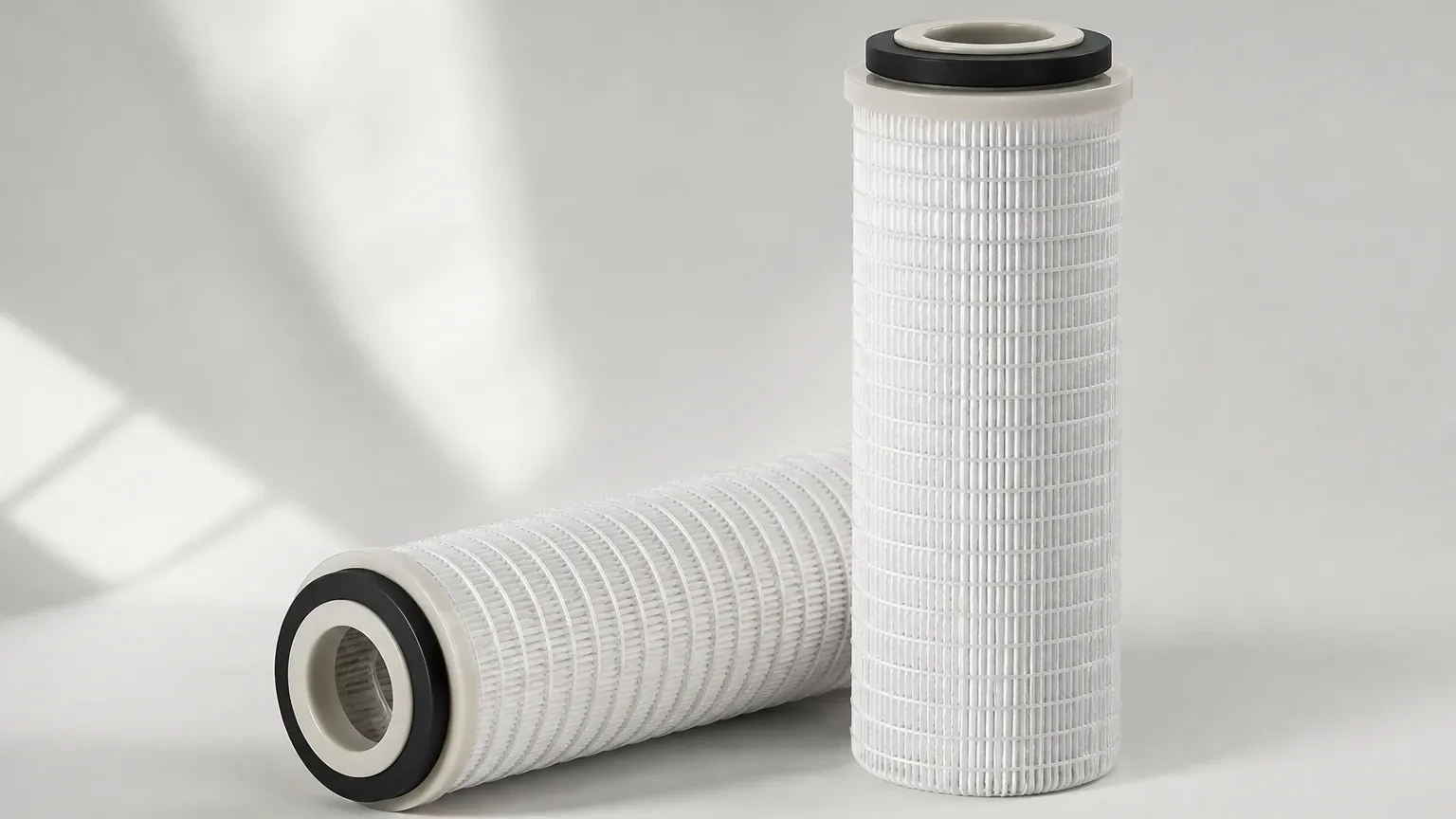
In industrial filtration, the selection of a cartridge filter 1 micron 20 inch represents a specific engineering decision aimed at achieving high-clarity fluid processing. This configuration is a standard in various sectors, including chemical processing, pharmaceuticals, and food and beverage production, where fine particulate removal is critical to product quality and equipment protection. Understanding the technical nuances of these filters—ranging from material composition to flow dynamics—is essential for engineers and procurement teams tasked with optimizing filtration systems.
A 1-micron rating indicates the filter's ability to capture particles as small as one-thousandth of a millimeter. When paired with a 20-inch length, the cartridge provides a specific surface area and flow capacity that fits into standard industrial housings. While many off-the-shelf solutions exist in polymer forms, industrial-grade Filter Cartridges manufactured from stainless steel offer distinct advantages in demanding environments involving high temperatures, aggressive chemicals, or high-pressure differentials.
Technical Specifications: Defining 1 Micron and 20 Inches
To accurately evaluate a cartridge filter 1 micron 20 inch, one must first distinguish between nominal and absolute filtration ratings. This distinction often dictates the success or failure of a filtration process.
Nominal vs. Absolute Ratings
A nominal 1-micron rating suggests the filter can trap a large percentage (typically 60% to 90%) of particles at that size. In contrast, an absolute rating implies a 99.9% efficiency (Beta ratio of 1000) at the specified micron level. For critical applications, such as final polishing in pharmaceutical manufacturing or protecting sensitive reverse osmosis membranes, absolute-rated stainless steel mesh or sintered metal cartridges are often preferred due to their predictable performance and structural integrity.
Dimensional Standards
The "20-inch" designation refers to the nominal length of the cartridge. However, actual measurements can vary slightly depending on the end-cap configuration. A standard Double Open End (DOE) cartridge might measure exactly 20 inches, while a Single Open End (SOE) version with a 226 or 222 O-ring fitting and a fin or flat top may have a different overall length. Engineers must confirm the internal dimensions of their filter housings to ensure a bypass-free seal.
Material Selection for Industrial Environments
The performance of a cartridge filter 1 micron 20 inch is heavily influenced by the material used in its construction. While polypropylene is common for low-cost, disposable applications, stainless steel is the standard for high-performance industrial filtration.
Stainless Steel 304 and 316L
Stainless steel 316L is frequently specified for its superior corrosion resistance, particularly in environments containing chlorides or acidic solutions. For less aggressive media, Type 304 provides a cost-effective alternative. Metal filters are inherently robust, resisting the fiber migration and media unloading that can occur with traditional depth filters under pressure surges.
Sintered Mesh vs. Pleated Wire Cloth
For a 1-micron requirement, there are two primary metal constructions:
1. Sintered Metal Fiber: This involves bonding layers of stainless steel fibers through a heat-treatment process. It creates a highly porous yet rigid structure with excellent dirt-holding capacity and precise micron control.
2. Pleated Wire Mesh: By pleating fine stainless steel wire cloth, manufacturers significantly increase the effective filtration area. This design is ideal for high-flow applications where a low initial pressure drop is required.
Engineering Considerations: Flow Rate and Pressure Drop
When integrating a cartridge filter 1 micron 20 inch into a system, engineers must calculate the Clean Pressure Drop (ΔP) and the terminal pressure drop.
Calculating Flow Capacity
The flow rate through a 1-micron filter is significantly lower than that of a 10 or 20-micron filter due to the increased resistance of the dense media. For a standard 20-inch cartridge, flow rates are typically calculated based on the viscosity of the fluid. Water-like fluids (1 cP) allow for higher throughput, whereas oils or syrups require a significant de-rating of the flow or an increase in the number of cartridges used in parallel.
Dirt-Holding Capacity and Lifespan
The 20-inch length provides a balance between footprint and surface area. However, a 1-micron filter will naturally blind faster than coarser filters if the upstream particulate load is high. In many industrial designs, it is standard practice to use a multi-stage approach, utilizing 5-micron or 10-micron pre-filters to extend the service life of the 1-micron cartridge.
End-Cap Configurations and Sealing Mechanisms
A filter is only as effective as its seal. Even the highest quality 1-micron media will fail if fluid bypasses the cartridge through a poorly fitted end-cap. Common configurations for 20-inch cartridges include:
* DOE (Double Open End): Requires flat gaskets at both ends. It is common in older or simpler housing designs but carries a higher risk of bypass if the housing spring tension is inadequate.
* Code 7 (226 O-ring/Fin): Features two O-rings and a locking tab mechanism. This is the preferred choice for high-purity applications as it ensures a positive, leak-proof seal and prevents the cartridge from unseating during back-pressure events.
* Code 3 (222 O-ring/Flat): Similar to Code 7 but without the locking tabs. It provides a reliable seal for standard industrial housings.
Applications for 1 Micron 20 Inch Cartridges
The versatility of this specific filter size and rating makes it a staple in several critical industries.
Chemical and Petrochemical Processing
In chemical manufacturing, 1-micron filters are used to remove catalysts, clarify intermediate products, and protect high-pressure injection nozzles. Stainless steel cartridges are essential here due to their compatibility with solvents and high-temperature operating conditions that would melt polymer filters.
Food and Beverage Production
For the beverage industry, 1-micron filtration is often used as a final polishing step for bottled water, spirits, or juices to ensure clarity and remove fine sediments. Stainless steel components must comply with food-grade standards (e.g., FDA or EC 1935/2004) to prevent contamination.
Hydraulic and Lube Oil Systems
High-precision hydraulic systems require extremely clean oil to prevent wear on valves and actuators. A 1-micron 20-inch cartridge can be used in a kidney-loop filtration system to maintain oil cleanliness levels according to ISO 4406 standards.
Maintenance, Cleaning, and Total Cost of Ownership
One of the primary reasons engineers specify stainless steel Filter Cartridges is their cleanability. Unlike disposable melt-blown or string-wound filters, metal cartridges can be restored to near-original performance through various cleaning methods.
Cleaning Protocols
* Backwashing: Reversing the flow of clean fluid through the cartridge to dislodge surface-loaded particles.
* Ultrasonic Cleaning: Using high-frequency sound waves in a detergent bath to remove deeply embedded contaminants from the sintered structure.
* Chemical Cleaning: Utilizing acids, alkalis, or solvents to dissolve organic or inorganic scaling, provided the chemical is compatible with the 304 or 316L steel.
Evaluating Total Cost
While the initial purchase price of a stainless steel cartridge filter 1 micron 20 inch is higher than a disposable equivalent, the Total Cost of Ownership (TCO) is often lower in the long term. By eliminating the costs associated with frequent filter changes, disposal of contaminated media, and system downtime, metal filters provide a sustainable and cost-effective solution for continuous industrial processes.
Key Questions for Engineers Before Purchasing
Before selecting a cartridge filter 1 micron 20 inch, technical teams should confirm the following parameters with their manufacturer:
1. What is the maximum operating temperature? Ensure the O-ring material (Viton, EPDM, Silicone, or PTFE) can withstand the process temperature.
2. What is the maximum allowable differential pressure? Metal filters can typically handle 50-100 psi or more, but the housing and the specific mesh design may have lower limits.
3. Is the micron rating absolute or nominal? Request a Beta ratio chart if the application is mission-critical.
4. Is customization required? For unique housings, custom lengths or specialized end-caps may be necessary to ensure a proper fit.
By focusing on these technical details, procurement and engineering departments can ensure they select a cartridge filter 1 micron 20 inch that provides reliable, long-term performance in their specific industrial application.
