


Antique Brass Woven Wire Mesh: Engineering and Selection Guide
In industrial and architectural engineering, the selection of materials often requires a balance between mechanical performance and specific surface characteristics. Antique brass woven wire mesh represents a specialized category of metal fabric that combines the structural reliability of copper-zinc alloys with a controlled oxidation finish. While standard stainless steel remains the benchmark for high-corrosion filtration, antique brass variants are increasingly specified in B2B applications where non-sparking properties, electrical conductivity, or specific aesthetic integration into high-end industrial equipment is required.
Understanding the technical nuances of this material is essential for procurement teams and design engineers. This guide examines the material composition, weave structures, and performance metrics that define high-quality Woven Wire Mesh solutions, specifically focusing on the antique brass finish.
Understanding the Material: Brass Alloys and Patination
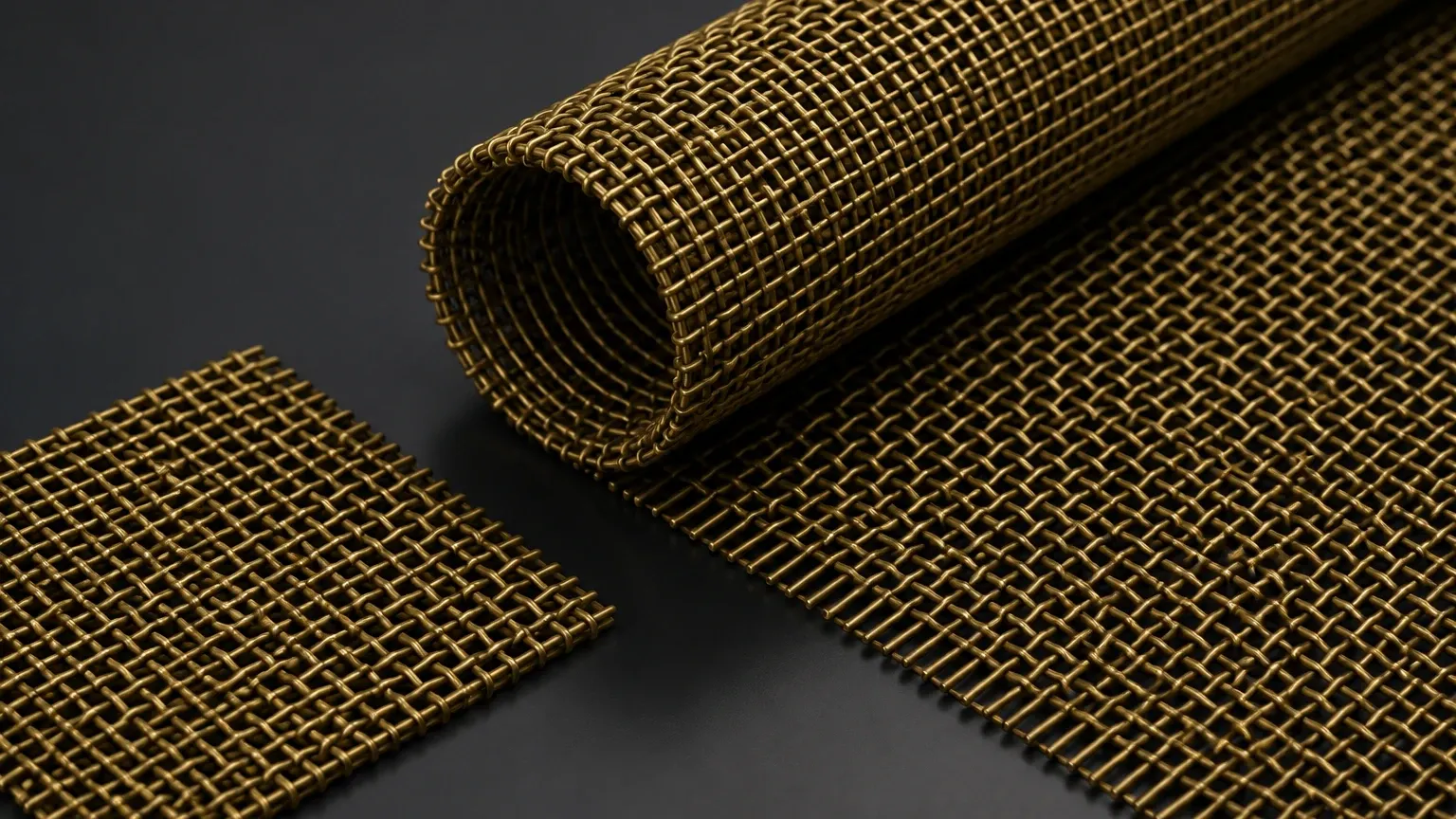
Antique brass woven wire mesh is typically manufactured from high-quality brass wire, which is an alloy primarily composed of copper and zinc. The most common alloys used in industrial mesh production are C260 (70% copper, 30% zinc) and C270 (65% copper, 35% zinc). These alloys are chosen for their ductility, which allows for precision weaving into fine mesh counts.
The "antique" designation refers to a secondary chemical process known as patination. Unlike standard bright brass, which has a reflective, gold-like appearance, antique brass undergoes a controlled oxidation process. This involves exposing the woven mesh to specialized chemical solutions that accelerate the natural aging process, resulting in a darkened, multi-tonal surface ranging from deep chocolate browns to subtle bronze hues.
From an engineering perspective, this patina is not merely aesthetic. It provides a pre-stabilized surface layer that can reduce the impact of further atmospheric oxidation. In many B2B applications, such as high-end ventilation grilles or specialized filtration housings, this finish prevents the uneven tarnishing that would otherwise occur on bright brass over time.
Technical Weave Patterns and Their Applications
The performance of any antique brass woven wire mesh is fundamentally dictated by its weave pattern. The weaving process determines the mesh's structural integrity, filtration accuracy, and open area percentage. At Kaifil, we provide a variety of configurations to meet specific industrial requirements, including Plain, twill and dutch woven wire mesh in SS304/316L — rolls, cut mesh and framed panels. Send mesh count or micron target for a technical quote.
Plain Weave
This is the most common weave used for antique brass applications. In a plain weave, each shute (cross) wire passes over and under each warp (lengthwise) wire. It offers the highest degree of stability for mesh counts ranging from 2×2 to 100×100. Engineers specify plain weave when a consistent aperture size and high visibility are required, such as in architectural infill panels or protective screening for electronic components.
Twill Weave
In a twill weave, each shute wire passes over and under two warp wires in a staggered pattern. This allows for the use of heavier wire diameters relative to the mesh count. For antique brass woven wire mesh, twill weaving is often used when the material needs to be more pliable for forming into complex shapes without compromising the structural strength of the wires.
Dutch Weave
While less common in decorative brass applications, Dutch weave (both plain and twill) is utilized in specialized filtration. This weave uses a larger diameter warp wire and a smaller diameter shute wire, creating a dense, high-strength mesh with a tortuous path for fluid or air. In brass, this is often used in low-pressure filtration systems where the non-sparking properties of brass are a safety requirement.
Key Evaluation Criteria for Engineers
When specifying antique brass woven wire mesh for a project, engineers must look beyond the surface color. Several critical parameters determine whether the mesh will meet the operational demands of the application.
1. Mesh Count and Aperture Size
The mesh count refers to the number of openings per linear inch. This directly correlates with the aperture size—the clear distance between two adjacent wires. For filtration or screening applications, the aperture size must be precisely calculated to ensure the desired particle retention or airflow. In antique brass variants, it is important to confirm that the patination process has not significantly altered the effective aperture, particularly in very fine mesh counts (above 200 mesh).
2. Wire Diameter and Open Area
Wire diameter influences the mechanical strength and the total open area of the mesh. The open area percentage is critical for applications involving fluid dynamics or heat dissipation. A common pitfall in B2B procurement is selecting a mesh based on appearance while neglecting the pressure drop caused by a low open area. Engineers should request a technical data sheet that specifies the ratio of wire diameter to aperture size.
3. Surface Treatment and Protection
Because the antique finish is a surface oxidation, it can be susceptible to wear if handled frequently or exposed to abrasive environments. For industrial components that require high durability, a clear lacquer or powder coating may be applied over the antique patina. This seals the finish and provides additional resistance to moisture and chemicals. Engineers must specify whether the mesh should be delivered "raw" (allowing for further natural aging) or "sealed" for long-term consistency.
Comparative Analysis: Brass vs. Stainless Steel
In the realm of industrial Woven Wire Mesh, stainless steel is often the default choice due to its superior tensile strength and corrosion resistance. However, antique brass woven wire mesh offers distinct advantages in specific scenarios:
* Non-Sparking Properties: Brass is a non-ferrous metal that does not produce sparks when struck. This makes it an essential material for filtration and screening in explosive environments or around flammable vapors.
* Acoustic and EMI Shielding: Brass has high electrical conductivity, making it effective for EMI (Electromagnetic Interference) shielding. The antique finish allows these functional components to be integrated into visible areas of high-end equipment without the industrial look of silver-toned steel.
* Malleability: Brass is generally easier to form, fold, and shape than stainless steel. This reduces tooling wear and allows for tighter tolerances in custom-formed filter cartridges or decorative enclosures.
Common Risks and Quality Control
Procuring antique brass woven wire mesh involves specific risks that are not present with standard industrial metals. B2B buyers should be aware of the following:
* Color Inconsistency: Because patination is a chemical process, variations in shade can occur between production batches. For large-scale projects, it is vital to source the entire requirement from a single production run or to establish a "range sample" that defines acceptable color deviations.
* Structural Integrity of Fine Mesh: In very fine mesh counts, the chemicals used for antiquing can potentially weaken thin wires if the immersion time is not strictly controlled. Reputable manufacturers like Kaifil ensure that the mechanical properties of the wire are preserved during the finishing process.
* Corrosion in Harsh Environments: While brass is resistant to atmospheric corrosion, it is susceptible to "dezincification" in certain chemical environments, such as those with high acidity or salt content. Engineers should confirm the chemical compatibility of brass with the operating environment before finalizing the specification.
Customization and OEM Capabilities
Most industrial applications require more than just a standard roll of mesh. Customization is a core component of the B2B supply chain for antique brass woven wire mesh. This includes:
* Precision Slitting: Cutting rolls to exact widths for automated assembly lines.
* Custom Framing: Mounting the mesh into stainless steel or brass frames for easy installation into cabinetry or machinery.
* Forming and Pleating: Shaping the mesh into cylinders or pleated elements to increase surface area in filtration applications.
* Variable Patina Levels: Adjusting the chemical process to achieve specific "light," "medium," or "dark" antique effects based on the project's technical or design requirements.
Conclusion: Confirming Specifications Before Purchase
To ensure the successful integration of antique brass woven wire mesh into an industrial project, engineers and purchasing teams should confirm several key details with their supplier. At a minimum, the technical specification should include the alloy grade, the mesh count, the wire diameter, and the specific type of antique finish required.
By focusing on these technical boundaries, organizations can leverage the unique properties of brass while achieving a sophisticated aesthetic that standard industrial materials cannot provide. Whether for specialized filtration, protective screening, or architectural integration, high-quality Woven Wire Mesh remains a versatile and reliable solution for modern engineering challenges.
