


8 Stage Water Filter Replacement Cartridges
In industrial and high-end commercial water treatment, the complexity of a filtration system is often a direct response to the complexity of the source water. Multi-stage systems, specifically those utilizing an 8-stage configuration, are designed to address a broad spectrum of contaminants, ranging from macroscopic particulates to dissolved gases and microbial threats. However, the efficacy of these systems is entirely dependent on the integrity and timely maintenance of the 8 stage water filter replacement cartridges. For engineers and facility managers, understanding the technical specifications and material science behind these components is essential for maintaining process water quality and protecting downstream equipment.
Understanding the 8-Stage Filtration Architecture
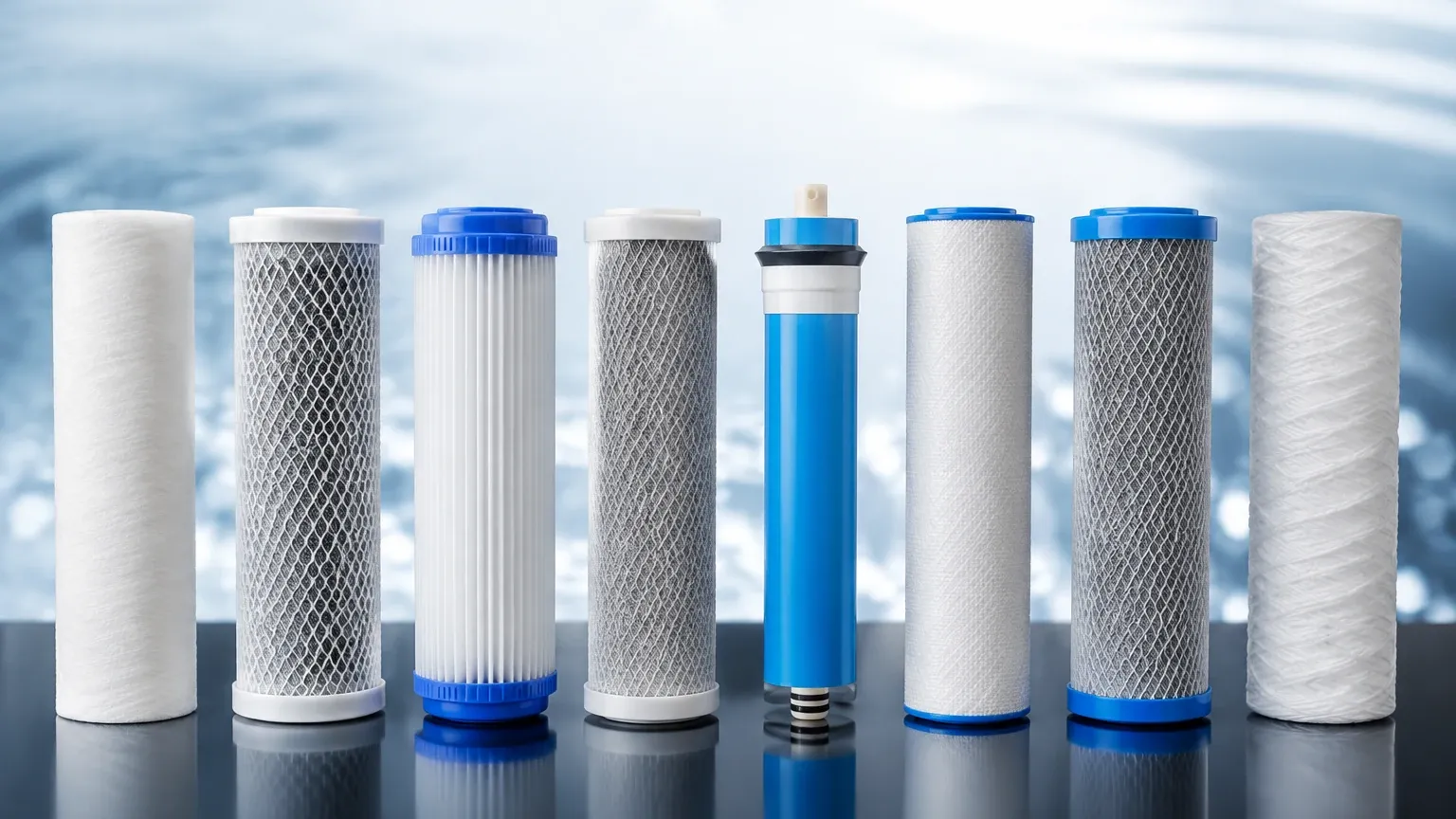
An 8-stage filtration system is not a single technology but a sequence of specialized media designed to work in synergy. The replacement of these cartridges requires a granular understanding of what each stage contributes to the overall water profile. While configurations vary based on the specific application—such as pharmaceutical processing, food and beverage production, or high-purity laboratory water—a typical 8-stage sequence follows a logical progression of mechanical and chemical separation.
1. Primary Sediment Filtration: Usually a high-capacity poly-spun or pleated cartridge designed to remove silt, rust, and scale. This protects subsequent stages from premature clogging.
2. Granular Activated Carbon (GAC): This stage utilizes adsorption to remove chlorine, volatile organic compounds (VOCs), and certain industrial solvents.
3. Carbon Block (CTO): A secondary carbon stage with a tighter pore structure to further reduce chemical contaminants and improve taste and odor profiles.
4. Kinetic Degradation Fluxion (KDF): Often using copper-zinc formulations, this stage uses redox reactions to neutralize heavy metals and inhibit the growth of microorganisms within the filter housing.
5. Ion Exchange or Mineralization: Depending on the goal (softening vs. remineralization), this stage adjusts the ionic balance of the water.
6. Alkaline/pH Adjustment: Media such as calcite or magnesium are used to stabilize the pH, especially after aggressive processes like reverse osmosis.
7. Far-Infrared or Bio-Ceramic Media: These stages are often employed in specialized beverage applications to alter the structural properties of the water molecules for specific process requirements.
8. Final Polishing/Post-Filtration: Often a high-precision Filter Cartridges stage, sometimes utilizing stainless steel mesh or ultra-fine membranes to ensure no media migration occurs from the previous stages into the final output.
Engineering Criteria for Selecting Replacement Cartridges
When procuring 8 stage water filter replacement cartridges, procurement teams must look beyond basic dimensions. The technical compatibility of a replacement cartridge involves several critical engineering parameters that dictate the system's total performance.
Micron Ratings and Efficiency
It is vital to distinguish between nominal and absolute micron ratings. A nominal rating indicates the filter can trap a percentage of particles of a given size, whereas an absolute rating (often required in pharmaceutical or chemical processing) ensures that 99.9% of particles at that size are retained. In an 8-stage system, the micron rating should progressively decrease to prevent the final stages from being overwhelmed by large particles.
Flow Rate and Pressure Drop (Delta P)
Every filter media introduces resistance to the flow. In a multi-stage system, the cumulative pressure drop can be significant. Replacement cartridges must be selected to ensure that the system's pump capacity can maintain the required flow rate even as the filters accumulate debris. High-quality stainless steel support cores in cartridges can prevent media collapse under high differential pressure, a common failure point in lower-grade plastic alternatives.
Chemical Compatibility
In industrial environments, the water being filtered may contain aggressive chemicals or be at elevated temperatures. The housing, seals (O-rings), and the filter media itself must be chemically inert to the process fluid. For instance, while standard EPDM O-rings are common, applications involving oils or specific solvents may require Viton or PTFE seals to prevent bypass and contamination.
Material Science in High-Performance Filtration
The durability of 8 stage water filter replacement cartridges is heavily influenced by the materials used in their construction. While many commercial systems rely on plastic components, industrial-grade filtration often necessitates the use of metallic components, particularly for pre-filtration and final polishing stages.
Stainless steel 304 and 316L are the industry standards for high-performance filter components. Unlike polymer-based filters, stainless steel cartridges offer superior thermal stability and mechanical strength. In the context of an 8-stage system, using stainless steel wire mesh or sintered metal cartridges for the initial sediment stages allows for backwashing and reuse, significantly reducing the long-term waste and replacement costs associated with disposable polypropylene filters.
Furthermore, stainless steel components eliminate the risk of "media migration"—a phenomenon where small fibers from a synthetic filter break off and enter the process stream. In high-purity applications, this level of material integrity is non-negotiable.
Performance Evaluation and Replacement Cycles
A common mistake in facility management is replacing 8 stage water filter replacement cartridges based solely on a calendar schedule. While manufacturers provide estimated lifespans (e.g., 6 to 12 months), actual replacement cycles should be dictated by data-driven indicators:
* Differential Pressure Monitoring: Installing pressure gauges before and after the filter bank is the most reliable way to monitor clogging. A significant increase in Delta P indicates that the mechanical stages (sediment and carbon blocks) are saturated.
* Total Dissolved Solids (TDS) and Conductivity: For stages involving ion exchange or mineralization, monitoring the output water's conductivity can signal when the media's chemical capacity is exhausted.
* Flow Decay: A noticeable drop in the output flow rate, assuming pump performance is constant, usually points to a restriction in one of the primary filtration stages.
Failure to replace cartridges on time can lead to "breakthrough," where the accumulated contaminants are forced through the media by pressure, or "channeling," where the water finds a path of least resistance through the media, bypassing the filtration process entirely.
Industrial Applications and Customization
The standard 8-stage configuration found in retail markets is often insufficient for specialized industrial needs. Manufacturers like Kaifil specialize in providing customized filtration solutions that adapt the multi-stage concept for specific industrial rigors.
For example, in hydraulic systems or chemical processing, the "8-stage" logic might be compressed into a smaller number of high-efficiency housings, or expanded with specialized metal filter elements to handle high-viscosity fluids. Customization options include:
* Variable Lengths and End-Cap Configurations: Ensuring that replacement cartridges fit existing housings (e.g., DOE, Code 7, or Threaded connections).
* Reinforced Cores: For high-pressure applications where standard cartridges might buckle.
* Specialized Media Blends: Tailoring the carbon or resin stages to target specific contaminants unique to a local water source or industrial byproduct.
By working with a manufacturer that understands the engineering behind Filter Cartridges, engineers can optimize their 8-stage systems for maximum uptime and minimal maintenance intervention.
Total Cost of Ownership (TCO) Considerations
When evaluating 8 stage water filter replacement cartridges, the initial purchase price is only one component of the Total Cost of Ownership. A low-cost cartridge that requires frequent replacement, causes significant pressure drop (increasing energy costs), or fails prematurely (leading to downstream equipment damage) is significantly more expensive than a high-quality, precision-engineered component.
Investing in cartridges with higher dirt-holding capacities and robust construction materials like stainless steel can lead to:
* Reduced Labor Costs: Fewer change-outs mean less downtime and lower maintenance man-hours.
* Energy Savings: Lower pressure drop across the filter bank reduces the load on delivery pumps.
* Process Consistency: High-quality media ensures that the water quality remains within specification throughout the entire life of the cartridge, preventing batch rejections in manufacturing.
Conclusion for Technical Procurement
Maintaining an 8-stage water filtration system requires more than just buying the first set of replacements available. It requires a strategic approach to material selection, an understanding of the mechanical and chemical demands of each stage, and a commitment to data-driven maintenance. By prioritizing high-performance Filter Cartridges and considering the benefits of durable materials like stainless steel, industrial operators can ensure their water treatment systems provide reliable, high-quality output for years to come.
Before purchasing replacement cartridges, technical teams should confirm the exact micron requirements, chemical compatibility of the seals, and the maximum operating pressure of their system to ensure the selected components are fit for purpose.
Download 8 Stage Water Filter Replacement Cartridges as a PDF
