


Are All Water Filter Cartridges the Same
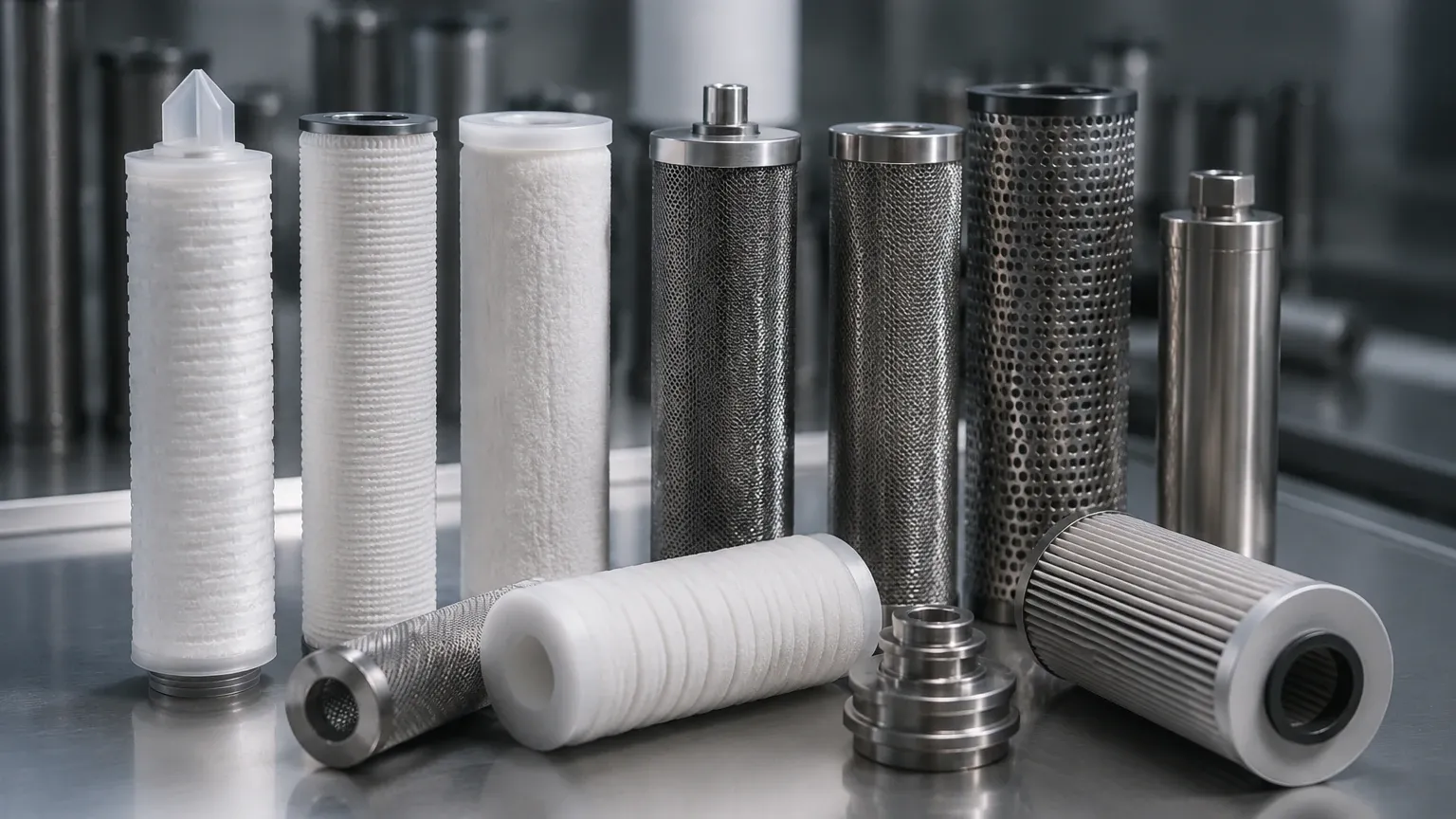
In industrial water treatment and process fluid management, a common misconception is that filter cartridges are interchangeable commodities. To the untrained eye, many cylindrical filters appear identical in form and function. However, for engineers and procurement professionals, the answer to the question "are all water filter cartridges the same?" is a definitive no.
Selecting the wrong cartridge can lead to premature system failure, bypass of contaminants, excessive pressure drops, and significant downtime. Industrial filtration requires a nuanced understanding of material science, fluid dynamics, and mechanical engineering. This guide examines the technical distinctions between various Filter Cartridges and provides the criteria necessary for selecting the appropriate component for demanding industrial environments.
Media Composition and Filtration Mechanisms
The most significant differentiator between filter cartridges is the media used to capture particles. While residential filters often rely on simple carbon blocks or melt-blown polypropylene, industrial applications demand media that can withstand specific chemical profiles, temperatures, and pressures.
Depth Filtration vs. Surface Filtration
Depth filtration media, such as string-wound or melt-blown polymers, trap particles throughout the entire thickness of the material. These are effective for fluids with a wide distribution of particle sizes but are generally disposable.
In contrast, surface filtration—typically achieved through stainless steel wire mesh or pleated membranes—captures particles on the upstream surface of the media. Surface filters offer more precise control over the maximum particle size that can pass through the system. For high-precision industrial water treatment, surface filtration using stainless steel mesh is often preferred due to its predictable performance and ability to be cleaned and reused.
Sintered Metal Media
Sintered metal cartridges represent the high end of industrial filtration technology. These are created by fusing metal powders or multiple layers of wire mesh together through a thermal process without melting the base material. This creates a porous structure with high mechanical strength and excellent heat resistance, far exceeding the capabilities of standard polymer-based cartridges.
Material Science: Beyond Polypropylene
When evaluating if all water filter cartridges are the same, material compatibility is a primary engineering consideration. A cartridge that performs well in a municipal water line may fail catastrophically in a chemical processing plant or a high-temperature steam system.
Stainless Steel 304 and 316L
For industrial water filtration, stainless steel is the gold standard. Stainless steel 304 provides excellent corrosion resistance for most general water applications. However, in environments involving high chloride concentrations or aggressive chemicals, Stainless Steel 316L is required. The "L" denotes low carbon content, which improves weldability and prevents sensitization—a common cause of corrosion in welded filter components.
Chemical and Thermal Resistance
Polymer cartridges (polypropylene, polyester, or nylon) have strict temperature ceilings, often losing structural integrity above 60°C (140°F). In contrast, stainless steel filter cartridges can operate at temperatures exceeding 300°C, making them essential for hot water loops, steam filtration, and heat-intensive industrial processes. Furthermore, metal cartridges do not leach surfactants or binders into the filtrate, which is a critical requirement in pharmaceutical and food and beverage sectors.
Micron Ratings: Nominal vs. Absolute
A common point of confusion in filter selection is the micron rating. Two cartridges might both be labeled as "5-micron filters," but their performance in the field can vary by orders of magnitude based on whether that rating is nominal or absolute.
1. Nominal Rating: This is an arbitrary value determined by the manufacturer. A 5-micron nominal filter might only capture 60% to 80% of particles at that size. It is a measure of the "average" pore size rather than a guarantee of filtration efficiency.
2. Absolute Rating: This refers to the diameter of the largest hard spherical particle that will pass through the filter under specified test conditions. An absolute-rated cartridge typically has a filtration efficiency of 99.9% (Beta 1000) at the stated micron level.
For critical industrial processes, such as protecting high-pressure nozzles or sensitive membranes in a reverse osmosis (RO) system, using an absolute-rated stainless steel cartridge is non-negotiable. Relying on nominal ratings in these scenarios often leads to downstream equipment damage.
Structural Integrity and Differential Pressure
Industrial filtration systems operate under varying flow rates and pressures. A filter cartridge must maintain its pore structure even as it becomes loaded with contaminants. This is where the structural differences between cartridges become most apparent.
Collapse Pressure
Disposable polymer cartridges are prone to "unloading" or collapsing when the differential pressure (the difference between the inlet and outlet pressure) reaches a certain threshold. When a filter unloads, the captured contaminants are forced through the media and back into the process stream. Stainless steel cartridges are engineered with internal support cores and heavy-duty end caps to withstand significantly higher differential pressures, ensuring that contaminants remain trapped until the filter is serviced.
Flow Rate and Pressure Drop (ΔP)
The geometry of the filter—specifically the available surface area—dictates the initial pressure drop. Pleated stainless steel cartridges offer a much higher surface area than cylindrical depth filters of the same dimensions. This results in a lower clean pressure drop, allowing for higher flow rates or the use of smaller filter housings, which reduces the overall footprint of the filtration system.
Standard Dimensions and End-Cap Configurations
While the internal technology varies, many industrial cartridges follow standardized dimensions to ensure compatibility with existing filter housings. However, even within these standards, there are critical variations in how the cartridge seals within the housing.
Common Lengths and Diameters
Standard lengths include 10, 20, 30, and 40 inches, with diameters typically ranging from 2.5 to 2.75 inches (standard) or 4.5 inches (Big Blue style). Engineering teams must verify these dimensions, as even a few millimeters of difference can prevent a proper seal.
Seal Types and End-Caps
The method of sealing is perhaps the most overlooked factor in the "are all water filter cartridges the same" debate. Common configurations include:
* Double Open End (DOE): Features flat gaskets on both ends. These rely on the compression of the housing to create a seal.
* Single Open End (SOE): One end is capped, and the other features an O-ring seal (such as the 222 or 226 style). These are preferred in high-purity or high-pressure applications because the O-ring provides a more positive, leak-proof seal than flat gaskets.
* Threaded Connections: Some industrial cartridges use NPT or BSP threads for a permanent, high-integrity mechanical connection.
Total Cost of Ownership: Disposable vs. Cleanable
When procurement departments compare filter cartridges, they often focus on the unit price. However, the true cost of filtration is measured over the life of the system.
The Disposable Cycle
Polypropylene and other synthetic cartridges are inexpensive upfront. However, they must be replaced frequently, leading to recurring costs for new media, labor for change-outs, and disposal fees for contaminated filters. In high-solids applications, the annual spend on disposable filters can easily exceed the cost of the filter housing itself.
The Cleanable Advantage
Stainless steel filter cartridges are designed for longevity. When the differential pressure reaches the terminal limit, these cartridges can be cleaned via backwashing, ultrasonic cleaning, or chemical soaking. While the initial investment in a stainless steel cartridge is higher, the ability to reuse the component hundreds of times results in a much lower total cost of ownership (TCO). Additionally, using cleanable filters aligns with industrial sustainability goals by significantly reducing the volume of solid waste generated by the facility.
Engineering Checklist for Cartridge Selection
To ensure optimal performance, engineers should confirm the following parameters before selecting a filter cartridge:
* Fluid Chemistry: Is the media compatible with the pH and chemical composition of the water or process fluid?
* Operating Temperature: What are the maximum and continuous operating temperatures?
* Required Micron Rating: Is an absolute or nominal rating required for downstream protection?
* Flow Rate and Pressure: What is the maximum allowable pressure drop at the start of the cycle?
* Cleaning Protocol: If using stainless steel, is the facility equipped to clean the cartridges, or is an automated backwash system required?
* Sealing Integrity: Does the housing require a DOE or SOE configuration to prevent bypass?
Conclusion
It is clear that not all water filter cartridges are the same. The differences in media material, construction quality, filtration efficiency, and structural limits are profound. For industrial applications where reliability and precision are paramount, moving away from generic disposable options toward engineered stainless steel solutions often provides the best technical and economic outcome. By understanding these technical boundaries, engineers can specify filtration components that protect their equipment, maintain product quality, and optimize operational costs.
