


Sintered Filter Stainless Steel
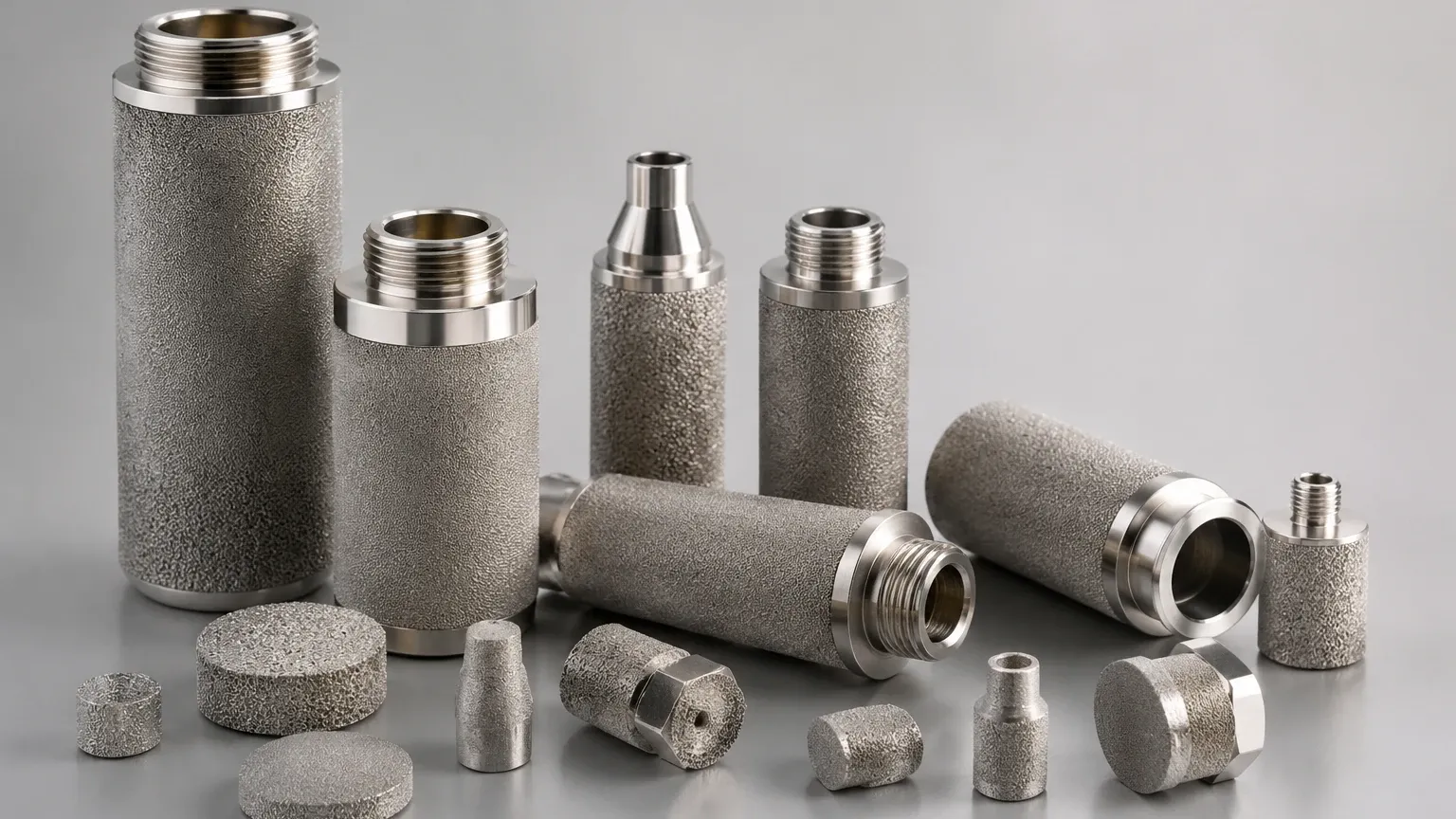
In industrial filtration, the selection of media is dictated by the severity of the operating environment and the required precision of the separation process. Sintered filter stainless steel represents a specialized category of porous metal media engineered to withstand conditions that would compromise polymer or glass-fiber alternatives. By utilizing a high-temperature bonding process known as sintering, manufacturers create a rigid, stable structure that provides consistent filtration performance under high pressure, extreme temperatures, and corrosive chemical exposure.
For engineers and procurement specialists, understanding the technical nuances of sintered stainless steel is essential for optimizing system efficiency and reducing the total cost of ownership. This guide examines the manufacturing principles, material properties, and engineering considerations necessary for selecting the appropriate sintered filter solution.
The Engineering Principles of Sintering
Sintering is a metallurgical process where stainless steel particles or wire mesh layers are heated in a controlled-atmosphere furnace to a temperature just below their melting point. At these temperatures, molecular diffusion occurs at the contact points between the metal elements, creating solid-state bonds known as "necks."
Unlike traditional welding, sintering maintains the porosity of the material while significantly increasing its mechanical strength. The result is a monolithic structure where the individual wires or powder particles are permanently fused. This process eliminates the risk of media migration—a common failure mode in non-metallic filters where fibers can break loose and contaminate the downstream filtrate. In critical applications like pharmaceutical manufacturing or semiconductor processing, this structural integrity is a primary requirement.
Sintered Wire Mesh vs. Sintered Metal Powder
Sintered filter stainless steel typically falls into two categories based on the raw material used: sintered wire mesh and sintered metal powder. Each offers distinct advantages depending on the fluid dynamics and particle characteristics of the application.
Sintered Wire Mesh
Sintered wire mesh is constructed by layering multiple sheets of stainless steel woven wire cloth and sintering them together. A standard 5-layer configuration often includes a fine filtration layer, a distribution layer, and multiple support layers. This structure provides high permeability and excellent surface filtration capabilities. Because the pore geometry is defined by the weave of the mesh, it offers highly predictable and uniform pore sizes, making it ideal for backwashing and surface-loading applications.
Sintered Metal Powder
Sintered powder filters are produced by compressing stainless steel powder into a mold and then sintering it. This creates a tortuous path for the fluid, facilitating depth filtration. These filters are capable of achieving much finer micron ratings than mesh—often down to 0.5 microns. They are particularly effective in gas filtration and applications where the removal of fine, irregularly shaped particles is required. However, they generally exhibit a higher pressure drop compared to mesh filters of the same micron rating.
Material Grade and Corrosion Resistance
The chemical compatibility of a sintered filter is determined by the grade of stainless steel utilized. While many industrial applications standardise on Type 304, more demanding environments require higher-alloyed variants.
* 304 Stainless Steel: Suitable for general industrial use, offering good strength and basic corrosion resistance in non-acidic environments.
* 316L Stainless Steel: The "L" denotes low carbon content, which minimizes carbide precipitation during welding or sintering. 316L contains molybdenum, providing superior resistance to chlorides and pitting, making it the industry standard for chemical processing and marine applications.
* 310S and 430: These grades are often selected for high-temperature gas filtration, where oxidation resistance at temperatures exceeding 600°C is a critical design factor.
When evaluating a filter for a specific chemical process, engineers must consider the pH, temperature, and concentration of the fluid to ensure the passive oxide layer of the stainless steel remains intact.
Critical Performance Metrics: Micron Ratings and Permeability
Selecting a sintered filter stainless steel component requires a precise definition of filtration efficiency. In B2B procurement, it is vital to distinguish between nominal and absolute micron ratings.
1. Absolute Micron Rating: This refers to the diameter of the largest hard spherical particle that will pass through the filter under specified laboratory conditions. For sintered mesh, the absolute rating is highly reliable due to the fixed pore geometry.
2. Permeability and Pressure Drop (ΔP): Permeability is a measure of how easily a fluid passes through the porous media. A filter with low permeability will result in a high initial pressure drop, which increases energy consumption and reduces the available service life before the filter reaches its terminal pressure drop. Engineers must balance the need for fine filtration with the requirement for high flow rates.
3. Bubble Point Pressure: This is a standard test used to verify the integrity and pore size of a sintered filter. By submerging the filter in a liquid and increasing air pressure until the first bubble appears, technicians can calculate the maximum pore size using the surface tension of the fluid.
Structural Integrity and Thermal Stability
One of the primary reasons engineers specify sintered filter stainless steel is its ability to maintain its shape and function under mechanical stress. In hydraulic systems or high-pressure gas streams, filters are often subjected to pressure spikes and flow fluctuations. The fused structure of a sintered filter prevents the pores from enlarging or collapsing under these loads.
Furthermore, stainless steel maintains its mechanical properties across a broad temperature spectrum. While polymer filters may soften or degrade at temperatures above 100°C, sintered stainless steel components can operate effectively from cryogenic levels up to 450°C (in oxidizing atmospheres) or higher in reducing environments. This thermal stability is essential for steam filtration and hot gas monomer recovery.
Maintenance, Cleaning, and Longevity
The initial acquisition cost of sintered stainless steel is often higher than that of disposable cartridges. However, the total cost of ownership is frequently lower due to the material's cleanability. Unlike disposable media, sintered filters can be regenerated multiple times.
Common cleaning methods include:
* Backpulsing/Backwashing: Reversing the flow of the fluid to dislodge particles from the surface of the media.
* Ultrasonic Cleaning: Using high-frequency sound waves in a cleaning solution to remove fine particles trapped deep within the pores.
* Chemical Cleaning: Using surfactants, acids, or caustic solutions to dissolve specific contaminants without damaging the stainless steel structure.
* Hydrodynamic Cleaning: High-pressure water jets used primarily for surface-loading mesh filters.
By implementing a proper cleaning regimen, industrial facilities can extend the lifespan of a single filter element for several years, significantly reducing waste and replacement labor costs.
Customization and OEM Integration
Industrial filtration systems rarely utilize "off-the-shelf" components without some level of modification. Sintered filter stainless steel is highly versatile in terms of fabrication. It can be pleated to increase surface area, welded into cylindrical cartridges, or formed into flat discs and conical shapes.
When working with a manufacturer like Kaifil, engineers can specify custom dimensions, end-cap configurations (such as DOE, 222, or 226 fittings), and reinforced internal cores to meet specific flow and pressure requirements. This level of customization ensures that the filtration component integrates seamlessly into existing housings while meeting the precise separation goals of the process. For more information on tailored filtration components, you can Review product options and application support to align technical specifications with industrial demands.
Conclusion: Making an Informed Selection
Specifying a sintered filter stainless steel solution requires a comprehensive analysis of the operating environment, including fluid chemistry, temperature, pressure, and the nature of the contaminants. By focusing on the structural advantages of sintered media—such as its fixed pore structure, high mechanical strength, and excellent thermal resistance—engineers can ensure reliable process continuity.
Whether the goal is to protect sensitive downstream equipment, recover valuable catalysts, or ensure the purity of a final product, sintered stainless steel provides a robust and reusable solution. Prioritizing material grade, absolute micron ratings, and cleanability will lead to a filtration system that delivers consistent performance over a long operational life, ultimately supporting the efficiency and sustainability of industrial operations.
