


Bronze Filter
In the landscape of industrial filtration, the selection of media is a critical engineering decision that directly impacts system efficiency, equipment longevity, and operational costs. Among the various porous metal solutions available, the sintered bronze filter remains a foundational component for pneumatic, hydraulic, and gas processing applications. Characterized by its unique manufacturing process and robust physical properties, this type of filter offers a balance of permeability and structural integrity that is difficult to replicate with synthetic or fibrous media.
For engineers and procurement professionals, understanding the technical nuances of bronze filtration is essential for optimizing system performance. While stainless steel solutions—such as those manufactured by Kaifil—are often preferred for highly corrosive or high-temperature environments, the bronze filter serves specific niches where its thermal conductivity, cost-effectiveness, and anti-sparking properties are advantageous.
The Engineering Fundamentals of Sintered Bronze Filters
A bronze filter is typically produced through a process known as powder metallurgy. Unlike woven wire mesh, which is constructed from interlaced strands, sintered bronze is created by fusing spherical bronze particles together under controlled heat and pressure. This process, conducted at temperatures below the melting point of the alloy (typically a copper-tin alloy like CuSn10), allows the particles to bond at their contact points, creating a rigid, porous structure.
Pore Geometry and Tortuosity
The resulting structure is a "depth" filtration medium. Because the spherical particles create an irregular, interconnected network of voids, the fluid must follow a tortuous path through the filter. This design is highly effective at trapping irregularly shaped contaminants within the thickness of the filter wall, rather than just on the surface. Engineers specify these filters based on their mean pore size, which can be precisely controlled by selecting specific powder grain sizes during the manufacturing stage.
Structural Integrity
One of the primary advantages of the sintering process is the creation of a self-supporting component. A sintered bronze filter does not require an internal perforated core or an external shroud for low-to-medium pressure applications. This simplifies the design of filter housings and reduces the number of potential failure points within a filtration assembly.
Key Performance Characteristics and Material Properties
When evaluating a bronze filter for industrial use, several material-specific properties must be considered. These characteristics define the operational boundaries of the component and dictate its suitability for specific fluids and gases.
Thermal Stability and Conductivity
Bronze alloys generally maintain their mechanical properties at temperatures up to 200°C (approximately 400°F). While this is lower than the thermal threshold of stainless steel, it is more than sufficient for the majority of compressed air and hydraulic return-line applications. Furthermore, bronze has excellent thermal conductivity, which helps dissipate heat in high-speed gas flows, reducing the risk of localized overheating in sensitive pneumatic circuits.
Corrosion Resistance and Chemical Compatibility
Bronze is naturally resistant to atmospheric corrosion and is highly compatible with a wide range of oils, fuels, and neutral gases. However, it is susceptible to attack from strong acids, ammonia, and certain sulfur compounds. In environments where chemical aggression is a concern, technical teams often transition to stainless steel alternatives. For detailed comparisons of material compatibility across different industrial grades, professionals often refer to the Main Page of specialized manufacturers to evaluate the performance of 304 or 316L stainless steel against traditional bronze.
Filtration Precision (Micron Ratings)
Sintered bronze filters are typically available in filtration grades ranging from 1 micron to 100 microns. The precision of these ratings is a result of the uniform spherical powder used in production. Unlike fabric filters, which may stretch or migrate under pressure, the rigid pore structure of a bronze filter ensures consistent filtration performance throughout its service life.
Primary Industrial Applications for Bronze Filtration
The unique physical profile of the bronze filter makes it an industry standard in several specific sectors. Its ability to handle high flow rates with relatively low pressure drops is particularly valued in fluid power systems.
Pneumatic Systems and Silencers
In pneumatic applications, bronze filters serve a dual purpose. They remove particulate matter from compressed air lines to protect downstream valves and actuators, and they are frequently used as exhaust silencers (mufflers). The porous structure breaks up the kinetic energy of exhausting air, significantly reducing noise levels while allowing the air to vent freely without excessive backpressure.
Hydraulic Fluid Filtration
In hydraulic circuits, bronze elements are often used in breather caps or as last-chance filters. Their robustness allows them to withstand the vibration and pressure pulsations inherent in hydraulic machinery. They are particularly effective at capturing metallic wear particles and environmental dust that could otherwise damage precision pumps.
Gas and Flame Arresting
The thermal mass and pore structure of sintered bronze make it an effective flame arrestor. In systems handling flammable gases, a bronze filter can act as a heat sink, cooling a flame front below the ignition temperature of the gas on the protected side of the filter. This safety-critical application requires precise engineering of the pore size to ensure the quenching distance of the specific gas is met.
Comparative Analysis: Bronze vs. Stainless Steel Filtration
For many engineering teams, the choice between a bronze filter and a stainless steel filter is a matter of balancing performance requirements against total cost of ownership. While both are porous metal media, their application envelopes differ significantly.
1. Mechanical Strength: Stainless steel filters, particularly those made from sintered wire mesh or fiber felt, generally offer higher tensile strength and can withstand higher differential pressures before deformation occurs.
2. Cleanability: Both materials are cleanable, but stainless steel is more resilient to aggressive chemical cleaning agents (such as caustic washes or strong acids) used to remove stubborn contaminants like polymers or carbonized oils.
3. Environmental Suitability: In marine environments or food and beverage processing, stainless steel is the mandatory choice due to its superior resistance to salt-spray corrosion and its compliance with hygiene standards. Bronze is generally avoided in food-contact applications due to the potential for copper leaching.
4. Cost: Bronze is often more economical for standard industrial air and oil applications where the extreme properties of stainless steel are not required.
For organizations looking to upgrade their filtration systems to handle more demanding parameters, exploring specialized stainless steel options on the Kaifil Main Page provides insight into how advanced metal mesh technologies can replace or augment traditional bronze components.
Critical Selection Criteria for Engineering and Procurement
Selecting the correct bronze filter involves more than simply matching a micron rating. To ensure system reliability, engineers must confirm several technical parameters during the specification process.
Flow Rate vs. Pressure Drop
The permeability of the filter determines the pressure drop (ΔP) across the medium. A filter with a lower micron rating will inherently have a higher resistance to flow. Engineers must calculate the maximum allowable pressure drop at the system’s peak flow rate to avoid starving downstream components or triggering bypass valves prematurely.
Operating Environment
Beyond temperature and chemical compatibility, the physical environment must be considered. Is the filter subject to high-frequency vibration? Will it be exposed to external impacts? While sintered bronze is rigid, it is more brittle than stainless steel. In high-vibration environments, the mounting method and the thickness of the filter wall become critical design factors.
Connectivity and Integration
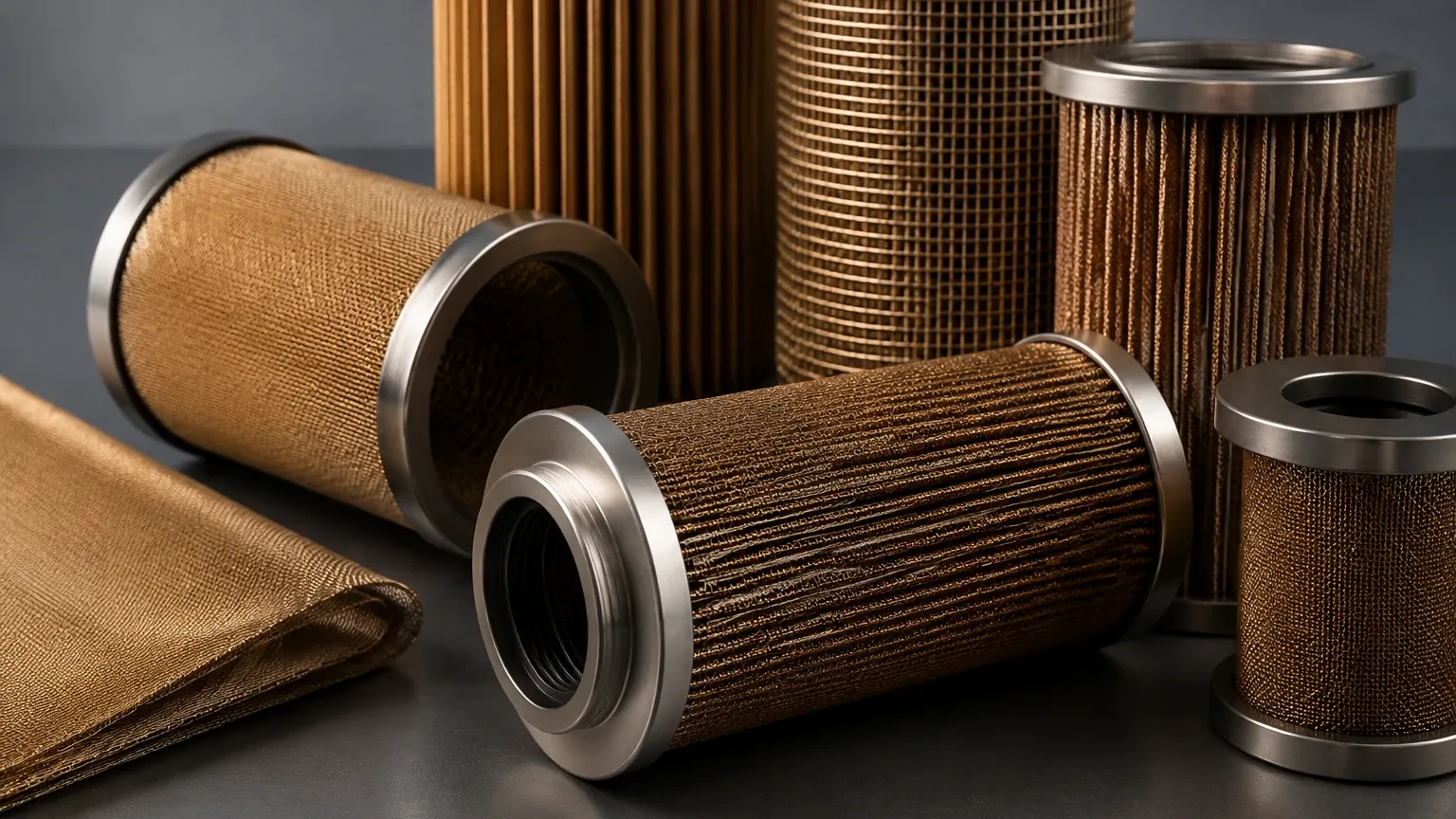
Bronze filters are available in various configurations, including threaded plugs, discs, cylinders, and custom-molded shapes. Specifying the correct thread standard (NPT, BSP, or Metric) and ensuring the sealing surface is compatible with the housing are essential steps to prevent bypass leakage.
Maintenance, Cleaning, and Service Life Optimization
One of the primary B2B advantages of metal filtration media is the ability to clean and reuse the components, reducing the waste and recurring costs associated with disposable paper or synthetic filters. However, the effectiveness of cleaning a bronze filter depends on the nature of the contaminant.
Cleaning Methodologies
* Backwashing: For surface-loaded contaminants, reversing the flow of a clean fluid through the filter can often dislodge particles.
* Ultrasonic Cleaning: This is the most effective method for depth-loading media like sintered bronze. High-frequency sound waves create cavitation bubbles that penetrate the pore structure and lift out embedded debris.
* Solvent Cleaning: Using compatible degreasers can remove oil and grease buildup, though care must be taken to ensure the solvent does not react with the bronze alloy.
Determining Replacement Cycles
Despite being cleanable, a bronze filter will eventually reach a point of "permanent fouling" where the baseline pressure drop remains high even after cleaning. Establishing a replacement schedule based on pressure differential monitoring is a best practice for maintaining system efficiency.
Technical Considerations Before Final Specification
Before finalizing a purchase order or integrating a bronze filter into a new system design, technical professionals should confirm the following data points with their supplier:
* Absolute vs. Nominal Rating: Clarify whether the micron rating is absolute (100% capture of particles at that size) or nominal (a percentage of particles captured). Sintered bronze is typically rated nominally due to its depth-filtration characteristics.
* Maximum Differential Pressure: Determine the pressure at which the sintered structure may crack or collapse.
* Alloy Composition: Confirm the specific bronze alloy to ensure it meets any regulatory or environmental requirements (e.g., Lead-free requirements in certain jurisdictions).
For complex applications where bronze may not meet the necessary safety or performance margins, consulting with a manufacturer that specializes in custom stainless steel filtration is recommended. By visiting the Main Page, engineers can access technical documentation on wire mesh and sintered metal alternatives that provide higher precision and durability in challenging industrial contexts.
In conclusion, the bronze filter remains a versatile and essential tool in the industrial designer's toolkit. By understanding its manufacturing origins, physical limitations, and optimal application zones, B2B buyers can ensure they are selecting the most efficient filtration solution for their specific operational needs. Whether used for noise reduction in pneumatics or particle control in hydraulics, the sintered bronze filter provides a reliable, cost-effective, and robust solution for modern industry.
