


Cuno Filter Housing
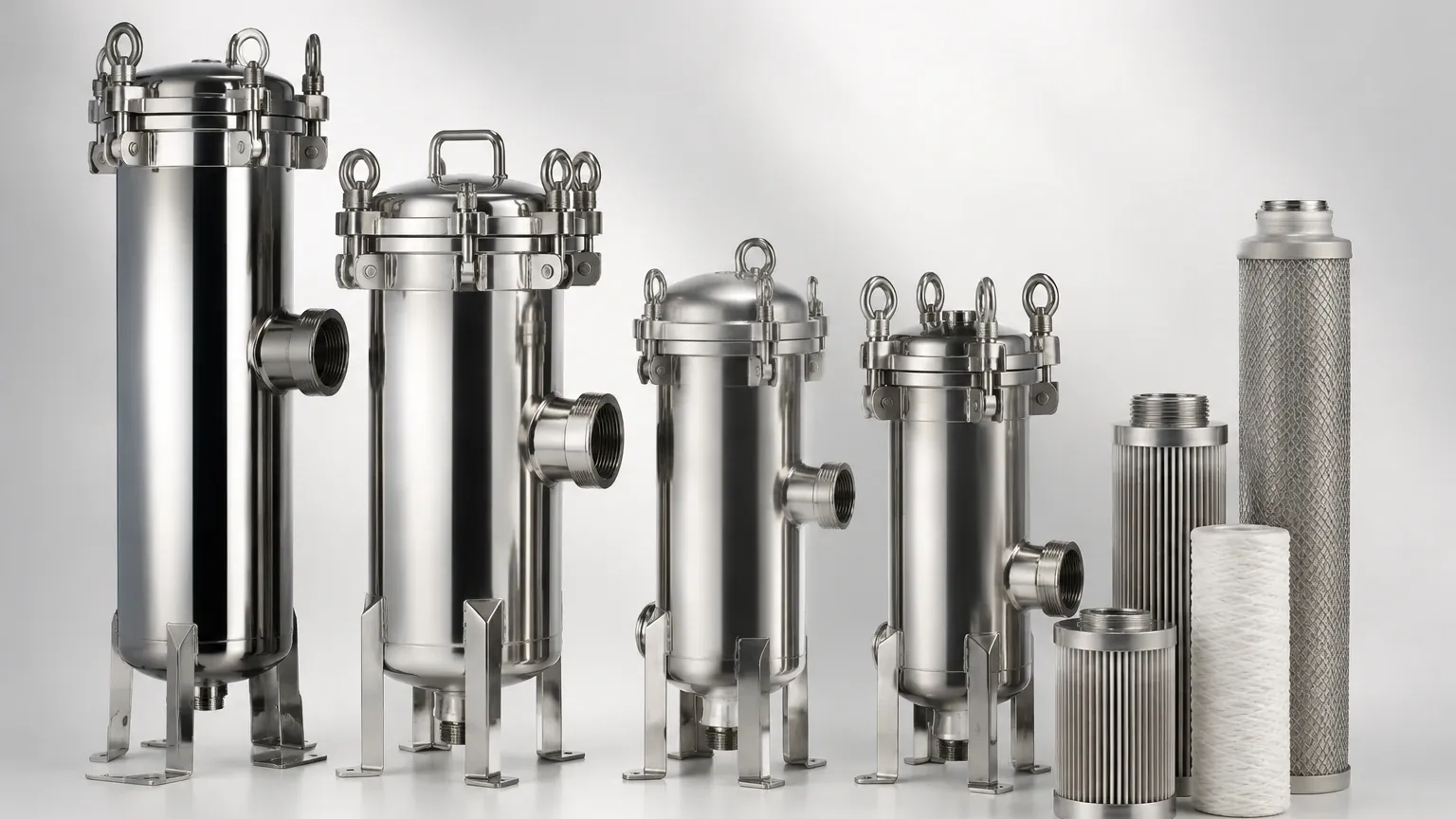
In the landscape of industrial liquid filtration, the term "Cuno filter housing" often serves as a benchmark for high-capacity, reliable pressure vessels designed to house various filter cartridges. Originally popularized by the Cuno brand (now part of 3M), these housings have set industry standards for design, footprint, and performance. For engineers and procurement specialists in sectors such as chemical processing, food and beverage, and pharmaceuticals, understanding the technical nuances of these housings—and the stainless steel components that support them—is essential for maintaining system integrity and process efficiency.
Industrial filter housings are more than just containers; they are precision-engineered components that must withstand significant hydraulic stress while ensuring zero bypass of contaminants. When selecting or maintaining a filtration system, technical professionals must evaluate material compatibility, pressure ratings, and the specific requirements of the filter media used within the vessel.
Engineering Specifications of Industrial Filter Housings
The performance of a filter housing is primarily dictated by its construction materials and manufacturing tolerances. Most high-performance industrial housings are fabricated from stainless steel, typically Grade 304 or Grade 316L.
Material Selection: 304 vs. 316L
Grade 304 stainless steel is suitable for general industrial applications, providing excellent durability and resistance to oxidation. However, in environments involving chlorides, high temperatures, or aggressive chemicals—common in chemical processing and marine applications—Grade 316L is the preferred choice. The addition of molybdenum in 316L provides superior pitting resistance. For high-purity applications, such as pharmaceutical manufacturing, the low-carbon content of 316L also minimizes carbide precipitation during welding, ensuring the structural integrity of the housing over long-term use.
Surface Finish and Sanitary Requirements
In the food, beverage, and life sciences industries, the internal surface finish of the housing is a critical specification. Rough surfaces can harbor microbial growth or trap particulates, leading to cross-contamination. Engineers often specify a mechanical polish or electropolishing to achieve a specific Ra (Roughness Average) value. A common standard for sanitary housings is an internal finish of 0.8 μm Ra or better. Electropolishing not only smooths the surface but also enhances the chromium-to-iron ratio at the surface, increasing corrosion resistance.
Design Configurations for Cuno-Style Housings
Cuno-style housings are available in various configurations to accommodate different flow rates and space constraints. These range from small, single-cartridge units to massive multi-round vessels capable of handling thousands of gallons per minute.
Single-Round vs. Multi-Round Housings
Single-round housings are typically used for low-flow applications or as point-of-use filters. They are designed for ease of maintenance, often featuring a T-style or L-style flow pattern. Multi-round housings, on the other hand, contain multiple filter cartridges—ranging from 3 to over 100—arranged in a circular pattern within the vessel. This design maximizes the filtration surface area within a compact footprint, which is essential for high-volume industrial processes.
Closure Mechanisms
How a housing is sealed impacts both safety and the speed of maintenance. Common closure types include:
- Ring Nut/Threaded Closures: Usually found on smaller, lower-pressure housings. They are cost-effective but can be difficult to operate if the threads become fouled.
- Swing Bolt Closures: The industry standard for high-pressure, multi-round housings. They allow for quick access without the need for specialized tools and provide a robust, even seal across the gasket.
- V-Band Clamps: Often used in medium-pressure applications, offering a balance between ease of use and sealing reliability.
Compatibility and Sealing Mechanisms
A critical aspect of any filter housing is the interface between the housing and the filter cartridge. If this seal is compromised, "bypass" occurs—where fluid bypasses the filter media entirely, rendering the filtration process ineffective.
Cartridge End-Cap Configurations
Most industrial housings are designed to accept specific cartridge end-cap styles. The most common are:
- Double Open End (DOE): The cartridge is open at both ends and relies on compression against a flat gasket or knife-edge seal within the housing.
- 222/226 O-Ring Seals: These feature a bayonet or plug-in style fit with dual O-rings. This configuration provides a more secure, leak-proof seal and is generally preferred for critical filtration tasks where bypass must be strictly eliminated.
Gasket and O-Ring Selection
The choice of sealing material must be based on the chemical nature of the fluid and the operating temperature. Common materials include EPDM (for water and polar solvents), Viton (for oils and acids), and PTFE (for broad chemical resistance but lower elasticity). Engineers must consult compatibility charts to ensure that the seals will not degrade, swell, or become brittle during service.
Key Performance Indicators in Industrial Filtration
When evaluating a filtration system centered around a Cuno-style housing, engineers must focus on several performance metrics to ensure long-term cost-effectiveness and process stability.
Flow Rate and Pressure Drop (ΔP)
Every housing and filter combination introduces a pressure drop into the system. The initial pressure drop should be minimized to maximize the available "dirt-holding capacity" of the filter. As the filter accumulates contaminants, the differential pressure increases. Systems should be designed so that the housing does not restrict flow more than the filter media itself. High-quality stainless steel housings from manufacturers like Kaifil are designed with optimized internal flow paths to reduce turbulence and parasitic pressure losses.
Dirt Holding Capacity and Service Life
The goal of industrial filtration is to achieve the desired fluid clarity while maximizing the interval between filter changes. This is achieved by selecting the correct micron rating and surface area. For heavy-duty applications, using stainless steel wire mesh filters or pleated metal cartridges within the housing can significantly extend service life, as these elements can often be cleaned and reused, unlike disposable melt-blown or string-wound cartridges.
Maintenance and Replacement Cycles
Proper maintenance of the filter housing is essential for both safety and performance. A neglected housing can become a point of failure or a source of contamination.
Monitoring Differential Pressure
All industrial housings should be equipped with upstream and downstream pressure gauges. The difference between these two readings (ΔP) is the primary indicator of filter health. Most systems are designed to have the filter elements replaced or cleaned when the ΔP reaches a predetermined limit—typically between 15 and 25 psi, depending on the structural strength of the filter media.
Cleaning and Sterilization
In many applications, the housing itself must be cleaned periodically. For stainless steel housings, this may involve Clean-in-Place (CIP) or Steam-in-Place (SIP) procedures. It is vital to ensure that the housing design eliminates "dead legs" or stagnant zones where bacteria could proliferate. When using reusable stainless steel filter elements, such as those provided on the Kaifil Main Page, ultrasonic cleaning or backwashing can restore the elements to near-original performance, drastically reducing the total cost of ownership compared to disposable systems.
Customization and OEM Solutions
While standard Cuno filter housings meet many needs, specific industrial challenges often require customized solutions. This is where specialized manufacturers provide significant value. Customization can include:
- Non-standard Inlet/Outlet Sizes: Matching existing piping without the need for redundant adapters.
- Specific Pressure Ratings: Designing vessels for high-pressure hydraulic systems or vacuum applications.
- Integrated Valving and Instrumentation: Adding vents, drains, and sampling ports directly to the housing body.
By working with a manufacturer that understands the intricacies of metal fabrication and filtration science, engineering teams can develop bespoke housings that integrate seamlessly into complex skids or production lines.
Selecting the Right Filtration Solution
Choosing the right housing and filter combination requires a holistic view of the process. Engineers should ask the following questions before finalizing a specification:
1. What is the fluid's chemical composition and temperature? (Determines housing and seal material).
2. What is the required flow rate and maximum allowable pressure drop? (Determines housing size and number of cartridges).
3. What is the target particle size for removal? (Determines filter media selection).
4. Are there regulatory requirements? (e.g., FDA compliance for food contact or ASME Boiler and Pressure Vessel Code for safety).
Kaifil specializes in providing the precision stainless steel components that make these filtration systems work. From custom-designed wire mesh filters to high-durability stainless steel cartridges, their expertise ensures that industrial housings operate at peak efficiency. For more information on technical specifications and custom filtration components, visit the Kaifil Main Page.
Conclusion
The Cuno filter housing remains a cornerstone of industrial liquid processing due to its versatile and robust design. However, the effectiveness of the housing is entirely dependent on the quality of its construction and the performance of the filter elements housed within. By focusing on material science, precise engineering tolerances, and proper maintenance protocols, industrial operators can ensure reliable filtration, protect downstream equipment, and optimize their total process costs. Whether utilizing standard configurations or seeking customized stainless steel solutions, a technical approach to housing selection is the key to industrial filtration success.
