


Sip Pharma
In the pharmaceutical and biotechnology industries, maintaining a sterile environment is not merely a regulatory requirement but a fundamental necessity for product safety and efficacy. Steam-in-Place (SIP) technology has emerged as the industry standard for sterilizing process equipment without the need for disassembly. For engineers and facility managers, the implementation of a robust sip pharma protocol requires a deep understanding of how filtration components interact with high-temperature saturated steam. The choice of filter media, its structural integrity under thermal stress, and its ability to maintain precise filtration accuracy after repeated sterilization cycles are critical factors in the design of pharmaceutical production lines.
Industrial filtration in SIP applications often centers on the use of stainless steel components. Unlike polymer-based filters, which may degrade or lose structural integrity after a limited number of steam cycles, stainless steel filters offer the durability required for long-term, repeatable sterilization. As a manufacturer specializing in custom stainless steel filtration solutions, Kaifil provides the technical expertise necessary to navigate the complexities of SIP-compatible filter selection, ensuring that pharmaceutical processes remain sterile, efficient, and compliant with global standards.
Understanding the Mechanics of SIP in Pharmaceutical Filtration
The sip pharma process involves the introduction of saturated steam into a closed system to achieve a specific Sterility Assurance Level (SAL), typically $10^{-6}$. This process usually requires the system to reach and maintain temperatures between 121°C and 135°C for a predetermined duration, often 20 to 30 minutes. During this time, the filter must act as a sterile barrier, preventing the ingress of contaminants while allowing the steam to penetrate all surfaces of the housing and the filter element itself.
From an engineering perspective, the filter is often the most vulnerable component in an SIP system. It must withstand the initial "air-out" phase, where steam displaces air, followed by the heating phase, the sterilization hold time, and finally, the cooling phase. Each of these stages introduces thermal and mechanical stresses. For instance, during the cooling phase, if the system is not properly vented or if the steam condenses too rapidly, a vacuum can form, potentially collapsing a filter element that is not designed for reverse pressure or high differential loads. Therefore, selecting a filter with a high mechanical strength-to-weight ratio is essential for ensuring system reliability.
Material Selection: Why 316L Stainless Steel is Essential
When designing filters for sip pharma applications, material compatibility is the first line of defense against system failure. While various metals can be used in industrial filtration, 316L stainless steel is the preferred choice for pharmaceutical environments. This low-carbon molybdenum-bearing austenitic stainless steel provides superior corrosion resistance, particularly against the pitting and crevice corrosion that can occur in the presence of moisture and high temperatures.
In an SIP environment, the filter media is subjected to constant moisture and heat. 316L stainless steel maintains its mechanical properties across the entire sterilization temperature range. Furthermore, its smooth surface finish—often enhanced through electropolishing—minimizes the risk of microbial adhesion and biofilm formation. For custom filtration solutions, the use of 316L ensures that the filter does not leach metallic ions into the process stream, thereby maintaining the purity of the pharmaceutical product. Whether the application involves a vent filter for a fermentation tank or a liquid filter for a buffer preparation system, the material's stability is non-negotiable.
Engineering Challenges: Thermal Expansion and Condensate Management
One of the most significant challenges in sip pharma is managing the physical changes that occur within the filter housing during heating. Thermal expansion can cause slight shifts in the seating of the filter element. If the filter is not properly secured with high-temperature resistant O-rings or if the housing design does not account for this expansion, bypass can occur, compromising the sterility of the entire batch.
Condensate management is another critical factor. Steam that condenses within the filter media can create a "water-lock," significantly increasing the differential pressure across the filter. In gas filtration applications, such as tank venting or compressed air sterilization, a wet filter can become a breeding ground for bacteria if not dried properly after the SIP cycle. Engineers must ensure that the system design includes proper trapping and drainage points to remove condensate effectively. Additionally, using hydrophobic stainless steel mesh or specialized pleated designs can help mitigate the impact of moisture on gas flow rates.
Filtration Accuracy and Pore Stability Under Steam Stress
In pharmaceutical manufacturing, the precision of the filter's pore size is what determines its ability to remove specific microorganisms or particulates. A common concern with disposable filters is that repeated exposure to steam can cause the pore structure to shift or expand, a phenomenon known as "pore migration." This can lead to a decrease in filtration efficiency over time.
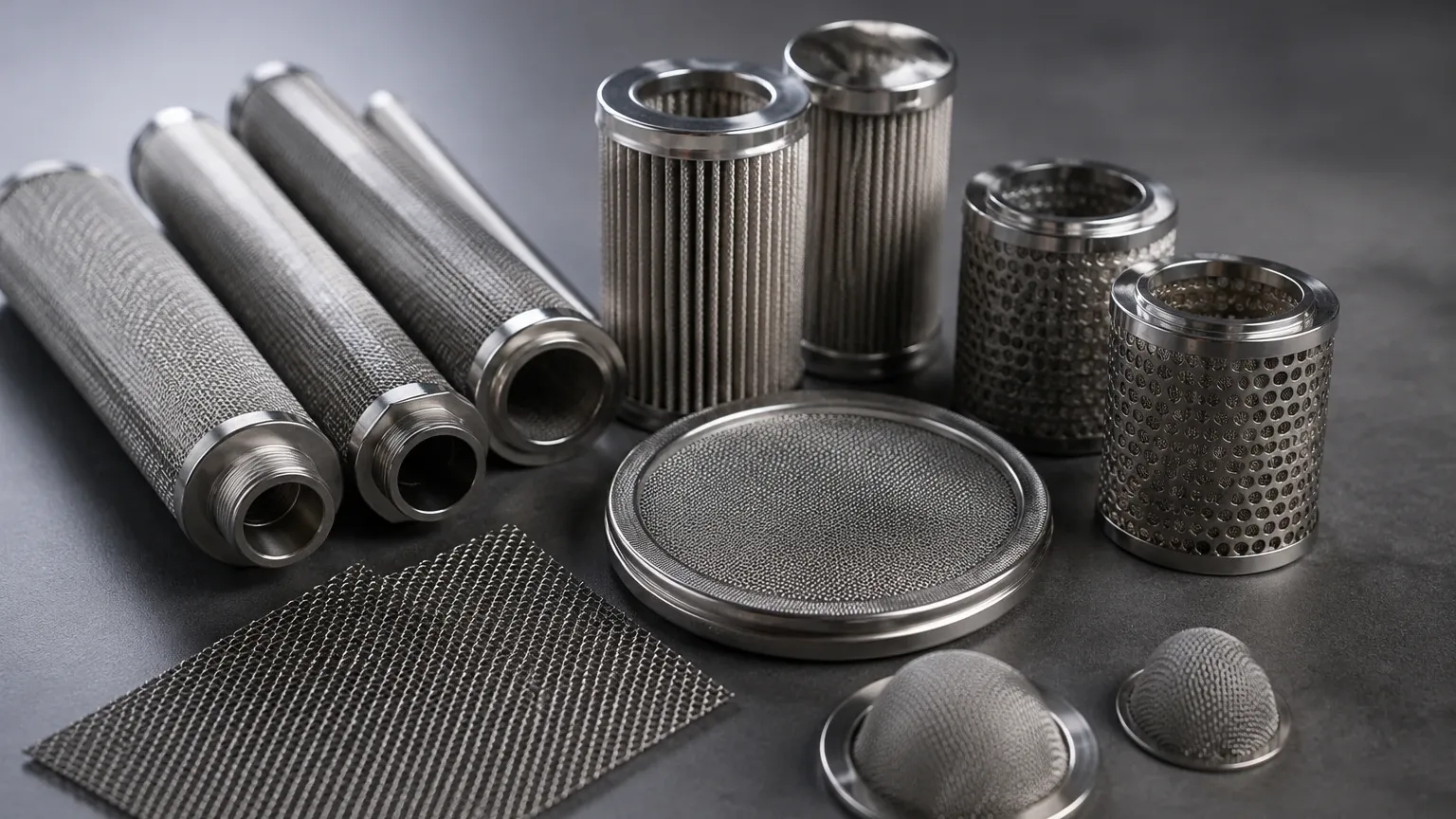
Stainless steel filters, particularly those utilizing sintered wire mesh or sintered metal fibers, offer exceptional pore stability. The sintering process fuses the metal strands at their contact points, creating a rigid and permanent structure that does not deform under the pressures and temperatures of a sip pharma cycle. This allows the filter to maintain its rated micron level—whether it is a 0.2-micron sterilizing grade or a 10-micron pre-filter—throughout hundreds of sterilization cycles. This consistency is vital for validation processes, as it ensures that the filter's performance remains within the parameters established during the initial process qualification.
Integrity Testing and Validation in SIP Systems
Validation is a cornerstone of pharmaceutical production. Every filter used in a sterile process must be integrity tested to ensure it is undamaged and capable of performing its intended function. For sip pharma applications, integrity testing is typically performed both before and after the sterilization cycle. Common methods include the Bubble Point Test, the Pressure Hold Test, and the Water Intrusion Test (for hydrophobic vent filters).
Stainless steel filters are particularly well-suited for these tests because of their predictable wetting characteristics and structural rigidity. Unlike polymer membranes, which may require specific wetting agents that could potentially contaminate the process, stainless steel mesh can often be tested with purified water or the process fluid itself. Providing documented evidence of a filter's ability to pass integrity tests after repeated SIP exposure is a key part of the technical support Kaifil offers to its global partners. This data helps engineering teams establish realistic replacement cycles and minimize the risk of batch failure.
Optimizing Total Cost of Ownership (TCO) in Pharma Filtration
While the initial investment in a high-quality stainless steel filter may be higher than that of a disposable polymer cartridge, the Total Cost of Ownership (TCO) is often significantly lower in the long run. In a high-volume sip pharma environment, the cost of frequent filter replacements, the labor associated with change-outs, and the risk of disposal-related environmental impact can add up quickly.
Stainless steel filters are cleanable and reusable. Depending on the nature of the contaminants, they can be cleaned using ultrasonic baths, chemical cleaning agents, or back-washing techniques, allowing them to be returned to service multiple times. When a filter is designed to withstand 200+ SIP cycles compared to a polymer filter that may only last 10 to 50 cycles, the economic benefits become clear. Furthermore, the reduced risk of catastrophic filter failure—such as a burst membrane—provides an added layer of financial protection by preventing the loss of expensive pharmaceutical batches.
Customization and OEM Solutions for Specialized Requirements
Every pharmaceutical facility has unique piping configurations, flow rate requirements, and space constraints. A one-size-fits-all approach to filtration often leads to inefficiencies in the SIP process. Customization is where engineering expertise truly adds value. At Kaifil, we work closely with engineers to develop filtration components that are tailored to specific sip pharma applications.
Customization options include:
- Tailored End-Cap Configurations: Ensuring a perfect, leak-proof fit within existing filter housings.
- Variable Pleat Densities: Optimizing the surface area for specific flow rates and dirt-holding capacities.
- Multi-Layer Sintered Mesh: Combining different mesh counts to provide both fine filtration and high mechanical strength.
- Specialized Surface Treatments: Enhancing cleanability and reducing the risk of product adsorption.
By focusing on the specific technical demands of the pharmaceutical industry, Kaifil helps purchasing teams and engineers achieve a balance between high-performance filtration and operational reliability. For more information on our full range of industrial filtration components and how we support demanding pharmaceutical applications, visit our Main Page.
Conclusion: The Future of SIP in Pharmaceutical Manufacturing
As pharmaceutical processes become more complex and regulatory scrutiny increases, the demand for reliable, high-performance sip pharma solutions will continue to grow. The transition toward more durable, sustainable, and precisely engineered filtration components is a clear trend in the industry. Stainless steel filtration technology stands at the forefront of this movement, offering the thermal stability, chemical resistance, and mechanical strength required to meet the challenges of modern sterilization protocols.
By understanding the engineering principles behind Steam-in-Place and selecting filters that are specifically designed for these rigorous conditions, pharmaceutical manufacturers can ensure the continuous production of safe, high-quality medications. Whether it is through material selection, structural design, or rigorous integrity testing, the goal remains the same: to provide a sterile barrier that engineers can trust, cycle after cycle. Kaifil remains committed to providing these advanced filtration solutions, supporting the global pharmaceutical industry with products that define durability and precision.
