


Steam Filtration
In industrial environments, steam is a critical utility used for heat transfer, sterilization, and as a direct ingredient in various processes. However, steam is rarely pure. As it travels from the boiler through carbon steel or stainless steel piping, it inevitably picks up contaminants such as pipe scale, rust, and chemical residues from boiler feed water treatments. Without effective steam filtration, these particulates can damage sensitive equipment, contaminate end products, and lead to significant downtime. For engineers and facility managers, selecting the correct filtration system is a matter of protecting both process integrity and the bottom line.
Industrial steam filtration requires a specialized approach compared to liquid or gas filtration. The high temperatures, varying pressures, and the corrosive nature of condensate necessitate the use of robust materials, primarily stainless steel. This guide explores the technical considerations, material requirements, and engineering principles behind high-performance steam filtration systems.
The Role of Steam Quality in Industrial Applications
Before selecting a filter, it is essential to define the required steam quality. Industrial steam is generally categorized into three levels based on the application and the degree of filtration required:
1. Process Steam: Used primarily for heat exchange, jacket heating, and other indirect heating applications. While it does not come into contact with the product, large particulates must be removed to prevent the erosion of valves, regulators, and heat exchanger surfaces. Typically, filtration in the range of 25 to 50 microns is sufficient.
2. Culinary Steam: This steam comes into direct contact with food, beverages, or dairy products. It must be free of any contaminants that could affect the taste, color, or safety of the product. Standards such as the 3-A Sanitary Standards often dictate the use of 5-micron filters (capable of removing 95% of particles 2 microns and larger) to ensure the steam is clean enough for direct injection.
3. Pure or Clean Steam: Used in the pharmaceutical and biotechnology sectors for sterilization-in-place (SIP) and autoclaving. This steam is often produced from deionized or distilled water. Filtration here is critical to ensure no pyrogens or fine particulates compromise the sterile environment. High-efficiency filters with sub-micron ratings are often employed in these systems.
Effective steam filtration ensures that the steam reaching the point of use meets these specific quality requirements, preventing the "blinding" of downstream equipment and ensuring product consistency.
Engineering Considerations for Filter Media Selection
Selecting the right media for steam filtration involves balancing filtration efficiency with mechanical strength and thermal stability. Because steam systems operate at high temperatures—often exceeding 200°C (392°F)—synthetic filter media are unsuitable. Stainless steel is the industry standard due to its durability and resistance to thermal shock.
Material Grades: 304 vs. 316L Stainless Steel
For most steam applications, AISI 304 or 316L stainless steel is used. While 304 is suitable for general process steam, 316L is preferred for culinary and pharmaceutical applications. The addition of molybdenum in 316L provides superior resistance to pitting and corrosion, particularly in environments where chloride ions or acidic cleaning agents are present. In high-purity steam systems, the low carbon content of 316L also minimizes carbide precipitation during welding, ensuring the structural integrity of the filter cartridge.
Sintered Metal vs. Pleated Wire Mesh
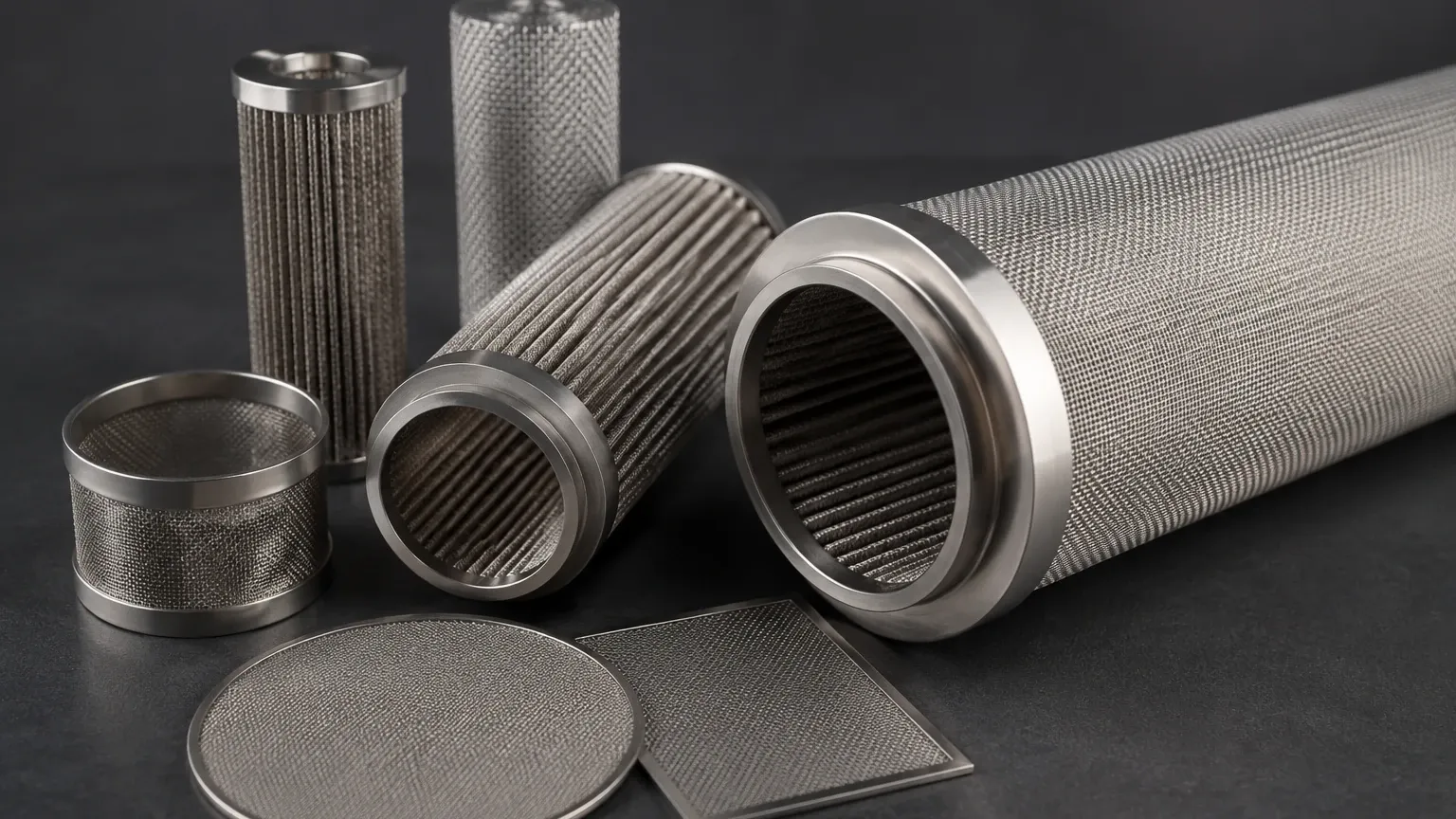
There are two primary configurations for stainless steel steam filters: sintered metal and pleated wire mesh. Each offers distinct advantages depending on the application.
* Sintered Metal Filters: These are created by fusing stainless steel powder or fibers under high heat and pressure. The result is a rigid, porous structure that provides excellent depth filtration. Sintered filters are highly resistant to pressure surges and can withstand aggressive cleaning cycles. They are ideal for removing fine particulates in high-pressure steam lines.
* Pleated Wire Mesh Filters: These consist of multiple layers of stainless steel wire cloth pleated together to increase the surface area. The primary advantage of pleated filters is their high flow capacity and low initial pressure drop (ΔP). They are particularly effective as pre-filters or in applications where high volumes of steam are required with minimal resistance.
Technical Specifications: Micron Ratings and Pressure Drop
When evaluating steam filtration components, engineers must focus on the relationship between micron ratings, flow rates, and pressure drop. A common mistake is over-specifying the filtration grade, which can lead to unnecessary pressure loss and more frequent maintenance.
Absolute vs. Nominal Ratings
In steam filtration, it is vital to distinguish between nominal and absolute micron ratings. A nominal rating refers to the filter's ability to trap a percentage of particles of a certain size (e.g., 95% of 10-micron particles). An absolute rating indicates the diameter of the largest spherical particle that can pass through the filter under specific test conditions. For critical applications like culinary steam, absolute ratings are often required to ensure total removal of specific contaminants.
Managing Differential Pressure (ΔP)
Every filter introduces a pressure drop into the system. In steam lines, excessive pressure drop can reduce the temperature of the steam at the point of use, potentially compromising sterilization or heating efficiency. A well-designed steam filtration system should typically operate with an initial clean pressure drop of less than 0.1 to 0.2 bar (1.5 to 3 psi). As the filter accumulates debris, the ΔP will increase. Monitoring this differential pressure is the most effective way to determine when a filter element needs cleaning or replacement.
Installation and System Design Best Practices
The performance of a steam filter is heavily influenced by how it is integrated into the piping system. Proper installation prevents premature clogging and protects the filter media from mechanical damage.
Condensate Management
Steam filters are designed to remove solids, not large volumes of liquid water. If condensate is allowed to build up in the filter housing, it can lead to "slugs" of water hitting the filter element at high velocity, a phenomenon known as water hammer. This can deform or rupture the filter media. To prevent this, a high-quality steam trap must be installed immediately upstream of the filter housing to remove condensate before it reaches the filter.
Entrainment Separators
In systems with high moisture content, an entrainment separator (or moisture separator) should be placed before the steam filter. This device uses centrifugal force or baffles to remove bulk moisture and large scale, allowing the fine steam filter to focus on removing sub-micron particulates. This staged approach significantly extends the service life of the primary filter element.
Proper Sizing
Sizing a steam filter based solely on pipe size is a common error. Filters should be sized based on the mass flow rate of the steam (kg/h or lb/h), the operating pressure, and the maximum allowable pressure drop. Because steam is a compressible gas, its density changes with pressure. A filter that works at 8 bar will have a much higher pressure drop if the system pressure is reduced to 2 bar while maintaining the same mass flow.
Maintenance, Cleaning, and Longevity
One of the primary benefits of stainless steel steam filtration is that the elements are often cleanable and reusable. Unlike disposable polymer filters, stainless steel cartridges can be restored to near-original performance through various cleaning methods, significantly reducing the total cost of ownership.
Cleaning Protocols
* Backwashing: For pleated mesh filters, reversing the flow of clean steam or water can dislodge surface-level contaminants.
* Ultrasonic Cleaning: This is the most effective method for sintered metal filters. The filter is submerged in a cleaning solution and subjected to high-frequency sound waves, which create microscopic bubbles that implode and strip away deeply embedded particulates.
* Chemical Cleaning: In cases where chemical scale or organic matter has fouled the filter, soaking the element in a compatible acid or alkaline solution can dissolve the contaminants.
Integrity Testing
In pharmaceutical and food applications, it is necessary to verify that the filter has not been damaged during cleaning or operation. Integrity tests, such as the bubble point test, can confirm that the filter still meets its specified micron rating. Regular inspection of the O-rings and seals is also required to prevent bypass, where unfiltered steam leaks around the element.
Achieving Operational Efficiency with Custom Solutions
Every industrial facility has unique steam requirements based on its boiler chemistry, piping age, and end-use sensitivity. Off-the-shelf solutions may not always provide the optimal balance of filtration efficiency and flow capacity. Working with a specialized manufacturer allows for the development of custom filter housings and elements tailored to specific spatial constraints and performance targets.
Customization options often include:
* Specific alloy selections for highly corrosive environments.
* Custom end-cap configurations (e.g., Code 7, 226, or NPT threaded) to fit existing housings.
* Reinforced internal cores for high-differential pressure applications.
* Specialized surface finishes for sanitary compliance.
By focusing on the technical nuances of material science and fluid dynamics, engineers can implement steam filtration systems that not only protect their equipment but also improve the overall energy efficiency of the steam loop. For more information on high-performance metal filtration components and custom engineering support, you can visit the Main Page of our technical resource center.
Conclusion
Steam filtration is a vital component of modern industrial infrastructure. Whether the goal is to protect a heat exchanger from pipe scale or to ensure the safety of a food product through culinary steam injection, the choice of filtration technology has a direct impact on operational success. By understanding the differences between sintered and pleated media, managing pressure drops, and adhering to strict maintenance protocols, facilities can ensure a reliable supply of high-quality steam. Investing in durable, stainless steel filtration solutions from a knowledgeable manufacturer provides the technical assurance needed to maintain process integrity in the most demanding industrial environments.
