


Amf Cuno
In the landscape of industrial filtration, few names carry as much historical weight as AMF Cuno. Originally a division of American Machine and Foundry (AMF), the Cuno brand established several benchmarks for fluid purification that remain relevant in modern engineering. Today, while the brand has transitioned through various corporate acquisitions—most notably becoming a part of 3M Separation and Purification Sciences—the legacy of AMF Cuno technology continues to influence how engineers approach depth filtration, resin-bonded media, and high-flow liquid processing.
For procurement teams and maintenance engineers, understanding the technical foundations of AMF Cuno products is essential when managing legacy systems or evaluating modern alternatives. This article examines the engineering principles behind these filtration technologies, the transition from disposable to permanent media, and the critical selection criteria for industrial applications. For those seeking specialized manufacturing support or custom metal filtration components, visiting the Main Page of a professional manufacturer can provide insights into current production capabilities.
The Technical Legacy of AMF Cuno Filtration
AMF Cuno became a staple in industrial environments primarily due to its innovations in depth filtration. Unlike surface filters, which trap particles on a single plane (such as a thin wire mesh), depth filters utilize the entire thickness of the filter media to capture contaminants. This is achieved through a tortuous path—a complex network of voids and channels within the material.
One of the most recognizable products associated with the AMF Cuno name is the resin-bonded filter cartridge. These cartridges are engineered by bonding long fibers with a specialized resin, which is then vacuum-formed into a rigid, porous structure. This design was revolutionary because it addressed the common failure points of traditional wound or melt-blown cartridges. In a standard non-rigid filter, high differential pressures can cause the media to compress or "unload," releasing previously trapped contaminants back into the downstream flow. The rigid structure of the AMF Cuno-style resin-bonded cartridge prevents this compression, ensuring consistent filtration performance even under fluctuating pressure conditions.
Engineering Principles: Depth vs. Surface Filtration
When evaluating filtration systems, engineers must choose between depth media and surface media based on the nature of the contaminant and the required flow characteristics.
Depth Filtration Mechanics
Depth filtration is ideal for fluids with a high concentration of deformable or gelatinous particles. Because the particles are trapped throughout the matrix, depth filters offer a high dirt-holding capacity. In the context of AMF Cuno technology, the use of graded-density structures is common. This means the outer layers of the filter have larger pores to catch bigger particles, while the inner layers have finer pores for final polishing. This prevents the surface from blinding prematurely and extends the service life of the cartridge.
Surface Filtration and Metal Alternatives
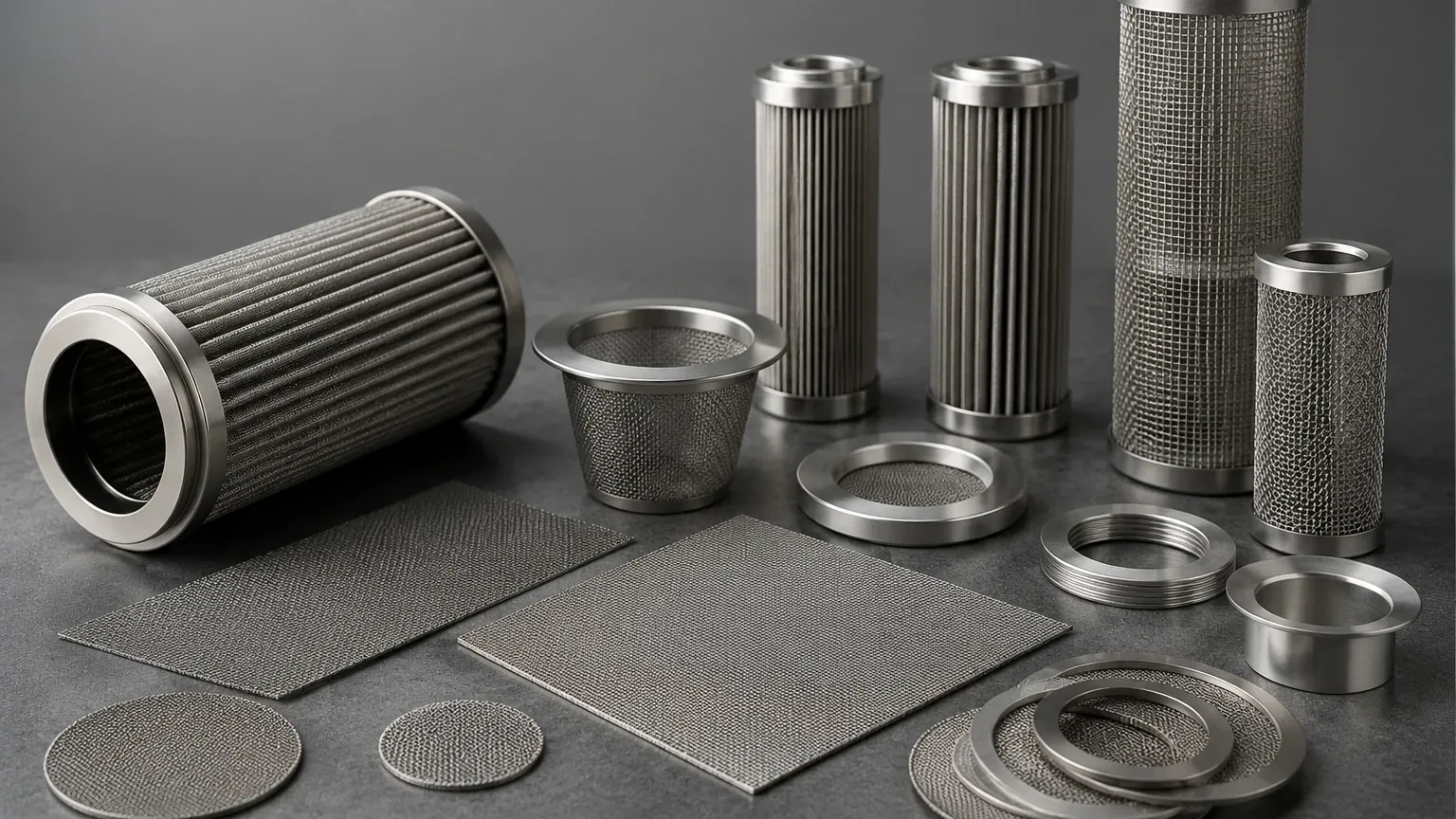
While resin-bonded depth filters are effective for many applications, they are essentially consumables. In high-temperature environments or applications involving aggressive chemicals that might degrade resins, engineers often turn to stainless steel surface filters or sintered metal depth filters. Stainless steel wire mesh filters provide a precise, absolute-rated filtration layer that can be cleaned and reused. For applications that require the dirt-holding capacity of a depth filter but the durability of metal, sintered metal fiber felt or multi-layer sintered mesh provides a robust alternative that mirrors the "tortuous path" principle without the risk of resin migration.
Material Compatibility and Selection Criteria
Selecting a filter housing or cartridge requires a rigorous analysis of the chemical and thermal environment. The legacy AMF Cuno product line covered a vast array of materials, from cellulose and melamine resin to sophisticated polypropylenes.
Chemical Resistance
Engineers must ensure that every component of the filter—including the media, the core, the end caps, and the seals—is compatible with the process fluid. For example, while a standard resin-bonded filter might excel in water or oil applications, it may fail in the presence of strong acids or bases. In these instances, 304 or 316L stainless steel components are often specified. Stainless steel offers near-universal chemical compatibility and can withstand the harsh Clean-In-Place (CIP) or Steam-In-Place (SIP) cycles required in pharmaceutical and food and beverage processing.
Temperature and Pressure Limits
Temperature is a limiting factor for many polymer-based filters. Most disposable cartridges have a maximum operating temperature between 60°C and 80°C. Beyond this, the structural integrity of the media may be compromised. Metal filtration solutions, by contrast, can operate at temperatures exceeding 400°C, making them the preferred choice for steam filtration or high-temperature chemical processing. Furthermore, the structural rigidity of metal allows for much higher allowable differential pressures (Delta P) before the risk of structural collapse occurs.
Total Cost of Ownership (TCO) in Industrial Filtration
When managing systems originally designed for AMF Cuno products, purchasing departments often focus on the unit price of the replacement cartridge. However, a technical evaluation of the Total Cost of Ownership (TCO) often reveals a different picture.
1. Disposal Costs: Disposable cartridges generate significant waste. In industries dealing with hazardous materials, the cost of disposing of contaminated resin-bonded filters can exceed the purchase price of the filter itself.
2. Labor and Downtime: Frequent filter changes require system shutdowns and manual labor. If a process requires a filter change every 48 hours, the cumulative downtime over a year can represent a massive loss in production efficiency.
3. Filtration Efficiency: A lower-cost "nominal" rated filter may allow more contaminants to pass through than an "absolute" rated filter, leading to downstream equipment damage or product quality issues.
By transitioning to cleanable stainless steel filtration systems, many facilities reduce their long-term costs. While the initial capital expenditure for a stainless steel cartridge is higher, the ability to clean the media via ultrasonics, back-flushing, or chemical baths means the filter can remain in service for years rather than days.
Customization and OEM Integration
Many legacy systems using AMF Cuno housings require specific end-cap configurations to ensure a proper seal. Common configurations include:
* Double Open End (DOE): Requires gaskets on both ends and a compression nut within the housing.
* Single Open End (SOE): Often features a 222 or 226 O-ring configuration with a locking fin or flat cap to prevent bypass.
For engineers maintaining these systems, finding exact-fit replacements is critical. Custom manufacturers can often produce stainless steel internals that retro-fit into existing AMF Cuno housings, allowing plants to upgrade their filtration performance without replacing the expensive pressure vessels. This customization extends to the micron rating and flow distribution. By adjusting the weave pattern of a wire mesh or the density of a sintered metal fiber, manufacturers can tune the filter to the specific viscosity and flow rate of the application.
Common Risks and Engineering Considerations
When sourcing filters for applications historically served by AMF Cuno, there are several risks to mitigate:
Media Migration
In lower-quality depth filters, fibers can break loose and enter the filtrate. This is known as media migration. It is a critical failure in pharmaceutical or microelectronics applications. Specifying high-quality resin-bonded filters or moving to sintered metal media eliminates this risk, as the filtration fibers are permanently fused or bonded.
Bypass
Bypass occurs when fluid flows around the filter media rather than through it. This is usually caused by poor sealing at the end caps or a deformed housing. When replacing legacy AMF Cuno cartridges, it is vital to verify the dimensions of the O-rings and the integrity of the housing’s sealing surface. Even a micron-level gap can significantly degrade the ISO cleanliness level of the downstream fluid.
Pressure Drop (Delta P)
Every filter introduces a pressure drop into the system. As the filter loads with dirt, the pressure drop increases. Engineers must ensure that the pump system can handle the maximum terminal pressure drop of the filter. If the initial (clean) pressure drop is too high, the effective service life of the filter will be unacceptably short.
Conclusion: Moving Forward with Industrial Filtration
The principles established by AMF Cuno—rigidity, graded density, and reliable depth filtration—continue to guide the industry. Whether a facility continues to use resin-bonded disposables or transitions to advanced stainless steel solutions, the focus remains on achieving the required fluid purity with maximum operational efficiency.
For technical teams, the decision-making process involves a careful balance of material science, fluid dynamics, and economic forecasting. By understanding the specific requirements of the application—from chemical compatibility to the nature of the contaminants—engineers can select filtration components that protect downstream equipment and ensure product consistency.
For those looking to explore high-performance, customized filtration components that meet these rigorous industrial standards, reviewing professional manufacturing options is a logical next step. To learn more about available solutions and engineering support, visit the Main Page for a comprehensive overview of modern filtration capabilities.
