


Woven Wire Mesh Belt
In industrial manufacturing and processing, the movement of materials often requires more than simple transport; it requires a medium that allows for air circulation, liquid drainage, or thermal exchange while maintaining structural integrity. A woven wire mesh belt serves this dual purpose, acting as both a conveyor and a functional processing surface. For engineers and procurement specialists, selecting the correct belt configuration is a critical decision that impacts throughput, product quality, and long-term operational costs.
At Kaifil, we specialize in high-performance stainless steel filtration and mesh solutions. Understanding the technical nuances of Woven Wire Mesh is essential for designing belts that withstand the rigors of chemical processing, food production, and high-temperature industrial environments.
Understanding the Fundamentals of Woven Wire Mesh Belts
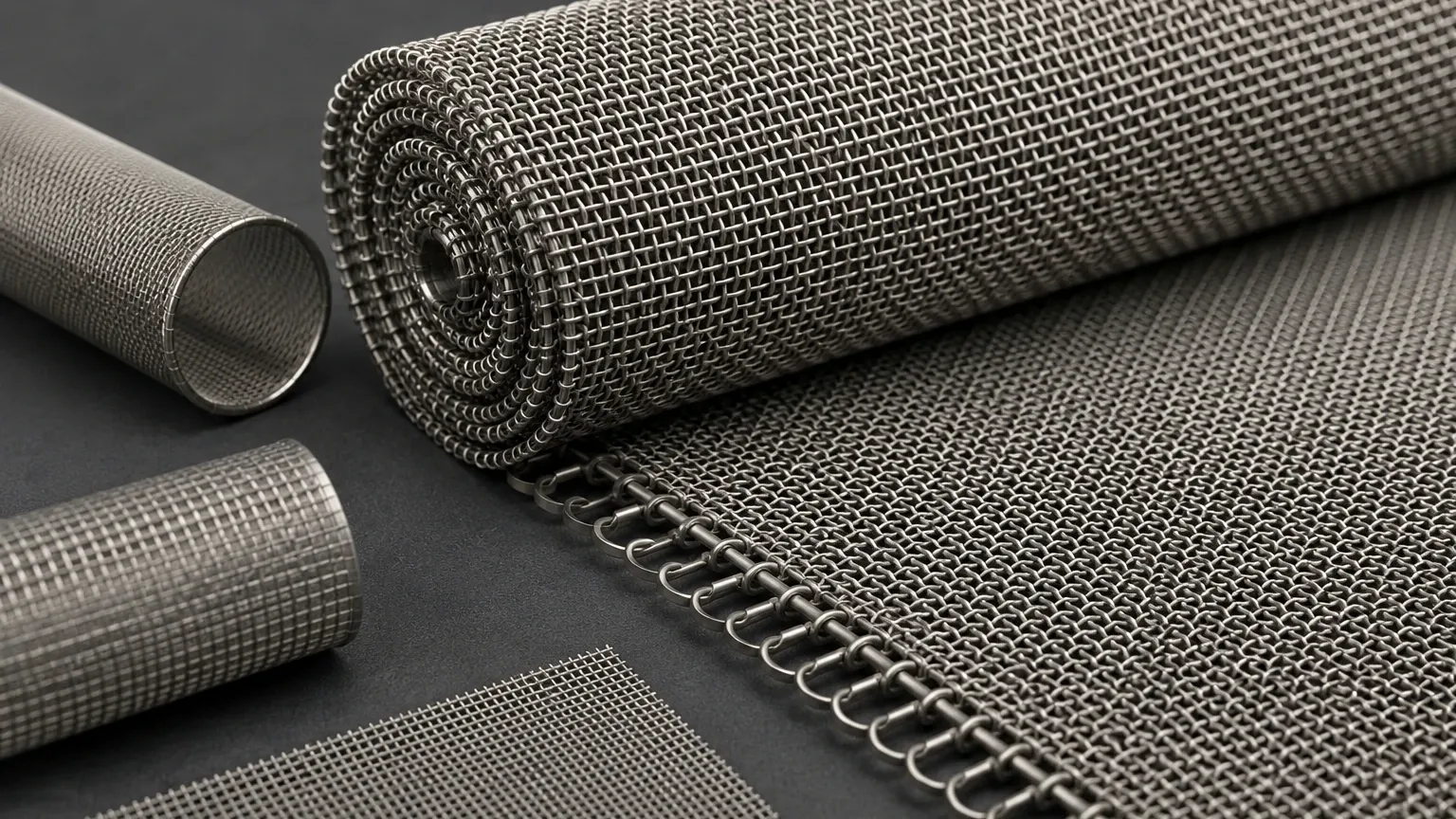
A woven wire mesh belt is essentially a continuous loop of interconnected metal wires. Unlike solid belts or plastic modular belts, these metal structures offer a high percentage of open area. This characteristic is vital for applications where the product must be dried, cooled, heated, or washed while in motion.
From an engineering perspective, the performance of a woven wire mesh belt is determined by three primary factors: the material alloy, the weave pattern, and the physical dimensions of the wire and aperture. When these factors are aligned with the specific requirements of the application, the result is a durable, low-maintenance component that can operate in environments where other materials would fail.
The Role of Material Selection
Material selection is the first boundary in filter and belt engineering. For most industrial applications, stainless steel is the standard due to its mechanical strength and resistance to oxidation.
1. SS304: This is the most common grade used for general-purpose belts. It offers excellent corrosion resistance and can handle temperatures up to approximately 800°F (425°C) without significant loss of structural integrity. It is widely used in food processing and standard industrial conveying.
2. SS316L: In environments involving high salinity, acidic chemicals, or pharmaceutical-grade hygiene requirements, SS316L is preferred. The addition of molybdenum enhances its resistance to pitting and crevice corrosion, making it suitable for chemical wash-down processes and marine environments.
3. High-Nickel Alloys: For specialized heat-treating applications where temperatures exceed 1500°F, specialized alloys may be required to prevent scaling and metal fatigue.
Weave Patterns and Their Functional Impact
The way a woven wire mesh belt is constructed dictates its load-bearing capacity, its filtration capability, and its tracking stability. Different weave patterns are chosen based on the size of the product being conveyed and the specific process taking place.
Plain Weave
In a plain weave, each warp wire (running lengthwise) passes alternately over and under each weft wire (running crosswise). This is the simplest and most common weave. It provides a consistent aperture size and is ideal for general filtration and light-to-medium-duty conveying. Plain weave belts are easy to clean and offer a flat surface that minimizes product marking.
Twill Weave
Twill weaves involve the wire passing over two wires and then under two wires. This allows for the use of heavier wire diameters in a given mesh count, resulting in a stronger mesh that can handle higher loads. Twill weaves are often used when the belt must support heavy industrial components or when a finer mesh is needed without sacrificing mechanical strength.
Dutch Weave (Plain and Twill)
Dutch weaves use different wire diameters for the warp and weft. Typically, the weft wires are smaller and driven closer together, creating a "zero-aperture" or "tortuous path" mesh. While less common for standard conveying, a Dutch woven wire mesh belt is used in specialized filtration processes where high pressure is applied, or where extremely fine particles must be retained while allowing high fluid flow rates.
Engineering Considerations for Belt Performance
When specifying a belt for a new or existing system, engineers must look beyond the mesh count. Several mechanical factors influence the total cost of ownership and the frequency of replacement cycles.
Open Area and Airflow
The percentage of open area is a critical calculation for drying and cooling applications. A higher open area allows for faster thermal transfer and more efficient drainage. However, increasing the open area often means using thinner wires, which can reduce the belt's tensile strength. Engineering a balance between the required airflow and the necessary load capacity is a core part of the customization process.
Tensile Strength and Tensioning
Unlike static filtration panels, a woven wire mesh belt is under constant tension. The belt must be able to withstand the pull of the drive motor while carrying the product load. If the tension is too high, the mesh may stretch or the wires may undergo fatigue. If it is too low, the belt may slip on the drive rollers or track improperly. Specifying the correct wire gauge ensures the belt can handle the operational torque without permanent deformation.
Edge Treatments
The edges of a mesh belt are its most vulnerable points. Without proper finishing, the wires can unravel, leading to catastrophic belt failure and potential product contamination. Common edge treatments include:
* Welded Edges: The warp and weft wires are fused together. This provides a clean, snag-free edge suitable for most applications.
* Knuckled Edges: The wires are bent back over themselves. This is often used in applications where the belt must flex significantly or where thermal expansion is a factor.
* Side Chains: For heavy-duty or precision-timed applications, the mesh is attached to side chains. This ensures positive drive and perfect tracking, though it increases the complexity and cost of the system.
Common Applications for Woven Wire Mesh Belts
The versatility of stainless steel mesh allows these belts to be used across diverse industries. Each sector has unique demands that influence the final design of the belt.
Food and Beverage Processing
In the food industry, hygiene is the primary concern. Woven wire mesh belts are used in baking ovens, cooling lines, and breading stations. Because they are made of stainless steel, they can withstand high-temperature sterilization and harsh cleaning chemicals. The open weave ensures that crumbs or excess coatings fall through the belt rather than accumulating and creating a sanitation risk.
Chemical and Pharmaceutical Manufacturing
These industries often require belts that can operate within submerged tanks or under continuous chemical sprays. A woven wire mesh belt made from SS316L is frequently used here to resist corrosion from solvents and reagents. In pharmaceutical applications, the precision of the mesh ensures that small components or tablets are conveyed without damage or loss.
Heat Treatment and Metalworking
Belts used in quenching tanks or tempering ovens must handle extreme temperature fluctuations. The thermal mass of a wire mesh belt is much lower than that of a solid metal belt, which means it heats up and cools down faster, improving energy efficiency in thermal processes.
Maintenance and Longevity: Best Practices
To maximize the life of a woven wire mesh belt, a proactive maintenance schedule is required. Even the highest quality Plain, twill and dutch woven wire mesh in SS304/316L — rolls, cut mesh and framed panels. Send mesh count or micron target for a technical quote. will eventually succumb to wear if not properly managed.
Monitoring Wear Patterns
Engineers should regularly inspect the belt for signs of "necking" (narrowing of the belt width) or elongation. These are indicators that the belt is being over-tensioned. Additionally, checking for uneven wear on the edges can reveal tracking issues in the conveyor frame that need to be addressed before they cause a tear.
Cleaning Protocols
Accumulated debris can act as an abrasive, wearing down the wires at the intersection points. In food or chemical applications, regular ultrasonic cleaning or high-pressure washing is recommended. It is vital to ensure that cleaning agents are compatible with the stainless steel grade to prevent stress corrosion cracking.
Replacement Indicators
When should a belt be replaced? Key indicators include:
* Frequent breakage of individual wires.
* Difficulty in maintaining proper tracking.
* Visible thinning of the wire diameter at the weave intersections.
* Permanent deformation or "waisting" that affects product stability.
Conclusion: Selecting the Right Partner for Custom Solutions
Choosing a woven wire mesh belt involves more than just selecting a part number from a catalog. It requires a deep understanding of the mechanical and chemical demands of your specific application. Factors such as the micron rating for filtration, the tensile strength for load-bearing, and the alloy's resistance to environmental stressors must all be weighed.
As a manufacturer specializing in custom stainless steel filtration and mesh components, Kaifil provides the technical expertise necessary to navigate these choices. Whether you are designing a new conveyor system or looking to optimize the performance of an existing line, confirming the mesh count, wire diameter, and material grade is the first step toward a reliable solution.
By focusing on precision manufacturing and high-quality materials, we help industrial operators achieve efficient, durable filtration and conveying performance. For technical specifications or to discuss a customized design for your application, reviewing the available mesh options is the best way to ensure your project's success.
