


Technical Guide to Woven Wire Fence Black: Engineering and Selection Criteria
In industrial and commercial infrastructure, the selection of perimeter and safety barriers requires a balance between structural integrity, environmental resistance, and visual integration. While standard metallic finishes are common, the use of woven wire fence black solutions has increased in specialized sectors such as chemical processing, high-end architectural security, and industrial safety enclosures. This preference is driven not only by aesthetics but by the specific performance characteristics of the coatings and base materials used in high-quality Woven Wire Mesh.
For engineers and procurement teams, understanding the technical nuances of these materials—ranging from the base alloy to the application of black protective layers—is essential for ensuring long-term durability and cost-efficiency. This guide examines the engineering considerations, material properties, and selection methods for industrial-grade woven wire fencing.
1. The Fundamentals of Woven Wire Mesh Construction
At its core, any woven wire fence is a product of precision engineering. The manufacturing process involves weaving individual wires over and under one another to create a stable, consistent grid. In industrial applications, the base material is typically a high-grade stainless steel, such as SS304 or SS316L, which provides the necessary tensile strength and corrosion resistance.
Weave Patterns and Their Impact
The structural behavior of the mesh is determined by its weave pattern. While many fencing applications utilize a simple plain weave, more demanding industrial environments may require variations:
* Plain Weave: The most common configuration where wires cross in an over-one, under-one pattern. This provides equal strength in both the warp and shute directions, making it ideal for standard safety partitions.
* Twill Weave: Each shute wire passes successively over and under two warp wires. This allows for a heavier wire diameter relative to the mesh count, increasing the overall impact resistance of the fence.
* Dutch Weave: Primarily used in filtration, this weave uses different wire diameters for warp and shute wires to create a dense, high-strength barrier. While less common for standard fencing, it is utilized in specialized security screens where high-pressure resistance or fine-particle exclusion is required.
When specifying a woven wire fence black solution, the weave must be chosen based on the anticipated mechanical load and the required visibility through the barrier.
2. Material Science: Why Black Finishes Matter
The term "black" in woven wire fencing refers to the secondary treatment applied to the base metal. For industrial applications, this is rarely just for appearance; the coating serves as a critical barrier against environmental degradation.
PVC and Vinyl Coatings
Polyvinyl Chloride (PVC) coating is a standard choice for black fencing. The wire is either extruded with a vinyl layer or dipped. In industrial settings, a thermally fused PVC coating is preferred because it bonds more tightly to the wire, preventing moisture from creeping between the coating and the metal. This is particularly vital in coastal or high-humidity environments where salt spray can lead to rapid oxidation of inferior metals.
Black Oxide and Chemical Finishes
For applications requiring a thinner, more integrated finish, black oxide is used. This is a conversion coating that changes the surface chemistry of the stainless steel. Unlike paint or PVC, it does not chip or peel. It is often selected for machine guards and internal safety partitions where precision tolerances must be maintained.
Powder Coating and Epoxy
Powder-coated black finishes offer high UV resistance and impact protection. Epoxy coatings are frequently used in chemical processing areas where the fence may be exposed to corrosive vapors. These coatings ensure that the underlying Woven Wire Mesh remains protected from localized pitting and crevice corrosion.
3. Technical Specifications: Mesh Count and Wire Diameter
Selecting the right woven wire fence black requires a detailed analysis of the mesh geometry. Engineers must define three primary variables: the mesh count, the wire diameter, and the percentage of open area.
Defining Mesh Count
Mesh count refers to the number of openings per linear inch. In fencing, a lower mesh count (larger openings) is typical to allow for visibility and airflow. However, for specialized industrial enclosures—such as those used to contain debris or protect sensitive electronics—a higher mesh count may be necessary.
Wire Diameter Considerations
The wire diameter (often measured in gauges or millimeters) directly correlates to the fence's tensile strength. A thicker wire increases the weight of the mesh but significantly improves its ability to withstand physical impact or attempted breaches. For industrial safety, wire diameters typically range from 0.5mm to 4.0mm depending on the required rigidity.
Calculating Open Area
The percentage of open area is a critical calculation for fences used in ventilation or where light transmission is required. It is calculated using the formula:
\[ \text{Open Area \%} = \frac{(O)^2}{(O + d)^2} \times 100 \]
Where:
* O = Size of the opening
* d = Wire diameter
A black finish can visually reduce the perceived open area, so engineers should account for the coating thickness when calculating these values for airflow-sensitive applications.
4. Performance Expectations in Industrial Environments
When deploying a woven wire fence black system, the performance expectations go beyond simple containment. Industrial environments subject materials to thermal cycling, chemical exposure, and mechanical stress.
Corrosion Resistance and Alloy Selection
While the black coating provides the first line of defense, the underlying alloy is the fail-safe.
* SS304: Suitable for most indoor industrial environments and general outdoor use.
* SS316L: Contains molybdenum, providing superior resistance to chlorides. This is the standard for marine environments or chemical plants where the fence may encounter aggressive cleaning agents or process byproducts.
Thermal Stability
In facilities with high-temperature equipment, the thermal expansion of the mesh must be considered. Black surfaces absorb more radiant heat than polished stainless steel. If the fence is constrained in a rigid frame without room for expansion, the mesh may buckle or warp over time. Selecting a coating with a high thermal threshold is essential in these scenarios.
Maintenance and Longevity
One of the primary advantages of a high-quality black woven wire fence is the reduction in maintenance. The coating hides dust and grime better than bright metallic finishes, and the added layer of protection significantly extends the replacement cycle. Engineers should evaluate the "Total Cost of Ownership" (TCO) by comparing the higher initial cost of coated stainless steel against the recurring maintenance and replacement costs of galvanized or uncoated alternatives.
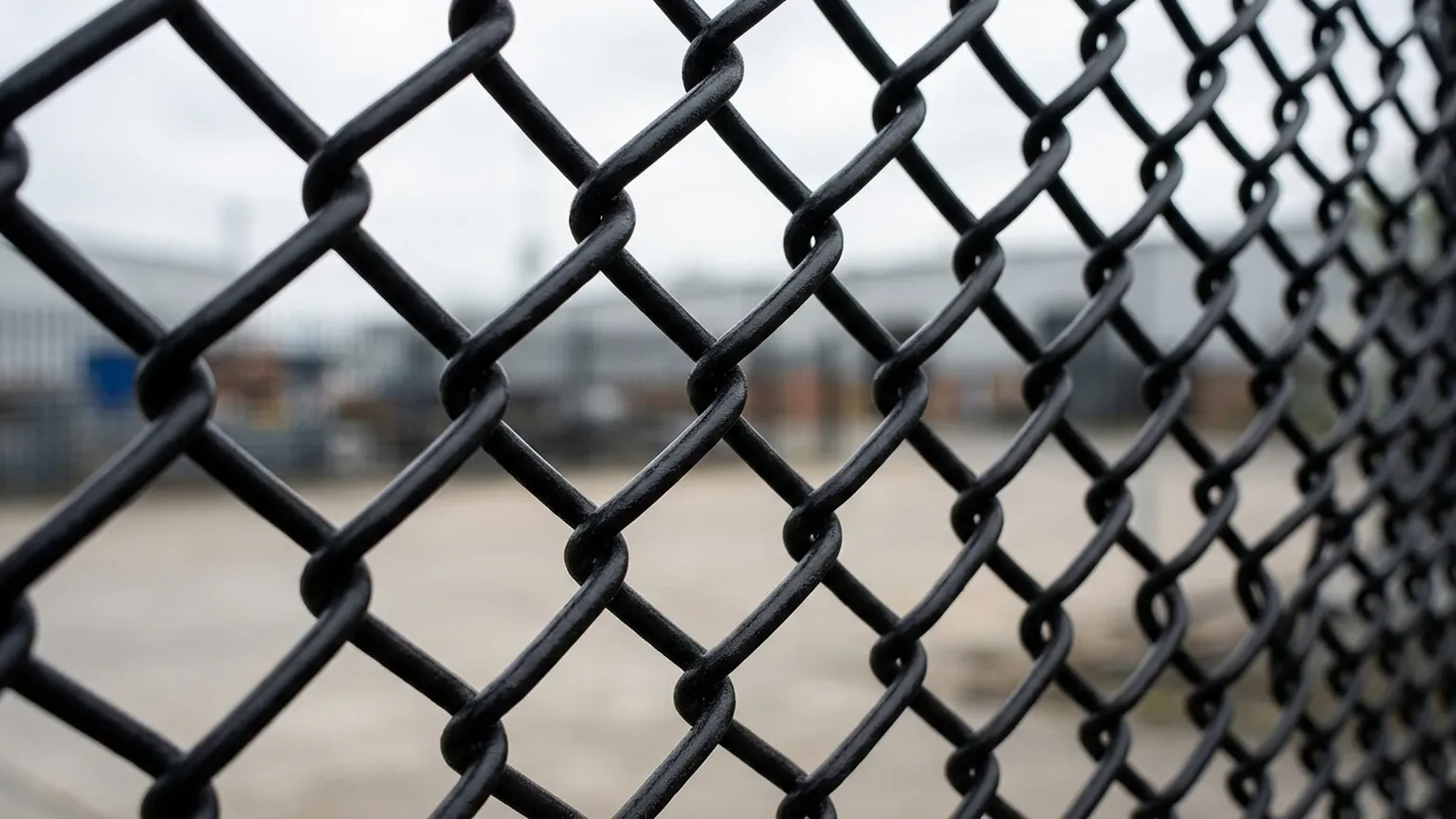
5. Industrial Applications of Black Woven Wire Mesh
The versatility of woven wire fence black allows it to be used across diverse sectors. Its application is often dictated by the need for high-strength separation that does not compromise the facility's aesthetic or operational flow.
Machine Guarding and Safety Enclosures
In manufacturing plants, black woven mesh is used to create safety perimeters around robotic arms and high-speed machinery. The black finish reduces glare from overhead industrial lighting, allowing operators to see through the mesh more clearly to monitor equipment without the visual interference caused by reflective surfaces.
Chemical and Pharmaceutical Processing
In these environments, cleanliness and resistance to reactive agents are paramount. Coated Woven Wire Mesh provides a durable barrier for storage areas and cleanroom partitions. The smooth surface of fused PVC or epoxy coatings prevents the accumulation of particulate matter and facilitates easier wash-down procedures.
Data Centers and Infrastructure Security
For high-security areas like data centers, black woven wire mesh is used for server cages and perimeter fencing. The material’s high tensile strength makes it difficult to cut, while the black finish provides a professional, low-profile appearance that blends into modern architectural designs.
6. Customization and Engineering Support
Standard off-the-shelf fencing often fails to meet the precise requirements of complex industrial projects. Customization is where technical expertise becomes most valuable. When sourcing a woven wire fence black, engineers should confirm the following with their manufacturer:
* Edge Treatments: Will the mesh be supplied with raw edges, or does the application require hemmed or framed edges for safety and structural mounting?
* Dimensional Tolerances: For integration into existing frames, what are the allowable variances in mesh pitch and overall panel size?
* Coating Thickness: Is the coating thickness consistent across the entire roll, and will it interfere with the assembly of mounting hardware?
* Testing and Certification: Can the manufacturer provide material test reports (MTRs) for the base alloy and salt spray test results for the coating?
At Kaifil, we specialize in providing tailored filtration and separation solutions. Our expertise in manufacturing stainless steel components ensures that every mesh product, including those used for specialized fencing, meets rigorous industrial standards for accuracy and durability.
7. Conclusion: Making an Informed Selection
Choosing the right woven wire fence black involves more than selecting a color. It requires a thorough understanding of the relationship between weave patterns, material alloys, and coating technologies. By focusing on the technical specifications—such as mesh count, wire diameter, and the specific type of black finish—engineers can implement a solution that offers superior protection, reduced maintenance, and long-term reliability.
Whether the goal is to enhance machine safety, secure a perimeter, or provide a durable partition in a corrosive environment, the use of high-quality Woven Wire Mesh remains the gold standard for industrial applications. By partnering with a manufacturer that understands these engineering nuances, purchasing teams can ensure they receive a product that is perfectly suited to their specific operational demands.
