


Porous Filter
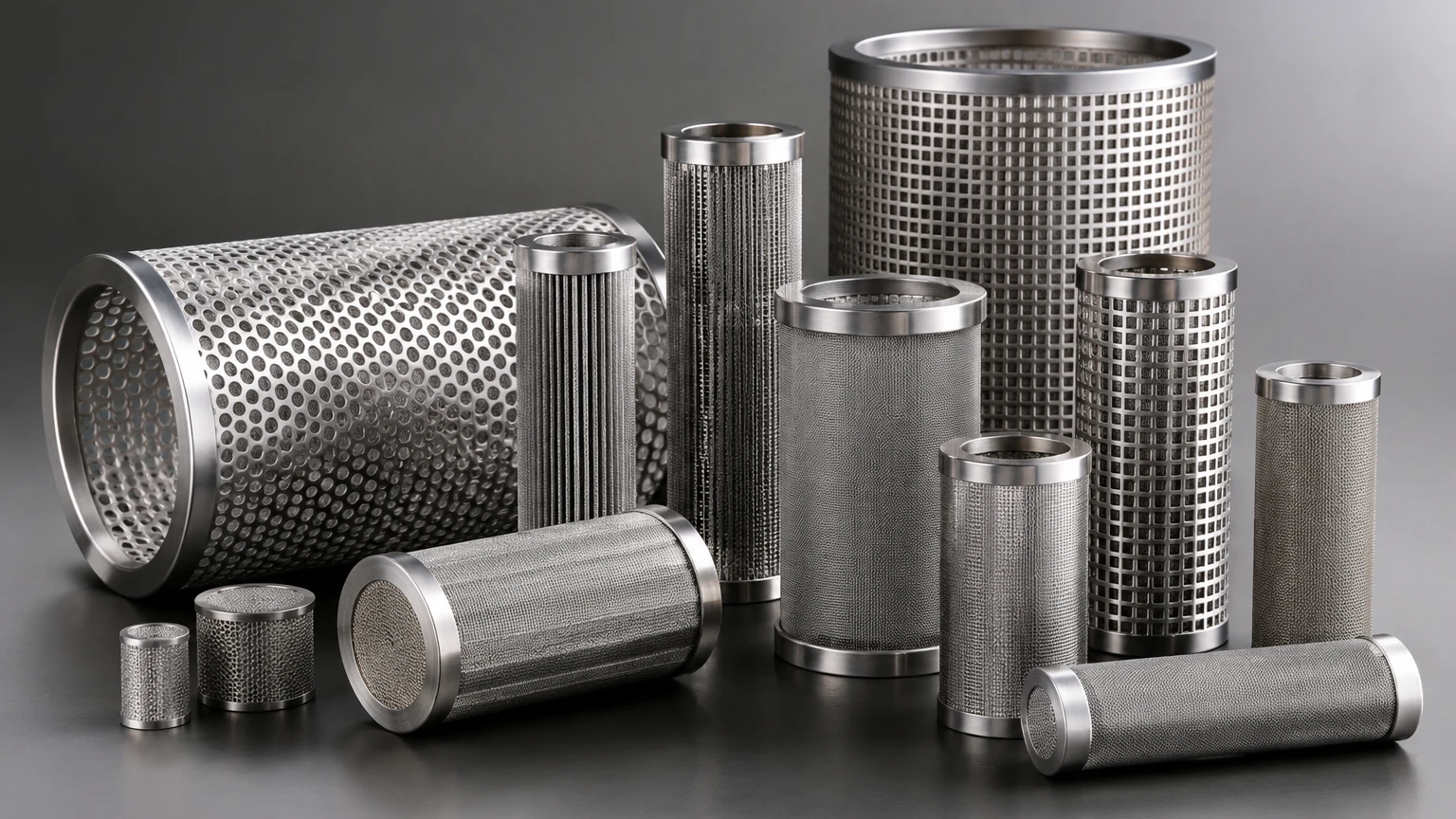
In industrial process engineering, the selection of a porous filter is a critical decision that impacts system efficiency, product purity, and long-term operational costs. A porous filter is a specialized component designed to allow the passage of fluids (liquids or gases) while retaining solid particulate matter within its internal structure or on its surface. Unlike simple screens, industrial porous filters—particularly those manufactured from stainless steel and other high-performance alloys—are engineered with precise pore geometries and distributions to meet specific micron ratings and flow requirements.
For engineers and procurement teams, understanding the technical nuances of porous media is essential. Kaifil, a professional manufacturer specializing in custom stainless steel filtration solutions, provides a range of products designed for demanding environments where mechanical strength, thermal stability, and chemical resistance are paramount. This guide explores the engineering principles, material considerations, and application-specific criteria necessary for selecting and implementing porous filtration systems.
Fundamentals of Porous Filter Media
Porous filters are generally categorized by their manufacturing process and the resulting internal structure. In the realm of metal filtration, two primary types dominate the landscape: sintered metal powder and sintered wire mesh.
Sintered Metal Powder
Sintered metal powder filters are created by compacting metal powders into a shape and then heating them in a controlled atmosphere furnace. This process, known as sintering, causes the particles to bond at their contact points without melting. The result is a rigid, highly porous structure with a tortuous path for the fluid. This "depth filtration" mechanism is exceptionally effective at capturing fine particles within the thickness of the filter wall. These filters are known for their high pressure-bearing capacity and precise micron ratings.
Sintered Wire Mesh
Sintered wire mesh involves layering multiple sheets of woven stainless steel wire mesh and sintering them together. This creates a composite material that combines the fine filtration capabilities of thin mesh layers with the mechanical strength and durability of coarser support layers. Sintered mesh filters offer excellent permeability and are easier to clean (backwash) compared to powder-based media, making them ideal for high-flow applications and systems requiring frequent regeneration.
Material Science and Engineering Considerations
The performance of a porous filter is largely dictated by the metallurgy of the media. While various materials can be used, stainless steel remains the industry standard due to its versatility.
1. 316L Stainless Steel: This is the most common material for industrial porous filters. The "L" denotes low carbon content, which improves weldability and resistance to intergranular corrosion. It offers excellent resistance to a wide range of chemicals and can withstand high operating temperatures.
2. 304 Stainless Steel: Suitable for less aggressive environments, 304 provides a cost-effective solution for food and beverage or general water treatment applications where extreme corrosion resistance is not the primary concern.
3. Specialty Alloys: In environments involving highly corrosive acids or extreme temperatures, materials such as Hastelloy, Inconel, or Monel may be utilized. These alloys provide the necessary oxidation resistance and mechanical integrity that standard stainless steels cannot maintain.
When evaluating materials, engineers must consider the pH of the fluid, the presence of halides (which can cause pitting in stainless steel), and the maximum operating temperature. A well-designed porous filter must maintain its structural integrity under the combined stresses of thermal expansion and hydraulic pressure.
Technical Specifications: Micron Rating and Permeability
Selecting the correct porous filter requires a deep dive into technical metrics. Two of the most misunderstood concepts are absolute versus nominal micron ratings.
Absolute vs. Nominal Ratings
* Nominal Micron Rating: This refers to an efficiency figure, typically indicating that the filter can retain a certain percentage (e.g., 90% or 95%) of particles at a specific size. It does not guarantee that larger particles will not pass through.
* Absolute Micron Rating: This represents the diameter of the largest hard spherical particle that will pass through the filter under specified test conditions. In critical applications, such as pharmaceutical processing or fine chemical production, absolute ratings are mandatory to ensure process integrity.
Permeability and Pressure Drop
Permeability is a measure of how easily a fluid passes through the porous medium. It is inversely proportional to the pressure drop ($ΔP$). A filter with very fine pores will have lower permeability and a higher initial pressure drop. Engineers must balance the need for fine filtration with the energy costs associated with pumping fluids through a high-resistance medium. For more information on optimizing these parameters for your specific system, you can visit the Main Page to review product options and application support.
Industrial Application Scenarios
Porous filters are utilized across a spectrum of industries, each with unique challenges regarding hygiene, pressure, and chemical exposure.
Chemical and Petrochemical Processing
In these sectors, porous filters are used for catalyst recovery, gas-solid separation, and the filtration of aggressive solvents. The ability of sintered metal to withstand high differential pressures allows for continuous operation in high-viscosity fluid streams.
Pharmaceutical and Biotechnology
Filtration in pharma requires media that is non-shedding and capable of withstanding sterilization processes like Autoclaving or Steam-in-Place (SIP). Stainless steel porous filters are preferred here because they do not release fibers into the filtrate and can be manufactured to meet stringent sanitary standards.
Food and Beverage
From carbonating beverages to filtering frying oils, porous filters provide a durable solution that complies with food safety regulations. Their ability to be cleaned and reused makes them a more sustainable and cost-effective alternative to disposable polymer filters.
Hydraulic and Aerospace Systems
Precision metal filters protect sensitive valves and actuators from particulate contamination. In these applications, the high strength-to-weight ratio of sintered metal is a significant advantage.
Engineering Challenges: Pressure Drop and Flow Dynamics
One of the primary challenges in implementing a porous filter is managing the flow dynamics. As a filter accumulates contaminants, the effective pore size decreases, and the pressure drop increases. If the $ΔP$ exceeds the structural limits of the filter element, it may collapse or experience "blow-through," where particles are forced through the media.
To mitigate this, engineers must calculate the "Clean Pressure Drop" during the design phase. This involves considering the fluid's viscosity, the flow rate, and the total surface area of the filter. Increasing the surface area—often achieved through pleating the filter media—can significantly extend the service life and reduce the frequency of cleaning cycles.
Customization and OEM Integration
Standard off-the-shelf filters rarely meet the exact needs of specialized industrial equipment. Customization is often necessary to ensure the filter fits perfectly within existing housing and meets specific performance benchmarks. Kaifil provides extensive OEM capabilities, allowing for the customization of:
* Geometry: Cylindrical cartridges, flat discs, conical shapes, or complex manifold assemblies.
* End Fittings: Threaded connections (NPT, BSP), flange mounts, or specialized O-ring seals to ensure leak-free integration.
* Multi-layer Structures: Combining different micron ratings in a single element to create a graduated density filter, which improves dirt-holding capacity.
By working closely with a manufacturer during the design phase, engineers can develop filtration components that are optimized for the specific flow patterns and mechanical stresses of their machinery.
Maintenance, Cleaning, and Longevity
One of the greatest advantages of a metal porous filter is its cleanability. Unlike polymer or paper filters that must be discarded once clogged, stainless steel filters can be restored to near-original performance levels through various cleaning methods:
1. Backwashing: Reversing the flow of fluid through the filter to dislodge particles from the surface.
2. Ultrasonic Cleaning: Using high-frequency sound waves in a cleaning solvent to break down stubborn contaminants deep within the pores.
3. Chemical Cleaning: Using acids, alkalis, or surfactants to dissolve organic or inorganic deposits, provided the chemicals are compatible with the filter material.
4. Thermal Burn-off: Heating the filter to high temperatures to carbonize organic contaminants, followed by ultrasonic cleaning to remove the ash.
Understanding the replacement cycle is also vital. While metal filters are durable, they are not infinite. Factors such as fatigue from pressure cycling or gradual erosion of the pore structures will eventually necessitate replacement. Monitoring the rate of pressure increase over time is the most effective way to determine when a filter has reached the end of its functional life.
Conclusion
The implementation of a porous filter is a foundational element of industrial process control. Whether the goal is to protect downstream equipment, ensure the purity of a final product, or recover valuable catalysts, the technical specifications of the filter must align perfectly with the operational environment. By focusing on material compatibility, precise micron ratings, and structural integrity, engineers can achieve a balance between filtration efficiency and operational economy.
For technical professionals seeking to optimize their filtration processes, partnering with an experienced manufacturer like Kaifil ensures access to high-quality, customized metal filtration components. To explore technical data sheets or discuss specific engineering requirements, visit the Main Page for comprehensive product information and support.
