


Small Filter Press Systems
In industrial liquid-solid separation, small filter press systems serve as critical tools for pilot-scale testing, laboratory analysis, and small-batch production. These systems are designed to provide the same mechanical dehydration and filtration capabilities as their larger industrial counterparts but on a scale that allows for precise control, lower material consumption, and portability. For engineers and procurement teams, selecting the right system requires a deep understanding of hydraulic pressure, material compatibility, and the specific performance characteristics of the filter media used within the plates.
As a manufacturer specializing in precision stainless steel filtration components, Kaifil provides the technical foundation for high-performance filtration. Understanding how these systems operate and where the filtration media—such as stainless steel wire mesh—impacts the final output is essential for optimizing industrial processes. You can explore our full range of technical capabilities on our Main Page.
Engineering Principles of Small Filter Press Systems
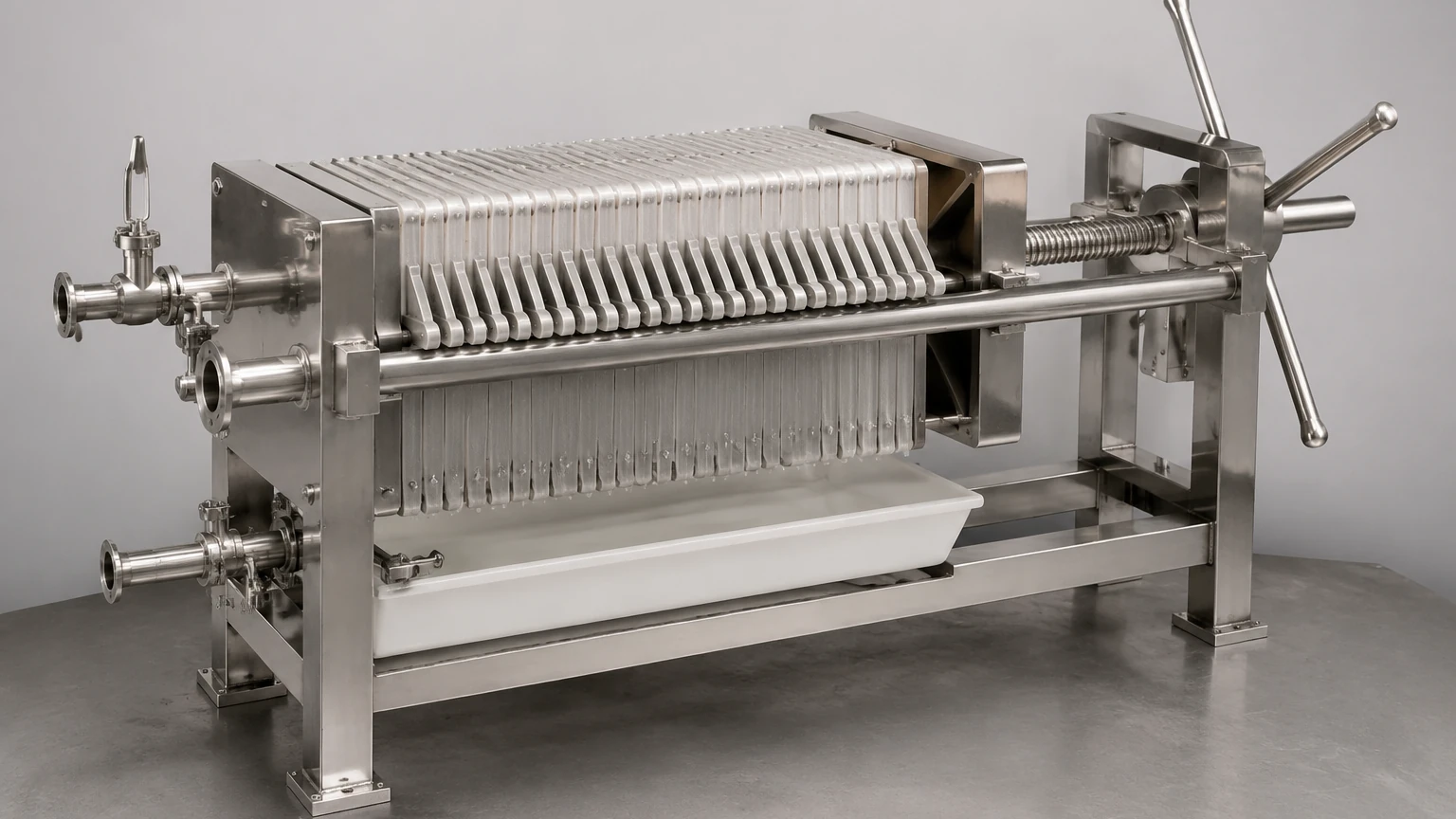
Small filter press systems operate on the principle of pressure-driven separation. The system typically consists of a series of filter plates covered with a filter medium, which are pressed together by a hydraulic or manual closing mechanism to form a series of chambers. A slurry is pumped into these chambers; the liquid (filtrate) passes through the filter medium and exits through the drainage ports, while the solids are retained in the chambers to form a "cake."
In small-scale applications, the precision of this process is paramount. Engineers often utilize these systems to determine the specific resistance of a cake or to calculate the optimal filtration cycle time before scaling up to full-size production units. The efficiency of the separation is governed by the Darcy-Weisbach equation and the Kozeny-Carman relationship, which relate the flow rate to the pressure drop across the filter medium and the accumulated cake.
Because small filter press systems often handle high-value or highly concentrated slurries, the choice of filter media is the most significant variable in determining throughput and clarity. While traditional cloth filters are common, many modern industrial applications require the durability and precision of stainless steel wire mesh to handle aggressive solvents or high-temperature fluids.
Material Selection and Chemical Compatibility
When evaluating small filter press systems, the materials of construction for both the frame and the internal filtration components must be strictly aligned with the chemical nature of the process fluid. In industries such as pharmaceutical manufacturing or chemical processing, the presence of corrosive agents or extreme pH levels can quickly degrade standard materials.
Plate and Frame Materials
Most small-scale systems utilize plates made from polypropylene, stainless steel, or aluminum. Polypropylene is favored for its chemical resistance and lightweight nature, but it has temperature limitations. For high-temperature applications or processes requiring stringent sanitization (such as in the food and beverage industry), 304 or 316L stainless steel plates are the standard. Stainless steel provides superior structural integrity under high pressure and resists the pitting and crevice corrosion often associated with chloride-rich environments.
Filtration Media Compatibility
The filter media is the primary interface between the equipment and the product. Stainless steel wire mesh filters are increasingly integrated into small filter press systems because they offer:
* Thermal Stability: Capability to operate in environments exceeding 250°C where polymer cloths would melt or deform.
* Chemical Inertness: Resistance to a wide range of organic solvents and acids.
* Mechanical Strength: The ability to withstand high differential pressures without tearing, ensuring consistent pore size and filtration accuracy.
Evaluating Filtration Efficiency and Cake Dryness
The primary objective of using small filter press systems is often to achieve maximum cake dryness or the highest possible filtrate clarity. Several technical factors influence these outcomes:
Feed Pressure and Flow Control
The pump used to feed the slurry into the press must be capable of maintaining a constant pressure as the chambers fill. As the cake builds up, the resistance increases. A common mistake in small-scale operations is using a pump with an insufficient pressure curve, leading to "soft" cakes that are difficult to discharge and contain excessive moisture.
Micron Rating and Pore Structure
The filtration accuracy is defined by the micron rating of the filter media. In small filter press systems, using a precision-woven stainless steel mesh allows for a defined aperture size. Unlike fiber-based cloths, which may have varying pore sizes due to the weave's flexibility, rigid metal mesh maintains its geometry under pressure. This ensures that the "first pass" of the filtrate meets the required clarity standards without the need for extensive recycling of the fluid.
Cake Discharge and Cleaning
In small-batch processes, the time taken to clean the equipment can significantly impact the total cycle time. Stainless steel filter components are particularly advantageous here because they are easier to clean via backwashing or ultrasonic cleaning compared to textile filters, which can trap particles within their fibers (a phenomenon known as blinding).
Common Operational Risks and Mitigation Strategies
Operating small filter press systems involves several risks that can compromise both the equipment and the product quality. Engineering teams must be proactive in identifying these issues during the pilot phase.
1. Media Blinding: This occurs when fine particles become lodged within the pores of the filter medium. To mitigate this, engineers should select a mesh weave—such as Dutch weave or twilled weave—that balances flow rate with particle retention. Stainless steel's smooth surface characteristics often reduce the mechanical adhesion of the cake, facilitating easier release.
2. Bypass and Leaking: In small systems, even a minor misalignment of the plates can lead to slurry bypassing the filter media. Ensuring that the filter plates and the media (especially if using custom-cut metal mesh) have precise tolerances is essential. Custom-engineered gaskets and precision-cut mesh inserts from manufacturers like Kaifil help maintain a tight seal.
3. Structural Fatigue: Repeated pressurized cycles can cause fatigue in the plate handles or the closing mechanism. Regular inspection of the hydraulic seals and the structural integrity of the frames is necessary, especially when operating at the upper limits of the system's pressure rating.
Integration and Customization for Industrial Workflows
Small filter press systems are rarely standalone units; they must be integrated into a larger process flow. This often requires customization of the inlet and outlet manifolds, as well as the filtration components themselves.
Customization options for these systems include:
* Automated Shifting: While many small systems are manual, semi-automated plate shifters can be added to reduce labor and improve safety during cake discharge.
* Tailored Filter Cartridges: In some configurations, the press may be designed to accept specialized stainless steel filter cartridges or custom-shaped wire mesh elements to meet specific flow patterns.
* Heating/Cooling Jackets: For processes where temperature control is vital to maintain viscosity or prevent crystallization, plates can be equipped with internal channels for heat transfer fluids.
By working with a specialized manufacturer, engineers can specify the exact wire diameter, weave type, and alloy required for their specific application, ensuring that the small-scale testing accurately reflects the conditions of full-scale production.
Pre-Purchase Technical Checklist for Engineering Teams
Before investing in small filter press systems, purchasing and engineering teams should confirm the following technical specifications to ensure the equipment meets the application requirements:
* Total Filtration Area: Calculate the required surface area based on the desired flow rate and the solids concentration of the slurry.
* Chamber Volume: Ensure the total volume of the chambers can accommodate the expected volume of solids per cycle.
* Maximum Operating Pressure: Confirm that the system is rated for the pressures required to achieve the target cake dryness (typically 7 to 15 bar for most industrial applications).
* Media Selection: Determine if the process requires the durability of stainless steel wire mesh or if a disposable cloth is sufficient. For high-precision or high-purity applications, stainless steel is often the preferred choice.
* Maintenance Requirements: Evaluate the ease of replacing the filter media and the availability of spare parts, such as gaskets and specialized mesh components.
Small filter press systems are indispensable for optimizing industrial filtration. By focusing on high-quality components and precise engineering specifications, companies can ensure reliable performance and a lower total cost of ownership. For more information on custom filtration solutions and high-performance stainless steel components, visit our Main Page.
