


Hydraulic Tank Filter Housing
In industrial hydraulic systems, the reservoir serves as more than just a storage vessel for fluid; it is the central hub for heat dissipation, air separation, and contaminant settling. The hydraulic tank filter housing is a critical component within this ecosystem, acting as the primary line of defense against particulate ingress and internal wear debris. For engineers and procurement specialists, selecting the appropriate housing is not merely a matter of fitting a part to a tank, but a strategic decision that affects the longevity of pumps, valves, and actuators.
Contamination is responsible for an estimated 70% to 80% of hydraulic system failures. By integrating a robust hydraulic tank filter housing, operators can maintain fluid cleanliness levels within specified ISO 4406 standards, thereby reducing unplanned downtime and extending the service life of expensive system components.
The Role of the Hydraulic Tank Filter Housing in System Integrity
The primary function of the hydraulic tank filter housing is to provide a secure, leak-proof enclosure for the filter element. Depending on its placement—either on the suction side, the return line, or as a breather—the housing must withstand varying degrees of pressure, vibration, and environmental exposure.
In a typical configuration, the housing is mounted directly to the reservoir. This "tank-top" or "in-tank" design minimizes the footprint of the hydraulic power unit (HPU) and reduces the number of external hoses and fittings, which are potential leak points. A well-engineered housing ensures that all fluid passing through the circuit is forced through the filter media, preventing bypass leakage that could allow contaminants to circulate back into the sensitive components of the system.
Furthermore, the housing must facilitate easy access for maintenance. In high-duty industrial environments, the ability to replace a filter element quickly without draining the reservoir or introducing new contaminants is a significant operational advantage.
Categorizing Tank-Mounted Filtration Systems
To select the correct hydraulic tank filter housing, it is essential to understand the different configurations available and how they interact with the system's flow dynamics.
Return Line Filter Housings
Return line housings are perhaps the most common type of tank-mounted filtration. Positioned at the end of the hydraulic circuit, they capture wear debris generated by the system's components before the fluid returns to the reservoir. Because they are located on the low-pressure side of the system, these housings are often designed for moderate pressure ratings but must be capable of handling high flow surges, especially in systems with large cylinders.
Suction Strainers and In-Tank Suction Filters
Suction housings are located between the reservoir and the pump. Their primary role is to protect the pump from large particles that could cause catastrophic failure. However, engineering these housings requires careful calculation of pressure drop ($\Delta P$). If the housing or the element creates too much resistance, the pump may experience cavitation, leading to rapid internal damage. Many modern designs utilize in-tank suction filters that are accessible from the top of the tank for easier servicing.
Tank Breather Filter Housings
As the fluid level in the reservoir rises and falls, air is drawn in and expelled. Without a breather filter housing, atmospheric dust and moisture can enter the tank freely. High-performance breather housings often incorporate desiccant media or fine-micron synthetic mesh to ensure that the air entering the system is cleaner than the fluid itself.
Technical Specifications and Engineering Considerations
When evaluating a hydraulic tank filter housing, engineers must look beyond basic dimensions and focus on the technical parameters that define performance under load.
Material Selection and Durability
While aluminum and plastic are common for light-duty applications, industrial-grade housings often require more robust materials. Stainless steel is the preferred choice for demanding environments, such as chemical processing, offshore oil and gas, or food-grade applications. Stainless steel housings offer superior corrosion resistance and can withstand the mechanical stresses of high-cycle systems. For more information on specialized material options, engineers can visit the Main Page to review technical capabilities.
Pressure and Flow Dynamics
The housing must be rated for the maximum flow rate of the system, including transient surges. A common mistake is sizing the housing based on the pump's nominal flow without accounting for the return flow from large-bore cylinders, which can be significantly higher. The internal geometry of the housing should promote laminar flow to minimize turbulence and pressure drop, which directly impacts the energy efficiency of the hydraulic system.
Bypass Valve Configuration
Most return-line housings include an integrated bypass valve. This valve opens if the filter element becomes clogged, allowing fluid to bypass the media to prevent the housing from over-pressurizing or bursting. The cracking pressure of the bypass valve must be carefully matched to the system requirements; if it is too low, the system may operate in bypass mode prematurely, leaving the fluid unfiltered.
Selection Criteria for Industrial Applications
Choosing the right hydraulic tank filter housing involves a multi-step verification process to ensure compatibility with the specific application. Engineers should confirm the following data points before finalizing a specification:
1. Fluid Compatibility: The housing seals (typically NBR, Viton, or EPDM) and the housing material itself must be compatible with the hydraulic fluid used. While mineral oils are standard, synthetic fluids, water-glycols, and high-phosphate esters require specific seal materials to prevent degradation.
2. Filtration Rating (Micron): While the housing holds the element, the housing design must support the required filtration fineness. High-precision systems may require 3-micron or 6-micron absolute filtration, necessitating a housing that can handle the higher differential pressures associated with fine media.
3. Environmental Factors: Will the housing be exposed to salt spray, extreme temperatures, or high-pressure washdowns? In these cases, a custom stainless steel housing is often the only viable long-term solution.
4. Mounting Interface: Standardized flange patterns (such as SAE or DIN) or threaded ports must align with the reservoir design. Custom manifolds can also be integrated into the housing base to streamline plumbing.
Maintenance, Monitoring, and Life Cycle Management
A hydraulic tank filter housing is only effective if the filter element inside is replaced at the correct intervals. To facilitate this, most industrial housings are equipped with contamination indicators. These can be visual gauges (color-coded dials) or electrical switches that send a signal to the system controller when the differential pressure reaches a pre-set limit.
Predictive maintenance is enhanced when the housing design allows for "clean-side" element changes. This ensures that when the housing cover is removed, any dirt accumulated on the outside of the filter does not fall into the clean side of the reservoir. Furthermore, considering the total cost of ownership (TCO) is vital. While a cheaper housing may save initial capital, a high-quality housing that reduces element change-out time and prevents bypass leakage will provide a much higher return on investment over the life of the machine.
Customization and OEM Manufacturing for Filtration Components
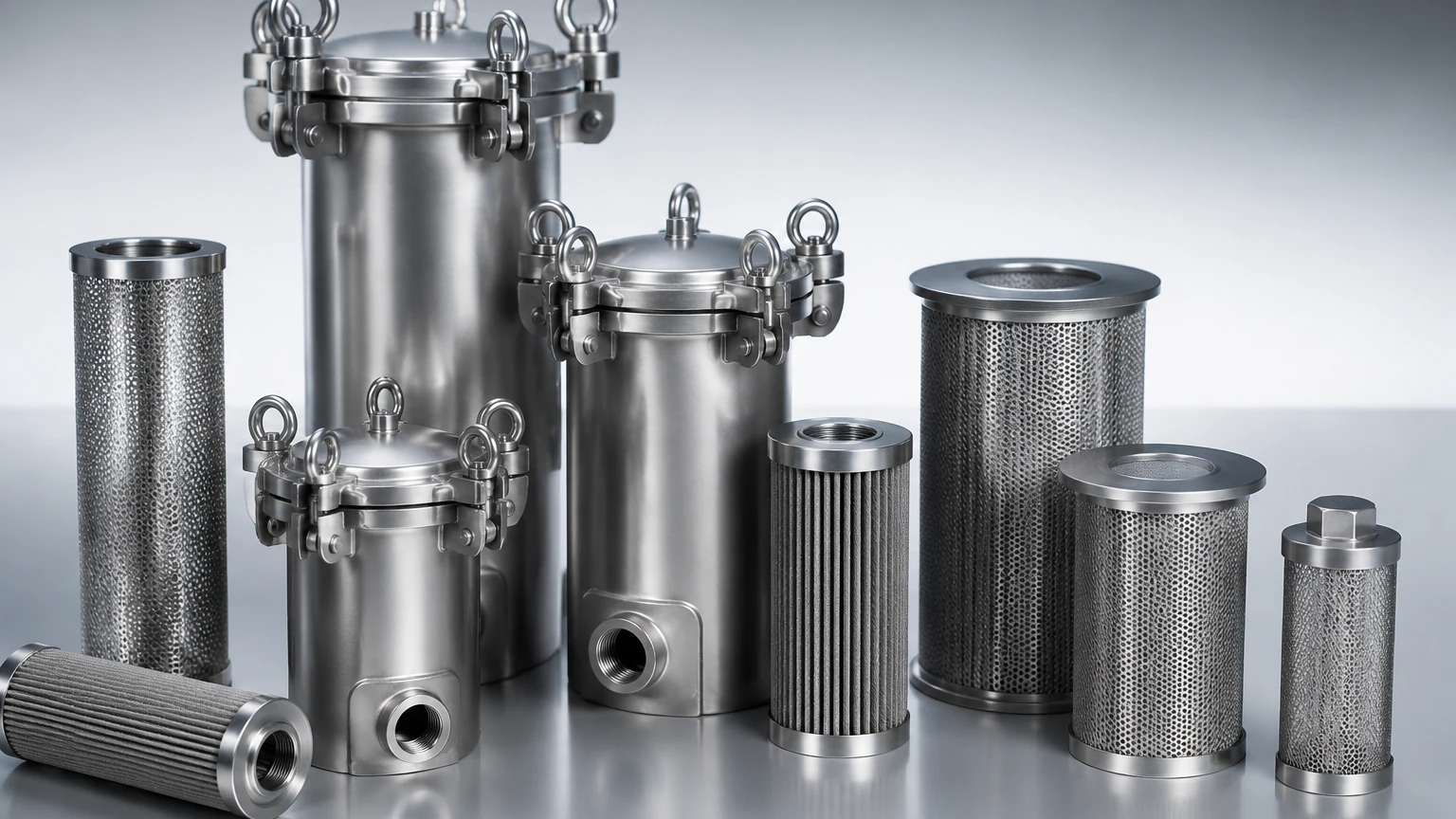
In many specialized industrial applications, off-the-shelf filter housings do not meet the exact spatial or performance requirements of the system. This is where custom manufacturing becomes essential. Manufacturers like Kaifil specialize in developing tailored stainless steel filtration solutions that address specific engineering challenges.
Customization options often include:
* Non-standard Porting: Integrating multiple inlets or outlets directly into the housing body.
* Specialized Materials: Utilizing 304 or 316L stainless steel for maximum chemical resistance.
* Integrated Components: Adding temperature sensors, sampling ports, or magnets to capture ferrous particles directly within the housing assembly.
* Specific Micron Ratings: Engineering the housing to accommodate custom-sized stainless steel wire mesh or pleated metal cartridges for high-temperature or high-viscosity fluids.
By working with a manufacturer that understands the nuances of metal fabrication and filtration science, OEM engineers can ensure that the hydraulic tank filter housing is perfectly optimized for their equipment's duty cycle and operating environment.
Conclusion
The hydraulic tank filter housing is a foundational component of any reliable hydraulic system. It serves as the physical barrier that maintains fluid purity and protects the system's most sensitive parts. By focusing on material integrity, flow dynamics, and ease of maintenance, engineers can select a housing that not only meets current performance standards but also contributes to the long-term reliability and efficiency of the industrial application. Whether selecting a standard return-line housing or a custom-engineered stainless steel solution, the goal remains the same: achieving the highest possible fluid cleanliness with the lowest operational risk.
For those seeking to optimize their filtration strategy, reviewing the specific technical parameters of your reservoir and fluid type is the first step toward a more resilient hydraulic system. Explore the full range of custom capabilities and engineering support at https://www.kaifil.com/ to find the right filtration components for your next project.
