


Iv Filters
In both clinical environments and pharmaceutical manufacturing, the integrity of intravenous delivery systems is paramount. Intravenous (IV) filtration serves as a critical safeguard, designed to remove particulate matter, air bubbles, and microbial contaminants from fluids before they enter a patient’s systemic circulation. For engineers, procurement specialists, and technical professionals in the medical device and pharmaceutical sectors, understanding the technical specifications of iv filters is essential for ensuring product efficacy and safety.
This guide explores the engineering principles, material science, and selection criteria associated with these specialized filtration components, while also addressing the broader industrial context of high-precision filtration solutions.
The Role of IV Filters in Fluid Management
IV filters are inline devices integrated into administration sets to provide a final barrier against contaminants. These contaminants may originate from several sources: the drug formulation itself (precipitates), the packaging (glass shards from ampoules or rubber cores from vials), or the environment (microorganisms and ambient air).
From a technical perspective, the primary functions of these filters include:
1. Particulate Retention: Capturing undissolved drug particles, glass, and plastic debris that can cause vascular irritation or embolism.
2. Microbial Filtration: Utilizing specific pore sizes to retain bacteria and fungi, thereby reducing the risk of infusion-related infections.
3. Air Elimination: Incorporating hydrophobic membranes to vent air bubbles, preventing air emboli in the patient.
4. Endotoxin Reduction: Specialized membranes can sometimes adsorb endotoxins, which are inflammatory byproducts of bacterial cell walls.
Technical Specifications: Pore Size and Micron Ratings
The performance of iv filters is primarily defined by their micron rating. The choice of pore size is dictated by the viscosity of the fluid and the specific types of contaminants that must be removed.
0.22 Micron Filters
Often referred to as "sterilizing-grade" filters, 0.22-micron membranes are the industry standard for removing the majority of bacteria and fungi. These filters are essential for non-lipid-containing solutions. Due to their tight pore structure, they offer high resistance to flow, which must be accounted for in gravity-fed systems or when calibrating infusion pumps.
1.2 Micron Filters
When infusing lipid emulsions or Total Parenteral Nutrition (TPN) mixtures, a 0.22-micron filter is unsuitable because it would trap the large lipid droplets, causing the filter to clog and the emulsion to break. A 1.2-micron filter is used instead. This pore size is sufficient to capture large precipitates and some fungi (such as *Candida albicans*) while allowing the essential lipids to pass through unimpeded.
5.0 Micron Filters
These are typically used as pre-filters or for basic particulate removal where microbial retention is not the primary concern. They are often found in pharmacy compounding sets to remove large glass fragments from ampoules.
Material Science and Membrane Chemistry
The efficacy of an IV filter depends heavily on the polymer used for the filtration membrane. Engineers must select materials that are chemically compatible with a wide range of drugs and carriers.
Polyethersulfone (PES)
PES is the most common material for modern iv filters. It is highly hydrophilic, meaning it wets easily and allows for high flow rates with low protein binding. Low protein binding is critical in pharmaceutical applications to ensure that the filter does not "strip" the active medication from the solution.
Nylon 6,6
Nylon membranes are durable and offer naturally hydrophilic properties. However, they may exhibit higher protein binding compared to PES, which requires careful consideration during the drug compatibility validation phase.
Polytetrafluoroethylene (PTFE)
PTFE is inherently hydrophobic. In the context of IV filtration, PTFE is typically used for the air-venting portion of the filter housing. It allows air to escape while preventing the aqueous liquid from leaking out, a dual-membrane approach that is standard in high-end air-eliminating filters.
Engineering Considerations for Integration
When specifying iv filters for OEM medical devices or pharmaceutical processing lines, several engineering factors must be evaluated to ensure system-wide compatibility.
Flow Rate and Pressure Drop
The "bubble point" and the pressure drop (ΔP) across the membrane are vital metrics. As pore size decreases, the pressure required to maintain a specific flow rate increases. Engineers must ensure that the infusion pump's pressure limits are not exceeded and that gravity-fed sets can maintain the required drops-per-minute under head pressure.
Priming and Air Elimination
A common failure point in fluid delivery is the presence of air in the line. Advanced IV filters feature an air-eliminating vent. The design must ensure that the filter can be easily primed (filled with liquid) without trapping air pockets that could later migrate into the patient line.
Chemical Compatibility and Leachable Profiles
Filters must be tested for extractables and leachables. Since these components are in direct contact with fluids entering the bloodstream, the housing (often transparent acrylic or modified polyester) and the membrane must not release harmful chemicals, especially when exposed to acidic or alkaline drug formulations.
Sourcing and B2B Procurement Criteria
For B2B buyers and technical procurement teams, selecting a supplier for filtration components involves more than just reviewing a datasheet. The following criteria are essential for long-term reliability:
* Regulatory Compliance: Ensure the manufacturer adheres to ISO 13485 standards and that materials meet USP Class VI biological reactivity testing.
* Customization Capabilities: In many industrial or specialized medical applications, standard off-the-shelf filters may not meet specific flow or connection requirements. Suppliers that offer OEM customization for housing shapes, connector types (Luer lock vs. slip), and membrane configurations provide significant value.
* Batch Traceability: In the pharmaceutical world, every component must be traceable. Reliable suppliers provide detailed Certificates of Analysis (CoA) for each lot, confirming pore size integrity and sterile processing.
* Total Cost of Ownership (TCO): While unit price is a factor, the TCO includes the cost of filter failures, the frequency of replacement, and the technical support provided by the manufacturer during the integration phase.
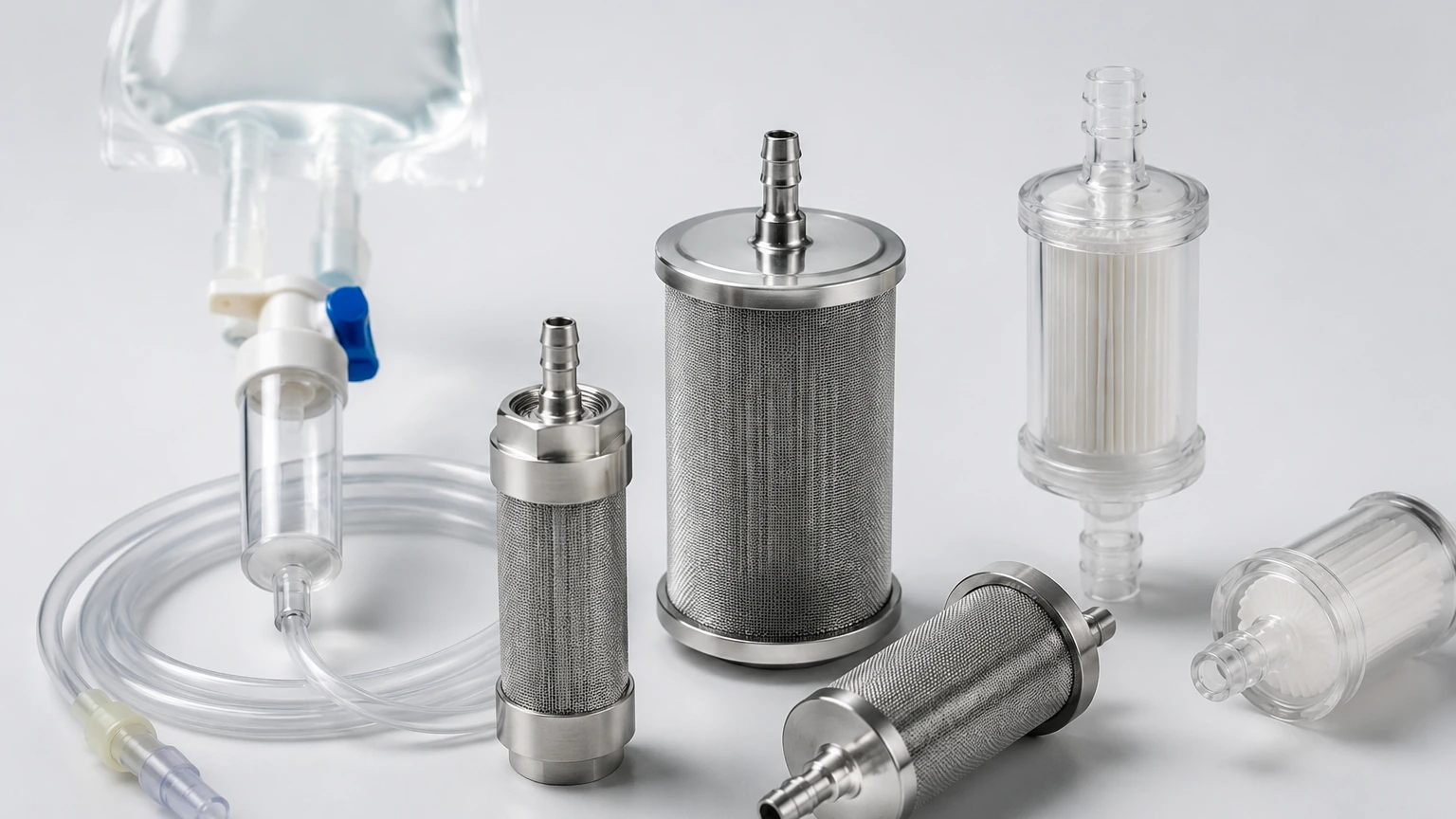
Industrial Filtration vs. Medical IV Filtration
While iv filters are specialized for clinical use, the technology shares many foundational principles with industrial stainless steel filtration. In pharmaceutical manufacturing, for instance, bulk fluids are often processed through large-scale stainless steel filter cartridges before being filled into individual IV bags.
Manufacturers like Kaifil specialize in these high-durability, precision metal filtration solutions. Stainless steel wire mesh filters offer advantages in industrial settings where high temperatures, high pressures, or aggressive chemical cleaning (CIP/SIP) processes are required. While the final IV filter at the bedside is typically a single-use plastic device, the upstream process relies heavily on the robust, reusable, and precise filtration provided by stainless steel components.
For organizations looking to optimize their industrial filtration processes or source high-precision metal filter components, reviewing professional manufacturing capabilities is the next logical step. You can Review product options and application support on the Kaifil Main Page to understand how custom engineering can solve complex filtration challenges in the pharmaceutical and chemical sectors.
Common Risks and Mitigation Strategies
Failure to correctly implement IV filtration can lead to several complications. Understanding these risks allows engineers to design better systems.
Filter Clogging (Occlusion)
Clogging occurs when the particulate load exceeds the membrane’s capacity. This is particularly common with poorly solubilized drugs. Mitigation involves using a larger surface area membrane or a graduated density pre-filter to capture larger particles before they reach the primary membrane.
Drug Adsorption
Certain medications, particularly low-dose biologics, can adhere to the filter membrane. This reduces the actual dose delivered to the patient. Selecting low-binding PES membranes is the standard technical solution for this issue.
Air Locks
If a filter is not properly primed, an air lock can occur, stopping the flow of fluid. Modern filter designs with multiple air vents help mitigate this, but user training and clear priming instructions remain essential.
The Future of IV Filtration Technology
As the pharmaceutical industry moves toward more complex biologics and personalized medicine, the demands on iv filters are evolving. We are seeing a shift toward:
* Smart Filtration: Integration of sensors to monitor flow rates and detect occlusions in real-time.
* Advanced Surface Chemistry: Membranes modified at the molecular level to repel specific proteins or attract specific endotoxins.
* Miniaturization: Developing high-surface-area filters in smaller housings to reduce the "dead volume" (the amount of fluid trapped inside the filter) which is critical for pediatric and neonatal applications.
Conclusion
IV filters are a small but indispensable part of the medical and pharmaceutical landscape. Whether you are an engineer designing a new medical device or a procurement professional sourcing components for a pharmaceutical production line, a deep understanding of micron ratings, material compatibility, and flow dynamics is required.
By focusing on technical precision and regulatory compliance, and by partnering with manufacturers who understand the rigors of industrial-grade filtration, organizations can ensure the highest standards of safety and efficiency. For those seeking expertise in the broader field of precision metal and stainless steel filtration, exploring the resources available on the Kaifil Main Page provides a foundation for making informed engineering and purchasing decisions.
