


Filter Frits
In high-precision industrial filtration and analytical chemistry, the integrity of a system often depends on the smallest components. Filter frits, though frequently overlooked, serve as critical barriers that protect sensitive instruments, ensure uniform flow distribution, and maintain the purity of fluid streams. For engineers and procurement professionals, selecting the correct filter frit is not merely a matter of choosing a dimension; it requires a deep understanding of material science, pore geometry, and the mechanical demands of the specific application environment.
As a specialized manufacturer of stainless steel filtration solutions, Kaifil provides the technical expertise necessary to navigate these complexities. Whether the application involves High-Performance Liquid Chromatography (HPLC), pharmaceutical synthesis, or industrial gas sparging, the performance of the filter frit directly impacts the efficiency and longevity of the entire process.
Understanding the Role of Filter Frits in Industrial Filtration
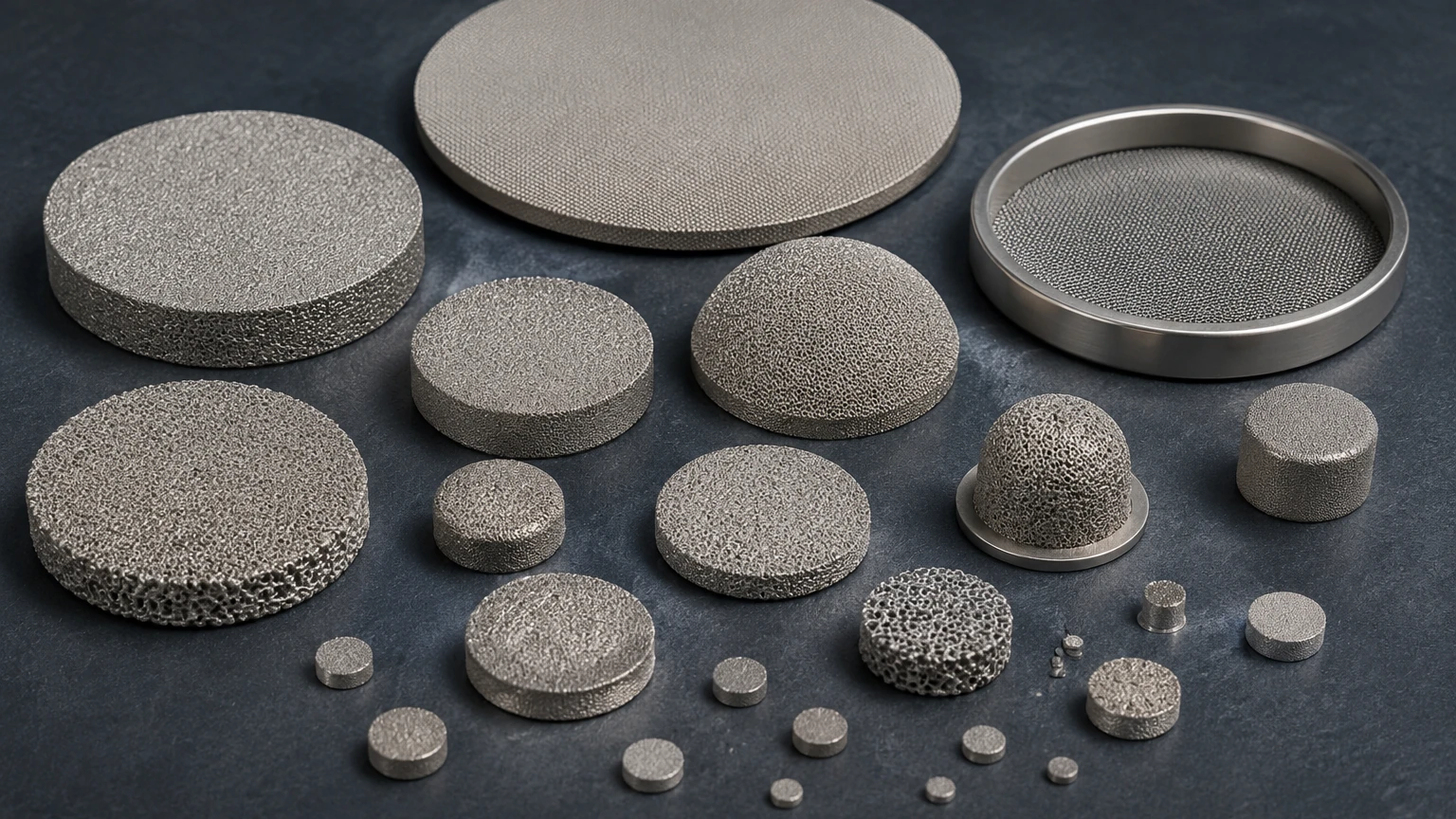
Filter frits are porous components, typically disc-shaped, designed to allow the passage of liquids or gases while retaining solid particulates. Unlike traditional mesh screens, frits often utilize a "tortuous path" filtration mechanism. This means that instead of a simple surface barrier, the fluid must navigate a complex network of interconnected pores, which increases the probability of trapping contaminants throughout the depth of the media.
In industrial contexts, filter frits serve several primary functions:
1. Component Protection: In systems like HPLC, frits are placed at the inlet of columns to prevent particulates from reaching the expensive stationary phase, which could cause clogging or pressure spikes.
2. Flow Distribution: By providing a uniform resistance across the surface area, frits ensure that fluid enters a chamber or column evenly, preventing "channeling" where fluid takes the path of least resistance.
3. Support Media: In many chemical reactors, frits act as a physical support for catalysts or resin beads, keeping them contained while allowing processed fluids to exit.
4. Phase Separation: Frits are used to separate gas from liquid or to facilitate controlled aeration in fermentation and water treatment processes.
Material Selection and Engineering Properties
The choice of material for filter frits is dictated by the chemical nature of the fluid and the thermal requirements of the process. While various plastics and ceramics are available, stainless steel remains the industry standard for demanding B2B applications due to its mechanical robustness and sterilization compatibility.
Stainless Steel (316L)
316L stainless steel is the most common material for industrial frits. The "L" denotes low carbon content, which improves corrosion resistance after welding or sintering. It offers excellent resistance to organic solvents and many acids, making it ideal for pharmaceutical and chemical processing. Furthermore, stainless steel frits can withstand high temperatures and pressures that would cause polymer-based frits to deform or fail.
Specialized Alloys
For environments involving highly aggressive chemicals, such as concentrated halides or strong reducing acids, alloys like Hastelloy® or Titanium may be required. Titanium frits are particularly valued in biocompatible applications where the leaching of metal ions must be strictly minimized.
Sintered Powder vs. Sintered Wire Mesh
There are two primary manufacturing methods for metal filter frits, each offering distinct performance characteristics:
* Sintered Powder Frits: These are created by compressing metal powder into a mold and heating it below its melting point. The particles fuse at their contact points, creating a rigid, porous structure. Powder frits offer very fine filtration ratings (down to 0.2 microns) and high mechanical strength, but they generally have a higher pressure drop due to lower overall porosity.
* Sintered Wire Mesh Frits: These are made by laminating multiple layers of stainless steel wire mesh and sintering them together. This structure provides higher permeability (lower pressure drop) and is often easier to clean via backwashing. However, they may not reach the ultra-fine filtration levels of powder-based designs.
Key Performance Metrics for Engineers
When specifying filter frits for a new project or as replacement parts, engineers must evaluate several technical parameters to ensure system compatibility.
Micron Rating and Pore Size Distribution
The micron rating indicates the size of particles the frit is expected to retain. It is important to distinguish between "nominal" and "absolute" ratings. A nominal rating refers to a percentage of particles retained, while an absolute rating implies that no particle larger than the specified size can pass. In high-precision applications, a narrow pore size distribution is essential to prevent unpredictable pressure fluctuations.
Porosity and Permeability
Porosity refers to the percentage of void space within the frit, while permeability measures how easily fluid flows through that space. Higher porosity generally leads to lower pressure drops, which is critical for maintaining flow rates in gravity-fed or low-pressure pump systems. Engineers must balance the need for fine filtration (which usually requires smaller pores and lower porosity) with the energy costs associated with higher pressure requirements.
Mechanical Integrity and Burst Pressure
In hydraulic and high-pressure gas systems, the frit must be able to withstand significant differential pressures without deforming or shedding particles. The structural integrity of a sintered frit is a result of the quality of the sintering process. Poorly manufactured frits may suffer from "media migration," where small bits of the filter material break off and contaminate the downstream flow.
Applications in High-Precision Environments
Chromatography and Analytical Science
In HPLC and UHPLC (Ultra-High Performance Liquid Chromatography), filter frits are vital for protecting the column and the detector. Because these systems operate at extremely high pressures (up to 15,000 psi or more), the frits must be precision-engineered to have minimal dead volume. Any excess space within the frit can lead to band broadening, which degrades the resolution of the analytical results.
Pharmaceutical and Biotech Manufacturing
Frits used in the pharmaceutical industry must often meet stringent regulatory requirements regarding material purity and extractables. Stainless steel frits are preferred because they can be easily cleaned, autoclaved, or steam-sterilized in place (SIP). They are used in everything from small-scale laboratory filters to large-scale production fermenters.
Industrial Gas Filtration
In gas delivery systems, filter frits serve as flame arrestors or diffusers. By breaking up a gas stream into thousands of tiny bubbles, they increase the surface area for gas-liquid contact, which is essential in aeration tanks or chemical carbonation processes.
Evaluating Total Cost of Ownership and Maintenance
While the initial purchase price of a filter frit is relatively low compared to the overall cost of an industrial system, the "total cost of ownership" is heavily influenced by the frit's lifespan and its impact on system downtime.
Cleaning and Reusability
One of the primary advantages of stainless steel filter frits is their cleanability. Depending on the contaminant, frits can be cleaned using:
* Ultrasonic Baths: Effective for removing fine particulates lodged deep within the pore structure.
* Chemical Cleaning: Using solvents or acids to dissolve organic or inorganic build-up (provided the frit material is compatible).
* Backwashing: Reversing the flow of fluid to push contaminants out of the pores.
However, in some high-purity applications, the risk of cross-contamination makes frits a consumable item that is replaced rather than cleaned. Engineers should establish clear replacement protocols based on pressure drop thresholds.
Avoiding Common Risks
The most common failure mode for filter frits is premature clogging. This is often caused by an underestimation of the particulate load in the fluid or the use of a micron rating that is unnecessarily fine for the application. Another risk is chemical bypass, where a frit that is not properly sealed within its housing allows unfiltered fluid to leak around the edges. Selecting the correct sealing method—whether it be an interference fit, a PEEK ring, or a metal-to-metal seal—is as important as the frit itself.
Procurement and Customization Strategy
For B2B buyers, sourcing filter frits requires a partner capable of providing consistent quality and technical support. Standard off-the-shelf frits may suffice for general applications, but custom engineering is often required for specialized equipment.
When preparing a request for quotation (RFQ), technical teams should confirm the following details:
* Exact Dimensions: Diameter and thickness, including tolerances (e.g., +/- 0.05mm).
* Material Grade: Specifically 316L, 304, or exotic alloys.
* Required Micron Rating: Specify if this is absolute or nominal.
* Operating Conditions: Maximum pressure, temperature, and chemical exposure.
* Edge Treatment: Whether the frit requires a solid metal rim or a polymer seal for installation.
Kaifil specializes in these customized solutions, bridging the gap between standard manufacturing and specific engineering needs. By focusing on the nuances of pore geometry and material durability, we help our clients optimize their filtration processes and reduce long-term maintenance costs. For more information on our full range of stainless steel filtration products and to explore how we can support your specific application, please visit our Main Page to review product options and application support.
Conclusion
Filter frits are essential components that ensure the reliability and precision of modern industrial processes. From protecting analytical columns to facilitating gas diffusion, their performance is a product of careful material selection and rigorous manufacturing standards. By understanding the trade-offs between different sintering methods, micron ratings, and cleaning protocols, engineers can select filtration solutions that provide the best balance of performance and value. As industrial requirements continue to move toward higher pressures and finer filtration, the role of high-quality, custom-engineered metal frits will only become more significant.
