


Hydraulic Oil Filtration Cart
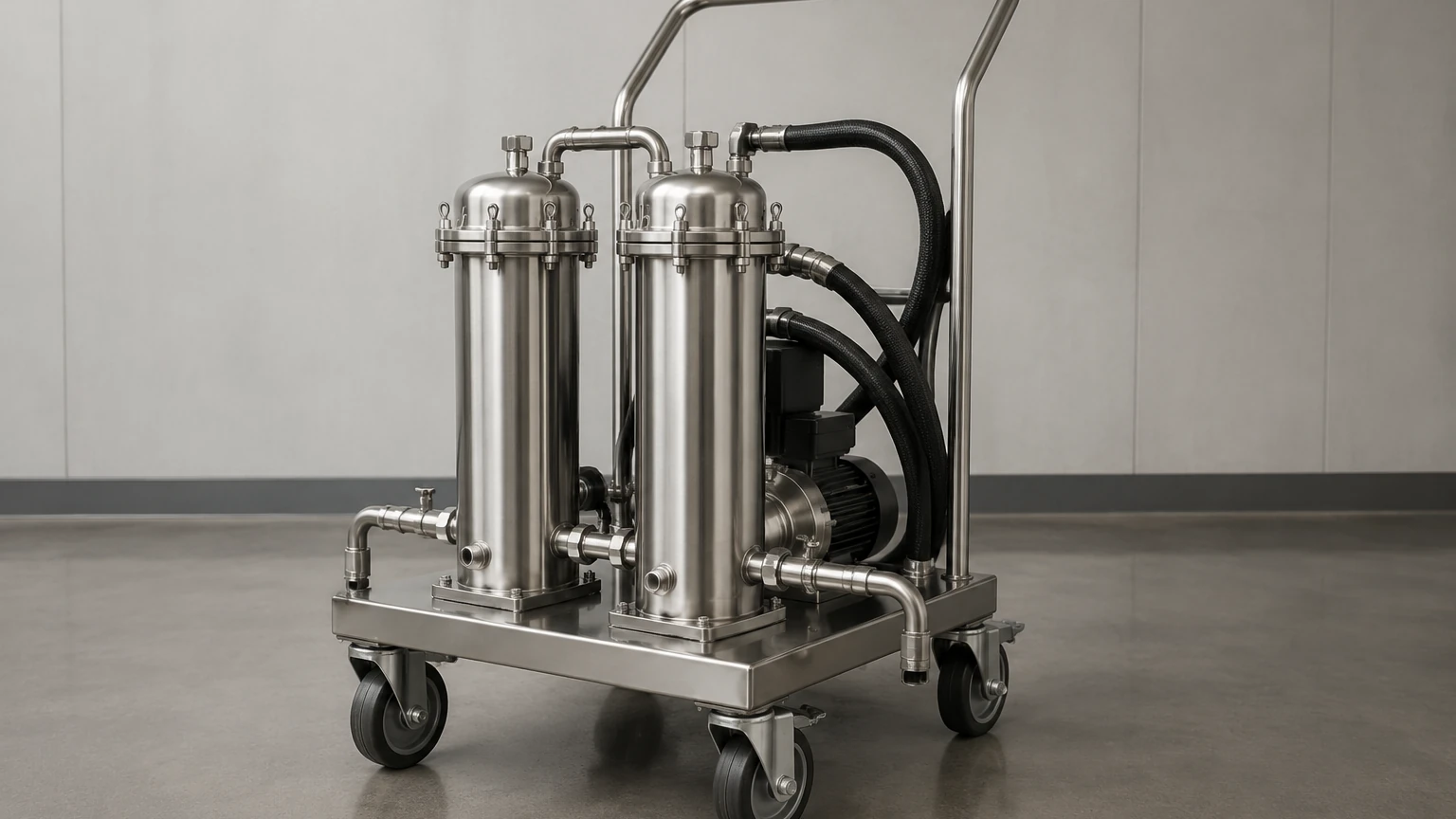
In the landscape of industrial maintenance, the cleanliness of hydraulic fluid is a primary determinant of system longevity and operational reliability. Contamination in hydraulic systems is responsible for an estimated 70% to 80% of component failures, leading to unplanned downtime, expensive repairs, and premature equipment replacement. A hydraulic oil filtration cart, often referred to as a filter trolley or kidney-loop system, serves as a critical mobile asset for maintaining fluid purity levels. These portable units are designed to circulate oil through high-efficiency filter elements, removing particulate matter and, in some configurations, moisture, without requiring the main system to be offline.
For engineers and maintenance managers, selecting or designing the right filtration cart involves more than choosing a pump and a motor. It requires a deep understanding of fluid dynamics, material compatibility, and the specific cleanliness standards required by high-precision hydraulic components. As a manufacturer specialized in custom stainless steel filtration solutions, Kaifil emphasizes the technical integration of high-performance filter media into these mobile systems to ensure they meet the rigorous demands of industrial environments.
The Critical Role of Fluid Cleanliness in Hydraulic Systems
Hydraulic systems operate under high pressure and tight tolerances. Modern hydraulic valves and pumps often have clearances measured in microns. When contaminants—ranging from metal shavings and silica to elastomeric wear particles—enter the fluid stream, they act as abrasives. This leads to a cycle of wear: particles generate more particles, accelerating the degradation of seals, cylinders, and sensitive servo-valves.
While most hydraulic systems include onboard suction and return-line filters, these are often insufficient for bulk fluid conditioning or for cleaning new oil before it is introduced into the system. New oil is rarely "clean" oil; it often contains significant levels of particulate from the refining, blending, and barreling processes. A hydraulic oil filtration cart provides a secondary, highly efficient filtration loop that can be moved from one machine to another, ensuring that every drop of oil in the facility meets the required ISO cleanliness codes.
Engineering Components of a Hydraulic Oil Filtration Cart
A robust industrial filtration cart is an integrated assembly of several key engineering components, each of which must be sized and specified based on the application's requirements.
1. The Pump and Motor Assembly
The heart of the cart is the pump, typically a gear pump or a vane pump, driven by an electric motor. The flow rate of the pump must be balanced against the filter's capacity. If the flow is too high, the fluid velocity through the filter media may exceed the manufacturer's recommendations, leading to decreased capture efficiency or high differential pressure. Conversely, a flow rate that is too low makes the filtration process inefficient for large reservoirs.
2. Filter Housings and Staged Filtration
Most professional-grade carts utilize a two-stage filtration approach. The first stage typically employs a coarser "pre-filter" to capture large debris and protect the pump. The second stage utilizes a high-efficiency polishing filter. For specialized applications involving water-glycol fluids or high-temperature oils, the housing material and seal types (such as Viton or EPDM) must be carefully selected to prevent chemical degradation.
3. Filter Media and Elements
This is where the performance of the hydraulic oil filtration cart is truly defined. While disposable cellulose or synthetic glass fiber elements are common, many industrial applications benefit from stainless steel wire mesh or pleated metal cartridges. These elements offer superior structural integrity, chemical resistance, and the ability to be cleaned and reused in specific contexts. For technical guidance on selecting the appropriate media for custom housings, engineers can refer to the Main Page for detailed specifications on stainless steel filtration components.
Selecting Filter Media for Industrial Oil Conditioning
When specifying the filter elements within a cart, engineers must evaluate the media based on three primary factors: micron rating, beta ratio, and material compatibility.
Micron Rating: Absolute vs. Nominal
A nominal rating indicates the filter's ability to trap a percentage of particles of a certain size, but it is not a guarantee of total capture. An absolute rating, however, implies that the filter will capture essentially all particles of the specified size. In hydraulic systems where servo-valves are present, absolute filtration at the 3-micron or 5-micron level is often necessary.
Beta Ratio ($β$)
The Beta Ratio is the industry standard for measuring filtration efficiency. It is calculated by dividing the number of particles of a given size upstream of the filter by the number of particles of the same size downstream. For example, a $β_{10} = 1000$ means that for every 1000 particles of 10-micron size entering the filter, only one passes through. High-performance hydraulic oil filtration carts should utilize elements with high Beta ratios to ensure rapid cleanup of the fluid.
Stainless Steel Advantage
In environments involving aggressive chemicals, high temperatures, or high-viscosity fluids, stainless steel filter elements are often the preferred choice. Unlike synthetic media, stainless steel wire mesh does not shed fibers and can withstand high differential pressures without collapsing. This is particularly important when filtering cold, high-viscosity hydraulic oils where the pressure drop across the filter can spike significantly during startup.
Understanding ISO 4406 and Filtration Efficiency
The effectiveness of a hydraulic oil filtration cart is measured by its ability to move a fluid from a high ISO 4406 code to a lower, cleaner one. The ISO 4406:1999 standard uses a three-digit code to represent the number of particles larger than 4µm, 6µm, and 14µm per milliliter of fluid.
For instance, a typical "dirty" oil might have a code of 22/20/17. After several passes through a filtration cart equipped with 5-micron absolute elements, the goal might be to reach a code of 16/14/11. Achieving this requires consistent flow and high-efficiency media. Engineers must ensure that the filtration cart is operated long enough to achieve at least seven "passes" of the total reservoir volume to reach the desired equilibrium of cleanliness.
Operational Challenges: Viscosity, Temperature, and Pressure
One of the most common mistakes in utilizing a hydraulic oil filtration cart is failing to account for fluid viscosity. Hydraulic oils are available in various grades (e.g., ISO VG 32, 46, 68). As the temperature drops, the viscosity increases, which in turn increases the resistance to flow through the filter media.
Cold Start Conditions
If a filtration cart is used on cold oil, the differential pressure (ΔP) across the filter element may trigger the bypass valve immediately. When in bypass mode, the oil is not being filtered at all. To mitigate this, some carts include heaters, while others require the use of larger filter housings with lower flux rates (flow per unit of surface area) to keep the pressure drop within acceptable limits.
Pressure Monitoring
Every industrial filtration cart should be equipped with differential pressure gauges. These gauges provide the only reliable way to know when a filter element is saturated and requires replacement. Relying on a fixed schedule for filter changes is often inefficient; changing too early wastes money, while changing too late risks the cart operating in bypass mode or, worse, causing the filter element to rupture.
Strategic Implementation: Kidney-Loop Filtration vs. Inline Filtration
While inline filters are designed to protect specific components in real-time, the hydraulic oil filtration cart operates on the principle of "kidney-loop" filtration. This method is often more effective for overall fluid conditioning for several reasons:
1. Constant Flow: Unlike return-line filters that experience surges in flow and pressure, a filtration cart provides a steady, controlled flow, which allows the filter media to perform at its peak efficiency.
2. Off-line Maintenance: The cart can clean the oil while the machine is running or while it is idle, providing flexibility in maintenance scheduling.
3. Decontamination of New Oil: As mentioned previously, the cart is the ideal tool for transferring oil from a drum to a reservoir, ensuring that no external contaminants are introduced during the refill process.
4. Water Removal: Specialized elements, such as water-absorbing polymers or coalescing stages, can be integrated into the cart to remove free and emulsified water, which is a major cause of oil oxidation and additive depletion.
Customization and OEM Integration for Specialized Environments
Not all hydraulic systems are found in clean factory environments. Many operate in marine, mining, or chemical processing plants where standard off-the-shelf filtration carts may fail due to corrosion or harsh operating conditions. This is where customized filtration solutions become essential.
Manufacturers like Kaifil work with engineers to develop custom filter housings and elements that fit the specific spatial and performance constraints of specialized carts. Whether it is a requirement for 316L stainless steel for salt-spray resistance or custom-sized pleated elements to handle high-flow volumes in a compact footprint, customization ensures that the filtration cart is an asset rather than a liability. For organizations looking to integrate high-quality filtration into their own equipment designs, reviewing the options on the Main Page can provide a foundation for technical collaboration.
Maintenance and Total Cost of Ownership (TCO)
When evaluating a hydraulic oil filtration cart, the initial purchase price is only one part of the total cost of ownership. Engineers must also consider the cost and frequency of replacement elements, the ease of maintenance, and the durability of the pump and motor.
* Element Life: High-capacity pleated elements may cost more upfront but offer significantly more surface area, leading to longer service intervals and lower labor costs.
* Cleanable Media: In certain heavy-debris applications, using a cleanable stainless steel mesh pre-filter can significantly extend the life of the more expensive downstream polishing filters.
* Portability and Ergonomics: A cart that is difficult to move or has poorly placed ports will likely be underutilized by maintenance staff. Quality construction, including heavy-duty casters and industrial-grade hoses, is vital for long-term ROI.
By focusing on these technical and operational details, industrial facilities can ensure that their hydraulic oil filtration cart is a powerful tool in their reliability-centered maintenance (RCM) program. Maintaining ultra-clean oil not only protects expensive hydraulic components but also extends the life of the oil itself, reducing the environmental impact and cost associated with frequent oil changes.
In conclusion, a well-engineered hydraulic oil filtration cart is an indispensable component of modern industrial fluid management. By selecting the correct pump rates, utilizing high-efficiency filter media, and adhering to strict ISO cleanliness standards, organizations can significantly reduce mechanical failures and optimize the performance of their hydraulic assets.
