


Well Casing for Sale
In industrial water extraction, chemical processing, and environmental monitoring, the integrity of a borehole depends entirely on the quality of its lining. When engineers and procurement teams search for well casing for sale, the focus often shifts from simple structural support to a complex evaluation of material science, hydraulic efficiency, and long-term corrosion resistance. Well casing serves as the permanent structural retainer for the borehole, preventing the collapse of the surrounding strata and protecting the well from contamination. However, for industrial applications, the casing is more than just a pipe; it is a critical component of a larger filtration and fluid management system.
Selecting the right well casing requires a deep understanding of the geological environment, the chemistry of the fluids being handled, and the mechanical stresses the system will endure over its service life. This guide examines the technical parameters essential for evaluating well casing and integrated filtration components to ensure optimal performance in demanding industrial environments.
Understanding the Role of Well Casing in Industrial Filtration
While the primary function of well casing is to provide structural stability, its secondary role as a conduit for fluid transport makes it inseparable from the filtration process. In many industrial wells, the casing string is divided into two main sections: the solid casing and the well screen. The solid casing prevents the entry of surface pollutants and stabilizes the upper borehole, while the screen—often a specialized version of the casing—allows the target fluid to enter while filtering out sand, gravel, and other particulates.
For high-performance applications, the transition between the casing and the filtration screen must be seamless. This is where precision engineering becomes vital. If the casing is not matched to the filtration requirements of the well, the system may suffer from "sand pumping," which can damage downstream pumps and valves, or "incrustation," where mineral deposits clog the openings and reduce flow rates. When reviewing well casing for sale, technical professionals must look beyond the price per foot and consider how the casing geometry and material will interact with the specific filtration media, such as stainless steel wire mesh or wedge wire screens.
Key Material Considerations for Well Casing and Screens
Material selection is perhaps the most critical decision in the procurement of well casing. While PVC and carbon steel are common in residential or shallow irrigation wells, industrial and chemical applications typically demand the superior properties of stainless steel.
Stainless Steel (304 and 316L)
Stainless steel is the industry standard for wells that encounter corrosive environments. Grade 304 stainless steel offers excellent resistance to oxidation and is suitable for most freshwater applications. However, in environments with high chloride concentrations or acidic conditions—common in chemical processing and coastal water extraction—Grade 316L is preferred. The addition of molybdenum in 316L provides enhanced resistance to pitting and crevice corrosion.
Corrosion Resistance and Longevity
The primary advantage of stainless steel casing is its lifespan. In industrial settings, the cost of well failure far exceeds the initial material investment. Corrosion in carbon steel casing can lead to structural thinning, eventually causing the well to collapse or allowing contaminated groundwater to breach the system. Stainless steel maintains its structural integrity and smooth internal surface, which also reduces friction losses during fluid extraction.
Strength-to-Weight Ratio
Stainless steel provides high tensile strength and collapse resistance with thinner wall sections compared to some thermoplastic alternatives. This allows for a larger internal diameter (ID) for a given borehole size, which can be critical for housing high-capacity submersible pumps or multi-stage filtration assemblies.
Technical Specifications to Evaluate When Browsing Well Casing for Sale
When evaluating well casing for sale, engineers must verify several mechanical and dimensional specifications to ensure the product meets the project's safety factors. These specifications are typically governed by standards such as ASTM or API.
1. Collapse Strength
Collapse strength is the amount of external pressure the casing can withstand before buckling. This is a function of the material's yield strength, the wall thickness, and the outside diameter (OD). In deep wells, the hydrostatic pressure of the fluid column and the pressure exerted by shifting geological formations can be immense. Procurement teams must ensure the casing’s rated collapse pressure exceeds the maximum anticipated external pressure by a safety margin (typically 1.5x).
2. Tensile Strength (Joint Strength)
The casing string must support its own weight during installation. The joints—whether threaded or welded—are often the weakest points. For deep industrial wells, high-torque threaded connections or precision-beveled ends for professional welding are required to ensure the string does not part during the lowering process.
3. Dimensional Tolerances
Consistency in the outside diameter and wall thickness is essential for maintaining the alignment of the borehole. Inconsistent dimensions can lead to difficulties in installing centralizers or cause the pump to become lodged during maintenance. Precision-manufactured casing ensures that filtration components, such as wire mesh liners or internal cartridges, fit perfectly within the casing ID.
The Intersection of Casing and Filtration: Integrating Well Screens
In many specialized industrial applications, the "casing" being sought is actually a perforated pipe or a base-pipe for a well screen. The integration of filtration technology directly into the casing design is a hallmark of advanced industrial well construction.
Wire-Wrapped Screens
These are manufactured by wrapping a V-shaped wire around a series of longitudinal support rods. The resulting slot openings are non-clogging because the V-shape widens inwardly. These screens are often used as part of the casing string in high-flow water wells. The precision of the wire spacing determines the filtration accuracy, preventing fine sand from entering the system.
Mesh-Lined Casing
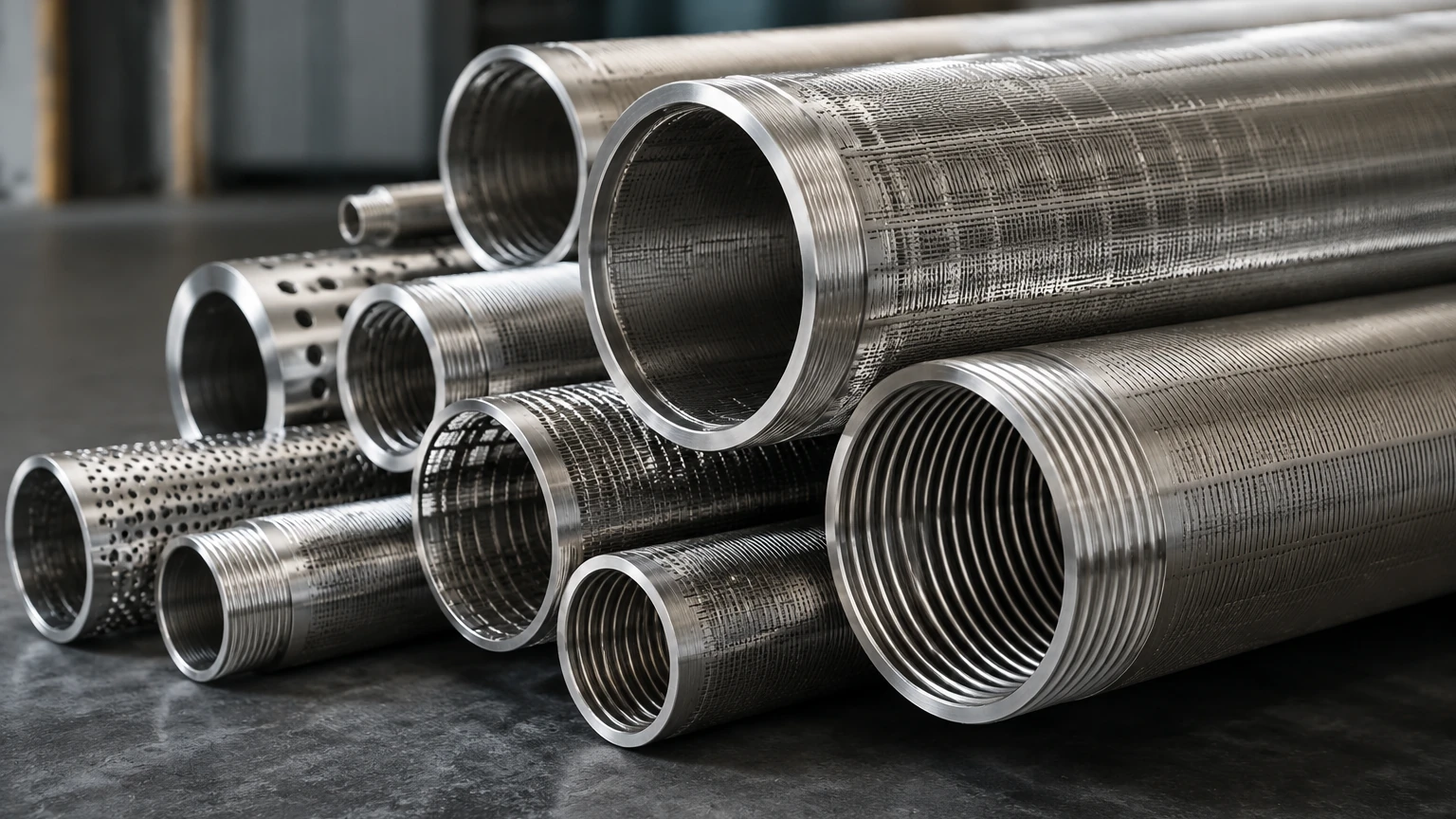
For applications requiring extremely fine filtration—such as oil/water separation or chemical recovery—stainless steel wire mesh is often sintered or mechanically bonded to a perforated casing. This provides the structural strength of the casing with the micron-rated filtration capabilities of high-density wire cloth. When sourcing well casing for sale for these purposes, it is vital to confirm that the mesh is securely attached and can withstand the high-velocity flow and potential backwashing pressures.
Common Risks and Quality Standards in Procurement
Procuring well casing involves navigating several risks that can compromise the long-term viability of an industrial project. Identifying these risks early can prevent costly remediation efforts.
* Material Substitution: One of the most common risks is the use of lower-grade alloys that are marketed as higher-grade stainless steel. Always request Material Test Reports (MTRs) to verify the chemical composition of the steel.
* Poor Weld Quality: In fabricated casing and screens, the integrity of the welds is paramount. Poorly executed welds can become focal points for stress corrosion cracking. Automated welding processes, such as TIG or plasma welding, generally provide the consistency required for industrial standards.
* Inadequate Slot Precision: In the case of screened casing, variations in slot width can lead to localized high-velocity zones, causing premature erosion and sand bypass. Precision manufacturing ensures that the filtration area is uniform across the entire length of the component.
To mitigate these risks, engineers should partner with manufacturers who specialize in custom stainless steel solutions. A manufacturer with extensive experience in industrial filtration can provide the technical documentation and quality assurance necessary for critical infrastructure projects. For more information on specialized filtration components and custom manufacturing capabilities, you can visit the Main Page of our technical resource site.
Engineering Checklist Before Purchasing Well Casing
Before finalizing a purchase order for well casing or associated filtration components, the following checklist should be completed by the engineering team:
1. Fluid Analysis: What is the pH, chloride content, and temperature of the fluid? This dictates the choice between 304, 316L, or more exotic alloys.
2. Geotechnical Data: What is the maximum depth and the expected formation pressure? This determines the required collapse strength and wall thickness.
3. Flow Rate Requirements: What is the desired production rate? This influences the diameter of the casing and the required open area of any integrated screens to minimize entrance velocity and pressure drop.
4. Compatibility: Does the casing ID allow for the necessary clearance for pumps, monitoring tools, and internal filter cartridges?
5. Installation Method: Will the casing be threaded or welded? Ensure the end treatments are compatible with the drilling rig’s capabilities.
6. Regulatory Compliance: Does the casing meet local and industry-specific standards for water quality or industrial safety?
Total Cost of Ownership vs. Initial Purchase Price
In the B2B sector, the "well casing for sale" with the lowest price tag is rarely the most cost-effective solution. The total cost of ownership (TCO) includes the initial purchase price, installation costs, maintenance expenses, and the projected lifespan of the well.
A stainless steel casing system might have a higher upfront cost than carbon steel, but it eliminates the need for frequent chemical treatments to manage corrosion and biofouling. Furthermore, the durability of stainless steel reduces the risk of catastrophic well failure, which can result in the loss of the entire borehole and the need for a costly replacement well. By investing in high-quality materials and precision-engineered filtration components, industrial operators can ensure a reliable and efficient fluid supply for decades.
Conclusion
Well casing is the backbone of any borehole-based industrial system. Whether used for water supply, waste injection, or process fluid recovery, the choice of casing directly impacts the efficiency and longevity of the operation. When evaluating well casing for sale, it is essential to prioritize material integrity, mechanical strength, and the seamless integration of filtration technologies.
By focusing on technical specifications such as collapse resistance, corrosion-resistant alloys, and precision slot design, engineers can build systems that withstand the harshest industrial environments. For those seeking customized stainless steel filtration solutions, including wire mesh filters and precision metal components, exploring professional manufacturing resources is the first step toward optimized well performance. For a comprehensive overview of available filtration technologies and engineering support, please refer to our Main Page.
