


In the procurement of industrial filtration components, the distinction between general-purpose hardware and precision-engineered materials is critical for operational efficiency. When maintenance teams or engineers search for terms like woven wire mesh canadian tire, they are often navigating the boundary between immediate, small-scale retail availability and the rigorous requirements of industrial-grade filtration. While retail outlets provide essential hardware for domestic or light commercial use—such as pest control, garden screening, or basic ventilation—industrial applications in chemical processing, food and beverage, and pharmaceutical manufacturing demand a level of precision and material integrity that standard retail products cannot meet.
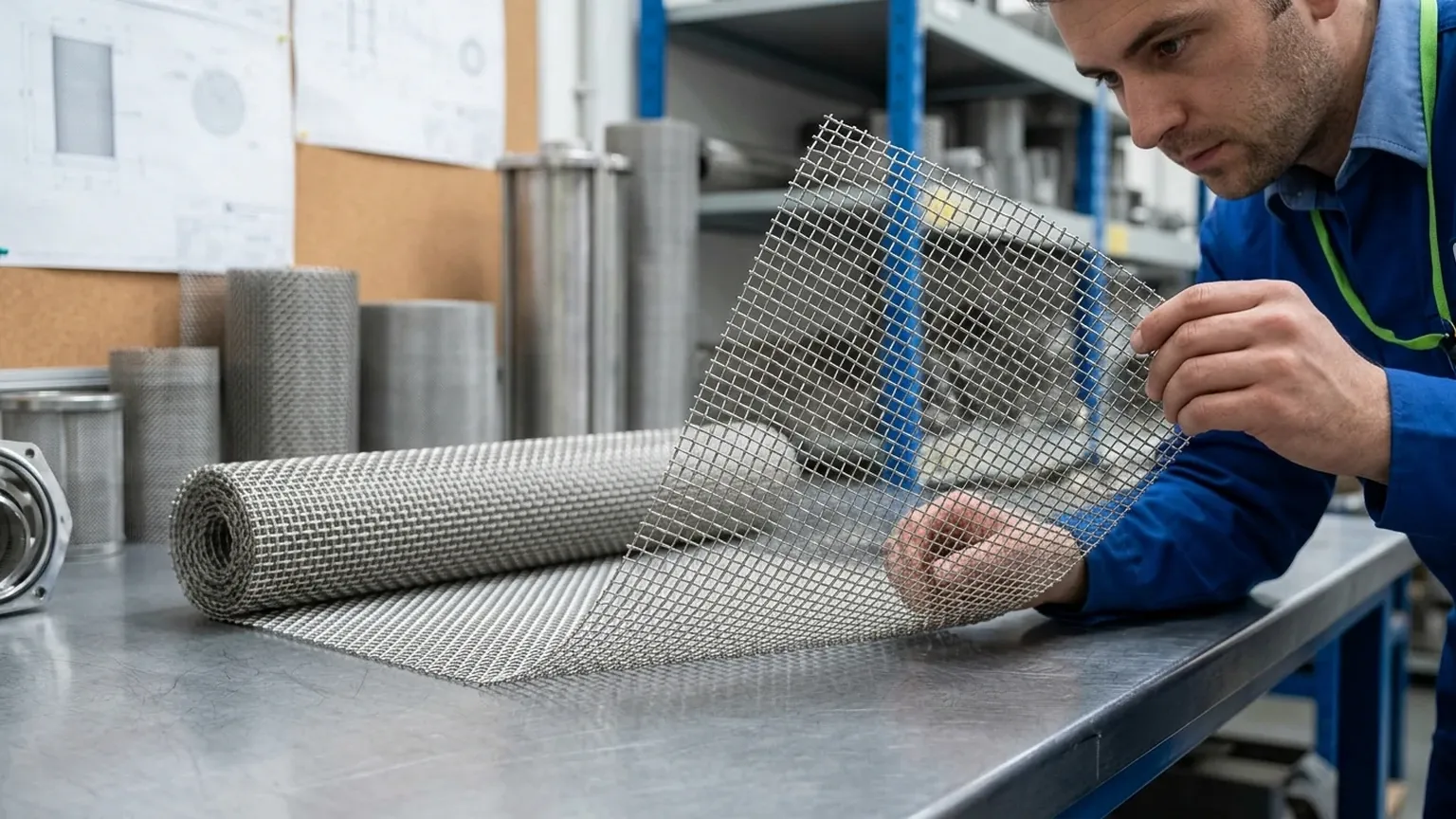
Plain, twill and dutch woven wire mesh in SS304/316L — rolls, cut mesh and framed panels. Send mesh count or micron target for a technical quote. This technical guide explores the engineering considerations behind Woven Wire Mesh, contrasting consumer-grade options with industrial specifications to help purchasing teams make informed decisions regarding durability, filtration accuracy, and long-term cost.
Understanding the Gap: Retail vs. Industrial Woven Wire Mesh
The search for "woven wire mesh canadian tire" typically reflects a need for immediate, local access to wire cloth. For a homeowner or a small workshop, retail-grade mesh is often sufficient. These products are generally available in standard sizes, often made from galvanized steel or basic 304 stainless steel, and are designed for applications where the exact micron rating or chemical resistance is not a primary concern.
However, for industrial engineers, the requirements are far more stringent. Retail mesh often lacks the documentation (such as Material Test Reports or MTRs) required for compliance in regulated industries. Industrial-grade Woven Wire Mesh is manufactured to strict tolerances regarding wire diameter, aperture size, and weave consistency. In a high-pressure hydraulic system or a corrosive chemical reactor, even a minor deviation in the weave can lead to bypass, premature clogging, or structural failure of the filter element.
Key Differences in Specification
1. Material Purity: Industrial mesh utilizes high-grade SS304, SS316L, or exotic alloys like Monel and Inconel to ensure longevity in aggressive environments.
2. Precision Weaving: Industrial looms ensure that the "open area" remains consistent across the entire roll, which is vital for maintaining predictable flow rates and pressure drops.
3. Customization: Unlike the pre-cut rolls found at hardware stores, industrial mesh can be customized by mesh count, wire thickness, and specialized weave patterns like Dutch or Twill to meet specific filtration targets.
Material Selection: The Foundation of Filtration Performance
When moving beyond general-purpose hardware, the first engineering decision involves material selection. The environment in which the mesh will operate dictates the alloy required.
Stainless Steel 304
This is the most common grade for industrial mesh. It offers excellent strength and good corrosion resistance for standard applications. It is widely used in food processing (where it is generally recognized as safe) and general industrial screening. However, it can be susceptible to pitting in chloride-rich environments.
Stainless Steel 316L
For more demanding applications, 316L is the industry standard. The addition of molybdenum provides superior resistance to chlorides and acids. In pharmaceutical and marine applications, 316L is preferred because of its enhanced durability and resistance to localized corrosion. When considering a transition from retail-grade products to specialized solutions, verifying the alloy grade is the first step in ensuring the filter's service life.
Engineering the Weave: Plain, Twill, and Dutch Patterns
The functionality of Woven Wire Mesh is largely determined by its weave pattern. While retail options are almost exclusively limited to "Plain Weave," industrial manufacturers offer several configurations to balance filtration fineness with mechanical strength.
Plain Weave
This is the simplest and most common weave. Each shute (weft) wire passes over and under each warp wire. It provides a consistent aperture and is ideal for basic screening and particle separation. Its primary limitation is that as the mesh becomes finer, the wire must become thinner, which can compromise the structural integrity of the mesh.
Twill Weave
In a twill weave, each shute wire passes over and under two warp wires. This allows for the use of heavier wires for a given mesh count, resulting in a stronger mesh that can withstand higher pressures. This is often used in heavy-duty filtration where a fine mesh is required but the fluid velocity is high.
Dutch Weave (Plain and Twill)
Dutch weaves utilize different diameters for the warp and shute wires. The result is a dense, firm mesh with very small, tortuous paths for the fluid. This is the preferred choice for high-precision filtration, such as in hydraulic systems or fuel filtration, where sub-100 micron accuracy is required. Retail outlets like Canadian Tire do not typically stock Dutch weave mesh, as it is a specialized product for technical filtration.
Technical Specifications: Mesh Count vs. Micron Rating
One of the most common points of confusion for those transitioning from retail hardware to industrial procurement is the relationship between mesh count and micron rating.
* Mesh Count: Refers to the number of openings per linear inch. A 100-mesh screen has 100 openings per inch.
* Wire Diameter: The thickness of the wire used in the weave.
* Aperture (Opening Size): The clear distance between two adjacent wires. This is the most critical dimension for filtration.
* Micron Rating: The size of the smallest particle the mesh is designed to retain.
In industrial applications, engineers must calculate the Open Area Percentage, which determines the flow capacity and pressure drop across the filter. A higher open area allows for higher flow rates but may reduce the structural strength of the mesh. Retail products rarely provide these technical data sheets, making it difficult for engineers to perform the necessary fluid dynamics calculations.
Quality Standards and Compliance in Industrial Filtration
For B2B buyers in sectors like food processing or medical device manufacturing, traceability is non-negotiable. Industrial Woven Wire Mesh must often comply with standards such as ASTM E2011 or ISO 9044. These standards govern the allowable tolerances for aperture size and wire diameter.
When a maintenance manager searches for "woven wire mesh canadian tire," they may be looking for a quick fix for a non-critical component. However, if that component is part of a production line, the lack of certification can pose a significant risk. Using non-certified mesh in a food-grade environment, for example, risks metal contamination if the lower-quality wire frays or breaks under the stress of CIP (Clean-In-Place) cycles.
Total Cost of Ownership and Replacement Cycles
While the initial price of retail mesh is low, the Total Cost of Ownership (TCO) in an industrial setting can be significantly higher. Factors that contribute to TCO include:
* Frequency of Replacement: Industrial-grade stainless steel mesh is designed for longevity. Retail-grade galvanized mesh may corrode within months in a humid or chemical environment, leading to frequent downtime for replacement.
* Filtration Efficiency: Precision-woven mesh ensures that downstream equipment (like pumps and nozzles) is protected from oversized particles. Inefficient filtration from low-tolerance mesh can lead to expensive repairs of more sensitive system components.
* Cleaning and Reusability: High-quality stainless steel mesh can be ultrasonically cleaned or backflushed multiple times without losing its structural integrity.
Customization: Beyond the Standard Roll
One of the primary advantages of working with a professional manufacturer like Kaifil is the ability to move beyond standard roll dimensions. Industrial applications often require mesh to be converted into specific shapes, such as:
* Cut-to-size circles or rectangles for extruder screens.
* Multi-layer sintered mesh for high-pressure environments where a single layer of mesh would collapse.
* Framed panels for easy installation into existing filtration housings.
* Cylindrical filter cartridges where the mesh is pleated to increase the surface area.
These customized solutions allow engineers to optimize the filtration process, reducing pressure drop and extending the time between maintenance intervals—options that are unavailable through standard retail channels.
Conclusion: Selecting the Right Filtration Partner
While searching for woven wire mesh canadian tire may solve an immediate, low-stakes hardware need, industrial filtration challenges require a more technical approach. For engineers and purchasing professionals, the priority should be on material certification, weave precision, and application-specific design.
By understanding the engineering principles behind wire mesh—from the nuances of 316L corrosion resistance to the flow characteristics of Dutch weaves—businesses can ensure their filtration systems operate at peak efficiency. Choosing a dedicated manufacturer ensures that you receive not just a product, but a technical solution backed by engineering expertise and quality assurance.
