


Woven Wire Mesh Cost
In industrial filtration and separation, woven wire mesh serves as a critical component across the chemical, pharmaceutical, food and beverage, and hydraulic sectors. For engineering and procurement teams, understanding the variables that influence woven wire mesh cost is essential for optimizing both performance and budget. This guide provides a technical breakdown of the factors affecting pricing, manufacturing considerations, and the long-term value of high-quality filtration media.
Understanding the Primary Drivers of Woven Wire Mesh Cost
The cost of woven wire mesh is not determined by a single metric but is a result of several intersecting technical specifications. When evaluating quotes, it is important to look beyond the surface price per square foot or meter and consider the engineering requirements of the specific application.
1. Material Grade and Raw Metal Markets
The most significant factor in the cost of industrial mesh is the material itself. Stainless steel is the industry standard due to its corrosion resistance and mechanical strength.
* SS304: The most common grade, offering good corrosion resistance for general industrial applications. It is generally the baseline for pricing.
* SS316L: Contains molybdenum, which provides superior resistance to chlorides and acids. Because of its enhanced chemical stability and the higher cost of nickel and molybdenum, SS316L typically carries a price premium of 15% to 30% over SS304.
* Specialty Alloys: For extreme environments involving high temperatures or highly corrosive chemicals, alloys like Monel, Inconel, or Hastelloy may be required. These materials can increase the cost significantly due to their rarity and the difficulty of drawing them into fine wires.
2. Wire Diameter and Mesh Count
The relationship between wire diameter and mesh count (the number of openings per linear inch) dictates the amount of metal used and the complexity of the weaving process.
* Heavy Mesh: Uses thicker wires and lower mesh counts. While the material weight is higher, the weaving process is often faster.
* Fine Mesh: Requires extremely thin wires and high mesh counts. The cost increases here not just because of the material, but because of the precision required in the drawing of the wire and the slower speed of the looms. High-mesh-count products require more labor hours and more frequent machine calibration.
Material Selection: SS304, SS316L, and High-Performance Alloys
Selecting the correct material is a balance between environmental demands and the woven wire mesh cost. Engineers must assess the chemical composition of the fluid being filtered, the operating temperature, and the presence of abrasive particles.
In food processing, SS304 is often sufficient and cost-effective. However, in pharmaceutical or marine environments, the risk of pitting corrosion makes SS316L a technical necessity. While the initial procurement cost is higher for 316L, it prevents premature failure, which can lead to contaminated batches or unplanned system shutdowns.
Furthermore, the "L" in 316L stands for "low carbon," which is crucial if the mesh is to be welded into a filter cartridge or frame. Low carbon content prevents carbide precipitation during welding, ensuring the mesh retains its corrosion resistance at the joints. Specifying the wrong grade to save on initial costs often leads to higher maintenance expenses later.
The Impact of Weave Type and Mesh Complexity on Pricing
The pattern in which the wires are interlaced—the weave type—affects the mesh’s filtration accuracy, flow rate, and mechanical stability. Each weave type requires different loom setups and production times.
Plain Weave
This is the most straightforward and economical weave. Each shute wire passes over and under one warp wire. It provides the highest open area and lowest pressure drop but is limited in how fine the filtration can go while maintaining structural integrity.
Twill Weave
In a twill weave, each wire passes over two and under two wires. This allows for the use of heavier wires with a given mesh count, providing greater strength for finer meshes. The increased complexity of the weaving pattern adds a modest increase to the production cost.
Dutch Weave (Plain and Twill)
Dutch weaves use different diameters for the warp and shute wires, resulting in a dense, firm mesh with very small, triangular openings. This is the standard for high-pressure hydraulic filtration and fine chemical processing. Because Dutch weaves require specialized looms and significantly more wire per square inch (due to the density of the shute wires), the woven wire mesh cost for these products is higher than for plain or twill weaves.
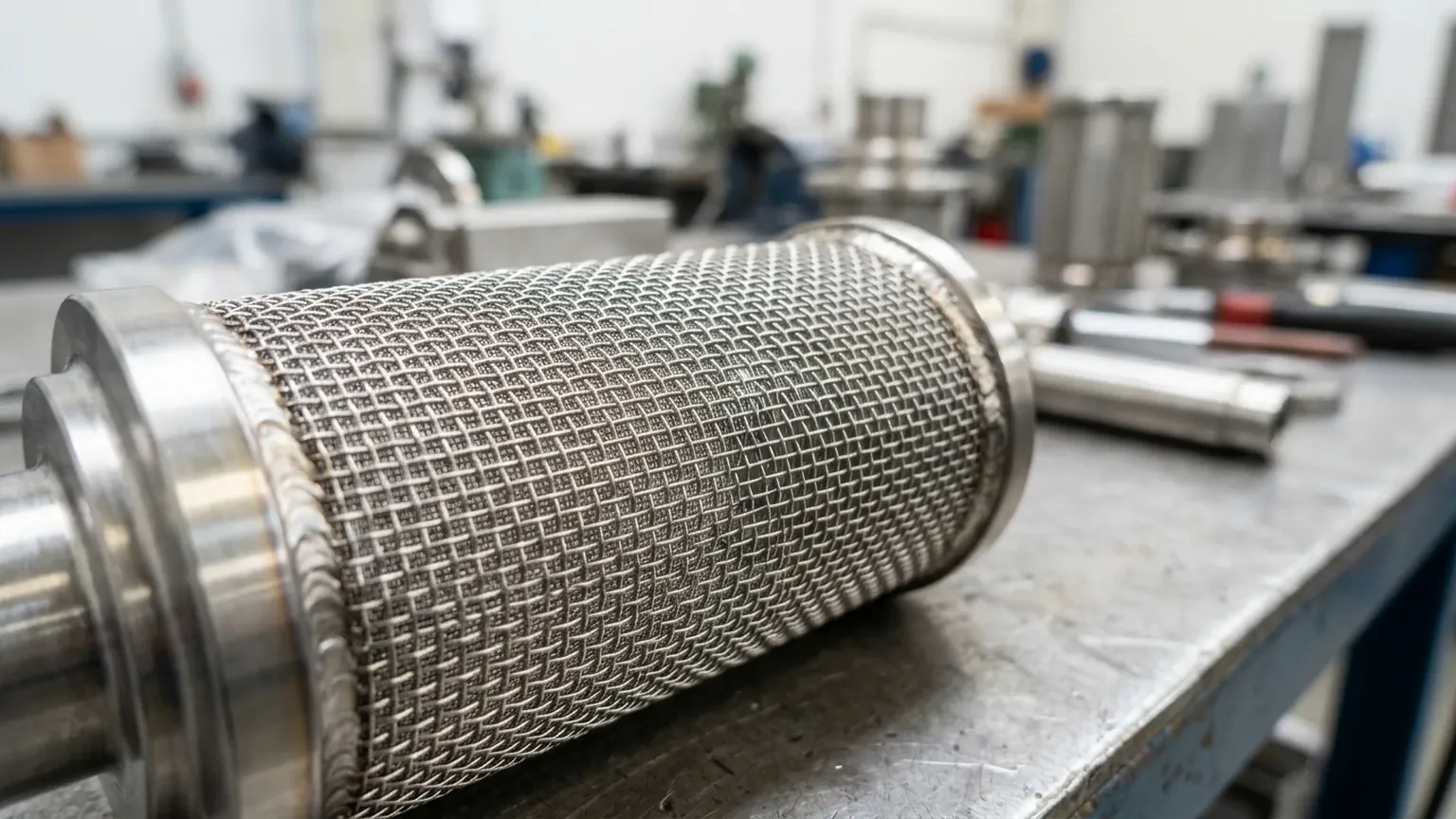
For those seeking specific configurations, Kaifil provides a comprehensive range of Plain, twill and dutch woven wire mesh in SS304/316L — rolls, cut mesh and framed panels. Send mesh count or micron target for a technical quote.
Manufacturing Standards and Quality Control Costs
Precision is paramount in industrial filtration. A mesh with inconsistent apertures will allow oversized particles to pass through, potentially damaging downstream equipment like pumps or valves. Achieving high precision requires rigorous quality control, which is factored into the final price.
* Aperture Tolerance: Standard commercial mesh may have wider tolerances. For critical pharmaceutical or laboratory applications, mesh must adhere to strict ASTM E11 or ISO 9044 standards. Testing and certifying these tolerances add to the cost.
* Cleaning and Degreasing: In many B2B applications, especially in the food and medical sectors, the mesh must be free of manufacturing oils and lubricants. Ultrasonic cleaning or specialized degreasing processes are additional steps that ensure the product is ready for use in sterile environments.
* Annealing: Proper heat treatment (annealing) ensures the mesh is ductile enough for fabrication (such as pleating or forming into cylinders) without cracking. Controlled atmosphere annealing prevents oxidation and maintains the bright finish of the stainless steel.
Total Cost of Ownership: Evaluating Durability and Maintenance
For a purchasing manager, the "sticker price" is only one part of the equation. The Total Cost of Ownership (TCO) includes the purchase price, installation costs, maintenance, and the cost of downtime.
Replacement Cycles
A lower-quality woven wire mesh may suffer from wire displacement or corrosion, requiring replacement every few months. In contrast, a high-quality, precision-woven mesh from a reputable manufacturer might last several years. If a filter replacement requires four hours of system downtime, the labor and lost production costs often far outweigh the price of the mesh itself.
Cleanability and Reusability
Stainless steel Woven Wire Mesh is prized for its ability to be cleaned and reused. Unlike disposable polymer filters, metal mesh can be backwashed, ultrasonically cleaned, or chemically treated to restore its flow properties. Investing in a more durable mesh grade that can withstand aggressive cleaning cycles reduces the long-term cost per gallon of filtrate.
Energy Consumption
The "open area" percentage of a mesh directly impacts the pressure drop across the filter. A mesh with a lower-than-optimal open area forces pumps to work harder, increasing energy consumption. Over the lifespan of a large-scale industrial filtration system, the energy savings from a high-performance mesh can offset a higher initial purchase price.
Essential Specifications to Confirm Before Procurement
To ensure an accurate quote and a product that meets engineering requirements, procurement teams should confirm several technical details before finalizing an order. This prevents costly errors and ensures the woven wire mesh cost is justified by the performance.
1. Micron Rating vs. Mesh Count: Do you need a specific number of wires per inch, or is the particle retention size (microns) the priority? For Dutch weaves, the micron rating is the standard metric.
2. Wire Diameter: Specify the wire diameter to ensure the mesh has the required mechanical strength and open area. Thinner wires increase open area but decrease durability.
3. Physical Dimensions and Form: Is the mesh needed in bulk rolls, cut-to-size pieces, or fabricated components? Custom cutting and edge treatments (such as hemmed edges or welded frames) add to the initial cost but save time during assembly.
4. Environmental Factors: Will the mesh be exposed to high pressures, vibrating machinery, or extreme pH levels? This information allows the manufacturer to recommend the correct alloy and weave type.
5. Compliance Requirements: Does the application require FDA compliance for food contact, or specific material traceability (MTRs) for aerospace or medical use?
By focusing on these technical parameters, engineers can work with manufacturers like Kaifil to develop customized filtration solutions that balance high performance with a sustainable woven wire mesh cost. Whether the application involves simple protective screening or complex multi-stage chemical separation, the right mesh selection is a fundamental step in industrial process optimization.
