


Filter Cartridge Suppliers
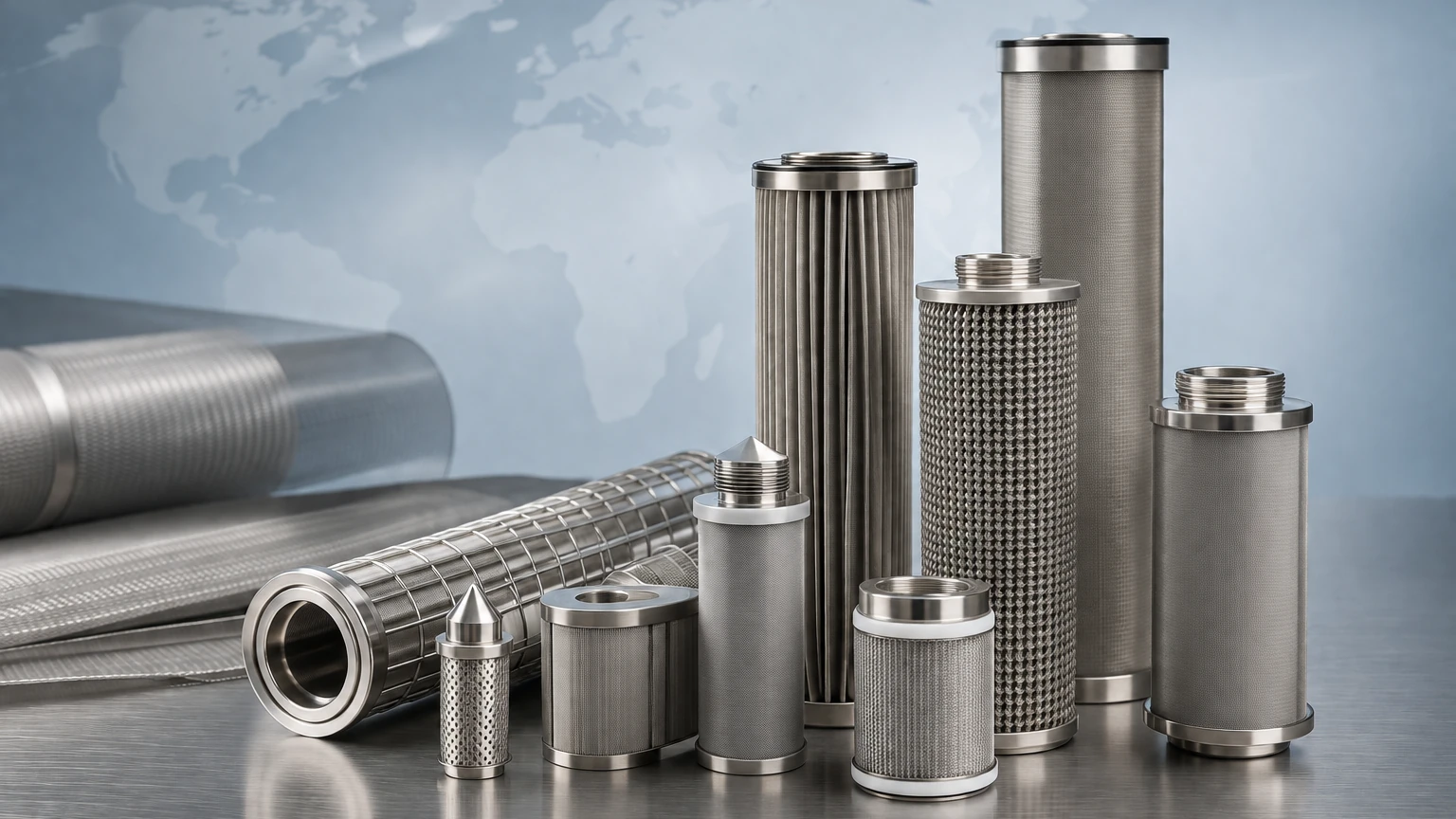
In the landscape of industrial manufacturing, the selection of filter cartridge suppliers is a decision that impacts process efficiency, product quality, and long-term operational costs. Filtration is rarely a secondary concern; in sectors such as chemical processing, pharmaceuticals, and food production, it is a critical path component. High-performance stainless steel filter cartridges are engineered to withstand extreme temperatures, corrosive environments, and high differential pressures—conditions where standard disposable filters often fail.
For procurement teams and lead engineers, identifying a supplier that offers more than just a catalog of parts is essential. A true partner in filtration provides technical expertise, material traceability, and the ability to customize components to fit specific housing requirements. This guide examines the technical criteria, evaluation methods, and strategic considerations necessary for selecting the right filter cartridge suppliers for demanding industrial applications.
Understanding the Role of Industrial Filter Cartridges
Filter cartridges serve as the primary barrier against contaminants in fluid and gas streams. Unlike simple strainers, industrial cartridges are designed for specific micron ratings, ensuring that particles of a certain size are consistently captured. When evaluating filter cartridge suppliers, it is important to distinguish between those providing consumer-grade products and those specializing in industrial-grade stainless steel solutions.
Industrial applications often require permanent or semi-permanent filtration media. Stainless steel cartridges, particularly those utilizing wire mesh or sintered metal, offer significant advantages over polymer-based alternatives. They provide superior mechanical strength, are resistant to chemical degradation, and can be cleaned and reused multiple times, significantly lowering the total cost of ownership. For a broader look at the range of available industrial solutions, engineers can refer to the Main Page of specialized manufacturers to understand the breadth of material options and configurations available.
Key Technical Evaluation Criteria
When vetting filter cartridge suppliers, technical specifications should be the primary focus. A supplier’s ability to meet precise engineering requirements determines the reliability of the filtration system.
Material Selection and Compatibility
The choice of material is the first line of defense in any filtration process. Most industrial filter cartridge suppliers offer products in Stainless Steel 304, 316, or 316L.
* SS 304: Suitable for general industrial use where basic corrosion resistance is required.
* SS 316/316L: Essential for applications involving chlorides, high acidity, or pharmaceutical-grade requirements due to its superior resistance to pitting and crevice corrosion.
* Specialty Alloys: For extreme environments, some suppliers provide Monel, Hastelloy, or Inconel options.
Suppliers must provide Material Test Reports (MTRs) to verify the chemical composition of the metals used, ensuring they meet ASTM or ISO standards.
Filtration Accuracy: Absolute vs. Nominal
One common area of confusion when communicating with filter cartridge suppliers is the distinction between nominal and absolute micron ratings.
* Nominal Rating: This indicates the ability of the filter to retain a majority of particles (typically 60% to 90%) of a specific size. It is often used for pre-filtration.
* Absolute Rating: This refers to the diameter of the largest hard spherical particle that will pass through the filter under specified test conditions. For critical processes, such as final-stage pharmaceutical filtration or high-precision hydraulic systems, absolute-rated cartridges are mandatory.
Structural Integrity and Pressure Ratings
A filter cartridge must maintain its shape and pore size under pressure. Suppliers should provide data on the "collapse pressure" and the maximum allowable differential pressure (ΔP). This is particularly important for high-viscosity fluids or systems where pressure surges are common. The construction method—whether the seams are plasma welded, TIG welded, or adhesive bonded—directly impacts the cartridge's durability and chemical resistance.
Customization and OEM Capabilities
In many industrial settings, off-the-shelf cartridges do not meet the specific requirements of legacy equipment or unique process flows. This is where the distinction between a distributor and a manufacturer becomes clear. Professional filter cartridge suppliers with in-house manufacturing capabilities can provide customized solutions, including:
1. Custom Dimensions: Tailoring the length, outer diameter, and inner diameter to fit non-standard housings.
2. End-Cap Configurations: Offering various fitting styles such as DOE (Double Open End), SOE (Single Open End) with 222 or 226 O-rings, threaded connections (NPT/BSP), or flange mounts.
3. Variable Media Layers: Combining different mesh counts to create a multi-stage filtration effect within a single cartridge, extending the service life before cleaning is required.
Engineers should seek suppliers who can work from technical drawings or provide reverse-engineering services for discontinued components.
Assessing Supplier Reliability and Quality Control
The risks associated with poor-quality filtration include downstream equipment damage, batch contamination, and unplanned downtime. To mitigate these risks, filter cartridge suppliers should be evaluated based on their quality management systems.
Testing Protocols
A reputable supplier will perform several tests to ensure product performance:
* Bubble Point Test: Used to verify the integrity of the filter media and the absence of leaks in the seals or welds.
* Flow Rate vs. Differential Pressure Testing: Provides data on how the filter will perform under specific flow conditions.
* Particle Retention Testing: Confirms the micron rating using standardized test dust or glass beads.
Certifications and Compliance
Depending on the industry, certain certifications are non-negotiable. For food and beverage applications, materials must often be FDA-compliant. For pharmaceutical use, USP Class VI plastics (for seals/O-rings) and 316L stainless steel are standard. ISO 9001 certification is a baseline indicator that the supplier follows consistent manufacturing and documentation processes.
The Economic Impact: Total Cost of Ownership
While the initial purchase price is a factor, the total cost of ownership (TCO) is a more accurate metric for B2B buyers. Stainless steel filter cartridges typically have a higher upfront cost than disposable polymer filters, but their longevity changes the financial equation.
Cleanability and Reusability
One of the primary reasons to choose stainless steel filter cartridge suppliers is the ability to clean the media. Methods such as ultrasonic cleaning, backwashing, or chemical steeping allow the cartridges to be restored to near-original differential pressure levels. This reduces the frequency of replacements and minimizes waste disposal costs, which is increasingly important for corporate sustainability goals.
Maintenance Intervals
High-quality cartridges with optimized surface areas (such as pleated designs) offer higher dirt-holding capacity. This leads to longer intervals between cleanings, reducing labor costs and system downtime. When discussing requirements with suppliers, engineers should provide data on the contaminant load and fluid characteristics to ensure the cartridge design is optimized for the longest possible service cycle.
Common Risks with Substandard Suppliers
Selecting a supplier based solely on the lowest bid can lead to several technical failures:
* Media Migration: In poorly manufactured filters, fragments of the filter media (wire or fibers) can break off and enter the process stream, causing catastrophic damage to downstream pumps or contaminating the final product.
* Bypass: If the end caps are not perfectly sealed or the O-rings are of poor quality, fluid will take the path of least resistance, bypassing the filter media entirely.
* Premature Clogging: Inaccurate pore size distribution can lead to "blinding" of the filter surface much faster than anticipated, necessitating frequent maintenance.
Questions to Ask Filter Cartridge Suppliers
Before finalizing a purchase agreement or a long-term supply contract, technical teams should confirm the following details with their prospective filter cartridge suppliers:
1. What is the specific grade of stainless steel used for the media, support core, and end caps?
2. Can you provide a certificate of conformance and material traceability for each batch?
3. What is the maximum operating temperature and differential pressure for this specific design?
4. Is the micron rating based on absolute or nominal retention?
5. What cleaning methods do you recommend for this specific cartridge type?
6. What is the lead time for custom configurations versus standard stock items?
Conclusion
The process of selecting filter cartridge suppliers is a technical exercise that requires a deep understanding of the application's environment and the physical properties of the filtration media. By focusing on material integrity, manufacturing precision, and the ability to provide customized engineering support, businesses can ensure their filtration systems perform reliably under the most demanding conditions.
High-quality stainless steel filtration components represent an investment in process stability. Whether the goal is to protect high-pressure hydraulic components or to ensure the purity of a chemical catalyst, the expertise of the supplier is just as important as the hardware itself. For those beginning the selection process, reviewing technical specifications and manufacturing capabilities on a supplier's Main Page is a vital step toward achieving optimal filtration performance and long-term operational success.
