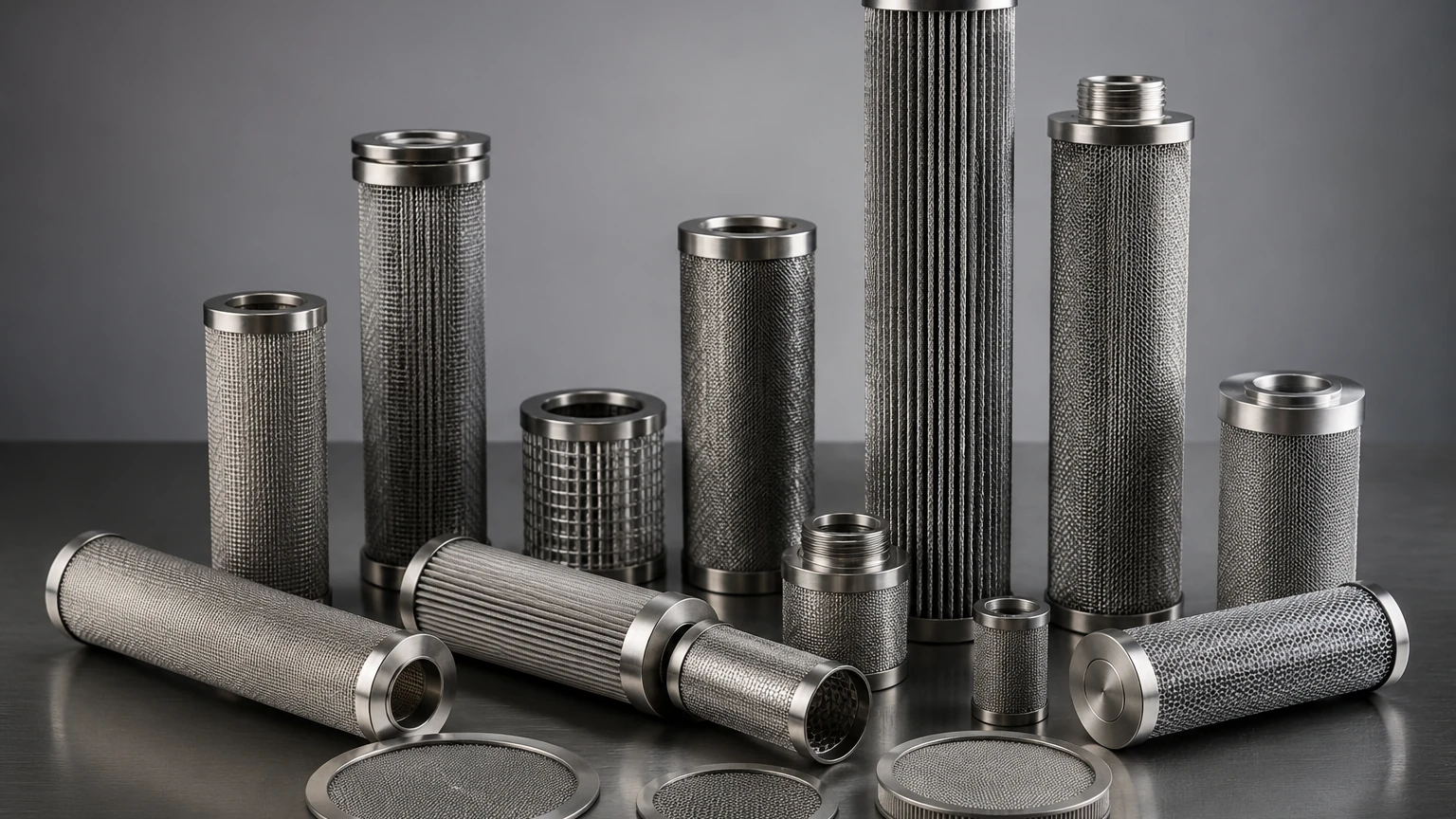
Industrie Luftfilter
In the landscape of modern manufacturing and chemical processing, air and gas filtration systems are critical components that ensure product purity, equipment longevity, and environmental safety. The term industrie luftfilter encompasses a wide range of technologies designed to remove particulate matter, aerosols, and contaminants from air streams. For engineers and procurement specialists, selecting the right filtration medium is not merely a matter of finding a fit; it is an exercise in balancing mechanical integrity, chemical compatibility, and operational efficiency. Stainless steel filtration solutions have emerged as the gold standard for demanding industrial environments where traditional polymer or paper filters fail due to temperature, pressure, or corrosive exposure.
The Role of Stainless Steel in Industrie Luftfilter Applications
When evaluating an industrie luftfilter for heavy-duty applications, the material of construction is the primary determinant of performance. Stainless steel, particularly grades 304 and 316L, offers a combination of properties that are indispensable in industrial settings. Unlike synthetic fibers, metal mesh and sintered metal components do not shed fibers, which is a critical requirement in pharmaceutical and food-grade air filtration.
Stainless steel filters are characterized by their high mechanical strength. In high-pressure pneumatic systems or vacuum applications, the filter medium must withstand significant pressure differentials without deforming or collapsing. Furthermore, the thermal stability of stainless steel allows these filters to operate in environments exceeding 300°C, a range where most organic filter media would degrade or ignite. This makes them ideal for hot gas filtration in chemical reactors or exhaust systems in power generation.
Engineering Specifications: Micron Ratings and Filtration Efficiency
One of the most critical decisions in selecting an industrie luftfilter is determining the required filtration accuracy, often measured in microns. Filtration efficiency is typically categorized into nominal and absolute ratings.
1. Nominal Rating: This indicates the ability of the filter to retain a major percentage (usually 60% to 90%) of particles of a specific size. It is often used for pre-filtration stages where the goal is to remove the bulk of larger contaminants.
2. Absolute Rating: This represents the diameter of the largest hard spherical particle that will pass through the filter under specified test conditions. For critical processes, such as sterile air filtration in biotechnology, absolute-rated stainless steel mesh is mandatory.
At Kaifil, the manufacturing process involves precision weaving and sintering to ensure that the pore size distribution is uniform across the entire surface of the filter. Engineers must also consider the "clean pressure drop"—the initial resistance to flow when the filter is new. A well-designed metal filter maximizes the open area of the mesh to reduce energy consumption in air handling units while maintaining the required particle retention levels.
Structural Integrity and Pressure Drop Management
In industrial air systems, the relationship between flow rate and pressure drop is a key performance indicator. As an industrie luftfilter captures contaminants, the effective pore area decreases, leading to an increase in differential pressure (ΔP). If the filter is not engineered to handle these loads, the system's energy efficiency drops, and the risk of structural failure increases.
To mitigate this, many industrial filters utilize a pleated design. By pleating the stainless steel wire mesh, the effective filtration surface area is increased significantly compared to a standard cylindrical element. This allows for higher flow rates within the same footprint and extends the service life between cleaning cycles. For extremely high-pressure applications, the filter media may be supported by internal or external perforated metal cores, ensuring that the mesh remains stable even under turbulent flow conditions.
Key Industrial Applications for Metal Air Filters
Industrial air filtration is not a one-size-fits-all solution. Different sectors have unique challenges that dictate the design of the industrie luftfilter.
* Chemical Processing: In environments where air streams contain acidic or alkaline vapors, 316L stainless steel provides the necessary corrosion resistance. These filters are used to protect sensitive analytical instruments and to recover valuable catalysts from gas streams.
* Food and Beverage: Air used for carbonation, packaging, or product transfer must be free of oils, moisture, and microbes. Stainless steel filter cartridges are preferred here because they can be steam-sterilized (SIP) and cleaned in place (CIP), meeting stringent hygiene standards.
* Pharmaceuticals: Precision is paramount in cleanroom environments. Metal filters are used in venting applications for storage tanks and as final barriers in sterile air lines, where their ability to withstand repeated sterilization cycles without losing integrity is a major advantage.
* Hydraulic and Pneumatic Systems: Protecting valves and actuators from airborne dust is essential for preventing mechanical wear. High-strength wire mesh filters ensure that the air powering these systems remains free of abrasive particles.
To explore the full range of technical specifications and material options available for these sectors, you can visit the Main Page for detailed product data and engineering support.
Maintenance, Cleaning, and Total Cost of Ownership (TCO)
While the initial investment in a stainless steel industrie luftfilter is higher than that of a disposable alternative, the Total Cost of Ownership (TCO) is often significantly lower over the equipment's lifespan. Disposable filters generate ongoing procurement costs, waste disposal fees, and downtime during frequent replacements.
In contrast, stainless steel filters are designed for longevity. They can be cleaned using various methods, including:
* Ultrasonic Cleaning: Using high-frequency sound waves in a cleaning solution to dislodge deep-seated particles from the mesh pores.
* Backwashing: Reversing the flow of air or fluid through the filter to blow out contaminants.
* Chemical Cleaning: Using compatible solvents or acids to dissolve accumulated organic or inorganic scaling.
* High-Temperature Burn-off: For carbonaceous deposits, filters can sometimes be heated in a controlled atmosphere to oxidize the contaminants.
The ability to regenerate the filter medium makes stainless steel an environmentally sustainable choice, aligning with corporate green initiatives by reducing industrial waste.
Customization and OEM Solutions for Specialized Requirements
Every industrial facility has its own set of constraints, from spatial limitations in existing ductwork to unique gas compositions. A standard industrie luftfilter may not always provide the optimal solution. This is where customization becomes vital. Engineering teams often require bespoke filtration components that feature specific end-cap configurations (such as DOE, 222, or 226 connectors), varying layers of mesh for graded density filtration, or specialized housing materials.
Kaifil specializes in working closely with global customers to develop these high-performance, customized filtration solutions. Whether it is a unique wire mesh weave for a specific particle shape or a reinforced cartridge for extreme vacuum applications, the focus is on delivering a product that integrates seamlessly into the client's existing infrastructure. During the design phase, engineers should confirm the chemical compatibility of all components, including gaskets and seals (such as Viton, EPDM, or PTFE), to ensure the entire filter assembly can withstand the operational environment.
Selection Criteria for Engineers and Purchasing Teams
When preparing to procure an industrie luftfilter, technical professionals should have a clear checklist to ensure the selected product meets the application's demands. Key questions include:
1. What is the maximum operating temperature and pressure? This determines whether a standard mesh or a sintered multi-layer structure is required.
2. What is the nature of the contaminant? Understanding if the particles are abrasive, sticky, or corrosive will influence the choice of stainless steel grade and weave type.
3. What are the flow rate requirements? This dictates the size of the filter and whether a pleated design is necessary to keep the pressure drop within acceptable limits.
4. What are the regulatory requirements? For food and pharma, ensure the materials are FDA-compliant or meet relevant industry standards for contact surfaces.
5. How will the filter be maintained? Consider the facility's cleaning capabilities and whether the filter design allows for easy removal and reinstallation.
By addressing these factors, purchasing teams can avoid the common pitfalls of underspecified filtration, such as premature clogging, bypass leakage, or mechanical failure, which can lead to costly production halts.
Conclusion
The selection of an industrie luftfilter is a critical engineering decision that impacts the efficiency, safety, and cost-effectiveness of industrial operations. Stainless steel filtration solutions offer the durability and precision required for the most demanding environments, from chemical plants to sterile pharmaceutical labs. By prioritizing high-quality materials, precise micron ratings, and cleanable designs, companies can achieve superior filtration performance while minimizing their environmental footprint and long-term operational costs.
For technical assistance in selecting the right filtration components or to review custom manufacturing capabilities, visit the Main Page to connect with filtration experts who can provide tailored advice based on your specific application requirements.