


Disc Filtration System
In the landscape of industrial liquid separation, the disc filtration system stands as a critical technology for achieving high-precision results across diverse sectors, including chemical processing, water treatment, and food production. Unlike traditional surface filters that rely on a single layer of mesh, a disc filtration system utilizes a stack of compressed discs with grooved surfaces to create a three-dimensional filtration matrix. This design provides a unique combination of surface and depth filtration, offering superior dirt-holding capacity and consistent performance under varying load conditions.
For engineers and procurement professionals, selecting the right filtration architecture requires a deep understanding of how these systems handle specific particle sizes, flow rates, and chemical environments. As a professional manufacturer specializing in custom stainless steel filtration solutions, Kaifil provides the technical expertise necessary to integrate these systems into demanding industrial workflows. For more information on specific component capabilities, you can visit our Main Page.
Understanding the Mechanics of a Disc Filtration System
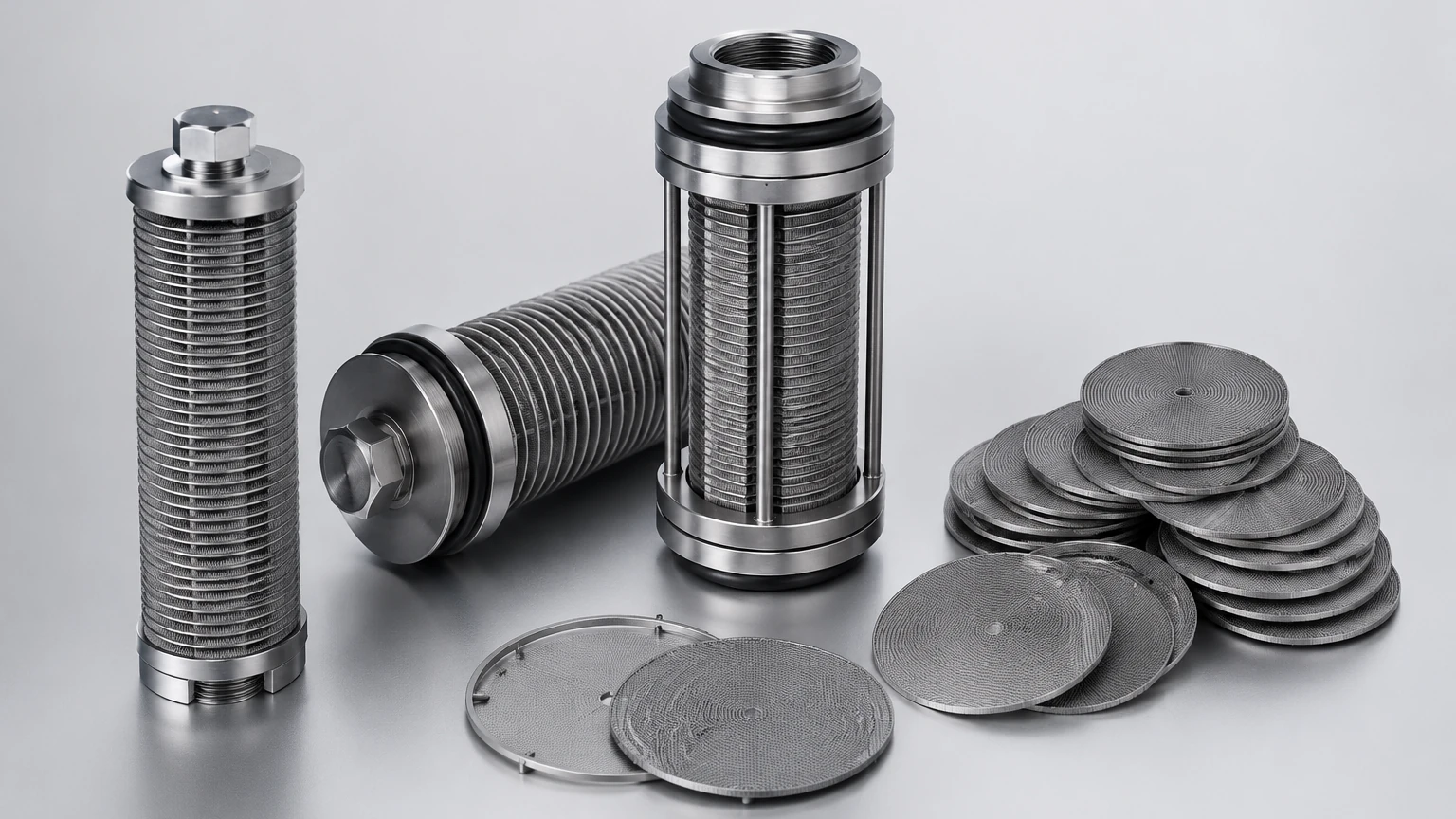
The core of a disc filtration system is the filter element, which consists of a series of thin, circular discs stacked on a central spine. Each disc is manufactured with precise grooves on both sides, running in opposite directions. When these discs are compressed together by a spring or hydraulic mechanism, the overlapping grooves intersect to create a complex network of traps and channels.
The Depth Filtration Advantage
This intersection of grooves creates a "depth" effect. While larger particles are captured on the outer surface of the disc stack (surface filtration), smaller particles are trapped within the intricate pathways formed by the compressed grooves (depth filtration). This dual-action mechanism allows the disc filtration system to maintain high efficiency even as the contaminant load increases, preventing the rapid blinding often seen in simple screen filters.
Backwashing and Regeneration
One of the primary operational advantages of industrial disc systems is their ability to be cleaned in situ. During a backwash cycle, the compression on the disc stack is released, allowing the discs to separate slightly. High-pressure water or air is then forced through the stack in the reverse direction, causing the discs to spin and effectively flushing out trapped debris. This self-cleaning capability reduces downtime and extends the service life of the filter media, making it a cost-effective choice for continuous processes.
Material Selection and Engineering Durability
In industrial environments, the material of construction is as important as the filtration geometry. While plastic disc systems are common in low-pressure irrigation applications, heavy industrial processes—such as those in the pharmaceutical or petrochemical sectors—require the robustness of metal components.
Stainless Steel Integration
Kaifil specializes in stainless steel filtration solutions, providing components that withstand high temperatures, high pressures, and corrosive chemicals. In a high-performance disc filtration system, the housing, support structures, and sometimes the discs themselves are fabricated from 304 or 316L stainless steel. These materials offer several advantages:
* Corrosion Resistance: Essential for chemical processing and water treatment involving aggressive media.
* Thermal Stability: Allows the system to operate in high-temperature steam cleaning or hot process fluids without deformation.
* Mechanical Strength: Prevents structural failure under high differential pressures ($ΔP$).
When designing a system, engineers must confirm that the alloy used is compatible with the fluid's pH levels and the presence of specific ions, such as chlorides, which can cause pitting in lower-grade steels.
Key Performance Metrics for Industrial Selection
Evaluating a disc filtration system requires looking beyond simple micron ratings. To ensure the system meets the specific needs of a facility, technical teams must analyze several key performance indicators (KPIs).
Micron Rating and Efficiency
Disc systems are available in a wide range of micron ratings, typically from 5 microns up to 400 microns. However, it is important to distinguish between nominal and absolute ratings. Because of the depth filtration nature of the disc stack, these systems often provide higher capture efficiency for deformable particles (such as organic matter) compared to rigid screen filters of the same rating.
Flow Rate and Pressure Drop
The flow rate per unit of filtration area (flux) is a critical design parameter. A higher flow rate through a single stack increases the initial pressure drop and accelerates the frequency of backwash cycles. Engineers should size the disc filtration system to operate at a "conservative" flux to ensure that the energy costs associated with pumping and the water loss during backwashing remain within acceptable limits.
Dirt Holding Capacity (DHC)
The DHC refers to the mass of contaminants the filter can retain before reaching the maximum allowable differential pressure. A disc filtration system generally offers a much higher DHC than a standard wire mesh filter because of its three-dimensional structure. This makes it ideal for applications with high total suspended solids (TSS).
Comparing Disc Filtration with Other Technologies
To make an informed purchasing decision, it is helpful to compare the disc filtration system against other common industrial technologies, such as screen filters and sand/media filters.
| Feature | Disc Filtration System | Screen Filter | Media (Sand) Filter |
| :— | :— | :— | :— |
| Filtration Type | Surface + Depth | Surface | Depth |
| Footprint | Compact | Very Compact | Large |
| Backwash Volume | Low | Very Low | High |
| Maintenance | Low (Automated) | Moderate | High (Media Replacement) |
| Precision | High | Moderate/High | Variable |
While screen filters are excellent for removing rigid, oversized particles, they can struggle with fibrous or slimy contaminants that "plug" the mesh. Media filters provide excellent depth filtration but require a large footprint and significant volumes of water for backwashing. The disc filtration system offers a middle ground, providing depth filtration capabilities in a compact, modular package with efficient water usage.
Maintenance, Cleaning, and Operational Longevity
Total cost of ownership (TCO) is a primary concern for industrial purchasing teams. A well-engineered disc filtration system is designed for longevity, but its performance depends on proper operational protocols.
Monitoring Differential Pressure
The most critical aspect of maintaining a disc system is monitoring the pressure differential across the stack. Most modern systems are equipped with automated controllers that trigger a backwash cycle once a pre-set $ΔP$ is reached (typically between 0.5 to 0.7 bar). Allowing the pressure to climb too high can compress the contaminants into the grooves so tightly that the standard backwash cycle cannot remove them, leading to "permanent" fouling.
Chemical Cleaning Cycles
In applications involving oils, fats, or biological growth (common in food and beverage or cooling tower water), standard backwashing may not be sufficient. In these cases, a Clean-in-Place (CIP) protocol should be established. This involves circulating specialized cleaning agents through the disc stack to dissolve organic or mineral deposits. Because Kaifil’s components are built with high-grade stainless steel, they can safely withstand the aggressive chemicals used in these cycles.
Customization and OEM Integration for Specific Applications
Every industrial process has unique constraints, from space limitations to specific regulatory requirements like FDA compliance for food contact. A standard, off-the-shelf disc filtration system may not always provide the optimal solution. This is where customization becomes essential.
Tailored Micron Grooving
The geometry of the grooves on the discs can be customized to target specific particle morphologies. For instance, a process dealing with needle-like crystals in a chemical plant may require a different groove pattern than a system filtering spherical algae from a water source.
Modular Scalability
One of the strengths of disc technology is its modularity. Systems can be designed with multiple manifolds, allowing individual filter pods to be taken offline for maintenance while the rest of the system continues to operate. This ensures zero-downtime filtration, which is vital for continuous manufacturing lines.
Engineering Support from Kaifil
As a manufacturer of precision metal filter components, Kaifil works closely with OEM partners and end-users to develop filtration solutions that meet exact specifications. Whether it is providing custom-sized stainless steel housings or specialized internal supports for high-pressure disc stacks, our engineering team focuses on durability and filtration accuracy. By understanding the nuances of fluid dynamics and material science, we help our clients achieve optimized filtration performance and reduced operational costs.
Conclusion: Selecting the Right System for Your Facility
Implementing a disc filtration system is a strategic investment in process stability and product quality. By offering the benefits of depth filtration in a self-cleaning, compact format, these systems solve many of the challenges associated with traditional filtration methods. However, the success of the installation depends on accurate sizing, appropriate material selection, and a clear understanding of the contaminant profile.
When evaluating your next filtration project, consider the long-term benefits of a system built with high-quality industrial components. For technical guidance on material compatibility or to explore our range of custom stainless steel filtration products, visit the Kaifil Main Page to connect with our engineering team. Ensuring that your disc filtration system is backed by expert manufacturing and robust design is the most effective way to guarantee reliable performance in demanding industrial environments.
