


Duplex Basket Strainer
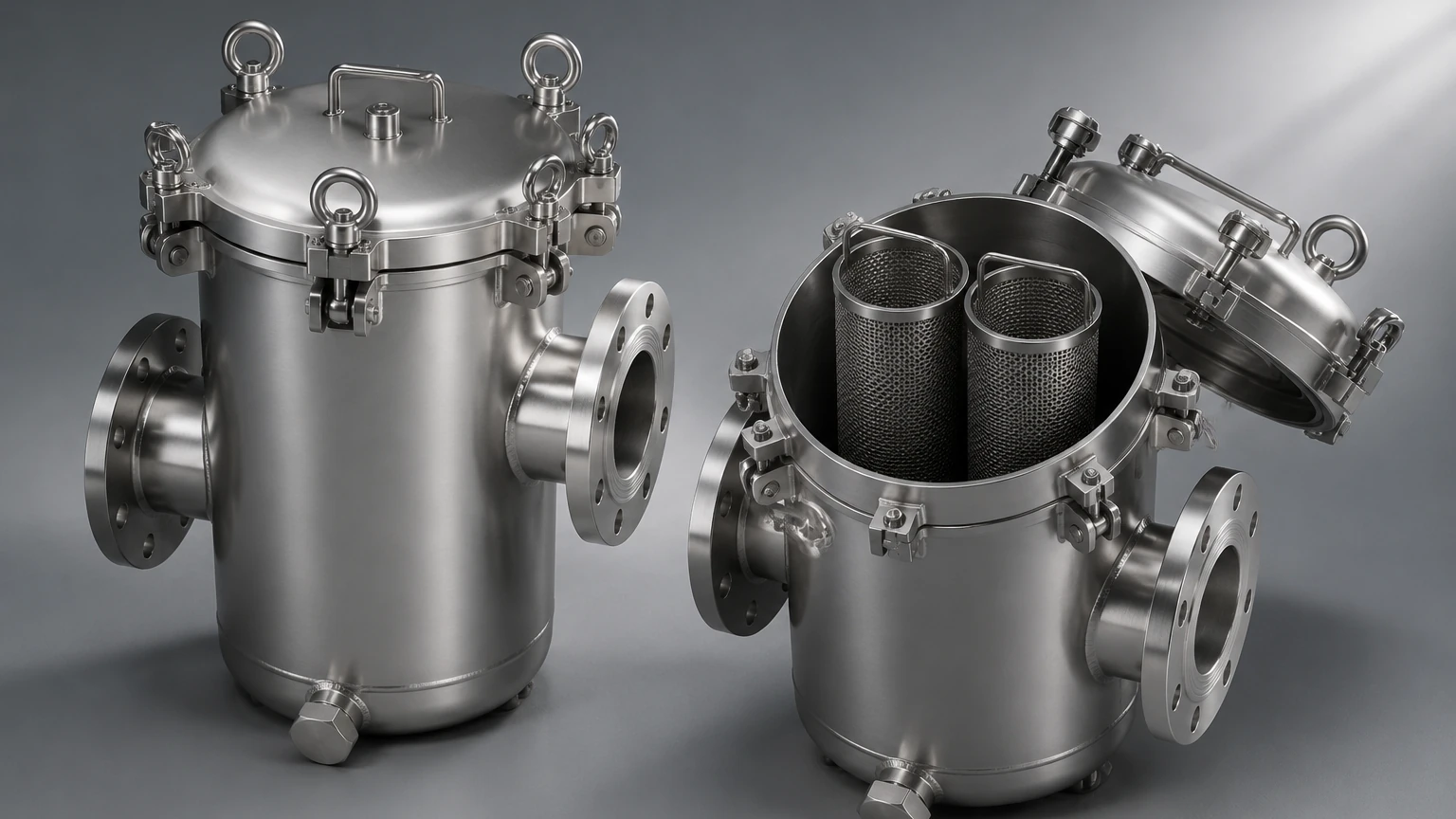
In industrial fluid handling, the requirement for continuous operation often dictates the choice of filtration equipment. A duplex basket strainer, also known as a twin basket strainer, is a critical component for systems where the flow cannot be interrupted for maintenance or cleaning. Unlike simplex strainers, which require a process shutdown to remove and clean the filter element, a duplex system utilizes two separate strainer chambers connected by a diversion valve. This configuration allows one chamber to remain in service while the other is isolated for cleaning or element replacement.
For engineers and procurement professionals in sectors such as chemical processing, power generation, and marine engineering, selecting the right duplex basket strainer involves a deep understanding of fluid dynamics, material compatibility, and the specific mechanical requirements of the application. As a specialized manufacturer, Kaifil provides precision-engineered stainless steel filtration components designed to meet these rigorous industrial standards.
Understanding the Engineering of Duplex Filtration Systems
The fundamental advantage of a duplex basket strainer is its ability to provide 24/7 filtration without downtime. This is achieved through a diversion valve mechanism—typically a plug, ball, or butterfly valve—that redirects the fluid flow from one chamber to the other.
When the primary basket becomes clogged with debris, the differential pressure across the strainer increases. Once a predetermined pressure limit is reached, the operator (or an automated system) switches the flow to the standby chamber. The isolated chamber can then be depressurized, opened, and the basket cleaned or replaced. This design is essential in applications where stopping the pump or closing the line would result in significant production losses, safety risks, or equipment damage.
Key Components of a Duplex Strainer
1. Strainer Housings: Two identical pressure vessels that contain the filter elements.
2. Diversion Valve: The mechanical interface that controls the flow path. High-quality valves must ensure a tight seal to prevent bypass leakage into the idle chamber.
3. Filter Baskets: The core filtration media, usually constructed from perforated metal or stainless steel wire mesh.
4. Pressure Equalization Line: A small bypass line that allows the idle chamber to be filled and pressurized before it is brought online, preventing hydraulic shock (water hammer).
5. Cover Seals and Closures: Bolted or quick-opening covers that provide access to the baskets.
Material Selection and Corrosion Resistance
Material integrity is paramount in industrial filtration. The choice of housing and basket material must align with the chemical properties of the fluid, the operating temperature, and the external environment. Stainless steel is the industry standard for high-performance duplex basket strainers due to its superior mechanical strength and resistance to corrosion.
At Kaifil, we focus on high-grade alloys such as 304 and 316L stainless steel. 316L, with its addition of molybdenum, offers enhanced resistance to chlorides and pitting, making it the preferred choice for marine environments, pharmaceutical production, and aggressive chemical processing. Beyond the housing, the internal basket must be equally robust. Because the basket is the component directly intercepting debris, it is subject to erosive forces and potential structural deformation if not engineered correctly.
When evaluating materials, engineers should consider the "Total Cost of Ownership." While carbon steel may have a lower initial purchase price, the longevity and reduced maintenance requirements of stainless steel often result in lower long-term costs, especially in corrosive or high-purity applications. For more information on material specifications and custom filtration components, you can visit the Main Page to review product options and application support.
Filtration Efficiency: Mesh, Perforation, and Micron Ratings
The performance of a duplex basket strainer is defined by its ability to remove specific particle sizes while maintaining an acceptable pressure drop. The filtration media within the basket is typically categorized by perforation size or mesh count.
Perforated Metal Baskets
Perforated baskets are used for coarse filtration, often acting as a "trash strainer" to remove large debris like stones, scale, or welding slag. Common hole sizes range from 1/32" to 1/2". These baskets provide high structural strength and are easy to clean.
Wire Mesh Liners
For finer filtration requirements, the perforated basket is lined with stainless steel wire mesh. The mesh count refers to the number of openings per linear inch. As the mesh count increases, the opening size decreases, allowing for the capture of smaller particles.
* 20 Mesh: Approximately 840 microns, suitable for protecting large pumps.
* 80 Mesh: Approximately 177 microns, often used in fuel and oil lines.
* 200 Mesh: Approximately 74 microns, used for precision protection of nozzles and valves.
Nominal vs. Absolute Ratings
It is important for engineers to distinguish between nominal and absolute filtration ratings. A nominal rating indicates the ability of the filter to retain the majority of particles of a specific size, while an absolute rating refers to the diameter of the largest spherical particle that can pass through the filter under specific test conditions. In critical industrial processes, understanding these nuances ensures that downstream equipment is adequately protected without over-specifying the filter, which can lead to excessive pressure drops.
Calculating Pressure Drop and Flow Coefficient (Cv)
One of the most common mistakes in strainer selection is undersizing the unit, which leads to a high initial pressure drop (ΔP). The pressure drop is the difference in pressure between the inlet and the outlet of the strainer. As the basket collects debris, the ΔP increases.
Engineers use the Flow Coefficient (Cv) to determine the pressure drop for a given flow rate. The Cv value represents the volume of water (in GPM) that will flow through the strainer with a pressure drop of 1 psi.
Factors that influence pressure drop include:
* Fluid Viscosity: Thicker fluids (like heavy oils) require larger strainers or coarser mesh to maintain flow.
* Specific Gravity: The density of the fluid relative to water affects the energy required to move it through the mesh.
* Open Area Ratio: This is the ratio of the total area of the openings in the basket to the cross-sectional area of the inlet pipe. A higher open area ratio (e.g., 6:1 or 8:1) allows for longer run times between cleanings and a lower initial ΔP.
By analyzing these variables, Kaifil assists technical teams in designing custom baskets that optimize flow while meeting strict filtration targets.
Operational Safety and Maintenance Protocols
Operating a duplex basket strainer requires adherence to specific safety protocols, particularly during the changeover process. Because these systems often handle high-pressure or hazardous fluids, the following steps are essential for safe maintenance:
1. Monitoring Differential Pressure: Baskets should be cleaned when the differential pressure reaches a specific limit (typically 5-10 psi above the clean pressure drop). Waiting too long can result in basket collapse or "blow-by," where debris is forced through the mesh.
2. Pressure Equalization: Before switching the diversion valve, the operator must open the equalization valve to fill the standby chamber. This prevents a sudden drop in line pressure and protects the system from hydraulic shock.
3. Venting: The standby chamber must be vented to remove trapped air. Air pockets in a liquid system can cause erratic flow and damage downstream equipment.
4. Isolation and Draining: Once the flow is diverted, the dirty chamber must be fully isolated. The drain valve should be opened to remove the fluid before the cover is removed for basket access.
Regular inspection of the diversion valve seals and cover gaskets is also necessary. Over time, seals can degrade, leading to internal bypass or external leaks. Using high-quality elastomers like Viton, EPDM, or PTFE, depending on chemical compatibility, is vital for maintaining system integrity.
Customization and OEM Solutions for Industry
Standard off-the-shelf strainers do not always meet the unique demands of specialized industrial environments. Customization is often required in terms of connection types (flanged, NPT, or socket weld), housing dimensions for tight spaces, and specialized basket designs.
Kaifil specializes in OEM and customized filtration solutions. Our engineering team works closely with global customers to develop stainless steel filter cartridges and baskets that fit existing duplex housings or new system builds. Whether the application requires a specific micron rating for a pharmaceutical line or a high-strength reinforced basket for a hydraulic system, our manufacturing capabilities ensure precision and durability.
Customization options include:
* Reinforced Baskets: Adding internal or external supports to withstand high differential pressures.
* Magnetic Inserts: Incorporating magnets into the basket to capture fine iron and steel particles that might otherwise pass through the mesh.
* Heating Jackets: For fluids that must be maintained at a specific temperature to remain pumpable (e.g., resins or waxes).
* Specialized Coatings: Applying surface treatments to enhance chemical resistance or reduce particle adhesion.
Conclusion: Selecting the Right Partner for Industrial Filtration
The duplex basket strainer is a workhorse of industrial fluid management, providing the reliability needed for continuous processes. However, its effectiveness is entirely dependent on correct sizing, appropriate material selection, and high-quality manufacturing. Engineers must look beyond the basic flow rate and consider the long-term impact of corrosion, pressure drop, and ease of maintenance.
By focusing on technical expertise and precision manufacturing, Kaifil supports industries in achieving optimized filtration performance. From material selection to the final production of custom stainless steel components, our goal is to provide solutions that enhance system uptime and protect critical infrastructure. For detailed technical specifications and to explore our full range of filtration capabilities, visit our Main Page and consult with our engineering team to find the best solution for your specific application.
