


Hplc Column Frit
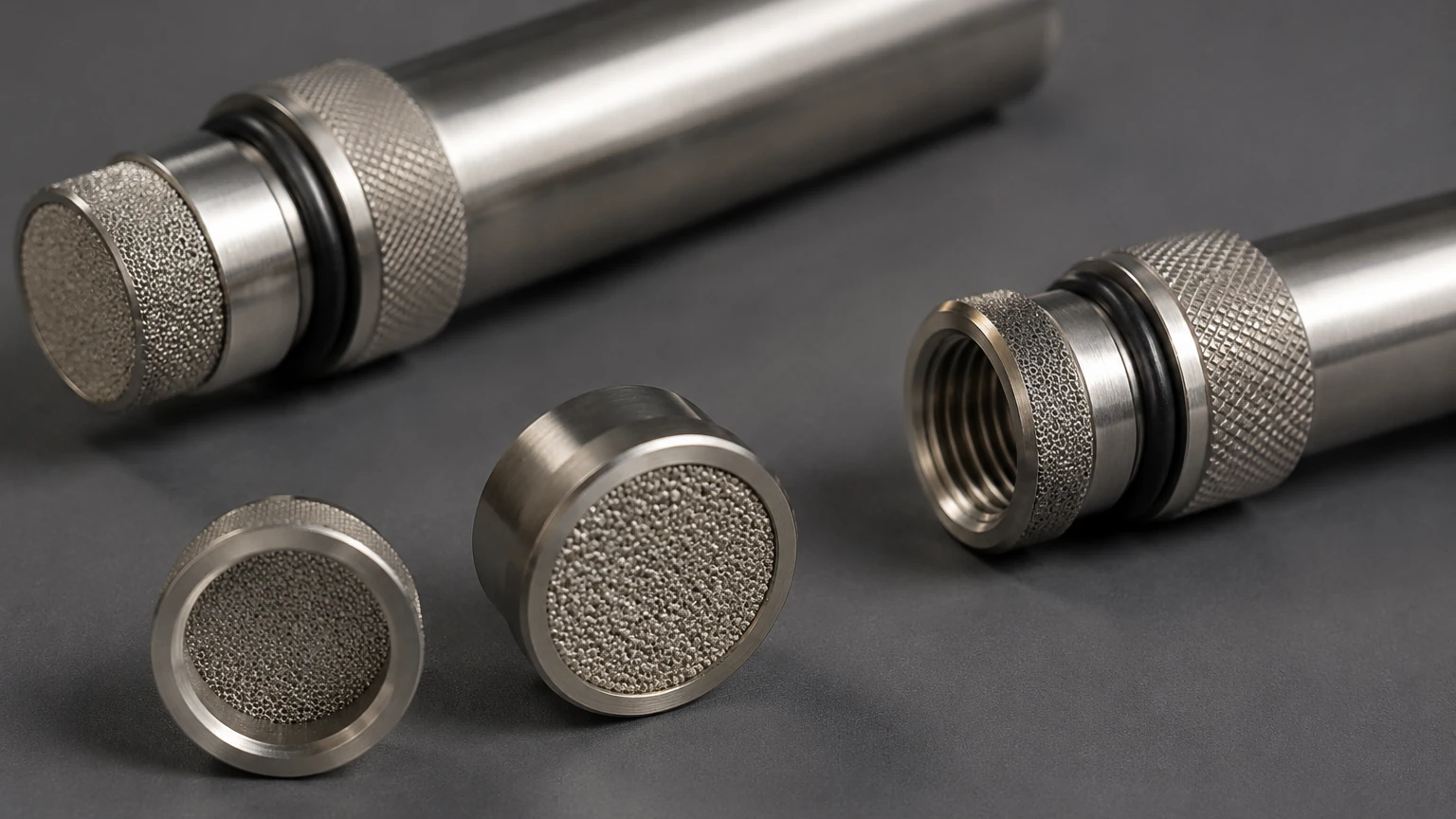
In the field of analytical chemistry, High-Performance Liquid Chromatography (HPLC) stands as a cornerstone for the separation, identification, and quantification of components in a mixture. While much of the technical focus is often directed toward the stationary phase chemistry or the precision of the high-pressure pumps, the performance of the system is fundamentally dependent on minor yet critical components known as column frits. An HPLC column frit is a porous metal or polymer disc located at both ends of a chromatography column. Its primary functions are to retain the stationary phase packing material within the column and to ensure a uniform distribution of the mobile phase as it enters the packed bed.
For engineers and laboratory managers, selecting the correct frit is not merely a matter of finding a part that fits; it is a critical engineering decision that impacts peak resolution, backpressure, and the overall lifespan of the analytical system. As a manufacturer specializing in precision stainless steel filtration solutions, Kaifil provides the technical expertise required to navigate the complexities of frit selection and customization for demanding industrial and laboratory environments.
Engineering Fundamentals of HPLC Column Frits
The design of an HPLC column frit involves a delicate balance between porosity, mechanical strength, and chemical inertness. Most industrial-grade frits are manufactured from sintered 316L stainless steel, although specialized applications may require titanium, Hastelloy, or PEEK (polyetheretherketone).
Material Selection and Chemical Compatibility
Stainless steel 316L is the industry standard due to its excellent corrosion resistance and ability to withstand the high pressures typical of HPLC (up to 600 bar) and UHPLC (up to 1500 bar). In pharmaceutical and proteomic applications where metal ions might interfere with the sample (biocompatibility), titanium or PEEK frits are often preferred. The material must remain inert under a wide range of pH levels and in the presence of various organic solvents and aqueous buffers.
Pore Size and Micron Ratings
The pore size of the frit must be smaller than the particle size of the column packing material to prevent "leakage" of the stationary phase. A general rule of thumb in chromatography engineering is that the frit pore size should be approximately half the diameter of the smallest packing particles. For example, a column packed with 5µm particles typically utilizes a 2µm frit, while a column with 3µm particles requires a 0.5µm or 1µm frit. If the pores are too large, the packing material will escape, leading to column voids and system contamination. Conversely, if the pores are too small, the frit will contribute to excessive backpressure and may clog prematurely.
The Role of Frits in Flow Distribution and Peak Symmetry
Beyond simple retention, the HPLC column frit plays a vital role in fluid dynamics. When the mobile phase is pumped into the column, it enters through a narrow inlet tube. The frit must act as a flow distributor, spreading the liquid evenly across the entire cross-section of the column head before it reaches the stationary phase.
Preventing Flow Anomalies
If a frit has non-uniform porosity or surface imperfections, it can create "channeling" or uneven flow velocities. This leads to a phenomenon known as peak broadening or tailing, where the sample components do not move through the column in a tight, symmetrical band. High-quality sintered metal frits from manufacturers like Kaifil are engineered to provide a uniform pore structure, ensuring that the mobile phase velocity is consistent across the diameter of the column. This uniformity is essential for achieving high theoretical plate counts and sharp, reproducible peaks.
Minimizing Extra-Column Volume
In modern chromatography, minimizing dead volume (or extra-column volume) is essential for maintaining resolution. The thickness and diameter of the frit must be precisely controlled. A frit that is too thick adds unnecessary volume where sample dispersion can occur, while a frit that is too thin may lack the structural integrity to withstand high-pressure pulses from the pump.
Manufacturing Precision: Sintered Powder vs. Wire Mesh
There are two primary methods for producing metal HPLC frits: powder sintering and multi-layer wire mesh compaction. Each has distinct advantages depending on the application requirements.
Sintered Metal Powder Frits
Most HPLC frits are produced by sintering fine stainless steel powder. In this process, the powder is placed in a mold and heated to a temperature just below its melting point. This causes the particles to bond at their contact points, creating a rigid, porous structure. The advantage of this method is the ability to create very fine pore sizes (down to 0.2µm) with a high degree of tortuosity, which is excellent for capturing fine particulates.
Sintered Wire Mesh Frits
For applications requiring higher flow rates or specific mechanical properties, sintered wire mesh may be used. This involves layering multiple sheets of stainless steel wire cloth and sintering them together. While less common for standard analytical columns, these are often used in preparative chromatography or large-scale industrial filtration where lower pressure drops are required. Kaifil’s expertise in both wire mesh and sintered powder technologies allows for the development of hybrid solutions tailored to specific OEM specifications.
Maintenance and Troubleshooting: Identifying Frit Failure
In a B2B or industrial laboratory setting, downtime is costly. The HPLC column frit is often the first component to show signs of wear or contamination, acting as a "sacrificial" filter for the expensive column packing. Understanding the symptoms of frit failure is essential for effective maintenance.
High Backpressure
The most common sign of a clogged inlet frit is a steady increase in system backpressure. This usually occurs because the frit has successfully captured particulates from the sample or the mobile phase. While the frit is doing its job by protecting the column, the increased pressure can eventually exceed the system's safety limits or cause leaks in the fittings. Regular replacement of the inlet frit, or the use of a guard column (which contains its own frit), can significantly extend the life of the primary analytical column.
Peak Tailing and Split Peaks
If the frit surface becomes partially blocked or if the stationary phase has settled away from the frit (creating a void), the resulting flow disturbance will cause peak distortion. If a laboratory observes split peaks or significant tailing that cannot be resolved by changing the mobile phase or the column, the frit is a likely culprit. In some cases, frits can be cleaned via ultrasonication in a strong solvent, but for high-precision analytical work, replacement is generally the more reliable and cost-effective solution.
Selecting and Customizing Frits for OEM Applications
For manufacturers of chromatography equipment, the ability to source custom-engineered frits is a competitive advantage. Standard off-the-shelf frits may not meet the specific requirements of a new instrument design or a specialized chemical process. When evaluating a supplier for HPLC column frits, engineering teams should confirm several key factors:
1. Dimensional Tolerances: Even a few microns of deviation in diameter can prevent a frit from sealing correctly within the column end-fitting, leading to bypass leaks.
2. Pore Size Distribution: It is not enough to have an "average" pore size; the distribution must be tight to ensure consistent flow characteristics across thousands of units.
3. Cleanliness: Frits must be free of manufacturing oils, carbon residues, and metallic dust. High-purity cleaning processes are mandatory to prevent "ghost peaks" during initial column runs.
4. Custom Geometries: Some systems require flanged frits, chamfered edges, or integrated seals (such as PEEK rings) to simplify assembly and improve high-pressure sealing.
Kaifil works closely with global customers to develop these high-performance components, ensuring that every frit meets the rigorous standards of the pharmaceutical and chemical processing industries. For more information on the full range of stainless steel filtration products and custom manufacturing capabilities, professionals are encouraged to visit the Main Page to review product options and application support.
Total Cost of Ownership and Quality Assurance
While frits are relatively inexpensive compared to the total cost of an HPLC system, the "cost of failure" is high. A single batch of failed pharmaceutical analysis due to a contaminated or poorly manufactured frit can result in significant financial loss. Therefore, procurement teams should prioritize quality assurance and traceability over the lowest unit price.
Reliable manufacturers provide documentation regarding material grades (e.g., 316L certification) and filtration efficiency. By investing in high-quality frits, laboratories reduce the frequency of column replacements, minimize system downtime, and ensure the integrity of their analytical data. Whether for routine quality control or advanced research and development, the precision of the HPLC column frit remains a fundamental pillar of successful chromatography.
In conclusion, the HPLC column frit is a high-precision engineering component that requires careful selection based on material science, fluid dynamics, and filtration principles. By understanding the relationship between pore size, flow distribution, and mechanical durability, engineers can optimize their filtration systems for maximum efficiency and reliability. For those seeking specialized industrial filtration solutions, Kaifil offers the manufacturing depth and technical expertise to support the most demanding chromatography applications.
