


What Is a Basket Strainer
In industrial fluid handling systems, protecting downstream equipment from particulate contamination is a critical engineering requirement. One of the most effective components used for this purpose is the basket strainer. This article provides a technical overview of what is a basket strainer, its design variants, engineering considerations, and its role in maintaining the integrity of industrial processes.
Understanding the Fundamentals of Basket Strainers
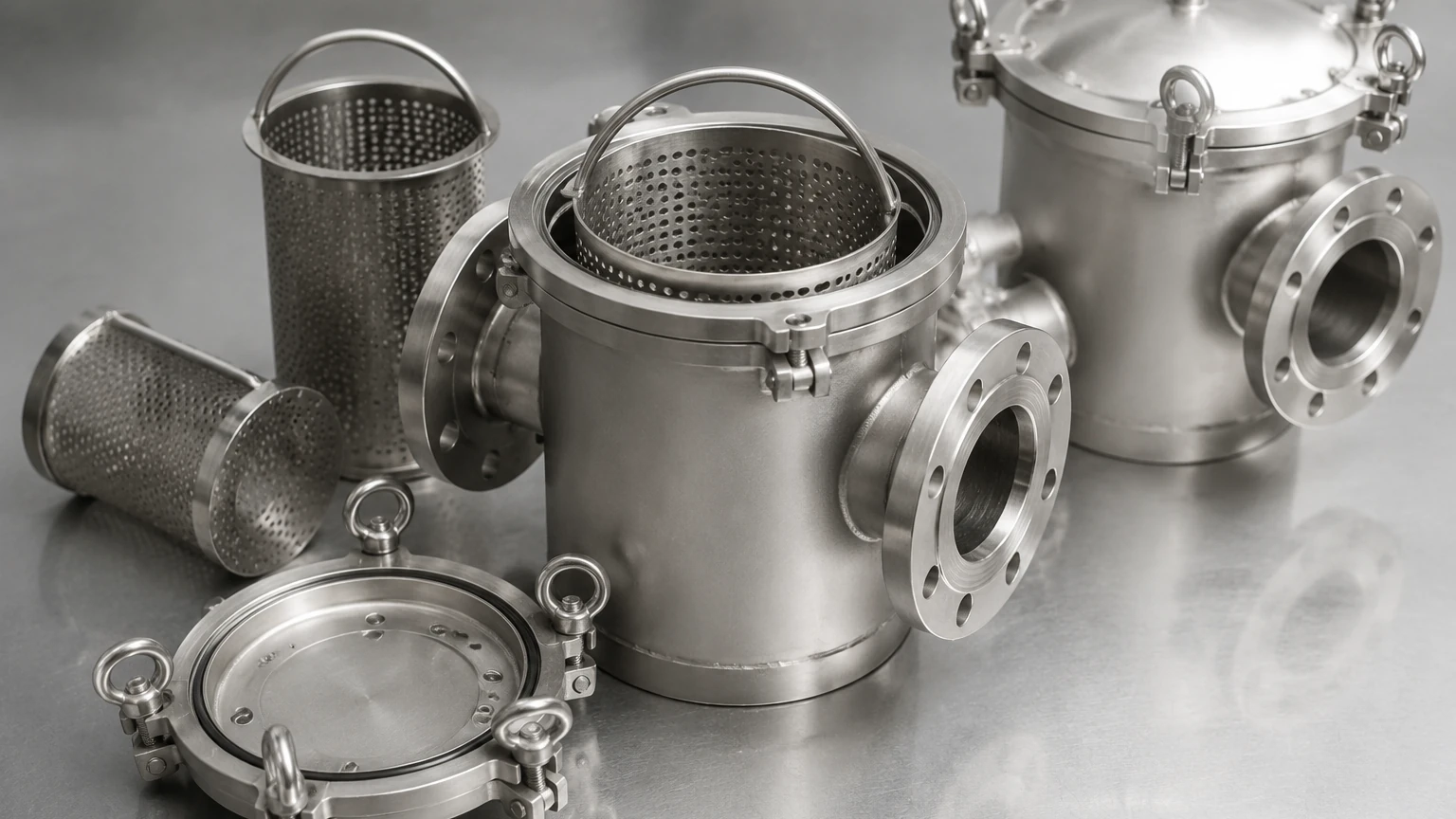
A basket strainer is a closed vessel with a removable screen or "basket" designed to remove large particles of foreign matter from a fluid stream. Unlike Y-strainers, which are often used for smaller amounts of debris in high-pressure steam or gas lines, basket strainers are typically utilized in liquid applications where the volume of solids to be removed is relatively high.
The primary function of the device is to protect sensitive equipment—such as pumps, valves, meters, and heat exchangers—from damage or clogging caused by pipe scale, welding slag, or other debris. When answering the question of what is a basket strainer from an engineering perspective, it is best described as a high-capacity filtration component that offers a larger surface area for debris collection compared to other strainer types, resulting in longer intervals between cleanings.
Design Variations: Simplex vs. Duplex Strainers
When specifying a basket strainer for an industrial application, the choice between simplex and duplex designs depends entirely on the requirements for system downtime and flow continuity.
Simplex Basket Strainers
A simplex basket strainer is used in systems where the flow can be safely interrupted for a short period to clean or replace the basket. These are common in batch processes or systems with redundant piping. To clean a simplex strainer, the line must be depressurized, the cover removed, and the basket manually cleaned. This design is valued for its simplicity, lower initial cost, and ease of installation.
Duplex Basket Strainers
For applications that require continuous operation, such as cooling water systems in power plants or chemical processing lines, a duplex basket strainer is the standard choice. A duplex system consists of two separate strainer chambers connected by a diversion valve. When one basket becomes full, the flow is diverted to the second chamber, allowing the first to be cleaned without stopping the process. This ensures that the system remains online 24/7, though it involves a higher capital investment and a larger footprint.
Material Selection and Industrial Compatibility
The performance and longevity of a basket strainer are heavily influenced by the materials used in its construction. As a specialized manufacturer, Kaifil emphasizes the use of high-grade stainless steel for both the housing and the internal mesh components to ensure durability in demanding environments.
1. Stainless Steel (304 and 316L): These are the most common materials for industrial filtration. SS304 offers excellent corrosion resistance for general water and chemical applications, while SS316L provides superior resistance to chlorides and organic acids, making it ideal for pharmaceutical and food-grade processes.
2. Specialty Alloys: In highly corrosive environments, such as those found in desalination or aggressive chemical processing, materials like Monel or Hastelloy may be required to prevent premature failure of the strainer housing and basket.
3. Seal Materials: The choice of O-rings and gaskets (e.g., EPDM, Viton, or PTFE) must be compatible with the fluid temperature and chemical composition to prevent leaks and maintain pressure integrity.
Technical Performance: Filtration Accuracy and Pressure Drop
When evaluating what is a basket strainer for a specific project, engineers must focus on two primary performance metrics: filtration accuracy and the allowable pressure drop.
Filtration Accuracy (Micron Rating)
The internal basket is usually constructed from a perforated metal plate lined with a fine wire mesh. The "mesh size" or "micron rating" determines the size of the particles that will be captured. Selecting a mesh that is too coarse will allow harmful debris to pass through, while a mesh that is too fine will clog rapidly, leading to frequent maintenance and excessive pressure loss.
Pressure Drop (Delta P)
The pressure drop is the difference in pressure between the inlet and outlet of the strainer. A clean basket strainer will have an inherent pressure drop based on its internal geometry and the viscosity of the fluid. As debris accumulates, the pressure drop increases. Engineers typically design systems so that the initial pressure drop does not exceed 2 psi, and the basket is cleaned or replaced when the pressure drop reaches a predetermined limit, usually around 10 psi.
Open Area Ratio
A critical engineering concept for basket strainers is the "Open Area Ratio" (OAR). This is the ratio of the total area of the holes in the basket to the cross-sectional area of the inlet pipe. A higher OAR (typically 4:1 to 6:1) means the strainer can hold more debris before the pressure drop becomes critical, extending the service life between cleanings.
Industrial Applications and Use Cases
Basket strainers are versatile components found across a wide range of industries where fluid purity is essential for operational efficiency.
* Chemical Processing: Protecting expensive control valves and flow meters from corrosive particulates and ensuring the purity of the final chemical product.
* Food and Beverage: Used in the filtration of syrups, juices, and oils to remove pulp or foreign matter, often requiring high-polish stainless steel finishes for sanitary compliance.
* Water Treatment: Removing sand, grit, and biological matter from intake water to protect membranes and high-pressure pumps in desalination and municipal treatment plants.
* Hydraulic Systems: Filtering hydraulic oils to prevent wear on precision-machined components within industrial machinery.
* Pharmaceuticals: Ensuring that active ingredients are free from contaminants during the manufacturing of liquid medications.
Maintenance, Cleaning, and Replacement Cycles
Understanding what is a basket strainer also involves knowing how to maintain it. Unlike disposable filters, basket strainers are designed to be cleaned and reused. However, the cleaning process must be handled with care to avoid damaging the delicate wire mesh.
* Monitoring: The most effective way to manage maintenance is through the installation of differential pressure gauges. These gauges provide a real-time indication of how full the basket is.
* Cleaning Procedure: Once removed, the basket should be cleaned using a soft brush or a high-pressure water spray from the outside in (backwashing). For sticky or oily residues, ultrasonic cleaning or specialized chemical baths may be necessary.
* Replacement: While the stainless steel housing can last for decades, the internal baskets are wear items. They should be inspected for signs of wire fatigue, broken welds, or corrosion during every cleaning cycle. Replacing a damaged basket promptly is essential to prevent bypass—where fluid flows through a hole in the mesh rather than being filtered.
Criteria for Selecting a Custom Basket Strainer
For many industrial applications, a standard off-the-shelf strainer may not meet the specific flow rates or space constraints of the facility. Customization is often necessary to optimize performance. When consulting with a manufacturer like Kaifil, engineers should be prepared to provide the following data:
1. Fluid Characteristics: Viscosity, specific gravity, and chemical compatibility.
2. Flow Rate: Minimum, normal, and maximum flow rates to ensure the vessel is sized correctly.
3. Operating Pressure and Temperature: These dictate the wall thickness of the housing and the type of closure mechanism (e.g., bolted cover or quick-opening clamp).
4. Debris Loading: The expected volume and type of solids to be removed, which influences the choice of basket size and OAR.
5. Connection Type: Flanged, threaded, or socket-weld connections to match existing piping.
By carefully considering these factors, purchasing teams can ensure they receive a filtration solution that minimizes total cost of ownership through reduced maintenance and protected downstream assets.
Engineering Support and Manufacturing Quality
Selecting the right filtration component requires a balance between technical specifications and operational realities. Whether you are designing a new system or upgrading an existing process, working with an experienced manufacturer ensures that the equipment meets international standards for pressure vessels and filtration efficiency.
For more detailed information on custom stainless steel filtration components and to explore our full range of industrial solutions, visit our Main Page. Our engineering team is available to assist with material selection, technical drawings, and performance evaluations to help you achieve optimized filtration performance in your specific application.
