


Casing Oilfield
In the extraction of oil and gas, the integrity of the wellbore is paramount. The casing oilfield system serves as the structural foundation of a well, providing a permanent lining that prevents the collapse of the borehole, isolates different formations to prevent cross-flow of fluids, and protects freshwater aquifers. Beyond structural support, the casing string is the primary conduit through which filtration and sand control technologies are deployed. For engineers and procurement specialists, understanding the intersection of casing design and filtration performance is essential for maximizing the lifespan of the well and optimizing production rates.
Industrial filtration components, particularly those manufactured from high-grade stainless steel, play a critical role within the casing string. These components must withstand extreme hydrostatic pressures, corrosive chemical environments, and the mechanical stresses of installation. As wells reach greater depths and encounter more complex geological formations, the demand for precision-engineered filtration solutions integrated into the casing oilfield infrastructure has increased significantly.
The Functional Architecture of Casing in Oilfield Operations
A typical well construction involves several layers of casing, each serving a specific engineering purpose. The selection of materials and the integration of filtration media depend heavily on which section of the casing string is being addressed.
Surface and Intermediate Casing
Surface casing is the first string run into the well, designed to protect shallow groundwater and support the weight of subsequent casing strings. Intermediate casing is then used to isolate high-pressure zones or unstable formations that could lead to circulation loss. While these sections are primarily structural, they set the stage for the production casing where the most critical filtration occurs.
Production Casing and Completion
The production casing is the final string through which oil or gas is transported to the surface. In many completions, this casing is perforated to allow hydrocarbons to enter the wellbore. However, along with the desired fluids, formation sand and debris can also enter, leading to catastrophic equipment failure. This is where specialized filtration media, such as wire-wrapped screens and metal mesh filters, become indispensable components of the casing oilfield strategy.
Engineering Requirements for Downhole Filtration Media
When integrating filtration components into a casing oilfield environment, engineers must account for several harsh variables. Unlike surface-level industrial filtration, downhole components cannot be easily accessed for maintenance, making durability and material selection the most significant factors in the total cost of ownership.
Mechanical Strength and Collapse Resistance
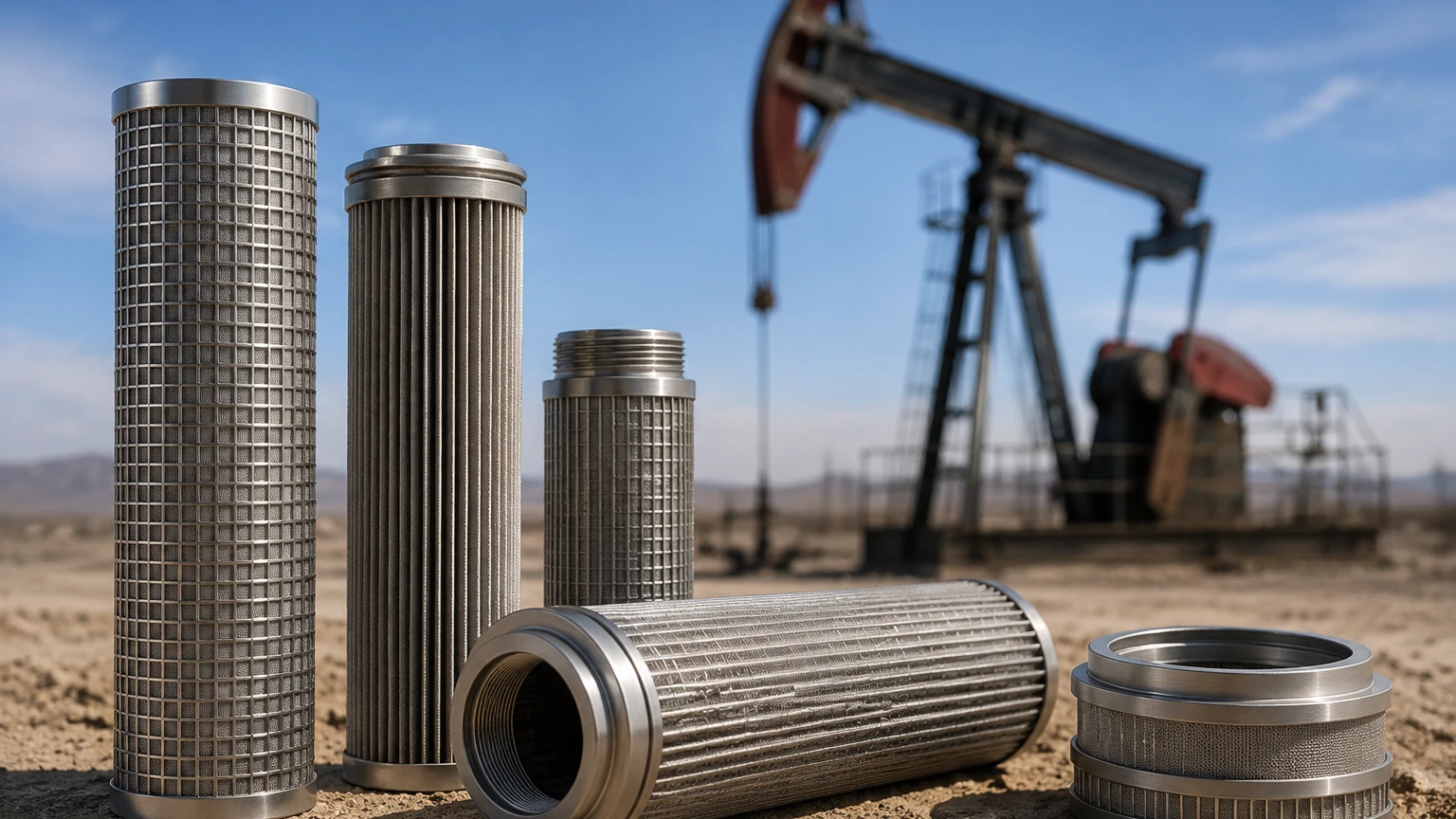
Filter elements attached to or integrated within casing must possess high collapse and burst ratings. As the well depth increases, the external pressure from the formation and the internal pressure from the production fluids create a high-stress environment. Stainless steel wire mesh and sintered metal cartridges are often reinforced with perforated base pipes to ensure that the filtration surface does not deform under these loads.
Corrosion Resistance in Harsh Environments
Oilfield fluids often contain high concentrations of chlorides, hydrogen sulfide (H2S), and carbon dioxide (CO2), all of which are highly corrosive to standard carbon steel. To ensure long-term reliability, filtration components are typically manufactured from 304 or 316L stainless steel. In more aggressive environments, specialty alloys may be required to prevent pitting and stress corrosion cracking. For more information on material compatibility and custom alloy options, technical teams can consult the Main Page of professional filtration manufacturers.
Sand Control: The Primary Filtration Challenge
Sand production is one of the most common challenges in the casing oilfield sector. If left unmanaged, sand can erode downhole pumps, clog valves, and fill the wellbore, eventually halting production. Effective sand control requires a deep understanding of the formation's grain size distribution and the selection of an appropriate filtration micron rating.
Wire-Wrapped Screens
These are constructed by wrapping a triangular-shaped wire around a longitudinal support rod or a perforated pipe. The gap between the wires is precisely controlled to allow fluid flow while blocking sand particles. The "V-shape" of the wire helps prevent clogging by ensuring that particles smaller than the gap can pass through without becoming wedged.
Premium Metal Mesh Screens
For finer formations, premium mesh screens utilize multiple layers of stainless steel wire cloth. These layers are often sintered together to create a robust, porous medium that provides high permeability while maintaining a strict micron rating. This type of filtration is highly effective in horizontal wells and unconsolidated formations where traditional wire-wrapped screens may not provide sufficient surface area.
Selection Criteria for Industrial Filter Components
Selecting the right filter for a casing oilfield application involves a balance between filtration efficiency and flow capacity. Engineers must evaluate several technical parameters before finalizing a design.
1. Micron Rating: The pore size must be small enough to retain the formation sand but large enough to prevent premature plugging by fines. This is often determined through Sieve Analysis of the formation samples.
2. Flow Velocity: High flow velocities can lead to erosion of the filter media. The total open area (TOA) of the filter must be maximized to keep the entrance velocity low, thereby extending the life of the stainless steel mesh.
3. Compatibility with Completion Fluids: The filter media must be chemically compatible with the acids and brines used during the well completion and stimulation phases.
4. Customization Requirements: Every well is unique. Custom lengths, diameters, and connection types (such as API threads) are often necessary to ensure the filter integrates seamlessly with the rest of the casing string.
The Economics of High-Performance Filtration
In the casing oilfield industry, the initial purchase price of a filter is only a small fraction of its true cost. The primary economic driver is the prevention of "workovers"—the expensive process of pulling the casing or tubing to repair or replace failed components.
By investing in high-quality stainless steel filtration solutions, operators can significantly extend the time between interventions. A well-designed filter reduces the wear on artificial lift systems and surface equipment, leading to lower operational expenditures (OPEX) over the life of the well. Furthermore, precise filtration prevents "formation damage," where fine particles clog the near-wellbore area, ensuring that the reservoir continues to flow at its maximum potential.
Customization and OEM Manufacturing in Filtration
Because of the varied conditions found in global oilfields, standardized filtration products often fall short. Manufacturers like Kaifil specialize in providing OEM and customized filtration solutions that address specific engineering challenges. Whether it is a unique diameter requirement for a slim-hole well or a specific layering of wire mesh for a high-pressure gas well, custom manufacturing ensures that the filtration component is fit for purpose.
Technical professionals should confirm the following before procurement:
* Material Certification: Ensure the stainless steel grades meet ASTM or international standards.
* Quality Control: Verify that the manufacturer uses advanced welding and sintering techniques to maintain the structural integrity of the mesh.
* Testing Procedures: Confirm that filters have undergone pressure testing and micron-rating verification.
Conclusion
The casing oilfield infrastructure is the backbone of the energy industry, and the filtration components housed within that infrastructure are its primary defense against operational failure. By focusing on material science, mechanical integrity, and precise micron ratings, engineers can ensure that their casing strings provide both structural support and efficient fluid management. As the industry moves toward more challenging environments, the partnership between oilfield operators and specialized filtration manufacturers becomes increasingly vital for sustainable and cost-effective production.
For those seeking reliable, high-performance filtration components tailored to demanding industrial and oilfield applications, exploring the technical resources and product capabilities on the Main Page provides a foundation for informed decision-making and optimized system performance.
