


Water Intake Screen
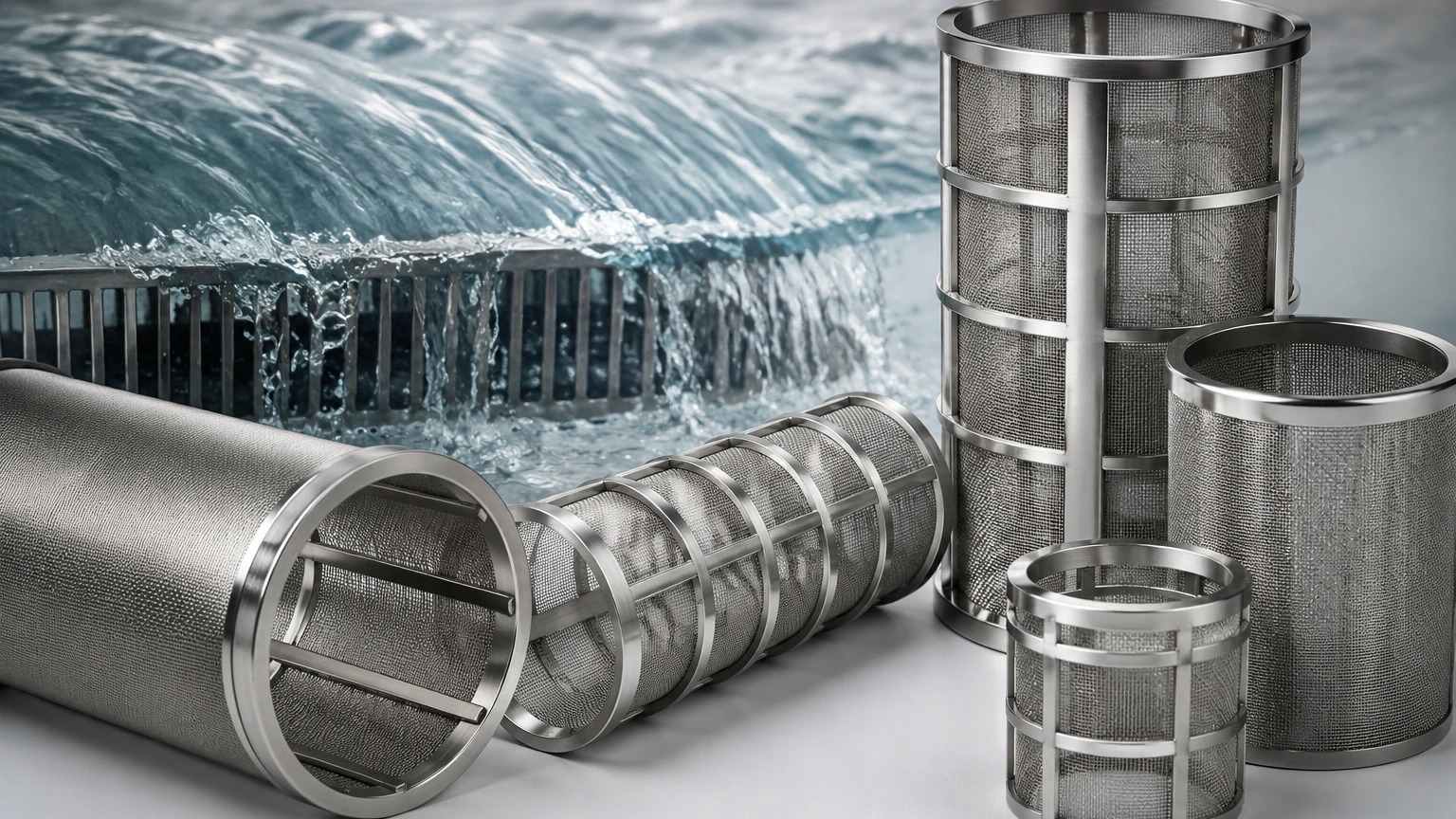
In industrial and municipal water management, the water intake screen serves as the primary defense mechanism for downstream equipment. Whether drawing from rivers, lakes, or oceans, these components are engineered to prevent the entry of debris, aquatic life, and suspended solids into pumping systems, heat exchangers, and treatment facilities. For engineers and procurement teams, selecting the correct intake technology is not merely a matter of filtration but a critical decision affecting operational uptime, maintenance costs, and environmental compliance.
As a specialized manufacturer of stainless steel filtration solutions, Kaifil provides the technical expertise required to design and produce high-performance intake components. Understanding the hydraulic and material requirements of these systems is essential for ensuring long-term reliability in demanding industrial environments. For more information on our full range of filtration capabilities, visit our Main Page.
The Role of Water Intake Screens in Industrial Infrastructure
A water intake screen is the first point of contact between a raw water source and an industrial process. Its primary function is to protect high-value assets—such as pumps, turbines, and membrane systems—from physical damage and clogging. In sectors like chemical processing, power generation, and large-scale water treatment, the failure of an intake screen can lead to catastrophic pump cavitation or the fouling of heat exchanger tubes.
Beyond equipment protection, these screens are increasingly governed by environmental regulations. In many jurisdictions, intake systems must meet specific "through-slot velocity" requirements to minimize the impingement and entrainment of fish and other aquatic organisms. Achieving this balance between effective filtration and environmental safety requires precise engineering of the screen’s open area and geometry.
Engineering Specifications: Slot Size and Open Area
The performance of a water intake screen is defined by its slot size and the resulting total open area. These parameters determine the filtration accuracy and the hydraulic efficiency of the system.
Slot Size Selection
Slot sizes for intake screens are typically measured in millimeters or microns, depending on the nature of the debris and the sensitivity of the downstream equipment. For coarse filtration, slots may range from 2mm to 10mm. For finer protection, such as protecting sensitive cooling loops, slot sizes may be reduced significantly. The goal is to select a slot size that captures the target debris without causing excessive pressure drop.
Open Area and Hydraulic Efficiency
Open area refers to the percentage of the screen surface that allows water to pass through. A higher open area results in lower head loss and lower through-slot velocity. This is critical for reducing the energy consumption of pumps and preventing debris from being "pinned" against the screen by high-velocity currents. Kaifil utilizes advanced manufacturing techniques, such as precision wire wrapping and welding, to maximize open area while maintaining the structural integrity of the stainless steel components.
Material Selection for Harsh Aquatic Environments
Water intake screens are subjected to constant immersion, often in chemically aggressive or high-salinity environments. Material selection is the most significant factor in determining the lifespan of the screen.
1. 304 Stainless Steel: Suitable for freshwater applications where corrosion levels are low to moderate. It offers excellent structural strength and cost-effectiveness.
2. 316L Stainless Steel: The industry standard for brackish water and many industrial chemical processes. The addition of molybdenum provides enhanced resistance to pitting and crevice corrosion.
3. Duplex Stainless Steel: For seawater intakes or highly corrosive industrial effluents, Duplex alloys (such as 2205) provide superior yield strength and exceptional resistance to chloride-induced stress corrosion cracking.
4. Super Duplex and Exotic Alloys: In extreme offshore or high-temperature chemical environments, Super Duplex or nickel-based alloys may be required to prevent premature failure.
Kaifil’s expertise in stainless steel fabrication ensures that every water intake screen is constructed from materials that match the specific chemistry of the source water.
Design Variations: Passive vs. Active Intake Screens
Engineers must choose between passive and active (mechanical) intake designs based on the water source, debris load, and maintenance accessibility.
Passive Intake Screens
Passive screens, often designed as cylindrical T-intakes or half-cylinders, have no moving parts. They rely on their large surface area to maintain low intake velocities, allowing debris to be carried away by natural ambient currents. These are preferred in remote locations or deep-water intakes where mechanical maintenance is difficult. They are often equipped with an "air-burst" cleaning system to periodically clear the surface of accumulated silt or biological growth.
Active and Mechanical Screens
Active systems, such as traveling water screens or raked bar screens, use mechanical means to remove debris from the screen surface and transport it to a collection point. These are essential in high-debris environments where a passive screen would quickly blind. While more complex, they offer a controlled method for managing heavy seasonal debris loads, such as autumn leaves or storm-driven runoff.
Hydraulic Performance and Environmental Compliance
One of the most technical aspects of water intake screen design is the management of flow velocity. Regulatory bodies often mandate a maximum through-slot velocity—frequently 0.15 meters per second (0.5 feet per second) or lower.
Low velocity is beneficial for several reasons:
* Aquatic Protection: It allows fish to swim away from the screen rather than being trapped against it (impingement).
* Reduced Fouling: Lower velocities reduce the force with which suspended solids are pulled into the screen slots, making the screen easier to clean via backwashing or natural current.
* Lower Head Loss: Minimizing the pressure drop across the screen reduces the Net Positive Suction Head (NPSH) requirements for the pumps, preventing cavitation and extending pump life.
Customization and OEM Manufacturing Capabilities
No two water intake sites are identical. Factors such as water depth, flow rate, seasonal temperature fluctuations, and specific debris types necessitate customized solutions. Kaifil specializes in the OEM manufacture of precision metal filtration components, allowing for the tailoring of every aspect of the water intake screen.
Our manufacturing process includes:
* Custom Geometry: Designing screens to fit existing intake structures or specialized pipe configurations.
* Precision Wire Profiles: Utilizing V-shaped (wedge wire) profiles to create a non-clogging surface where the slot widens inwardly, allowing particles that pass the surface to flow through freely.
* Integrated Support Structures: Engineering internal reinforcements to withstand the hydrostatic pressure and potential impact from large submerged objects.
For engineers looking to integrate these components into larger industrial systems, reviewing the options on our Main Page provides a starting point for technical collaboration.
Maintenance, Cleaning, and Operational Longevity
Even the best-designed water intake screen requires a maintenance strategy. Biological fouling (such as zebra mussels or algae) and mineral scaling can reduce the effective open area over time.
Air-Burst Cleaning Systems
For passive screens, an integrated air-burst system is the most common cleaning method. A high-pressure burst of compressed air is released from within the screen, creating a shockwave and a cloud of bubbles that displaces accumulated debris. This can be automated based on a timer or a differential pressure sensor.
Manual Inspection and Cleaning
In many industrial settings, annual or bi-annual inspections by divers or ROVs (Remotely Operated Vehicles) are standard. These inspections check for structural integrity, sacrificial anode depletion (for cathodic protection), and the extent of bio-fouling. Stainless steel's smooth surface finish, a hallmark of Kaifil’s production, helps resist the attachment of biological organisms, making manual cleaning more efficient.
Critical Considerations Before Purchasing
Before finalizing the design of a water intake screen, purchasing teams and engineers should confirm the following data points to ensure the solution is fit for purpose:
* Maximum and Minimum Flow Rates: To ensure the screen is sized for peak demand while maintaining compliant velocities.
* Water Chemistry Profile: Including pH levels, chloride concentration, and the presence of hydrogen sulfide, which dictates material selection.
* Debris Characterization: Is the debris primarily organic (vegetation), inorganic (silt/sand), or man-made (plastic)?
* Regulatory Requirements: Local environmental standards regarding fish protection and approach velocities.
* Installation Depth: To account for hydrostatic pressure and the logistics of future maintenance.
By addressing these technical variables during the design phase, industrial operators can ensure their intake systems provide reliable, long-term service with minimal intervention. Kaifil remains committed to delivering high-quality, customized stainless steel filtration components that meet these rigorous industrial standards. For technical support and product specifications, visit our Main Page.
