


Self Cleaning Pump Filter
In industrial fluid handling, the efficiency of a pumping system is directly proportional to the quality of the fluid entering the intake. Particulate matter, debris, and suspended solids can cause catastrophic failure in high-pressure pumps, lead to premature seal wear, and clog downstream process equipment. A self cleaning pump filter serves as the primary line of defense, providing continuous filtration without the downtime associated with manual basket cleaning or cartridge replacements. For engineers and facility managers, selecting the right automated filtration system requires a deep understanding of mechanical design, material compatibility, and the specific rheology of the process fluid.
As a specialized manufacturer of stainless steel filtration components, Kaifil provides the precision-engineered elements that form the core of these systems. To explore our full range of custom filtration capabilities, you can visit our Main Page for detailed technical specifications and support.
The Role of Automated Filtration in Industrial Pumping Systems
Manual filtration systems, such as duplex strainers or standard bag filters, require operator intervention when the pressure differential reaches a critical threshold. In many industrial environments—ranging from chemical processing to large-scale water treatment—stopping the flow for maintenance is either impossible or prohibitively expensive. This is where a self cleaning pump filter becomes an essential asset.
These systems are designed to monitor the pressure drop across the filter element. When the accumulation of solids on the filter surface restricts flow, the system triggers a cleaning cycle. This cycle is performed while the pump remains in operation, ensuring a constant supply of filtered fluid to the process. The primary engineering objective is to maintain a stable flow rate and protect the pump’s internal components from abrasion and cavitation caused by restricted intake.
Mechanical Mechanisms of Self-Cleaning Pump Filters
There are several mechanical approaches to automated cleaning, each suited to different types of contaminants and fluid viscosities. Understanding these mechanisms is vital for selecting a filter that will not fail under specific load conditions.
Backwash Filtration
In backwash systems, a portion of the filtered fluid (or an external clean fluid source) is redirected through the filter element in the reverse direction. This reverse flow dislodges particles trapped in the mesh or wedge wire. These systems are highly effective for removing low-density solids and are common in water treatment and cooling tower applications. The efficiency of a backwash cycle depends on the "backwash ratio"—the amount of fluid lost during cleaning versus the total throughput.
Scraper and Brush Mechanisms
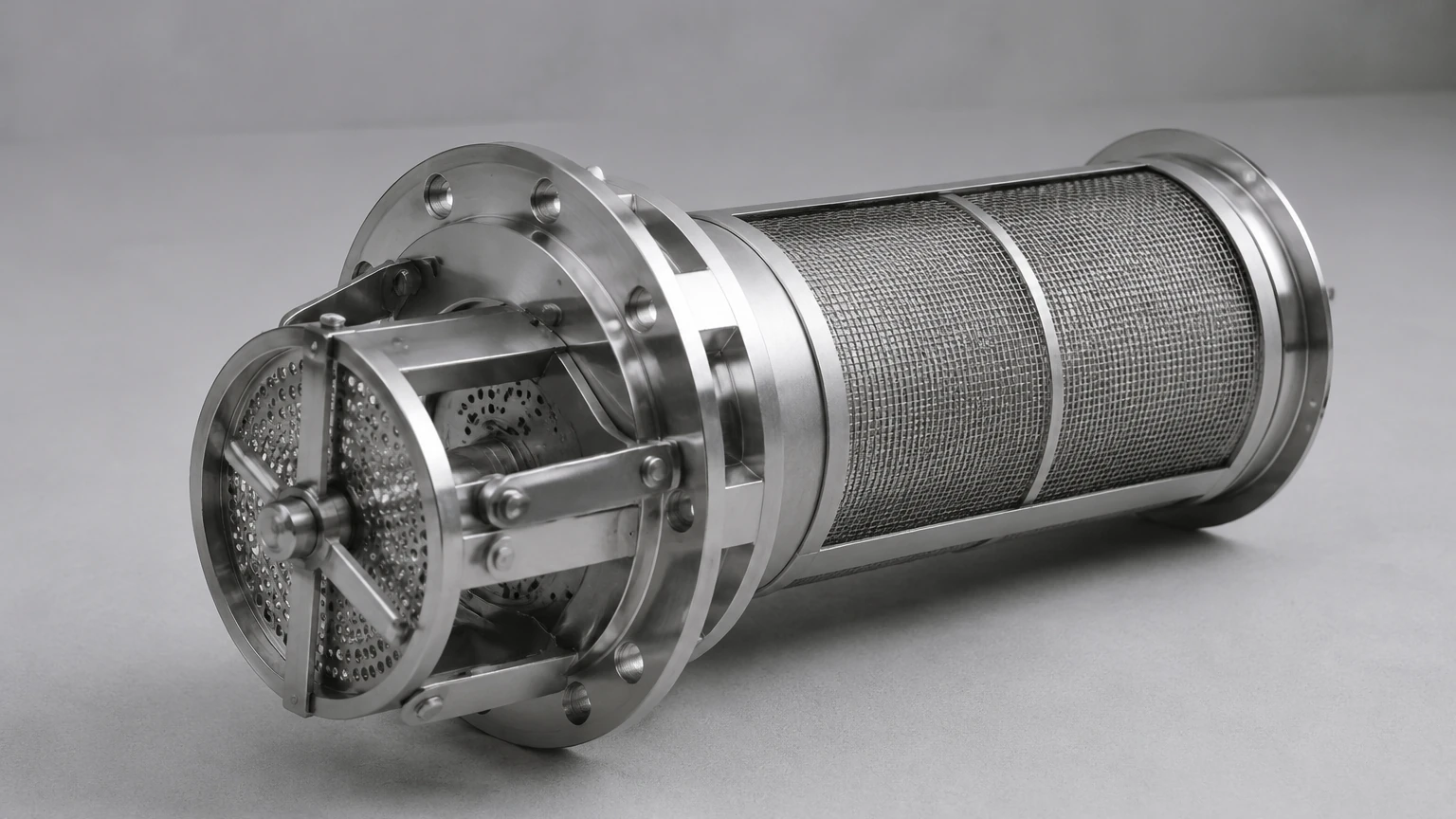
For fluids containing sticky, fibrous, or high-viscosity contaminants, mechanical cleaning is often preferred. A scraper-style self cleaning pump filter utilizes a motorized blade or brush that traverses the surface of the filter element. As the scraper moves, it physically displaces the "filter cake" and directs it into a collection chamber at the bottom of the housing. This method is particularly effective in the food and beverage industry and in oil processing, where particles may adhere to the filter surface despite high-velocity fluid flow.
Suction Scanner Technology
Suction scanners use a rotating nozzle that moves across the internal surface of the filter screen. By creating a localized low-pressure zone at the nozzle tip, the system sucks away debris without requiring a full system backwash. This technology is prized for its extremely low water consumption and its ability to clean fine screens (down to 10-20 microns) without interrupting the main flow.
Material Engineering: The Case for Stainless Steel Components
The durability of a self cleaning pump filter is largely determined by the materials used in its construction, particularly the filter element itself. In demanding industrial environments, stainless steel is the gold standard due to its mechanical strength and chemical resistance.
Stainless Steel 304 and 316L
Most industrial filters utilize Grade 304 or 316L stainless steel. 316L, with its addition of molybdenum, offers superior resistance to chlorides and organic acids, making it the preferred choice for chemical processing and marine environments. For high-purity applications, such as pharmaceuticals, the surface finish of the stainless steel (measured in Ra) is also critical to prevent bacterial growth and ensure complete cleaning during CIP (Clean-in-Place) cycles.
Wedge Wire vs. Woven Wire Mesh
At Kaifil, we emphasize the importance of choosing the correct filter structure.
- Wedge Wire: These elements are constructed from V-shaped profiles welded to support rods. They are exceptionally strong and provide a "point-of-contact" filtration that is very easy to clean. The widening gap behind the filtration surface prevents particles from becoming wedged, which is essential for backwash efficiency.
- Woven Wire Mesh: For applications requiring very high precision and fine micron ratings (below 50 microns), multi-layered sintered wire mesh provides a stable, porous structure that can withstand high pressure differentials without deforming.
Technical Selection Criteria for Engineers
When specifying a self cleaning pump filter, several technical parameters must be confirmed to ensure the system meets the application's demands. Engineers should evaluate the following:
1. Micron Rating and Particle Distribution: It is not enough to know the largest particle size; the distribution of particle sizes determines how quickly the filter will load. A "nominal" rating vs. an "absolute" rating can significantly impact downstream fluid quality.
2. Flow Rate and Velocity: High fluid velocity can cause particles to embed themselves deeply into the filter media, making the self-cleaning cycle less effective. The filter housing must be sized to keep the approach velocity within acceptable limits.
3. Viscosity and Temperature: Changes in temperature can drastically alter fluid viscosity, which in turn affects the pressure drop ($ΔP$). Systems handling oils or polymers must be designed with heating jackets or high-torque cleaning motors to compensate for fluid thickness.
4. Operating Pressure: The filter housing and internal elements must be rated for the maximum surge pressure of the pump. In hydraulic systems, this can be several hundred PSI, requiring heavy-duty stainless steel construction.
Integration and Installation Considerations
A self cleaning pump filter is rarely a standalone unit; it must be integrated into the wider piping and control architecture. Proper installation is critical to prevent air pockets and ensure efficient waste discharge.
Bypass Piping
Even though these filters are self-cleaning, engineering best practices dictate the installation of a bypass line. This allows for the complete isolation of the filter unit for long-term maintenance or seal replacement without shutting down the entire pumping station.
Control Systems and Sensors
Modern automated filters rely on PLC (Programmable Logic Controller) integration. Differential pressure transmitters provide real-time data to the controller, which manages the frequency and duration of the cleaning cycles. For remote locations, these systems can be equipped with telemetry to alert operators to unusual loading patterns or mechanical faults.
Waste Management
The material removed during the cleaning cycle—the "blowdown"—must be handled appropriately. Depending on the industry, this waste may need to be concentrated, recycled, or treated as hazardous waste. The volume of blowdown is a key metric in the system's overall efficiency.
Optimizing Total Cost of Ownership (TCO)
While the initial capital expenditure (CAPEX) for a self cleaning pump filter is higher than for manual strainers, the Total Cost of Ownership (TCO) is significantly lower in the long run. The reduction in labor costs, the elimination of disposable filter cartridges, and the prevention of pump damage provide a rapid return on investment (ROI).
To optimize TCO, engineers should focus on:
- Element Longevity: Using high-quality stainless steel elements that can withstand thousands of cleaning cycles without fatigue.
- Energy Consumption: Selecting a cleaning mechanism that minimizes the use of pressurized air or high-torque motors.
- Spare Parts Availability: Ensuring that wear items, such as seals, gaskets, and scraper blades, are easily sourced and replaced.
Application-Specific Considerations
Different industries impose unique constraints on filtration design. For example:
- Food and Beverage: Requires FDA-compliant materials and "dead-leg" free designs to prevent product stagnation.
- Chemical Processing: Requires compatibility with aggressive solvents and high-temperature tolerance.
- Pulp and Paper: Deals with high concentrations of fibrous solids that can easily overwhelm standard backwash filters, necessitating robust mechanical scrapers.
At Kaifil, we understand that no two filtration challenges are identical. Our expertise in manufacturing custom stainless steel filter cartridges and precision metal components allows us to support OEMs and end-users in developing solutions that are perfectly matched to their operational environment.
Conclusion: Future-Proofing Filtration Infrastructure
The shift toward automation in industrial processing makes the self cleaning pump filter an indispensable component of modern fluid systems. By removing the variable of human error and providing consistent protection for expensive pumping equipment, these filters ensure operational continuity and product quality.
When selecting a filtration partner, it is essential to work with manufacturers who understand the nuances of metal fabrication and filtration physics. High-performance stainless steel components are the foundation of a reliable automated filter. For more information on how our manufacturing capabilities can support your next project, explore the resources available on our Main Page. By focusing on material integrity and precision engineering, you can ensure your pumping systems remain efficient, durable, and cost-effective for years to come.
