


Vessel Tank Analysis
In industrial filtration systems, the vessel or tank is more than just a container; it is a critical pressure component that dictates the efficiency, safety, and longevity of the entire process. Vessel tank analysis is the systematic evaluation of these structures to ensure they meet the rigorous demands of chemical processing, pharmaceutical manufacturing, and high-pressure hydraulic applications. For engineers and procurement specialists, understanding the technical nuances of vessel design and its interaction with internal filtration media is essential for optimizing system performance and minimizing total cost of ownership.
At Kaifil, we recognize that the integration of high-precision stainless steel filter cartridges and wire mesh components requires a deep understanding of the vessel environment. This article provides a technical deep dive into the engineering considerations, material requirements, and performance evaluations necessary for comprehensive vessel tank analysis.
Understanding the Scope of Vessel Tank Analysis
Vessel tank analysis encompasses a broad range of engineering assessments aimed at verifying the structural and functional integrity of a filtration housing. Unlike atmospheric storage tanks, industrial filtration vessels often operate under significant pressure and temperature fluctuations. The analysis must account for both the external shell and the internal hardware that supports filtration media.
Key areas of focus include:
1. Pressure Boundary Integrity: Evaluating the wall thickness and weld quality to withstand operating pressures, including surge events.
2. Fluid Dynamics: Analyzing the flow patterns within the vessel to prevent dead zones, channeling, or excessive turbulence that could damage delicate filter media.
3. Internal Support Structures: Ensuring that tube sheets, hold-down plates, and support baskets can withstand the differential pressure (ΔP) generated as filters become loaded with contaminants.
4. Seal and Gasket Compatibility: Assessing the interfaces where the vessel opens for maintenance to ensure leak-proof operation across varying thermal cycles.
By conducting a thorough analysis before commissioning or during a system upgrade, facilities can avoid catastrophic failures and ensure that their filtration components perform according to their specified micron ratings.
Material Selection and Corrosion Engineering
The choice of material is perhaps the most critical factor in vessel tank analysis. In industries such as food and beverage or chemical processing, the vessel must resist both the process fluid and the aggressive chemicals used during Cleaning-in-Place (CIP) cycles. Stainless steel remains the industry standard due to its mechanical strength and corrosion resistance.
Stainless Steel Grades: 304 vs. 316L
While SS304 is suitable for many general-purpose industrial applications, vessel tank analysis often points toward SS316L for more demanding environments. The addition of molybdenum in 316L provides superior resistance to pitting and crevice corrosion, particularly in chloride-rich environments. In pharmaceutical applications, the "L" (low carbon) variant is preferred to prevent carbide precipitation during welding, which maintains the integrity of the vessel’s corrosion resistance at the joints.
Surface Finish and Ra Values
For high-purity applications, the internal surface finish of the vessel is as important as the material itself. Analysis must specify the required Roughness Average (Ra). A lower Ra value (achieved through mechanical polishing or electropolishing) reduces the surface area where bacteria or contaminants can lodge, facilitating more effective sterilization. Engineers must confirm that the internal components, such as the filter cages and plenums, match the vessel’s surface finish to maintain system-wide compliance.
Engineering Considerations for Pressure and Flow
A central component of vessel tank analysis is the calculation of the Maximum Allowable Working Pressure (MAWP). This calculation is not static; it must account for the maximum operating temperature, as the tensile strength of stainless steel decreases as temperature rises.
Differential Pressure (ΔP) Management
In a filtration vessel, the pressure drop across the filter media is a primary performance metric. Vessel tank analysis evaluates how the vessel's inlet and outlet diameters affect flow velocity. If the inlet velocity is too high, it can cause mechanical erosion of the filter cartridges or lead to uneven cake distribution in wire mesh filters.
Engineers use the analysis to determine the "terminal pressure drop"—the point at which the filters must be cleaned or replaced. The vessel must be designed to handle this maximum ΔP without deforming the internal support structures. For high-viscosity fluids, this analysis becomes even more critical, as the forces exerted on the filter elements are significantly higher.
Flow Distribution and Baffling
To maximize the life of stainless steel filter cartridges, the fluid must be distributed evenly across all elements. Vessel tank analysis often involves the use of internal baffles or diffusers. These components break up the high-velocity stream entering the vessel, protecting the filter media from direct impingement and ensuring that the entire surface area of the filtration media is utilized. This prevents premature clogging of the filters nearest to the inlet.
Structural Integrity and Compliance Standards
Industrial vessels are subject to strict regulatory standards, such as the ASME Boiler and Pressure Vessel Code (Section VIII) in the United States or the Pressure Equipment Directive (PED) in Europe. A factual vessel tank analysis must verify that the design, fabrication, and testing of the tank meet these legal requirements.
Weld Quality and Non-Destructive Testing (NDT)
The integrity of a stainless steel vessel is only as good as its welds. Analysis protocols typically include NDT methods such as:
* Radiographic Testing (RT): Using X-rays to identify internal defects in the weld seam.
* Dye Penetrant Inspection (DPI): Detecting surface-breaking defects.
* Hydrostatic Testing: Pressurizing the vessel to 1.3 or 1.5 times its design pressure to ensure there are no leaks or structural deformations.
Fatigue and Thermal Cycling
In processes that involve frequent batch changes or thermal sterilization (SIP), the vessel undergoes repeated expansion and contraction. Vessel tank analysis must include a fatigue assessment to ensure that the nozzle connections and support legs do not develop stress cracks over thousands of cycles.
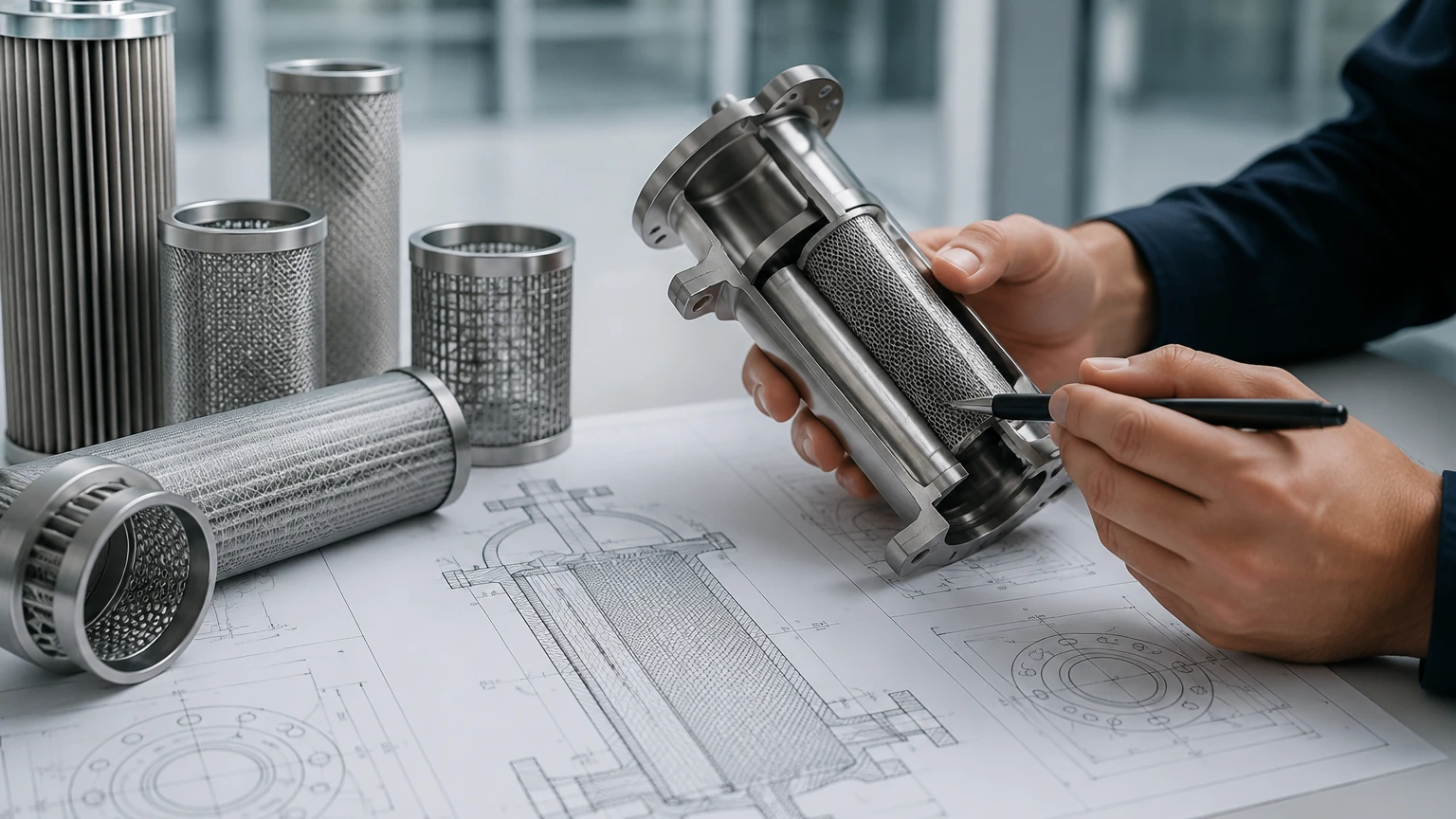
Optimizing Internal Filtration Components
The vessel is the housing, but the filtration media—such as wire mesh filters or pleated stainless steel cartridges—is the functional heart of the system. Vessel tank analysis must bridge the gap between the vessel's dimensions and the filter's performance characteristics.
Customization for Specific Applications
Standard off-the-shelf vessels often fail to meet the specific flow requirements of niche industrial processes. Through OEM customization, the vessel can be tailored to accommodate specific lengths and diameters of filter cartridges. For example, if a process requires a high flow rate but has limited floor space, a multi-round vessel analysis can determine the optimal arrangement of cartridges to maximize the effective filtration area within a compact footprint.
Compatibility with Wire Mesh Filters
When using permanent stainless steel wire mesh filters, the vessel tank analysis must account for the cleaning mechanism. If the system uses backpulsing or ultrasonic cleaning, the vessel must be equipped with the necessary ports and be structurally reinforced to handle the rapid pressure reversals associated with these cleaning methods.
For more detailed technical specifications and to explore our full range of custom filtration components, visit our Main Page.
Maintenance and Lifecycle Assessment
A comprehensive vessel tank analysis extends into the operational phase of the equipment. It establishes the baseline for preventative maintenance schedules. By monitoring the differential pressure and conducting periodic visual inspections of the vessel’s interior, engineers can predict when components are nearing the end of their service life.
Replacement Cycles
While stainless steel filters are known for their durability, they are not infinite. The analysis helps define the cleaning limits. For instance, after a certain number of cleaning cycles, the structural integrity of a wire mesh might degrade, or the pore size might shift due to mechanical stress. The analysis provides the data needed to determine when a full replacement is more cost-effective than continued cleaning.
Total Cost of Ownership (TCO)
When evaluating a filtration system, the initial purchase price of the vessel is only one part of the equation. Vessel tank analysis allows purchasing teams to calculate the TCO by factoring in:
* Energy costs associated with pressure drop.
* Labor costs for filter change-outs.
* The lifespan of the vessel vs. the frequency of internal component replacement.
* Potential downtime caused by seal failures or structural repairs.
Information to Confirm Before Implementation
Before proceeding with the fabrication of a filtration vessel or the purchase of replacement internals, technical professionals should confirm several key data points identified during the vessel tank analysis:
1. Fluid Characteristics: Confirm the chemical composition, viscosity, and solid loading of the process fluid.
2. Operational Extremes: Define the absolute maximum and minimum temperatures and pressures the vessel will encounter.
3. Filtration Accuracy: Ensure the micron rating of the internal mesh or cartridge aligns with the downstream requirements of the process.
4. Space Constraints: Verify that the vessel dimensions allow for the necessary clearance to remove and replace filter elements easily.
5. Certification Requirements: Confirm which regional or industry-specific standards (e.g., 3-A Sanitary Standards, ASME) must be documented.
Conclusion
Vessel tank analysis is a foundational process for any industry relying on high-performance filtration. By examining the intersection of material science, fluid dynamics, and structural engineering, facilities can ensure that their filtration systems operate at peak efficiency. Whether you are designing a new chemical processing line or optimizing a hydraulic system, a rigorous analysis of the vessel and its internal stainless steel components is the best defense against operational inefficiency and mechanical failure.
Kaifil’s expertise in manufacturing custom stainless steel filtration solutions provides the technical foundation necessary for these complex analyses. By focusing on precision engineering and high-quality materials, we help global industries achieve reliable, long-term filtration performance in even the most demanding environments.
